On this page
His times
- He worked in Bungo province, today Ōita, on Kyūshū, between the end of the Heian period and the start of the Kamakura.
- One of his tachi, an Important Art Object (重要美術品, jūyō bijutsuhin), bears the date Genkyū 2, that is, 1205: this fixes his activity. It is not the Kokin Denju no Tachi, which is undated.
- Markus Sesko classes him among the Ko-Kyūshū and Ko-Naminohira smiths of the early Kamakura, from 1185 to 1232.
What tradition says
- He was called “Kishin Taiu”, a nickname, according to the English translation of the NBTHK’s Sword Journal.
- He is said to have been a monk, and the pupil or the master of 定秀 (Sadahide), which in on reading is read Jōshū. Sadahide is said to have headed a large shugendō (修験道, shugendō) dōjō on Mount Hiko (英彦山, Hikosan), in neighbouring Buzen, and to have been both a monk and a smith. The styles of the two are very alike, but very few works by Jōshū survive.
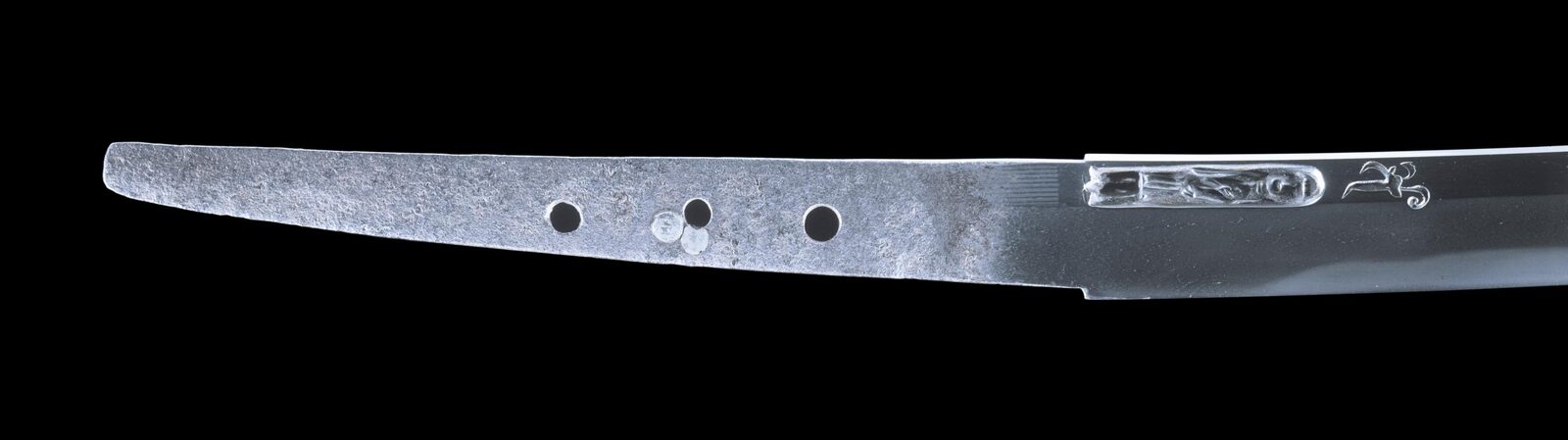
- One theory makes him an ascetic, and would see his faith in his engravings.
- The stories of a demonic being that helped him and of several banishments do not appear in the sources consulted.

His legacy
The NBTHK notes that some engravings by Nobukuni, already in the Ōei era, such as a kurikara inside a groove or a bōhi with peculiar ends, may have been influenced by him.