The Ko-Bizen and the three Hira
Ko-Bizen (古備前, Ko-Bizen) is the name given to the smiths of Bizen of the Heian period and the beginning of the Kamakura, before the Ichimonji school. Kanehira is one of its leading names, with Tomonari, and with Takahira (高平, Takahira) and Sukehira (助平, Sukehira) he forms the “three Hira” (sanpira). A biographical dictionary makes him an heir of the Ko-Bizen, active around the Genryaku era (1184-1185).
His period is unclear: the Daijisen and Nihon Kokugo Daijiten dictionaries place him in the mid-Heian; the Nihonjinmei Daijiten, Japanese Wikipedia and the Tokyo National Museum, at its end.
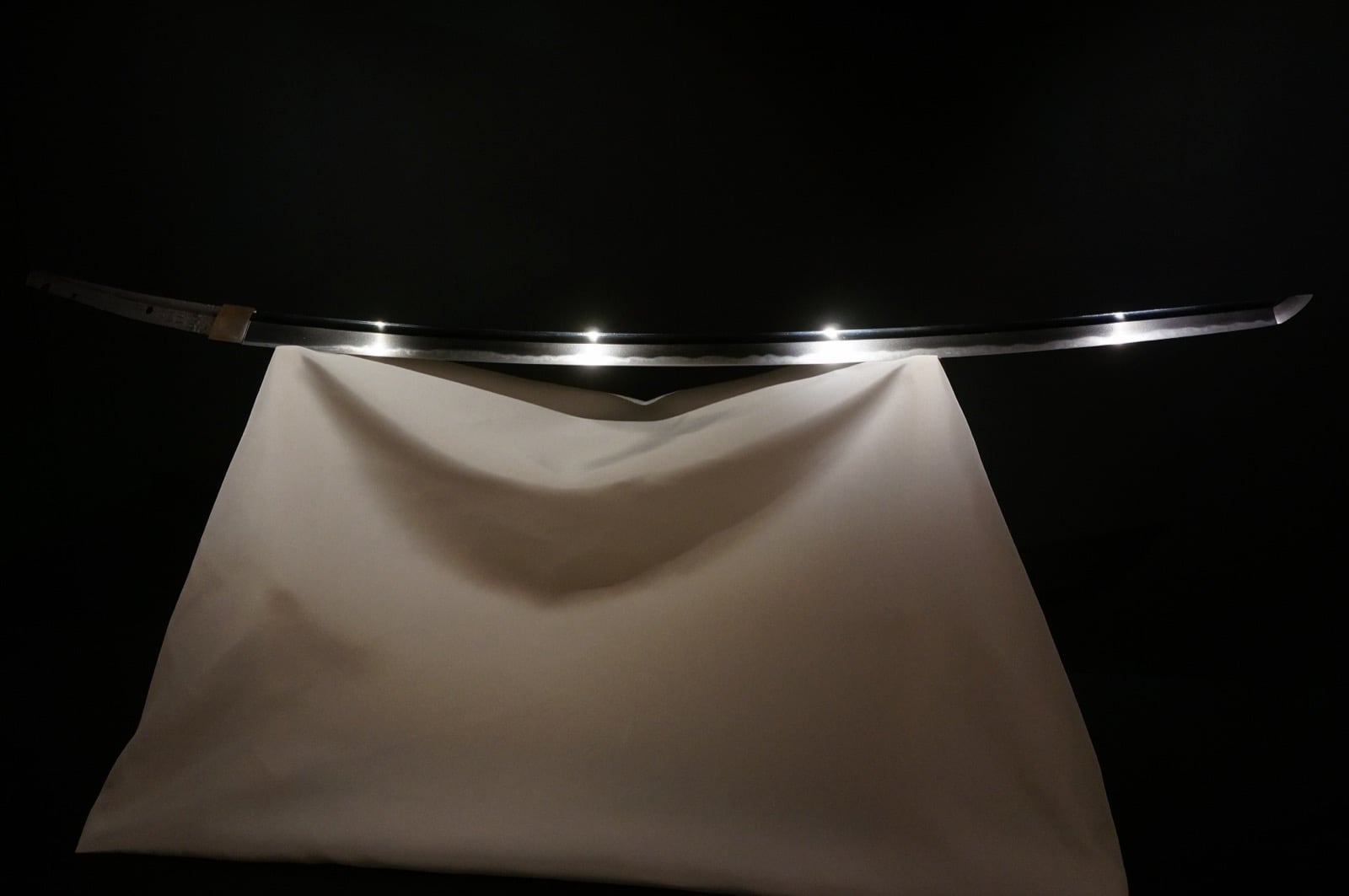

One Kanehira or several?
Almost all his works are signed 包平 (Kanehira) in two small characters; the Ōkanehira and a tachi in the Mori Memorial Shūsui Museum, in Toyama, bear the long signature 備前国包平作 (Bizen no kuni Kanehira saku). That is why it is thought that there were several smiths of that name, and Japanese Wikipedia reckons that the Ōkanehira is by a later Kanehira.
What tradition says
According to the Daijisen and Nihon Kokugo Daijiten dictionaries, the 蒲穂丸 (Gamaho-maru) of Emperor Go-Toba and the 簾丸 (Sudare-maru) of Minamoto no Yoritomo are attributed to him.