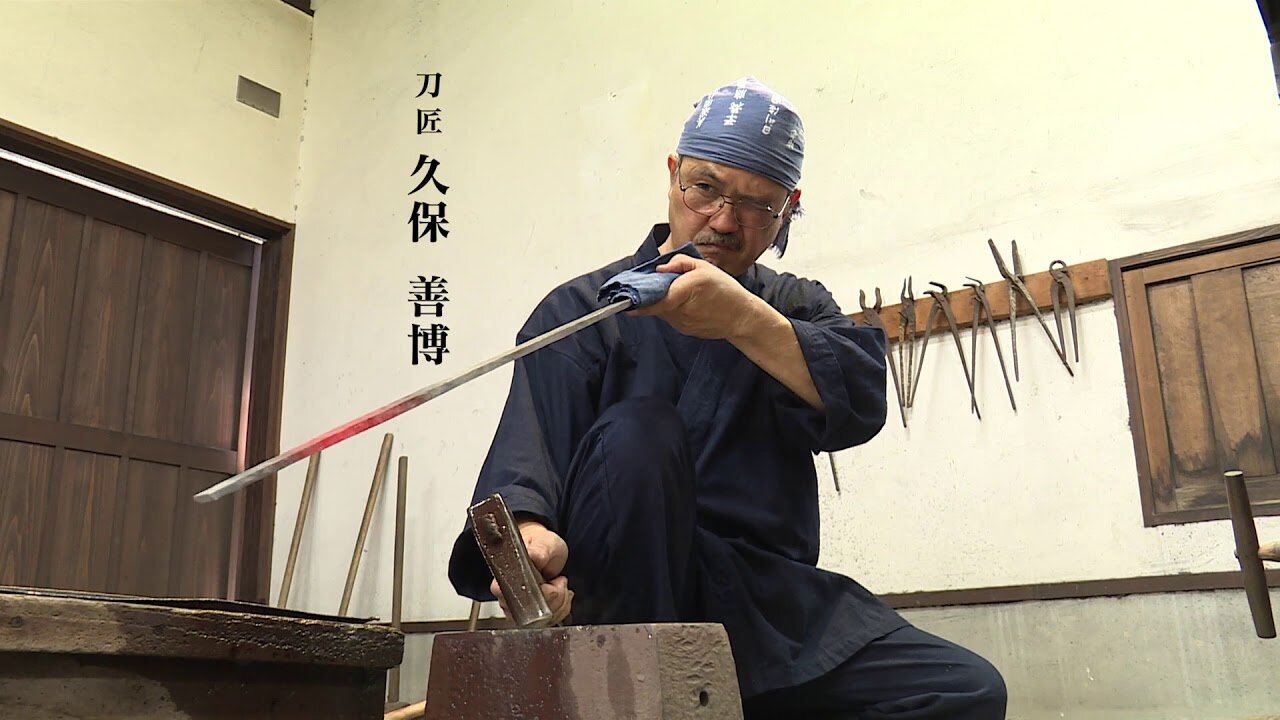
A swordsmith with glasses and a blue cloth on his head, crouching, holds a red-hot bar on the anvil; beside him, his name in Japanese.

Still from the video, © 瀬戸内市 (Setouchi-shi) · © 瀬戸内市 (Setouchi-shi)

From Amami to Shōbara

Life and forging

A postgraduate student who wanted “to reproduce the ancient swords with these hands”, a polisher who introduced him to his master, a hitchhiking trip to the Shimane furnace and a forge of his own in Shōbara.

On this page
  1. The forge and the laboratory
  2. Posts and apprentices
  3. At the Shōbara forge

The sword

History

  1. The sword

    Born in Amami-Ōshima HD

    He is born on the island of Amami-Ōshima (奄美大島), in Kagoshima.

  2. The sword

    With Yoshihara Yoshindo HD

    In his first year of postgraduate study, a television programme makes him decide to become a swordsmith. At the Nezu Museum (根津美術館, Nezu Bijutsukan) he meets the polisher Fujishiro Okisato (藤代興里), who introduces him to Yoshihara Yoshindo. On finishing his postgraduate studies at Chiba University, in 1989, he enters his forge against his parents’ wishes.

  3. The sword

    Licence and Shimane HD

    He settles in Yokota (today Okuizumo), in Shimane, and begins to forge; his licence dates from that year. With more than four years of apprenticeship behind him he had hitchhiked to the NBTHK furnace in Shimane, and the murage (村下, master of the furnace) Kihara Akira (木原明) told him: “if you want to learn the furnace, come to Yokota”.

  4. The sword

    His forge in Shōbara HD

    He opens his forge in Saijō, in Shōbara (Hiroshima), and begins in earnest to research furnace iron and utsuri.

  5. The sword

    Utsuri HD

    He succeeds in bringing out utsuri, with the help of Fujishiro Okisato in the study of the utsuri of ancient swords.

  6. The sword

    Cultural property of Shōbara HD

    Shōbara recognises him as holder of the intangible cultural property “Japanese sword technique” (日本刀製作技術, nihontō seisaku gijutsu); in 2011 it gives him its citizens’ award of honour.

  7. The sword

    Cultural property of Hiroshima AT

    Hiroshima Prefecture recognises him as holder of the same cultural property.

  8. The sword

    Mukansa HD

    Takamatsu-no-miya Kinenshō and the rank of mukansa. He gives thanks for the prizes on behalf of all the prizewinners.

  9. The sword

    The Daihannya Nagamitsu AT

    His copy of the 大般若長光 (Daihannya Nagamitsu) is donated to the Bizen Osafune Japanese Sword Museum.

  10. History

    An exhibition of his own HD

    From 12 July to 1 September, the 頼山陽史跡資料館 (Rai San'yō Shiseki Shiryōkan) in Hiroshima devotes to him the exhibition 「名刀に挑む!刀匠久保善博の世界」 (Meitō ni idomu! Tōshō Kubo Yoshihiro no sekai), for his thirty years as a licensed smith.

The forge and the laboratory

He says he learned metallurgy from specialists at Hitachi Metals (日立金属, Hitachi Kinzoku), and that this was “a great asset”. In 2000 he was a visiting researcher at their metallurgy laboratory. He has published in 『鉄と鋼』 (Tetsu to Hagane), in 2005 and in 2023, and in that of the Hiroshima University furnace study group (Tatara Kenkyūkai), in 2010 and in 2017, and he presented a paper at the BUMA-VIII conference in Nara, in 2013. At the 2024 exhibition he gave a talk entitled “古名刀再現への挑戦 科学する刀鍛冶” (Komeitō saigen e no chōsen, kagaku suru katanakaji: “The challenge of reproducing the ancient swords: a swordsmith who does science”).

Posts and apprentices

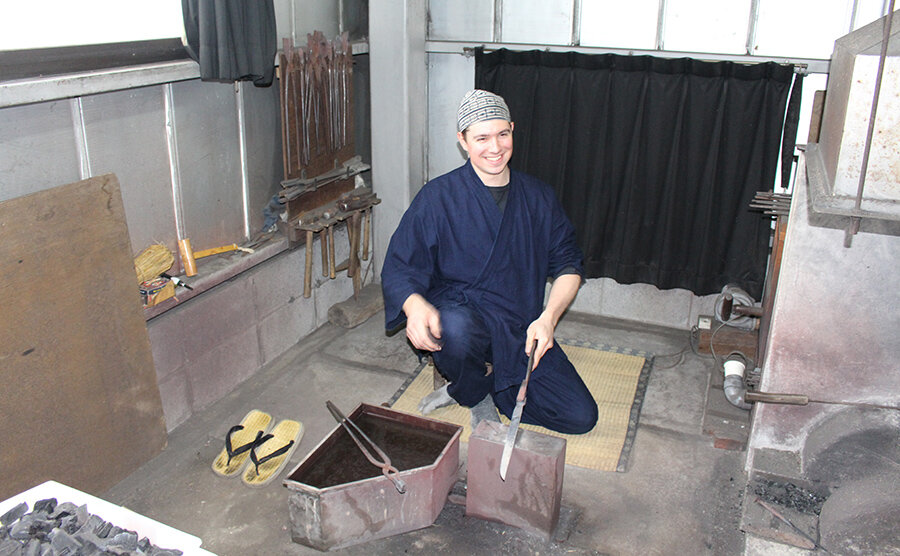
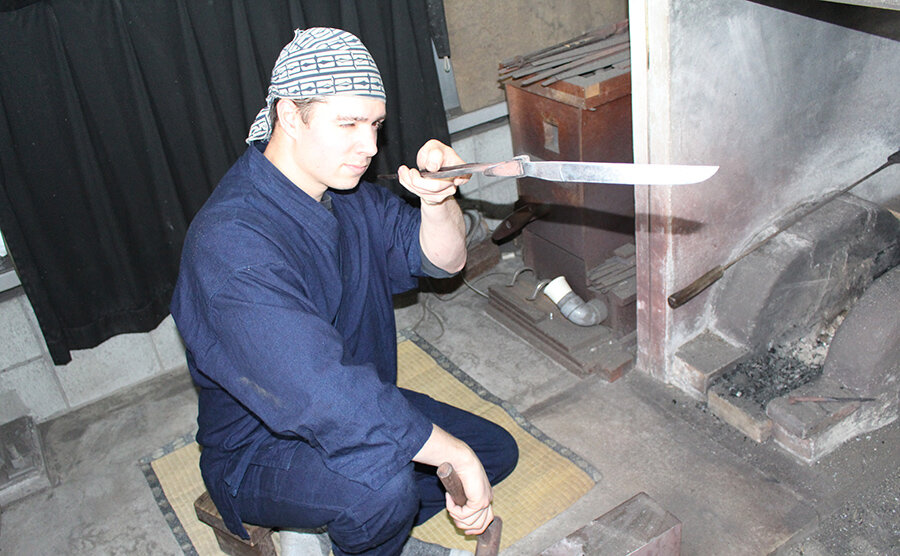
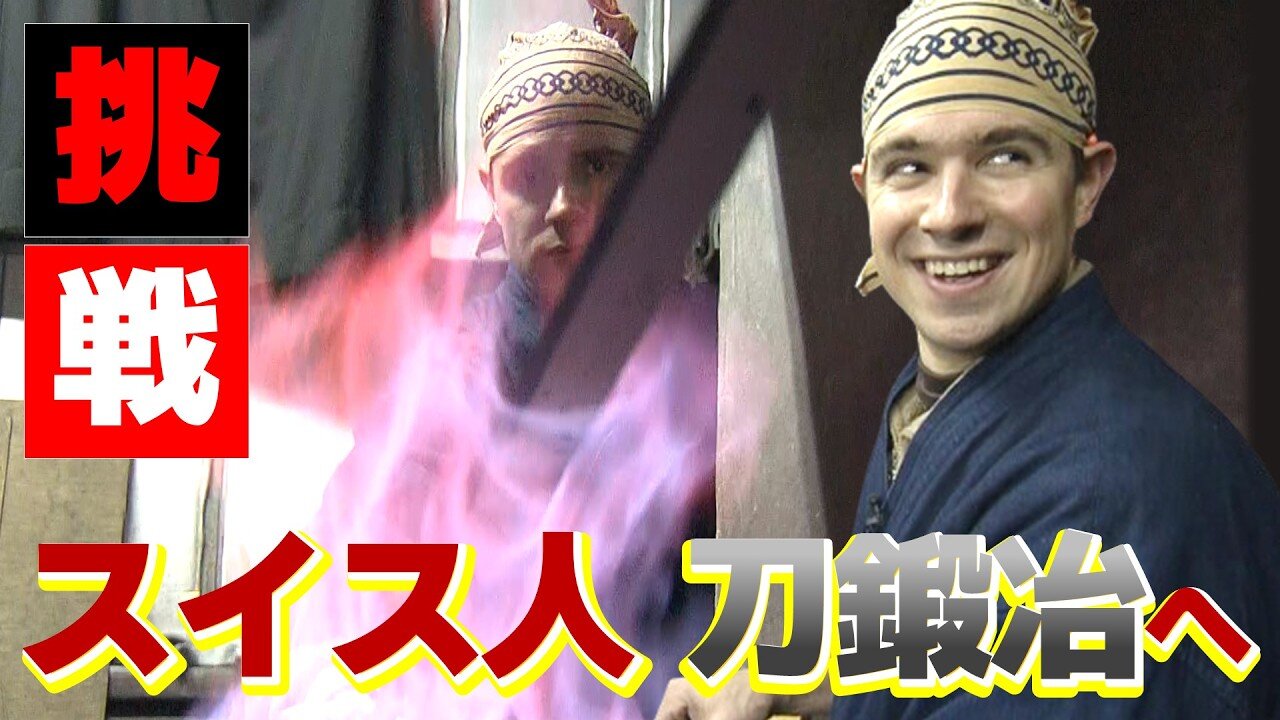
Since 2019 he has been vice-president of the swordsmiths’ association, the 全日本刀匠会 (Zen Nihon Tōshōkai), according to the 2024 exhibition and another source; the Japanese Wikipedia calls him president. He trains foreign apprentices: a 2024 report by Hiroshima television follows a young Swiss man who has decided to stay and live in Japan to learn with him.