On this page
Seki and the Kanemoto line
- He worked at the end of the Muromachi in Seki, in the Mugi district of Mino province.
- The name Kanemoto continues to this day, but only the second is called Magoroku Kanemoto. Magoroku (孫六, Magoroku) was the house name (屋号, yagō) of the Kanemoto, and some later generations sign it in kana.
- The Japanese Sword Index places him with Kanesada and Kanetsune among the swordsmiths of late Mino, the Sue-Seki.
Two versions of his training
- The Japanese Wikipedia places him in the 美濃三阿弥 (Mino San'ami) school and says that he trained with the first Kanesada around the Eishō era (1504–1521). It records as legend that he became the sworn brother of the second Kanesada, Izumi no Kami Kanesada.
His dates
- The Japanese Wikipedia gives works dated from the second month of Daiei 3 (1523) to the second month of Tenbun 7 (1538).
- The Metropolitan in New York places him as active in Seki around 1504–1520, and in its artist record gives him the years 1479–1545.
- The two dates do not match: either there was more than one Magoroku, or one of them is wrong.
Who carried his blades
The Japanese Wikipedia counts among his owners Takeda Shingen, Toyotomi Hideyoshi, Kuroda Nagamasa, Maeda Toshimasa, Maeno Nagayasu and Aoki Kazushige, who gave his name to the Aoki Kanemoto.
Today, in Seki
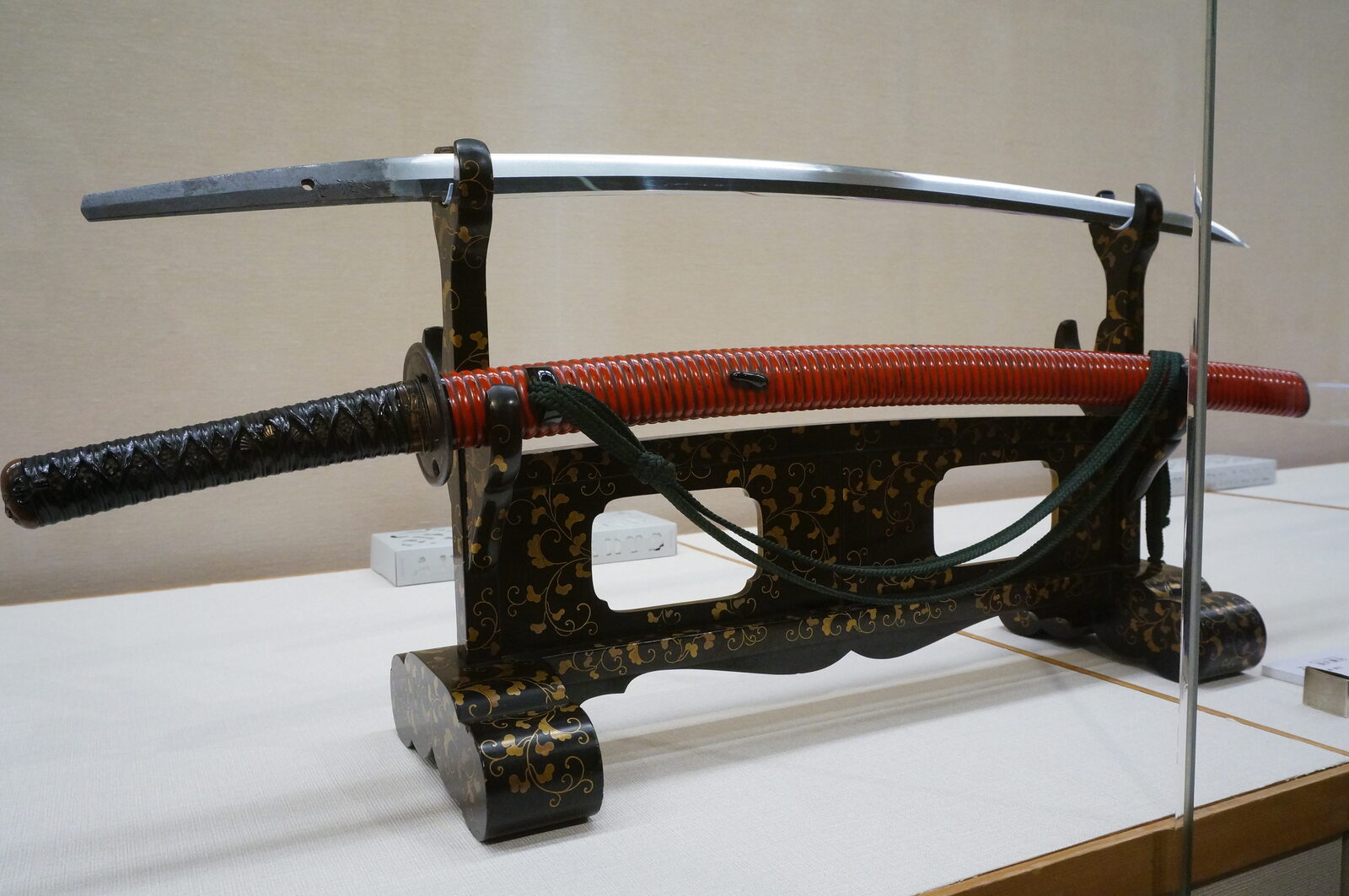
From 1 November 2025 to 12 January 2026, the house of the tradition of the Seki swordsmiths, the 関鍛冶伝承館 (Seki Kaji Denshōkan), devoted to him the exhibition “Magoroku Kanemoto and the sanbonsugi: the look of a fighting sword”.