On this page
What survives
According to the Japanese Wikipedia some thirty blades survive: tachi signed with the two characters 光忠 (Mitsutada) and long tachi shortened (磨上, suriage) into katana. The signed ones are often shortened, and the unsigned attributed ones are sometimes more flamboyant than the signed ones. The Agency for Cultural Affairs notes that his signatures on an unshortened nakago (生ぶ, ubu) are rare.
Kantei keys
According to the Japanese Wikipedia and the Agency for Cultural Affairs’ records:
- Sugata: that of the mid-Kamakura: high koshizori, thick kasane, wide mihaba and, in the robust type, ikubi-kissaki. The unshortened tachi of the Tokugawa Museum, 82.4 cm long, is shinogi-zukuri with iori-mune, high koshizori with plenty of funbari and chū-kissaki.
- Jihada: very tight ko-itame with fine ji-nie and a crisp midare-utsuri.
- Hamon: nioi-based: gunome-chōji, with kawazuko-chōji and jūka-chōji in the most flamboyant; in the small works in the Ko-Bizen style, suguha with ko-midare and chōji-ashi.
- Bōshi: notare-komi with komaru, on the tachi of the Tokugawa Museum; ran-komi almost yaki-zume, on the Ikoma Mitsutada.
- Nakago and mei: ubu nakago with a kurijiri tip and katte-sagari yasurime, on the tachi of the Tokugawa Museum; two-character signature, 光忠 (Mitsutada). The gold-inlaid signatures are appraisals by the Hon'ami, not by the smith.
Compared with the Ichimonji school
What sets him apart from the Ichimonji school, according to the Japanese Wikipedia: his temper has less difference in height and includes gunome. The Tokyo National Museum, describing his tachi, points to his relationship with the Ichimonji school, which flourished earlier, from the early to the mid-Kamakura.
The tachi of the Tokyo National Museum
Signed 光忠 (Mitsutada), 68.4 cm long with a sori of 1.8 cm; an Important Cultural Property since 1975. For the museum it is of the slender chū-kissaki type, not the robust ikubi-kissaki one: a jigane of tight itame with clear utsuri, and a brilliant chōji hamon with kawazuko-chōji and fukuro-chōji.
The hi
Markus Sesko cites Mitsutada among the smiths with a wide bōhi, with Miike Tenta Mitsuyo and Higo no Daijō Sadakuni, and the Ko-Osafune school (Mitsutada, Nagamitsu, Kagemitsu and Sanenaga) among those that accompany the bōhi with a tsurebi.
The tachi of the Tokyo National Museum

Tachi signed 光忠 (Mitsutada), Important Cultural Property. Tokyo National Museum. Tokyo National Museum, via ColBase · ColBase terms of use · source 
The same tachi, from the other side. Tokyo National Museum, via ColBase · ColBase terms of use · source 
The same tachi: the base of the blade and the nakago, with the worn signature. Tokyo National Museum, via ColBase · ColBase terms of use · source 
The base of the blade and the nakago, from the other side. Tokyo National Museum, via ColBase · ColBase terms of use · source
In the museum’s display cases
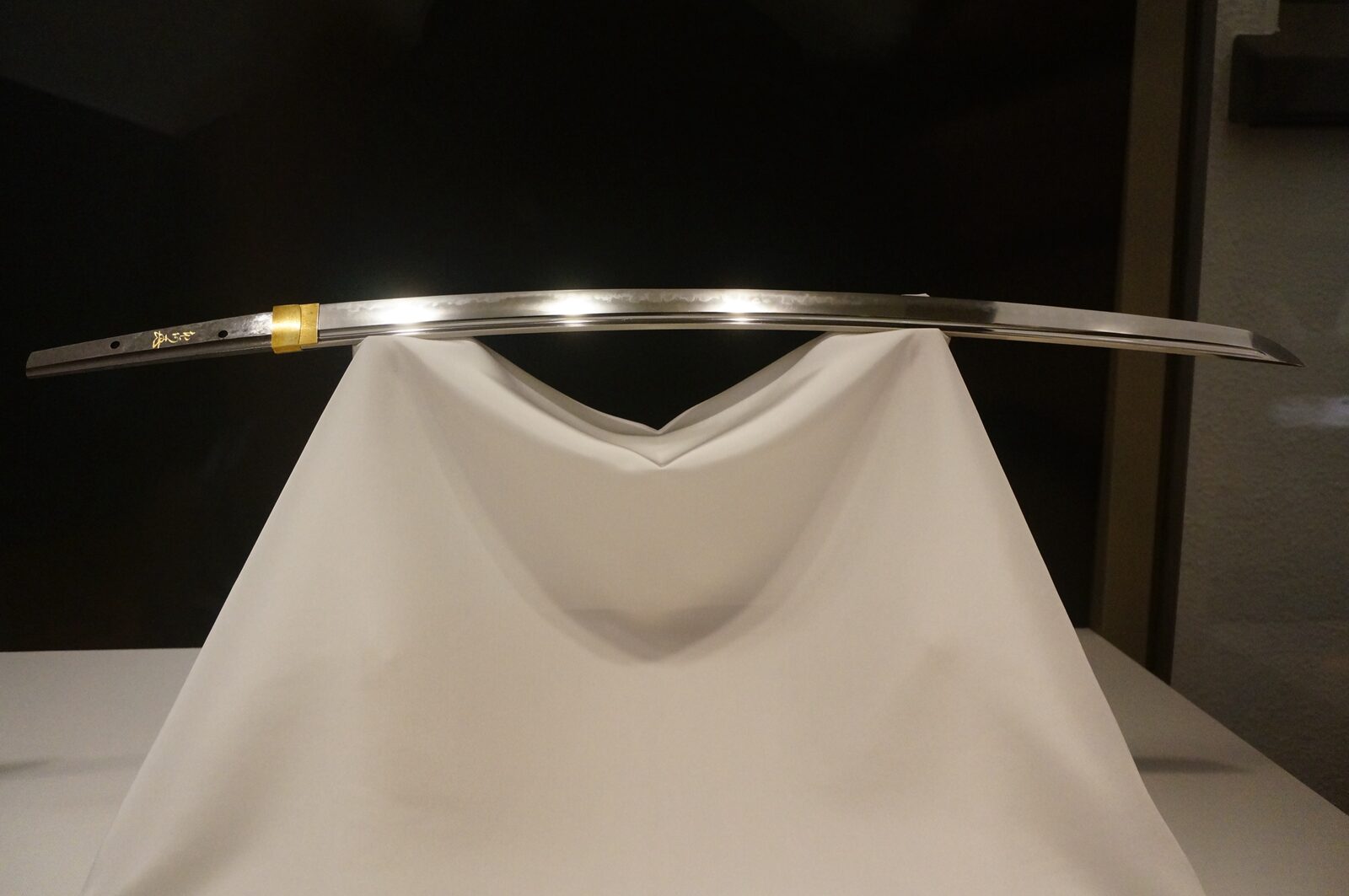
Tachi by Osafune Mitsutada, shortened into a katana, in the Tokyo National Museum. SLIMHANNYA, CC BY-SA 4.0, via Wikimedia Commons · CC BY-SA 4.0 · source 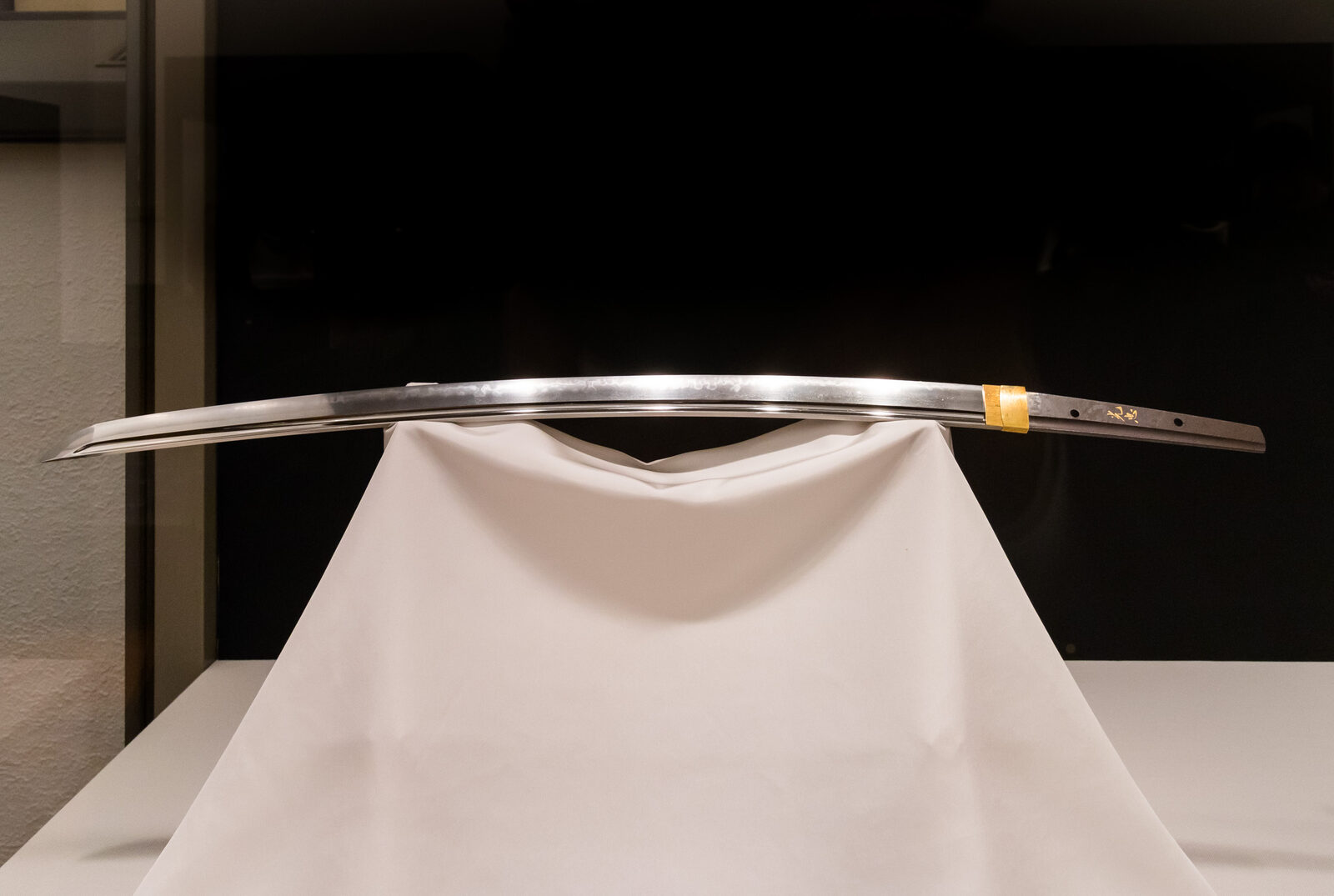
Katana by Mitsutada with the signature 光忠 (Mitsutada) inlaid in gold (金象嵌銘, kinzōgan-mei); Important Cultural Property. Kakidai, CC BY-SA 4.0, via Wikimedia Commons · CC BY-SA 4.0 · source

