The “Ōno chōji”
His speciality is the 重花丁子 (jūka-chōji) hamon, which has been called 大野丁子 (Ōno-chōji). He sums up his aim himself: to recreate the mid-Kamakura Ichimonji tachi, with a broad mihaba and a powerful shape, with a jūka-chōji midare on a nioi base and utsuri.
According to him, his blades have a very tight ko-itame jigane, with some mokume and a crisp utsuri; a deep, soft nioi hamon, with abundant ashi and yō, sometimes with kinsuji and sunagashi; and a bōshi (帽子) into which the chōji runs.
The works he signs 精鍛作 (seitan saku) are made, according to him, with a riskier forging method than the usual one, with more failures and a lower yield. If a blade does not come out well from the yaki-ire (焼き入れ), he destroys it and starts again.
The copies
His most cited work is the copy of the 山鳥毛 (Sanchōmō, also read Yamatorige), the Fukuoka Ichimonji tachi of the Uesugi, a National Treasure, whose temper line was held to be impossible to reproduce. He finished it around 1984 and copied it again in 1986 and in 2004. He is credited with being the first to achieve the half-island nioiguchi (匂口) that the original has on the omote side, next to the habaki.
He has also copied the tantō 桑山保昌 (Kuwayama Hōshō), in masame in the Yamato manner (he made only three of that type), and the spear 蜻蛉切 (Tonbokiri) of Honda Tadakatsu.
His works are art swords: they are seen at the NBTHK 現代刀職展 (Gendai Tōshokuten), where he exhibits without judging, and in the 2019 catalogue of the Heisei no Meitō Meikōten exhibition.
Gallery of works
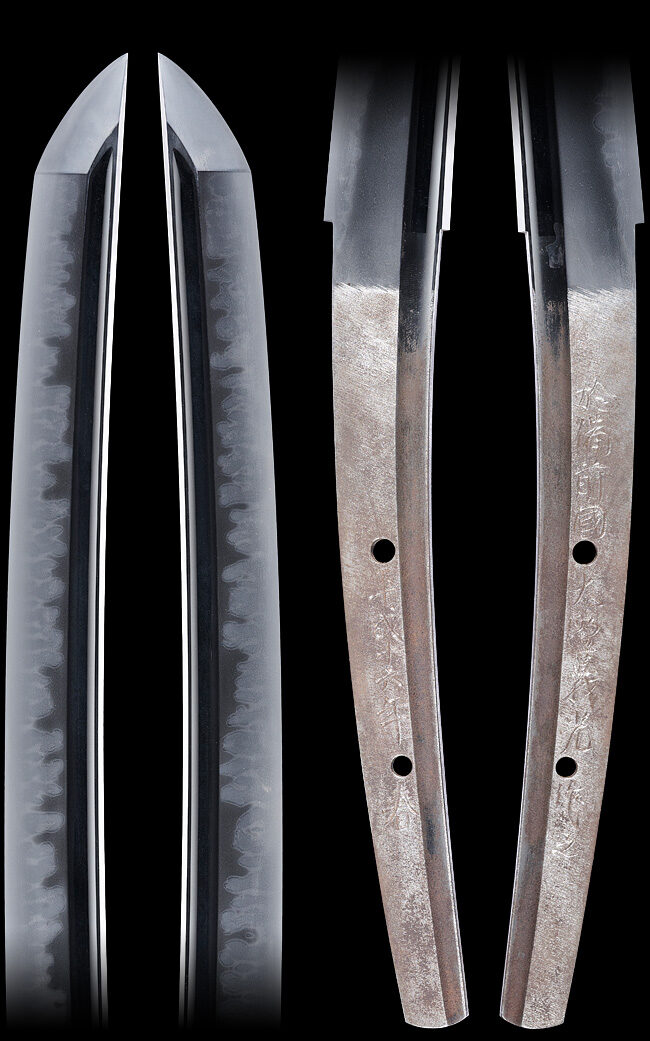
Tachi of 2004, copy of the Sanchōmō (山鳥毛, Sanchōmō). Photo: the smith himself 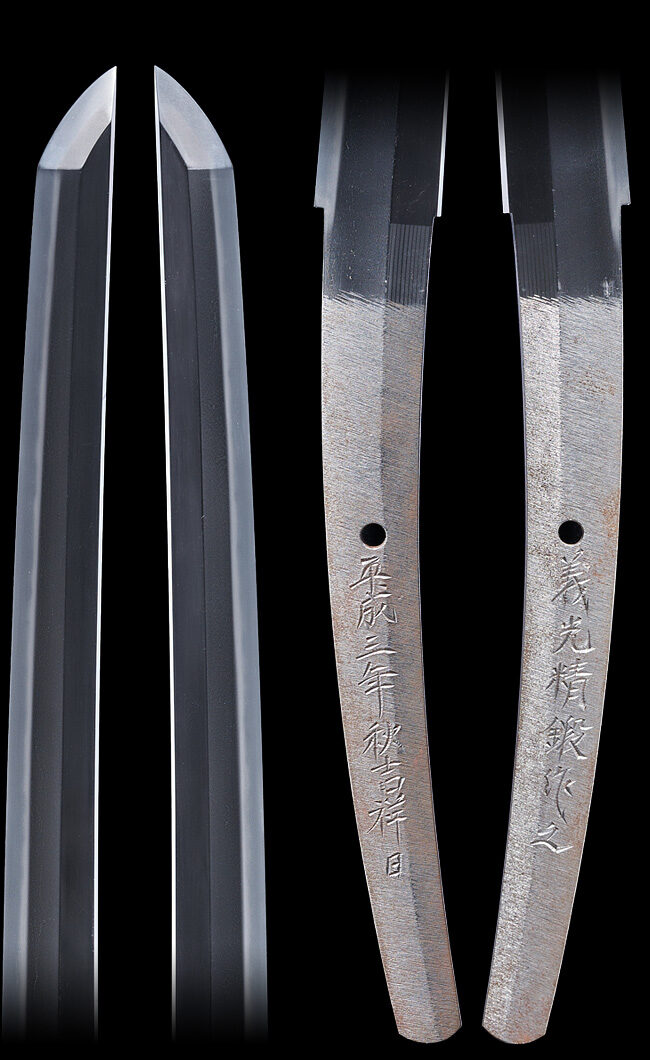
Tachi of 1991, in fine suguha. Photo: the smith himself 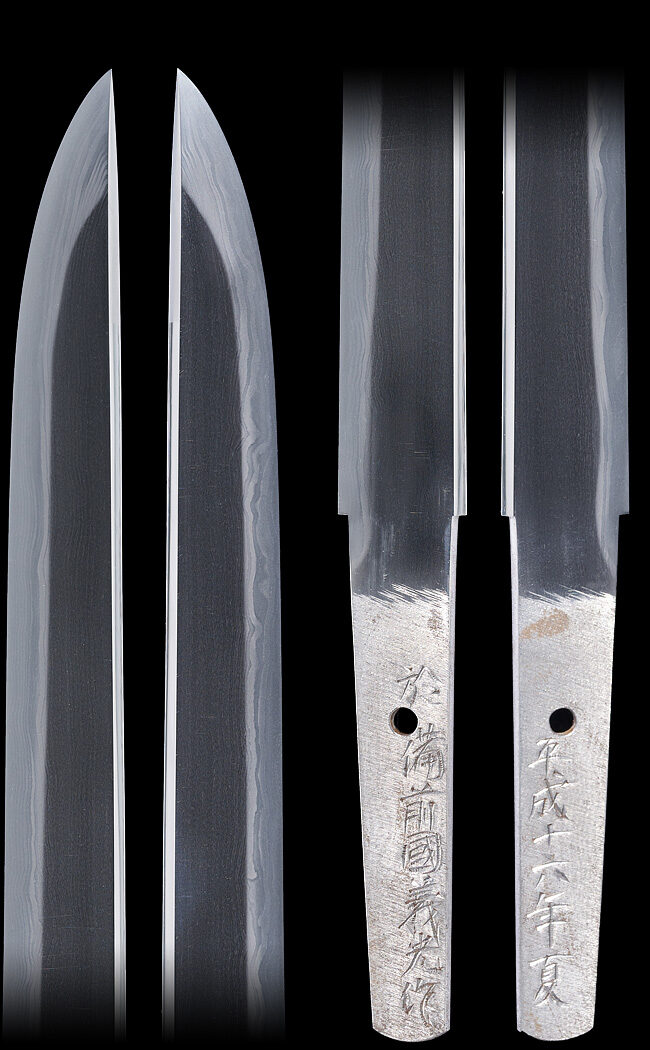
Tantō of 2004 in masame, copy of the Kuwayama Hōshō (桑山保昌, Kuwayama Hōshō). Photo: the smith himself 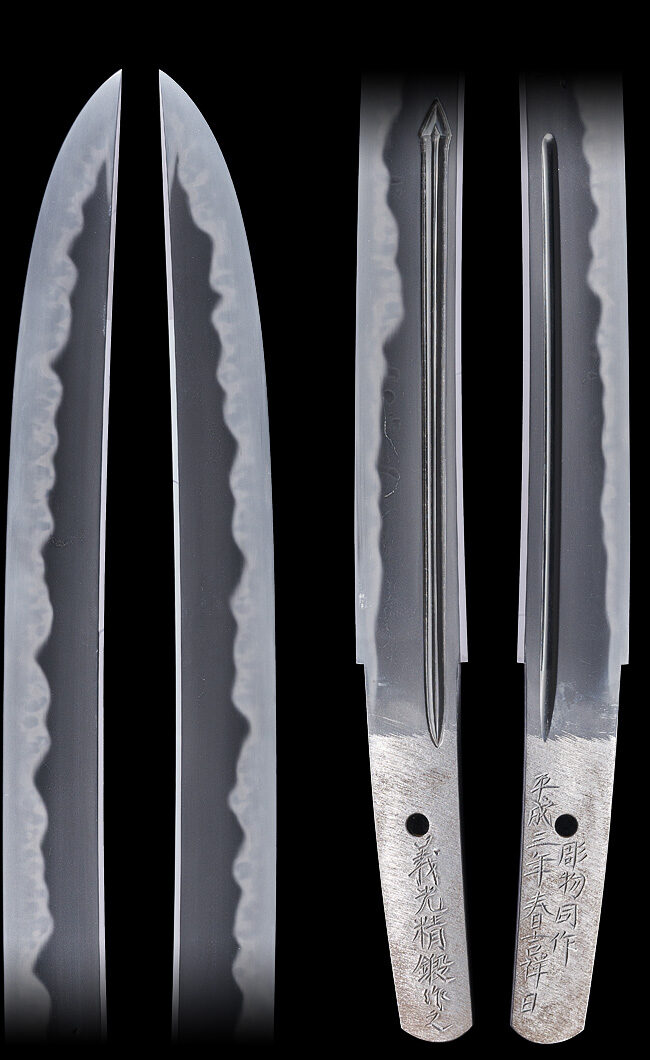
Wakizashi of 1991, with horimono. Photo: the smith himself 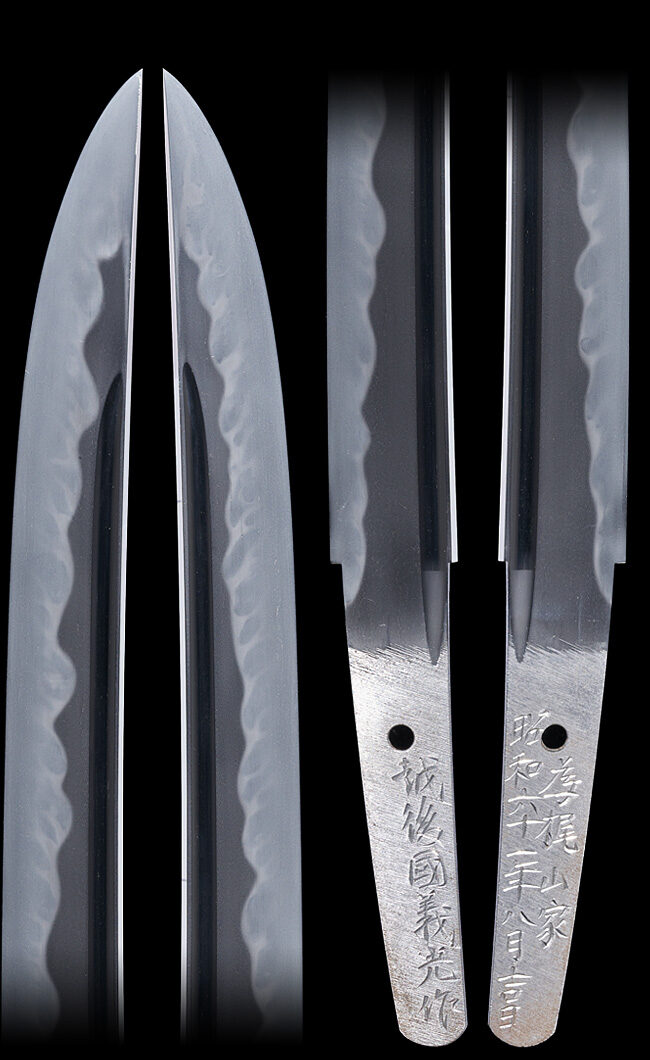
Tantō of 1986, with gunome and saka-chōji. Photo: the smith himself 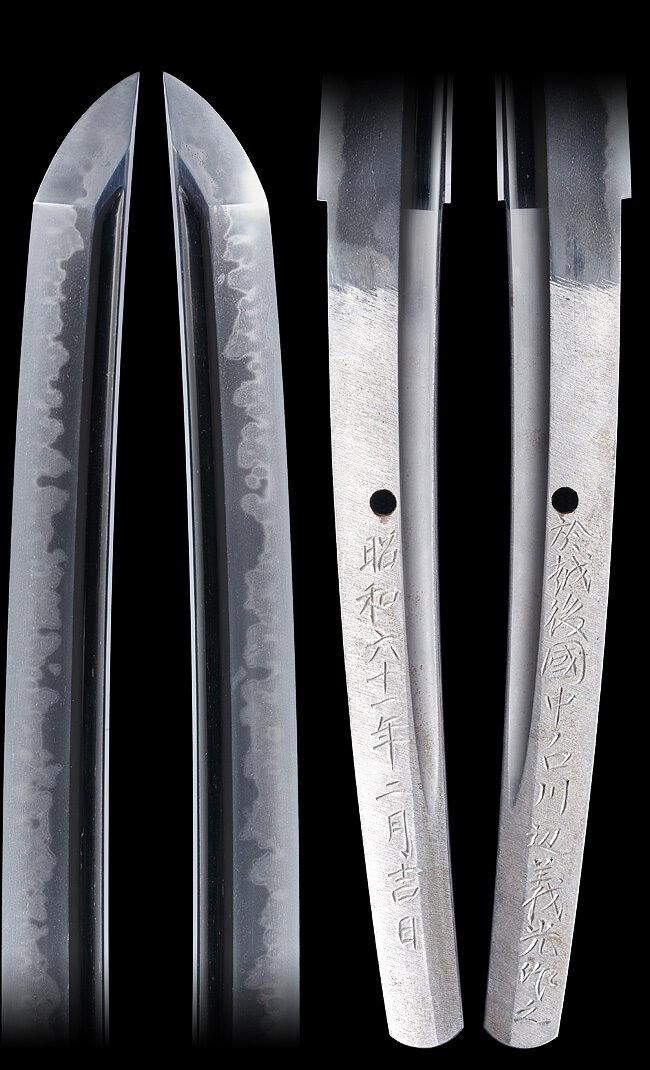
Tachi of 1986 with the inscription “中之口川辺” (Nakanokuchi-gawabe), the river of his childhood. Photo: the smith himself 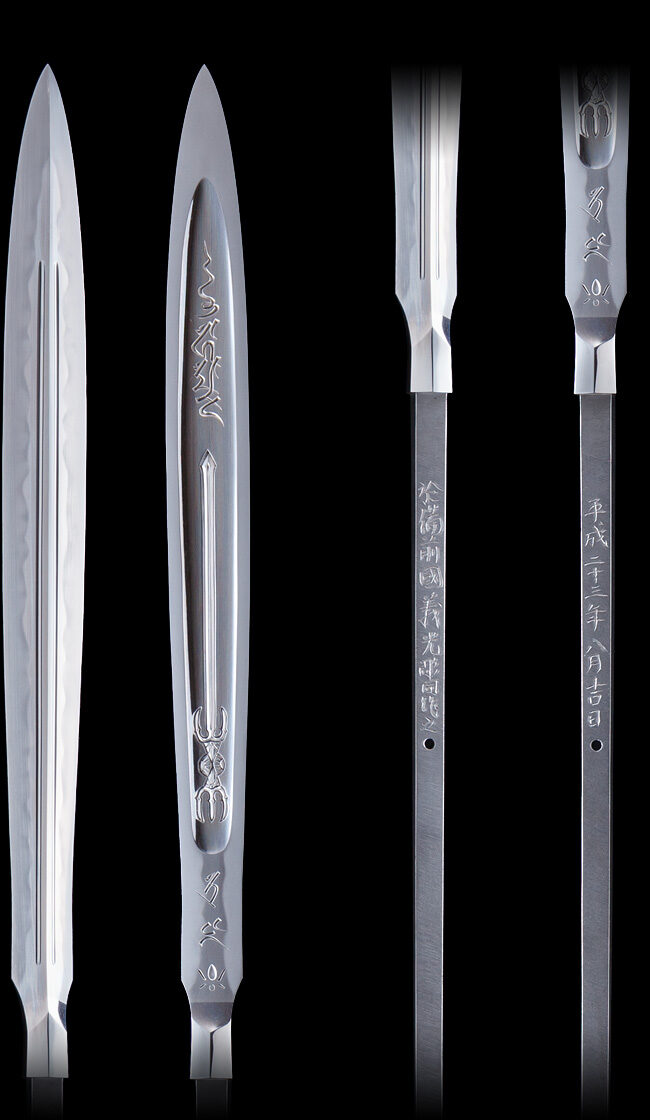
Spear of 2011, copy of the Tonbokiri (蜻蛉切, Tonbokiri), with horimono. Photo: the smith himself
Documented works
- Tachi signed 於越後國義光作之 (oite Echigo no kuni Yoshimitsu kore o tsukuru), autumn 1991: 79.3 cm, sori 3.4 cm, polished by 藤代興里 (Fujishiro Okisato). It is no. 26 in the Heisei no Meitō Meikōten catalogue (2019).
- Tachi of spring 2004, copy of the Sanchōmō, 79.5 cm, signed 於備前國大野義光作之 (oite Bizen no kuni Ōno Yoshimitsu kore o tsukuru).
- Tantō of summer 2004, copy of the Kuwayama Hōshō, 26.0 cm, in masame.
- Fine-suguha tachi of autumn 1991, 76.2 cm, and wakizashi with horimono of spring 1991, 47.3 cm: nos. 1 and 10 in the Hayashibara Museum catalogue.
- Tantō of August 1986, 28.6 cm, with gunome and saka-chōji; tachi of February 1986, 81.0 cm, with large chōji, bearing the inscription “中之口川辺” (Nakanokuchi-gawabe).
- Spear of August 2011, copy of the Tonbokiri, 40.8 cm, with horimono.