On this page
Documented works
| Work | Designation | Where it is |
|---|---|---|
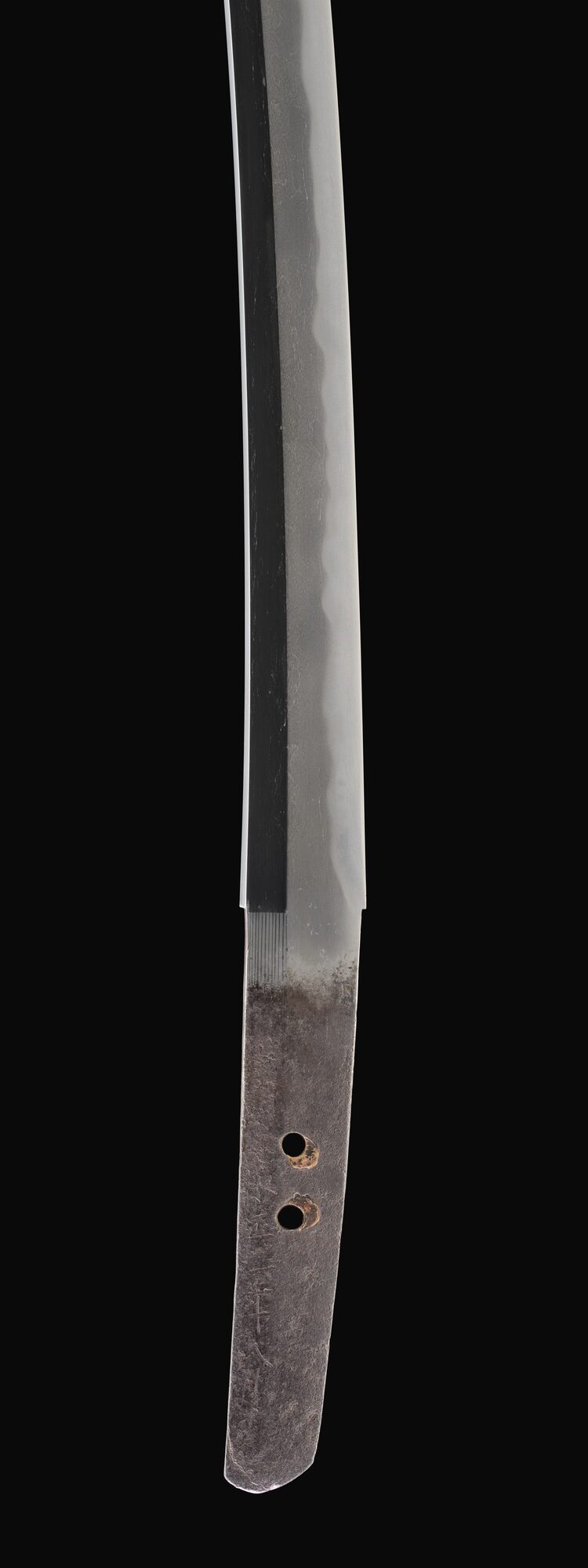
| Katana 備州長舩勝光 (Bishū Osafune Katsumitsu), dated 1505 (永正二年八月日, Eishō ninen hachigatsu hi): 60.6 cm long and 2.0 cm of curvature | Not designated; gift of Kitazaki Tetsurō | Kyūshū National Museum, Dazaifu (F89) |
| Wakizashi made with Munemitsu, signed 備前国住長船左京進宗光 (Bizen no kuni-jū Osafune Sakyō-no-shin Munemitsu) and 次郎左衛門尉勝光 (Jirōzaemon-no-jō Katsumitsu), dated 1508: 1 shaku 7 sun 6 bu, about 53 cm | Jūyō tōken | Private collection |
| Katana signed 備前国住長船次郎左衛門尉藤原勝光作 (Bizen no kuni-jū Osafune Jirōzaemon-no-jō Fujiwara Katsumitsu saku), dated 1509: just under 1 shaku 7 sun 9 bu, about 54 cm, with a kurikara and the inscription of Marishiten | NBTHK study blade | Private collection |
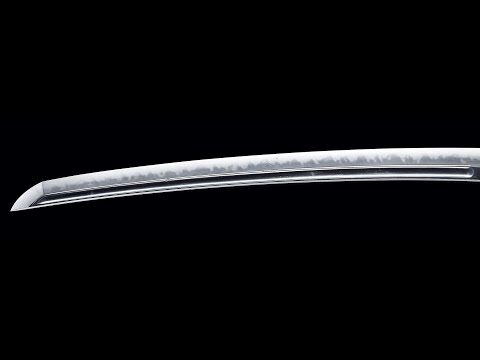
| Wakizashi blade signed Katsumitsu, from the late 15th or early 16th century: 57.6 cm cutting edge and 2.1 cm of curvature | Bequest of George C. Stone, 1935 (36.25.1681) | The Metropolitan Museum of Art, New York |
The katana in the Kyūshū National Museum
Shinogi-zukuri, iori-mune and a medium point; a jigane of itame with masame; a hamon mostly of ko-gunome, with one-sided gunome (片落ち, kataochi); and the signature 俻州長舩勝光 (Bishū Osafune Katsumitsu), without a personal title. That is why it is not known which of the Katsumitsu made it.
With Munemitsu
The NBTHK has published as a study blade a wakizashi signed jointly by Sakyō-no-shin Munemitsu and Jirōzaemon-no-jō Katsumitsu in 1508, designated jūyō tōken: a one-handed uchigatana of the Eishō and Taiei eras, with tight ko-itame, midare-utsuri, open-valley gunome with chōji and square gunome, a kurikara on one side and, on the other, a shiketsu-rendai, a Buddhist symbol. It published it twice, in 2016 and in 2022, with the same signature, the same date and the same measurement. It seems to be the same blade. In the first, the NBTHK converts it to 1509; Eishō 5 is 1508, as the second says.
Sakamoto Ryōma’s wakizashi
The Kōchi Prefectural Sakamoto Ryōma Memorial Museum holds a wakizashi that Ryōma carried, with the signatures of Katsumitsu and Munemitsu of Bizen Osafune. Its curator explains it, with the hamon close up, in a video by the museum.
 Play: 展示資料解説2 (龍馬佩刀 備前長船勝光宗光) (tenji shiryō kaisetsu 2, Ryōma haitō Bizen Osafune Katsumitsu Munemitsu)
展示資料解説2 (龍馬佩刀 備前長船勝光宗光) (tenji shiryō kaisetsu 2, Ryōma haitō Bizen Osafune Katsumitsu Munemitsu) · 高知県立坂本龍馬記念館 (Kōchi Kenritsu Sakamoto Ryōma Kinenkan)
3:09 · 2 September 2021
The museum’s curator explains Ryōma’s wakizashi signed by Katsumitsu and Munemitsu.
In the old lists
- In the cutting list of Yamada Asaemon, the 懐宝剣尺 (Kaihō Kenjaku), 次郎左衛門勝光 (Jirōzaemon Katsumitsu) and 右京進勝光 (Ukyō no Shin Katsumitsu) are in the rank of 良業物 (yoki-wazamono), the third of four, according to the Japanese Wikipedia.
- The sources consulted record no blade of his designated National Treasure or Important Cultural Property.