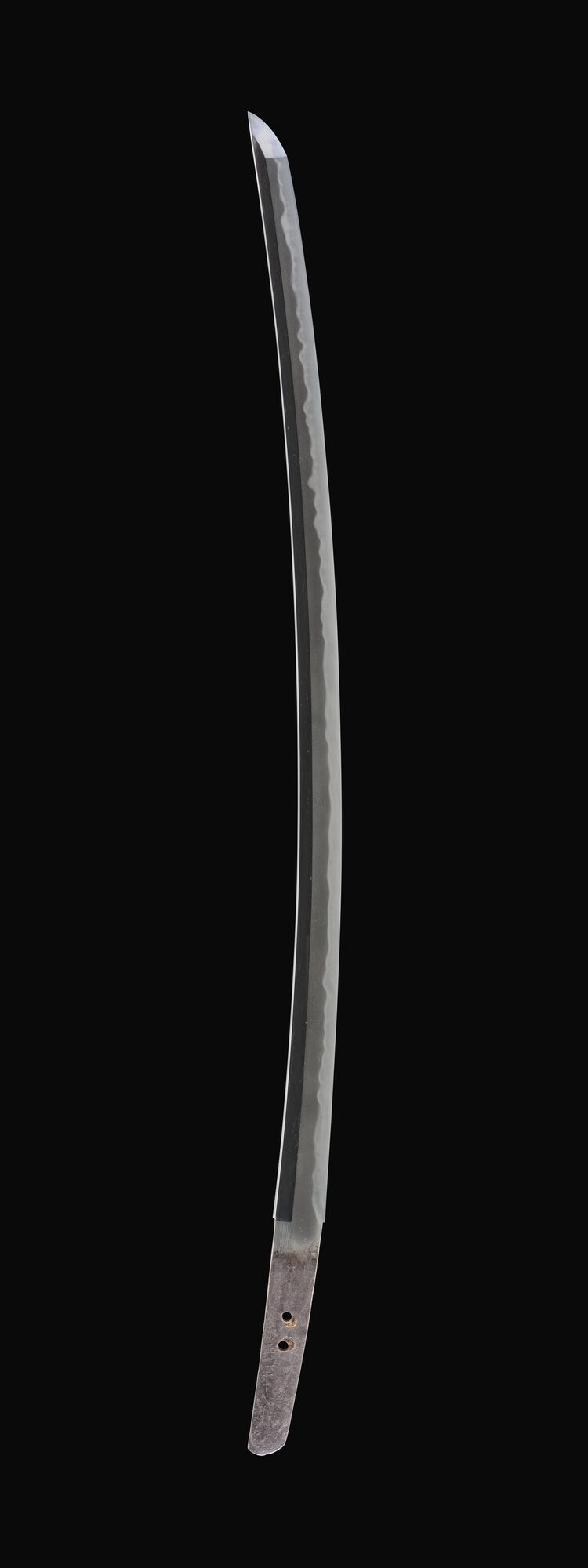
One name, several generations
- Kotobank and the Kyūshū National Museum agree: swordsmiths with the same name followed one another over several generations. Each is told apart by the title he adds to the signature: 右京亮 (Ukyō no Suke), in Kotobank, or 次郎左衛門尉 (Jirōzaemon-no-jō), in the NBTHK.
- For the museum, Katsumitsu seems to have played a central role among the Bizen swordsmiths of his time.
- There is no genealogy of the generations in any of the sources consulted.
1488: the camp at Magari
In 1488 (Chōkyō 2), the ninth shōgun, Ashikaga Yoshihisa, was on campaign in Ōmi Province against the Rokkaku. According to the 蔭涼軒日録 (Inryōken nichiroku), a diary of the time, in its entries for the eighth and ninth months, Katsumitsu brought many Bizen swordsmiths with him to forge for him. Kotobank specifies that it was Ukyō no Suke Katsumitsu, who led the swordsmiths of Osafune and forged in the camp at 鈎 (Magari), today in Rittō (Shiga), uchigatana of about 60 cm with a midare temper.
Another passage of the same diary, in Kotobank, says: 「勝光宗光一党、自備前上洛、凡六十員」 (Katsumitsu Munemitsu ittō Bizen yori jōraku oyoso rokujūin): “the group of Katsumitsu and Munemitsu went up from Bizen to the capital, some sixty people”. The two names led the crew of swordsmiths.
In Sue-Bizen
- Kotobank calls the Osafune of the early Muromachi period, with Morimitsu and 康光 (Yasumitsu), Ōei-Bizen, and what came after, Sue-Bizen, whose best-known names are Tadamitsu, Katsumitsu, Munemitsu, 祐定 (Sukesada) and 清光 (Kiyomitsu). That there were so many swordsmiths with each name suggests a collective workshop production.
- Markus Sesko cites a katana made jointly by Katsumitsu and Munemitsu in 1487 (Bunmei 19).
- According to Sesko, who cites Yokota Takao, engravings of dragons and similar figures are concentrated in series production, above all between the Bunki and Eishō eras (1501–1521).

