Kantei keys
- Sugata
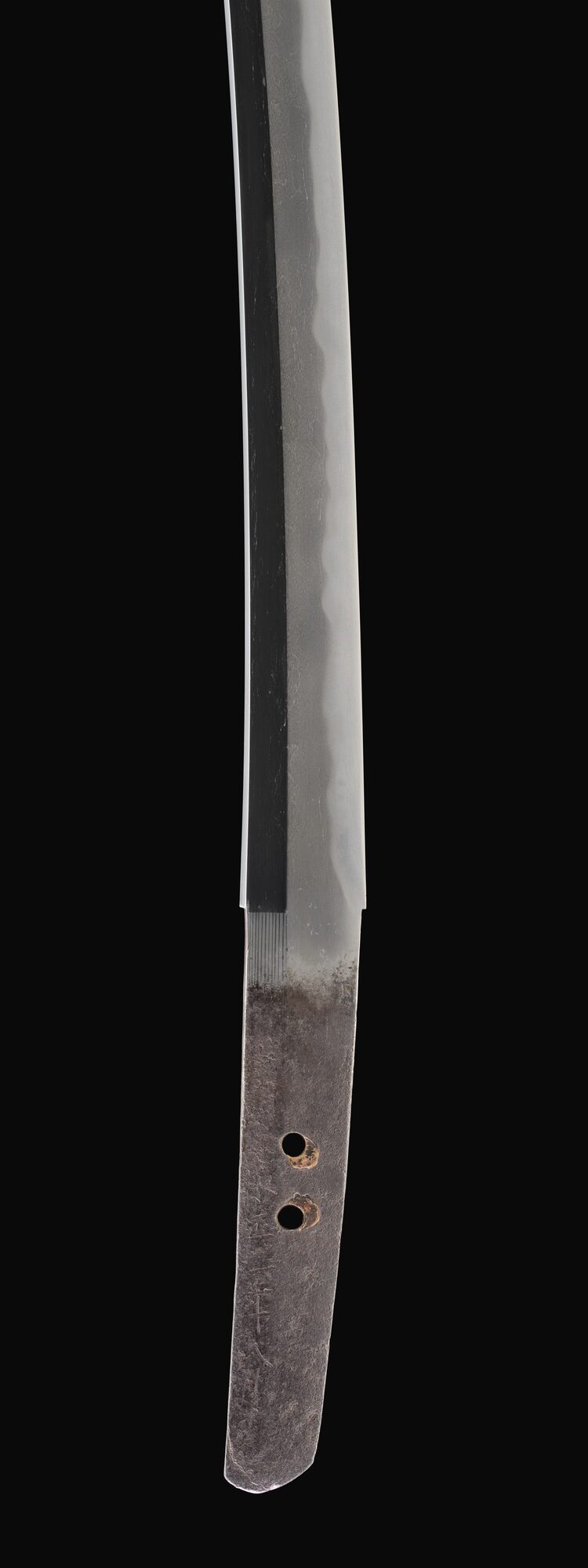
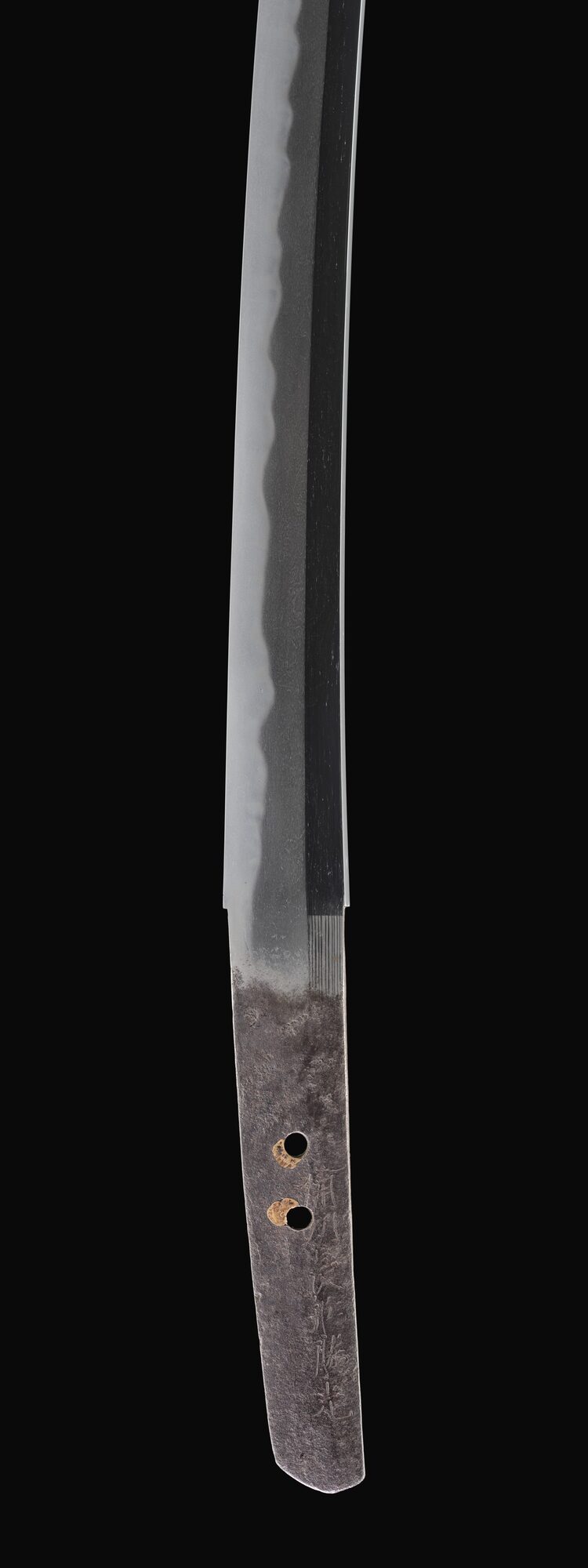
- The one-handed uchigatana (片手打, katate-uchi) of the Eishō and Taiei eras (1504–1527): short, of normal width, with a difference in width between the base and the point, and sakizori. Kotobank speaks of katana of about 60 cm. HD
- Jigane
- Tight, well-forged ko-itame, with fine ji-nie and midare-utsuri, according to the NBTHK; on the Kyūshū katana of 1505, itame with masame HD
- Hamon
- Open-valley gunome mixed with showy chōji, sometimes with square elements; a clear, bright nioiguchi. Among the Sue-Bizen swordsmiths, Katsumitsu tempers a lively chōji-midare relatively often HD
- Bōshi
- Midare-komi with a komaru point and a long turn-back, on the wakizashi of 1508; on the katana of 1505, kuzure with a turn-back on one side and notare-komi with a turn-back on the other HD
- Nakago and mei
- On the katana of 1505: two holes, faint katte-sagari file marks and a kurijiri tip; signature 俻州長舩勝光 (Bishū Osafune Katsumitsu) and, on the other side, the date 永正二年八月日 (Eishō ninen hachigatsu hi) HD
- Horimono
- A kurikara in a style peculiar to Sue-Bizen, which helps to attribute the blade HD
Katsumitsu’s chōji
- The NBTHK sums it up like this: in the hamon of other Sue-Bizen swordsmiths, such as Katsumitsu, midare with prominent chōji abounds; that of Kiyomitsu is based mostly on suguha, and double gunome is the mark of Sukesada.
- On a wakizashi of 1508 made with Munemitsu, the NBTHK recognizes Katsumitsu precisely by the open-valley gunome and the prominent chōji.
- Sesko names Katsumitsu, Munemitsu and Harumitsu as the representatives of an early-16th-century hamon that groups broad-based gunome-midare (腰の開いた, koshi no hiraita) in twos or threes.
The dragon and its tail
The NBTHK dates a type of Sue-Bizen kurikara, in gyō style, with the dragon in profile biting the point of a sword: it appears only between Bunmei 10 and the Eishō era (1479–1520), in swordsmiths such as Katsumitsu, Munemitsu, Tadamitsu and Sukesada. If the tail wraps three times around the sankozuka, the handle of the vajra, the blade is later than the Bunki era (1501–1503); if twice, earlier. According to Sesko, who cites Yokota Takao, engravings of Amaterasu Ōmikami, Hachiman Daibosatsu, Sumiyoshi Daimyōjin and Marishiten also appear on the blades of Katsumitsu, Munemitsu and Sukesada.