Documented works
| Work | Designation | Where it is |
|---|---|---|
| Tachi 来国光 (Rai Kunimitsu), 1327 (Karyaku 2) | National Treasure | Tokyo National Museum (F-21) |
| Tachi 来国光 (Rai Kunimitsu), shortened | National Treasure | Kyūshū National Museum (F1) |
| Tantō “Uraku Rai Kunimitsu” (有楽来国光, Uraku Rai Kunimitsu) | National Treasure | — |
| Katana with a gold attribution by Hon'ami Kōshitsu | Important Cultural Property | Tokyo National Museum (F-17) |
| Katana shortened by Umetada Myōju | Important Cultural Property | Kyoto National Museum (E甲215) |
| Tantō “Shiokawa Rai Kunimitsu” (塩河来国光, Shiokawa Rai Kunimitsu) | Important Cultural Property | — |
| Tantō “Ikeda Rai Kunimitsu” (池田来国光, Ikeda Rai Kunimitsu) | Important Cultural Property | Owner not on record |
| Tantō of the Akimoto family, of 24.5 cm | Important Cultural Property | Owner not on record |
| Tachi | Important Cultural Property | Shiogama shrine (鹽竈神社, Shiogama Jinja), Miyagi |
| Tachi | Important Cultural Property | Futarasan shrine (二荒山神社, Futarasan Jinja), Nikkō |
| Tachi | Important Cultural Property | Akiba-san Hongū Akiba Jinja (秋葉山本宮秋葉神社), Hamamatsu |
| Tantō | Important Cultural Property | Hiro Hachiman shrine (広八幡神社, Hiro Hachiman Jinja), Wakayama |
| Unsigned katana attributed to Kunimitsu | Important Cultural Property | Fukuyama Museum of Art (ふくやま美術館, Fukuyama Bijutsukan) |
| Tachi of the Matsubara shrine (Saga), another of the Maeda house and a tantō of 1330 | Important Cultural Property | Whereabouts unknown according to the Japanese Wikipedia |
| Jūyō Tōken tachi of about 68.8 cm | NBTHK Jūyō Tōken | Exhibited at the NBTHK Sword Museum in 2019 |
The three National Treasures
The 1327 tachi came from the Tokugawa shōgun: in 1899 Tokugawa Iesato gave it to the crown prince, the future Emperor Taishō. Sesko gives it a nagasa of 78.8 cm and a sori of 3.6 cm; e-Museum and ColBase, 79.1 and 3.5 cm.
The Kyūshū tachi measures 80.7 cm: it belonged to the Matsudaira house (Matsudaira Tadaaki, of Himeji, in 1639), then to the Iwasaki and to Yamagata Aritomo, who gave it to the Emperor Meiji in 1885; from there it passed to the museum. Sesko gives it as 80.6 cm and believes that before it was shortened it exceeded 90.
The “Uraku” tantō belonged to Oda Urakusai Nagamasu (1547-1622). The page on the Rai school in the Japanese Wikipedia says that Toyotomi Hideyoshi gave it to him; another page of the same Wikipedia, that it was Toyotomi Hideyori.
The named tantō
Three tantō bear meibutsu names: the “Uraku”, a National Treasure; the “Shiokawa”, with a habaki signed by Umetada Jusai, and the “Ikeda”, of 26.3 cm and in kanmuri-otoshi-zukuri, which belonged to Ikeda Terumasa (1564-1613); the last two are Important Cultural Properties. It remains to be confirmed that all three appear in the Kyōhō meibutsuchō (享保名物帳, Kyōhō meibutsuchō) and not in a later supplement.
The count
Sesko counts 26 works designated by the State (3 National Treasures and 23 Important Cultural Properties) and slightly more than 200 by the NBTHK: some 180 Jūyō Tōken and more than 20 Tokubetsu Jūyō Tōken. With that he equals his father. The Kyūshū National Museum gives 3 National Treasures and 21 Important Cultural Properties. The difference may be due to the date of the count or to the works whose whereabouts are unknown.
He does not appear in the Yamada cutting list: the Kunimitsu who appears in it is 摂州国光 (Sesshū Kunimitsu), another swordsmith. Between 1998 and 2024, the 誌上鑑定 (Shijō Kantei), the kantei competition of the NBTHK journal, proposed blades of his in four rounds: two different blades in all.
Gallery
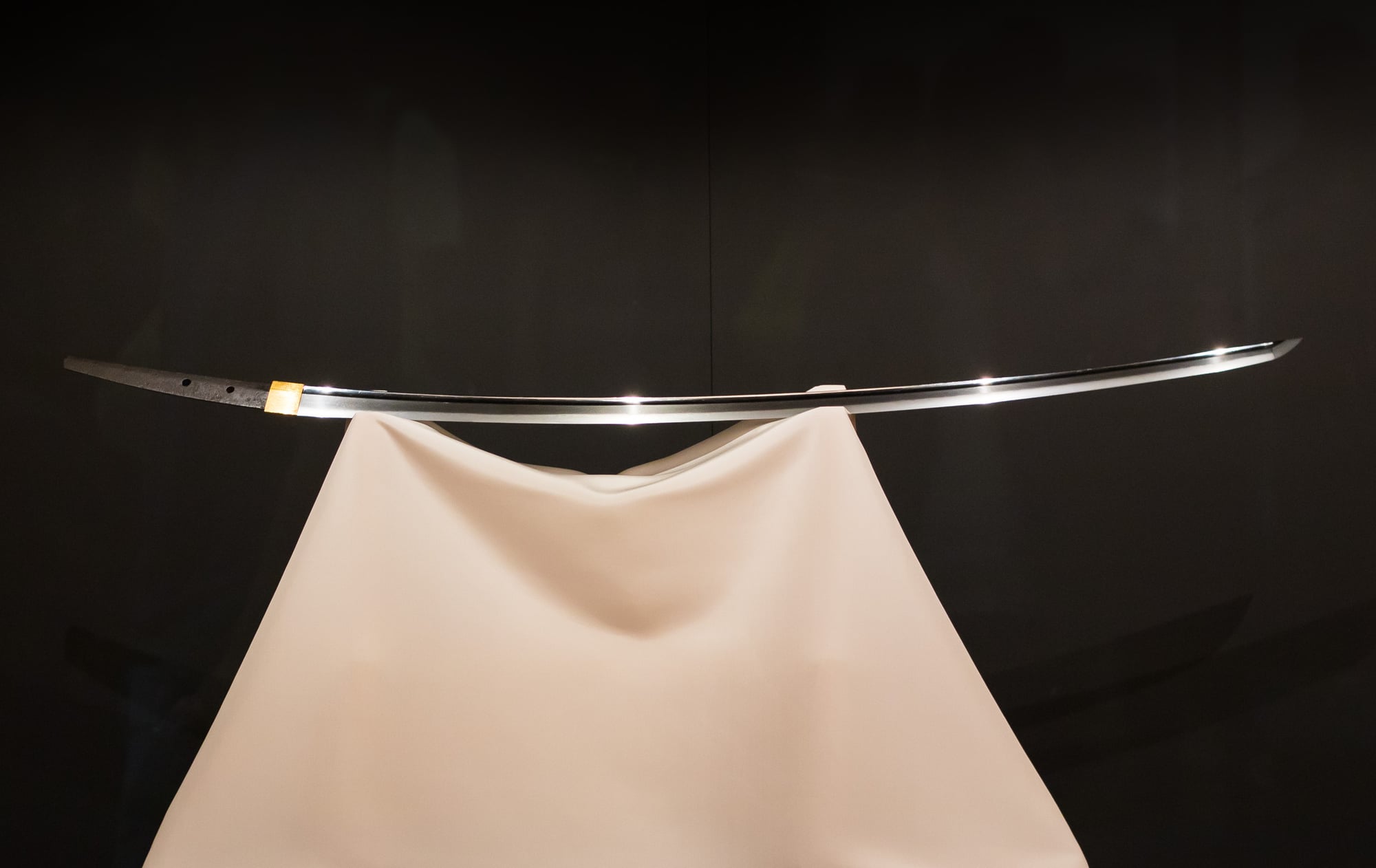
The 1327 tachi on display. Kakidai, CC BY-SA 4.0, via Wikimedia Commons · CC BY-SA 4.0 · source 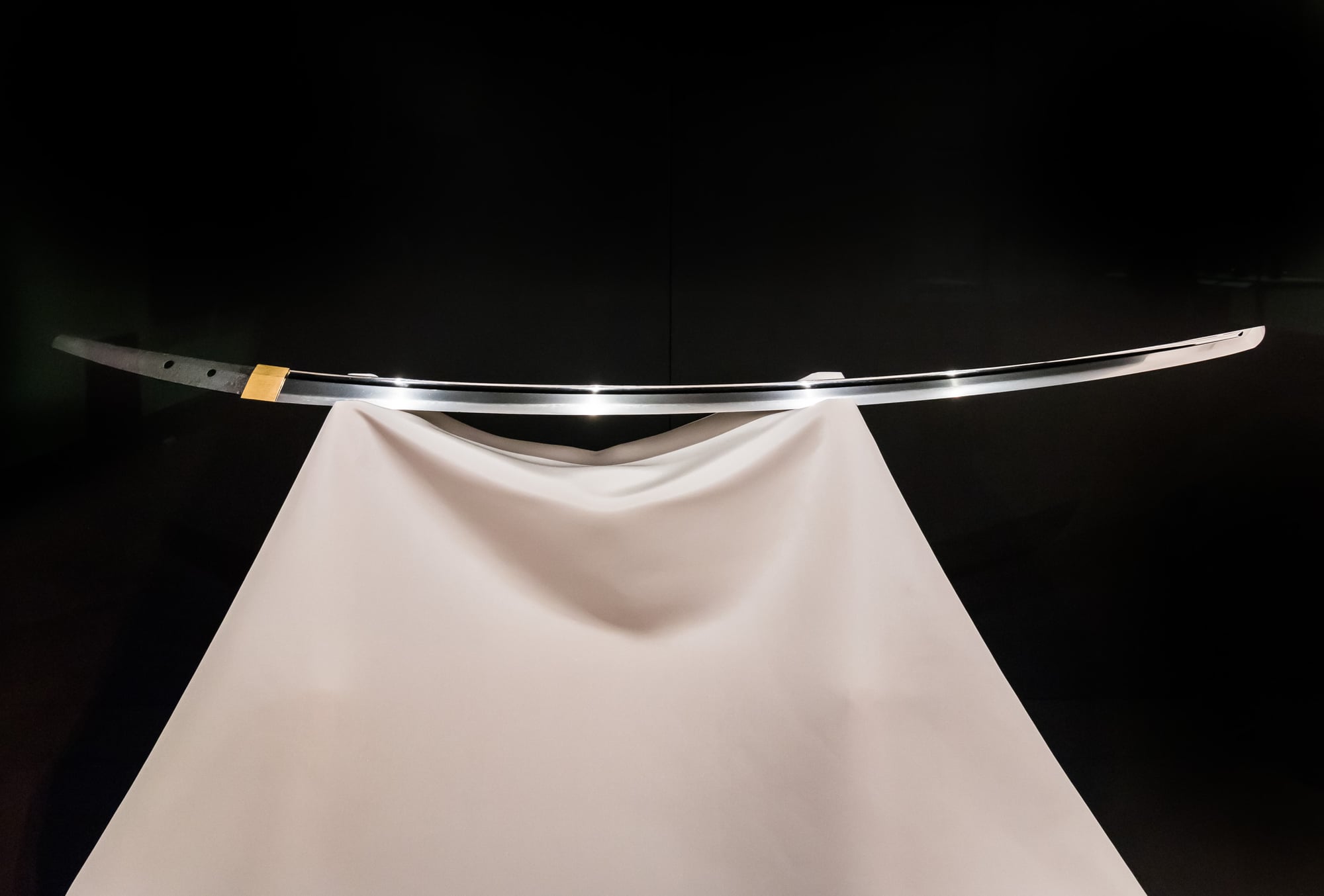
The 1327 tachi, another view. Kakidai, CC BY-SA 4.0, via Wikimedia Commons · CC BY-SA 4.0 · source 
The 1327 tachi, from the other side. Tokyo National Museum, via ColBase · ColBase terms of use · source 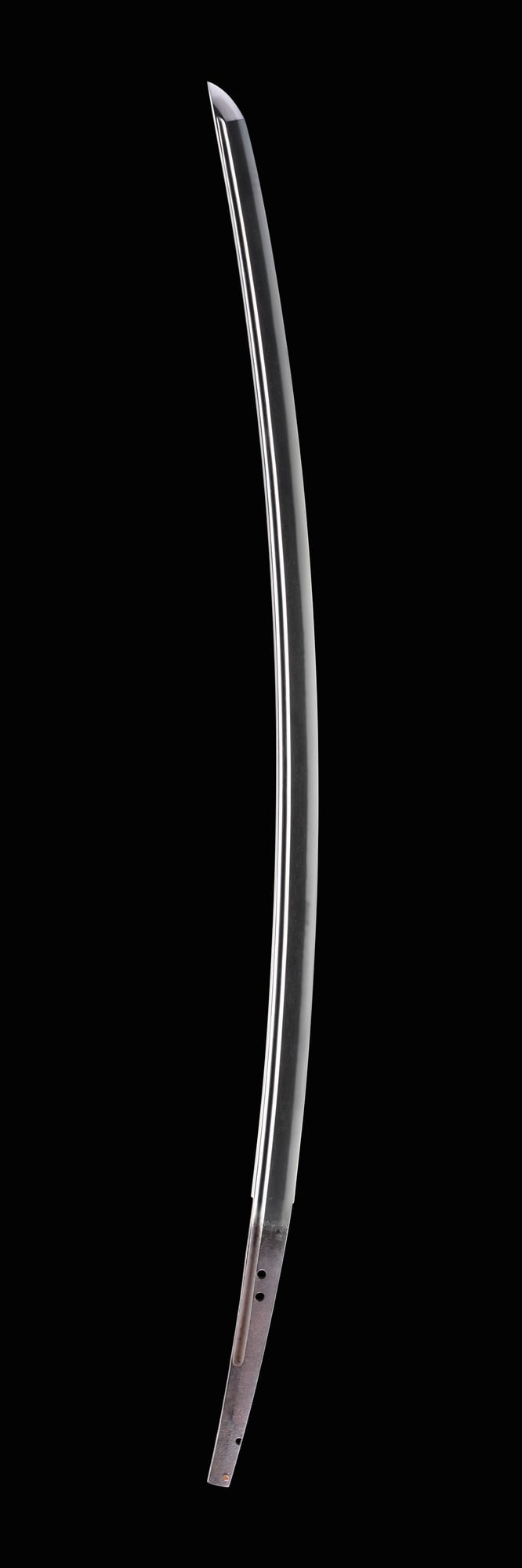
Shortened tachi, National Treasure. Kyūshū National Museum. Kyūshū National Museum, via ColBase · ColBase terms of use · source 
Katana with the attribution to Kunimitsu in gold by Hon'ami Kōshitsu, Important Cultural Property. Tokyo National Museum. Tokyo National Museum, via ColBase · ColBase terms of use · source 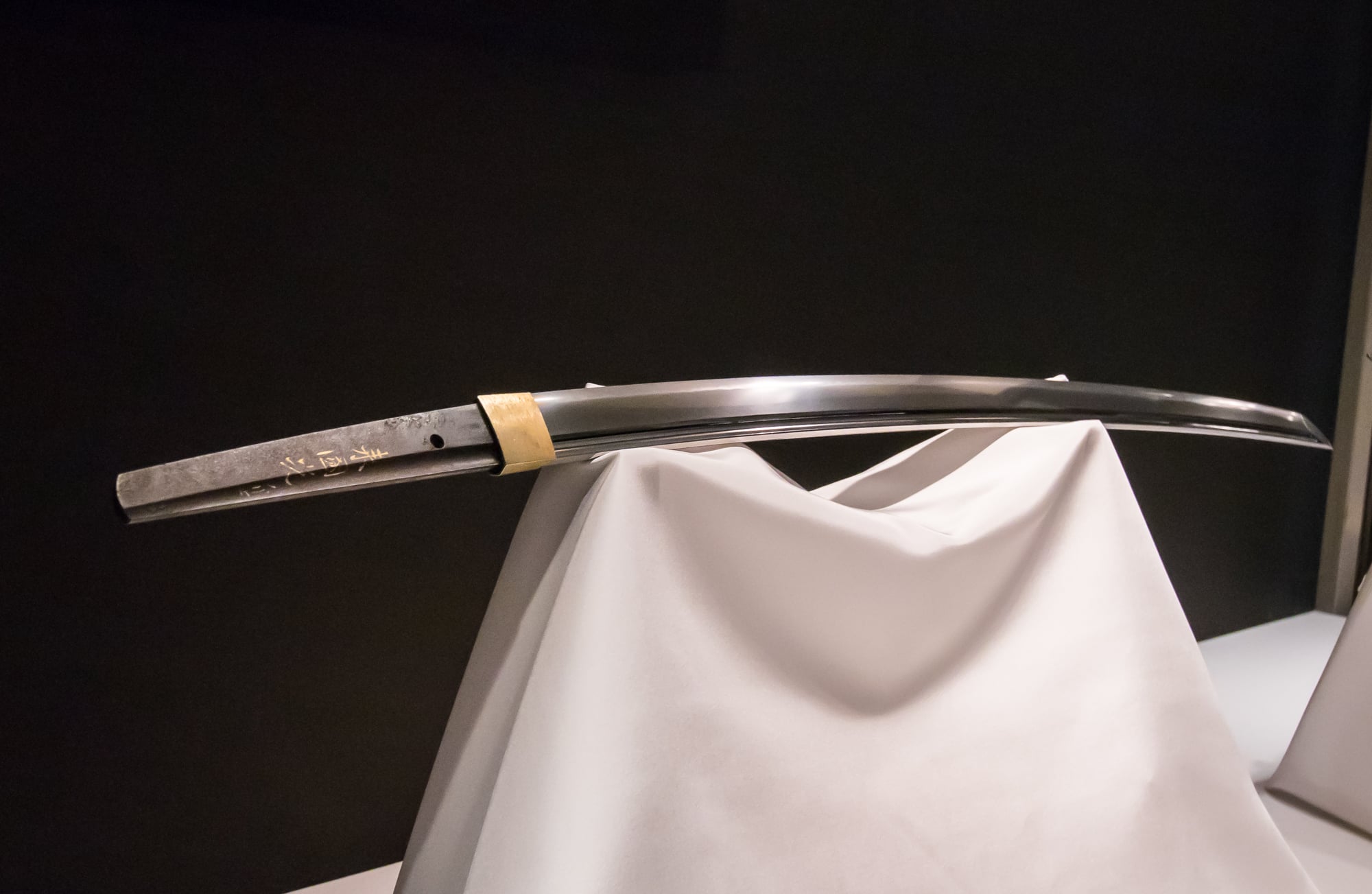
The same katana on display, with the gold inscription on the tang. Kakidai, CC BY-SA 4.0, via Wikimedia Commons · CC BY-SA 4.0 · source 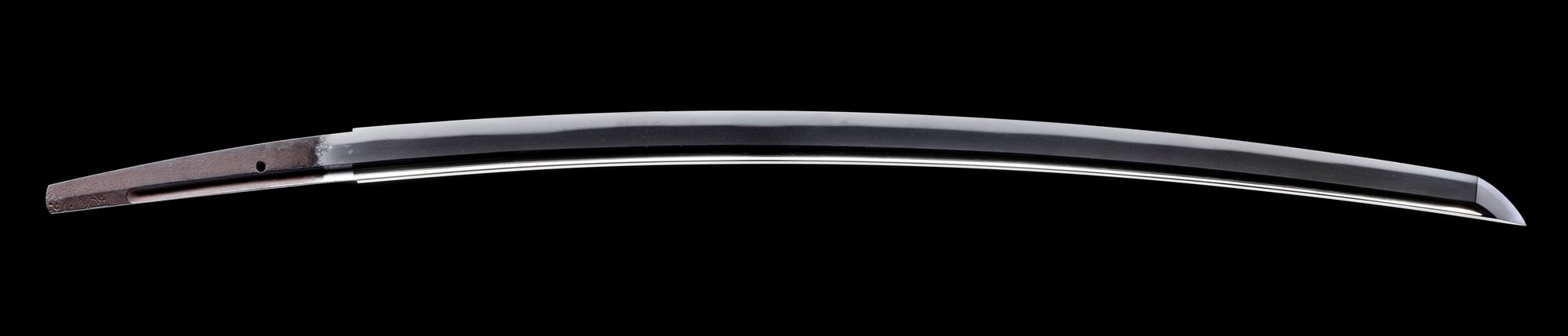
Katana shortened by Umetada Myōju, Important Cultural Property. Kyoto National Museum. Kyoto National Museum, via ColBase · ColBase terms of use · source


