Sugata
He made some classical, slender tachi with a small chū-kissaki, but most have an elongated chū-kissaki and a width that narrows little: they are wider and showier than Kunitoshi’s and herald the taste of the Nanbokuchō. Sesko sees in the sugata the key to telling him apart from his father. The signed blades tend towards the classical: the widest and most majestic were longer, were shortened (磨上, suriage) and lost their signature. The 1327 tachi is ubu, with deep toriizori, funbari and chū-kissaki; for the Tokyo National Museum, strongly curved and one of Kunimitsu’s best works.
Jihada
Very dense ko-itame with plenty of ji-nie and a reflection of nie (沸映り, nie-utsuri). Sesko associates Rai-hada (来肌, Rai-hada) with Kunimitsu from the outset: areas of softer, less carefully worked steel on one or both sides, from the monouchi to the yokote in the long blades and, in the tantō, where the grooves end. The Kyūshū tachi, on the other hand, has no weak areas: a very dense ko-itame with masame and plenty of ji-nie.
Hamon
Sesko distinguishes three manners in the long blades: a suguha mixed with ko-chōji and ko-gunome; an almost pure suguha, with ashi and some nijūba or kuichigai-ba, and an undulating suguha with layered hataraki, in the Yamato manner, reminiscent of Rai Kuniyuki. Compared with Kunitoshi, his temper line is somewhat tighter and more defined, with loose stretches of nijūba and kuichigai-ba. The Japanese Wikipedia adds that, towards the Nanbokuchō, there are midare with strong nie under the influence of Masamune’s Sōshū tradition, above all in the tantō. The 1327 tachi has a hiro-suguha in ko-nie mixed with ko-chōji, ko-gunome, ashi, yō and some kinsuji. The Tokyo National Museum sees it as calm and faithful to the style of Rai Kunitoshi, and recalls that Kunimitsu also had much more undulating hamon. According to tradition, Kunitoshi was his father.
Bōshi
In the long blades the bōshi is straight with ko-maru-kaeri, sometimes with kuichigai-ba; in the “Uraku” tantō, a pronounced midare-komi with a long, pointed turn-back that tends towards a flame. For Sesko, the bōshi is what Kunimitsu emphasises most, and what separates him from Rai Kunitsugu, whose bōshi is usually calm even when the hamon is very midare.
Nakago, mei and horimono
He signs 来国光 (Rai Kunimitsu), and on the dated tachi he writes the date straight after, on the same line, like his father. The blades that some attribute to a second Kunimitsu bear a smaller, finer signature. The bōhi is almost obligatory on his tachi and katana; on heavily shortened blades it runs through the tang. On the 1327 tachi it ends at a right angle at the machi; on the Kyūshū one, rounded inside the tang, because of the shortening. The tantō are of great variety, almost all hira-zukuri with mitsu-mune, with grooves or carvings and, the most conservative ones, with the curved furisode-type tang (振袖, furisode).
Who he is confused with
Sesko warns that he can be confused with Rai Kunitsugu, because of the showy midare, and the bōshi gives him away; and, in tantō with nijūba, with Awataguchi Kuniyoshi or Yoshimitsu.
Details
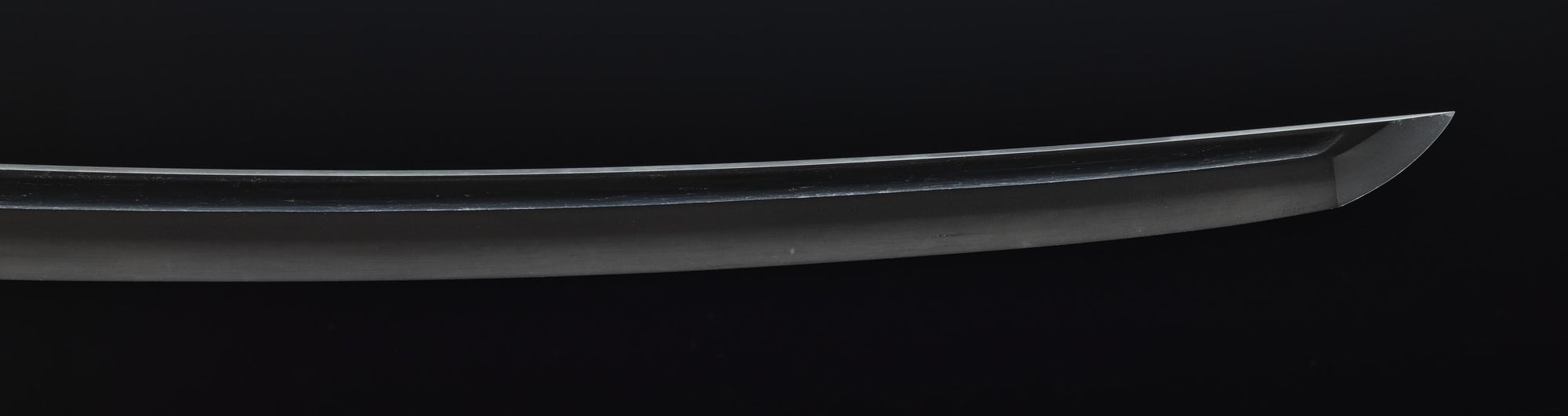
The point and the bōshi of the 1327 tachi. Tokyo National Museum, via ColBase · ColBase terms of use · source 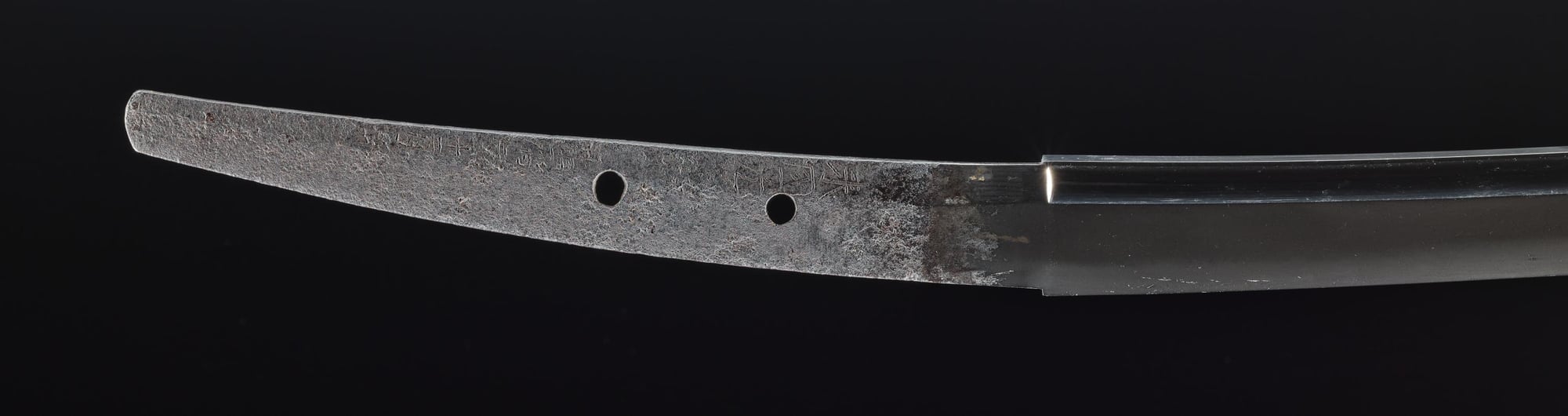
The tang of the 1327 tachi, with the signature and the date on a single line. Tokyo National Museum, via ColBase · ColBase terms of use · source 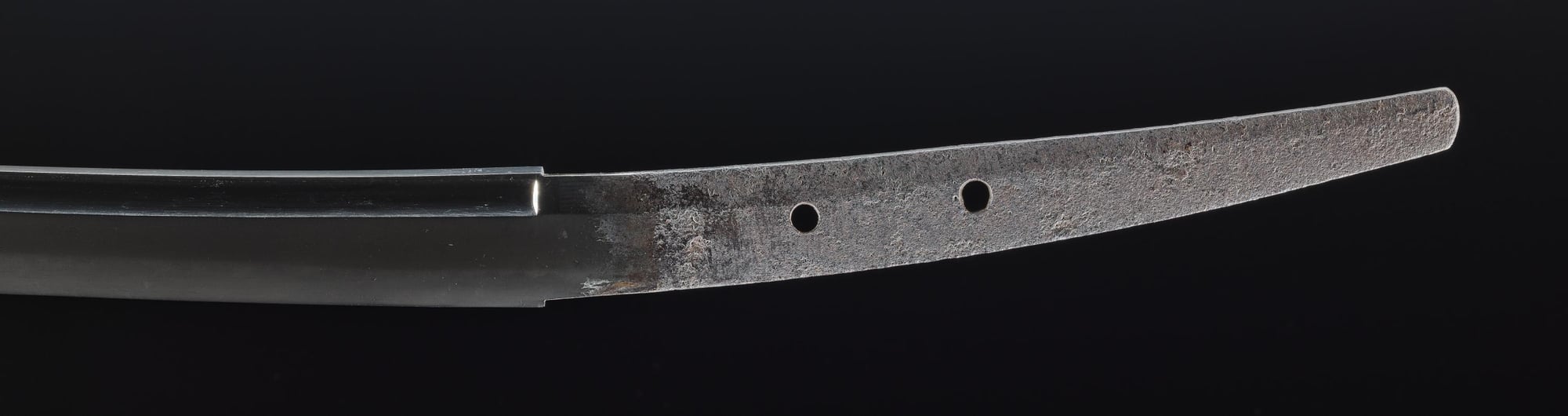
The tang of the 1327 tachi, from the other side. Tokyo National Museum, via ColBase · ColBase terms of use · source 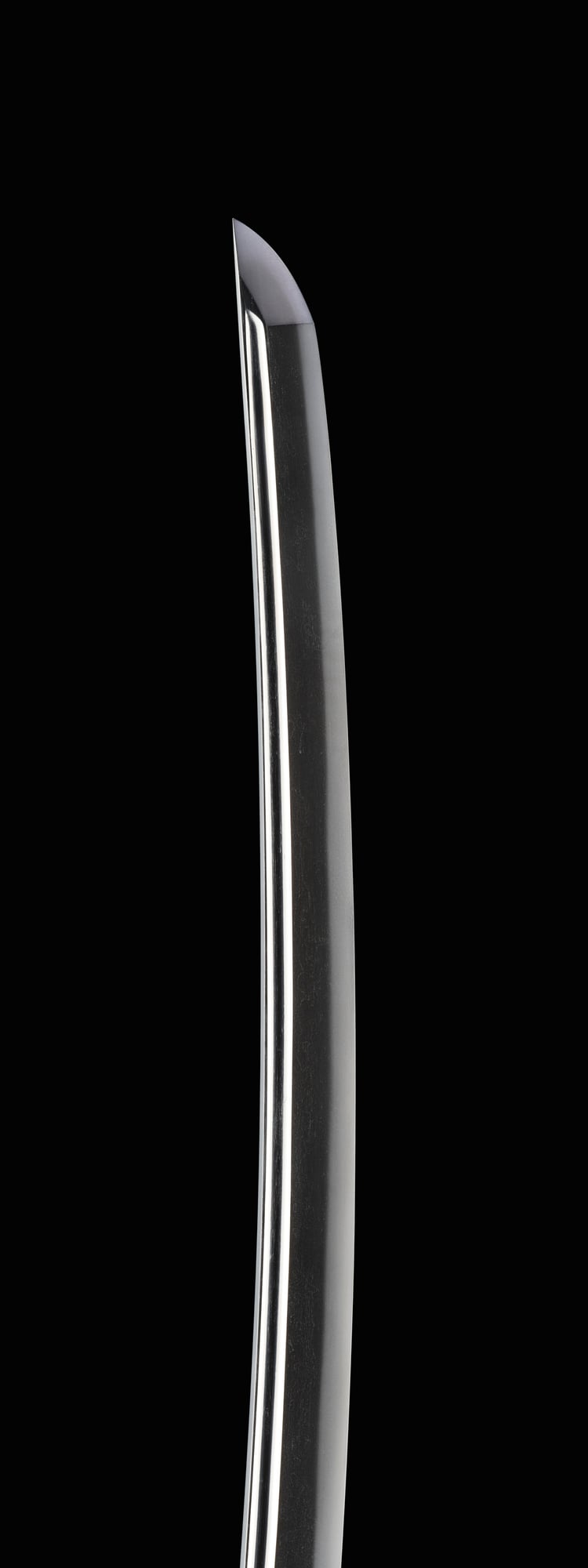
The upper part and the point of the Kyūshū tachi. Kyūshū National Museum, via ColBase · ColBase terms of use · source 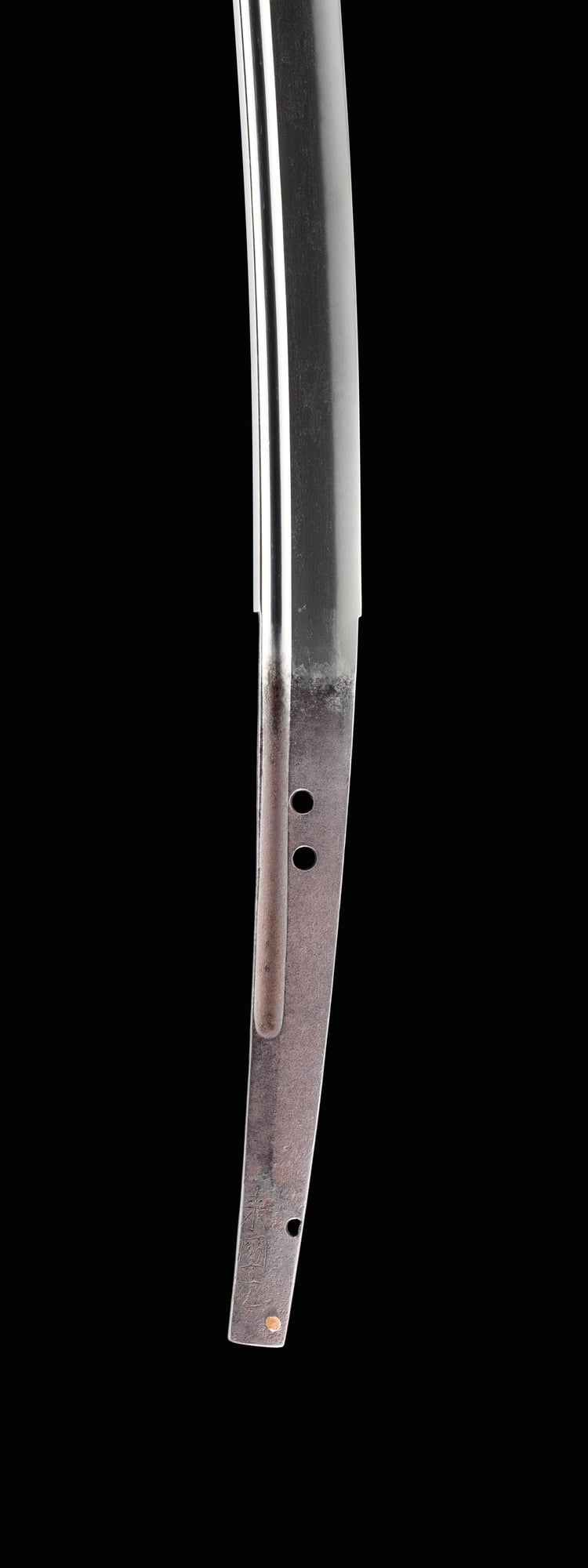
The shortened tang of the Kyūshū tachi. Kyūshū National Museum, via ColBase · ColBase terms of use · source