Two manners
Sesko speaks of two overlapping phases: that of Niji Kunitoshi, until around 1290, with a wide sugata, a boar’s-neck point (猪首切先, ikubi-kissaki) and showy chōji, and that of Rai Kunitoshi, with a slender blade and suguha. The change follows the fashion of the time. For the Tokyo National Museum, his 1278 tachi is a typical piece of Niji Kunitoshi, robust and with showy chōji, and the 1321 one, a typical example of the three-character manner, with ko-itame and suguha. In another record it recalls that some take them for the same person and some for two.
Sugata
The tachi have toriizori, with the curve in the centre, funbari and chū-kissaki. The tantō measure between 18 and 30 cm, most of them 21 to 24, and there are also some in shōbu-zukuri and kanmuri-otoshi-zukuri. From Kunitoshi on, tantō are plentiful. In the tantō, the grooves run somewhat further from the mune than in Awataguchi: it is one of the things that set Rai apart from Awataguchi.
Jihada
In the Niji phase, ko-itame with ji-nie and a faint nie-utsuri. In the Rai phase, dense ko-itame with ji-nie, nie-utsuri and some Rai-hada (来肌, Rai-hada), areas of weaker forging on one or both sides, a kantei feature of the school.
Hamon
In the Niji phase, ō-chōji or chōji-gunome in ko-nie, with many ashi and yō, sometimes with tobiyaki that almost form a nijūba. In the Rai phase, a suguha in ko-nie with ko-chōji, ko-gunome, sunagashi, muneyaki and ashi that slant towards the tang; the nioiguchi, tight and bright.
Bōshi
In the Niji phase, midare-komi with ko-maru-kaeri or yakizume. In the Rai phase, straight with a long ko-maru-kaeri, Tanobe’s “Fuji” shape: the turn-back is longer on the omote side than on the ura, like the silhouette of Mount Fuji.
Nakago and mei
In the Niji phase, the three short strokes inside 国 (kuni) cling to the upper left corner; with the “Rai” signature he lengthens them progressively. 来 (Rai) has at the top three parallel horizontal strokes, which in the Shōwa era (1312-1317) slant from upper right to lower left, and in Bunpō, Gen'ō and Genkō return to the earlier slant. The 1278 tachi bears the signature on the omote side and the date on the ura. The tantō have an ubu tang, of furisode shape (振袖形, furisode-gata). The one at the Kurokawa Institute, of 24.5 cm, ends in a straight cut, has faint katte-sagari file marks, two mekugi holes and the three-character signature on the omote, with goma-bashi (護摩箸, goma-bashi) carvings on the omote and koshi-hi (腰樋, koshi-hi) on the ura.
Details
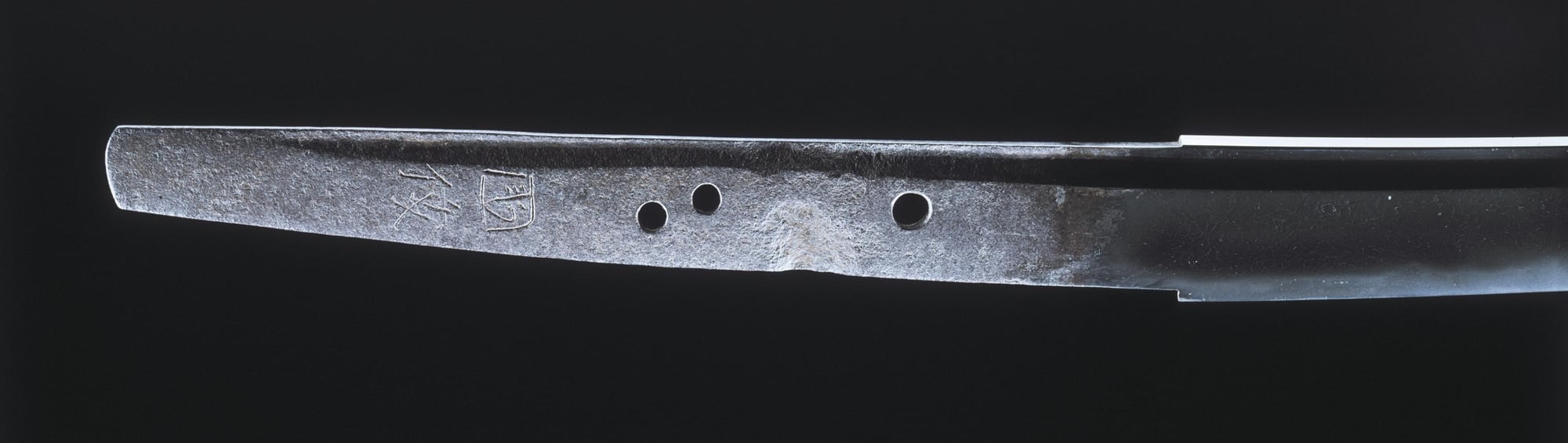
The tang of the 1278 tachi, with the signature 国俊 (Kunitoshi). Tokyo National Museum, via ColBase · ColBase terms of use · source 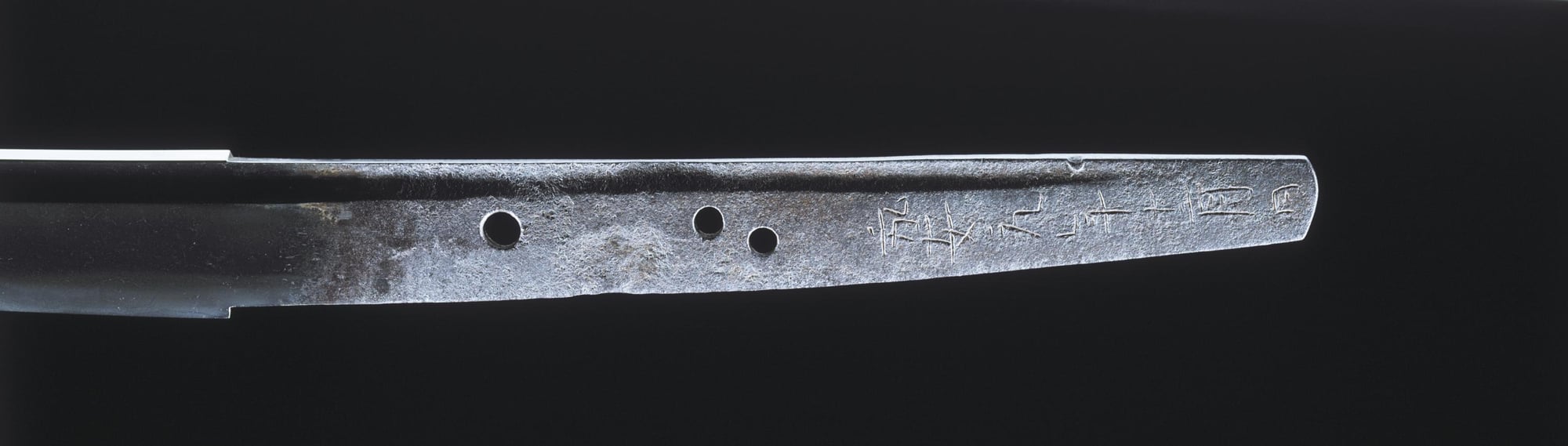
The other side of the tang, with the date 弘安元年十二月日 (Kōan gannen jūnigatsu hi). Tokyo National Museum, via ColBase · ColBase terms of use · source 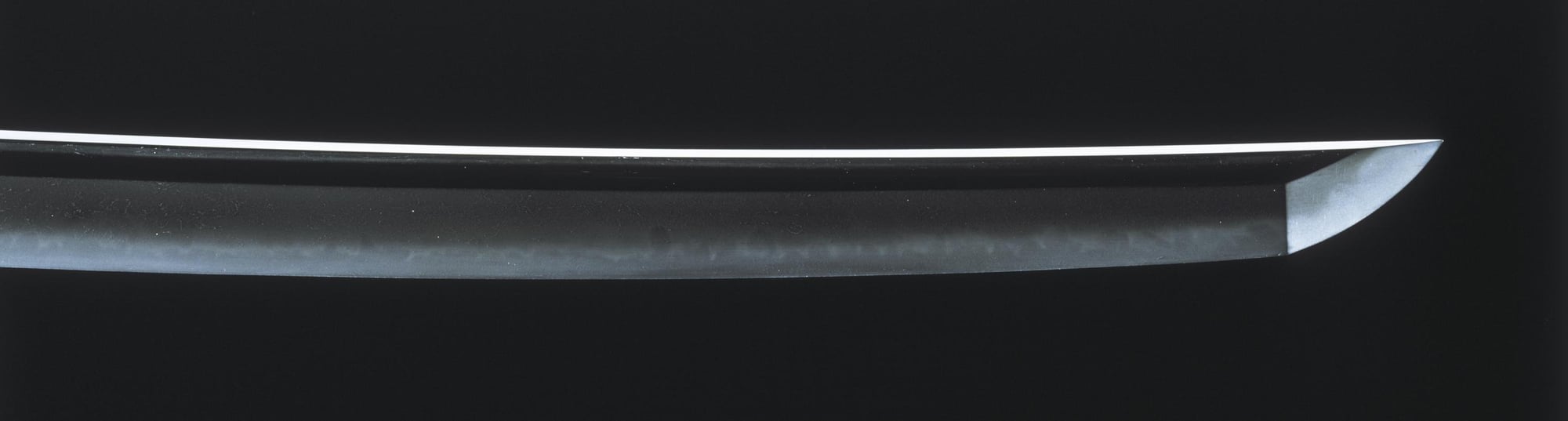
The point of the 1278 tachi. Tokyo National Museum, via ColBase · ColBase terms of use · source 
Tantō signed 来国俊 (Rai Kunitoshi). Kyoto National Museum. Kyoto National Museum, via ColBase · ColBase terms of use · source