On this page
Sugata
Almost all his work is tachi; hardly any tantō remain (Sesko speaks of a couple) and there is the odd kodachi and the odd stocky uchigatana. The typical tachi is wide, with koshizori (a high curvature, at the waist) or toriizori, with funbari and a chū-kissaki of the ikubi type (猪首, ikubi, “boar’s neck”); there are also finer, slender ones. For Sesko, his most common vein is the magnificent, robust one, with an ikubi-kissaki and a lively jiba; his first pieces, more sober, link up with the earlier masters of Kyoto.
Jihada
Dense ko-itame with plenty of ji-nie, sometimes with mokume, ō-hada and nagare; nie-utsuri or midare-utsuri, fine chikei and, on some pieces, jifu.
Hamon
A ko-nie suguha with ko-midare, ko-chōji, ashi and yō, sometimes with very small, tightly packed chōji, or a showier chōji-midare; on the slender pieces, the nioiguchi is wide. His kantei features: the karimata (small half-moon-shaped uchinoke above the habuchi, which link him to Awataguchi Kuniyasu, Kunikiyo and Ayanokōji Sadatoshi), the muneyaki and the nijūba in the bōshi.
Bōshi
Suguha or notare-komi with ko-maru-kaeri and hakikake; sometimes the kaeri is so short that it looks like yakitsume.
Nakago and mei
He signs with two characters, 国行 (Kuniyuki), without placing 来 (Rai) in front. The nakago is usually unshortened. Many blades bear a bōhi ending in kaki-nagashi on the nakago.
Kantei keys
The pieces with midare-utsuri and a showy hamon can recall Bizen, but Sesko warns that they have too much nie for a mid-Kamakura Bizen; and the sugata, with a koshizori that fades towards the point, separates Ko-Bizen from his tachi.
The tachi of the Kyūshū National Museum
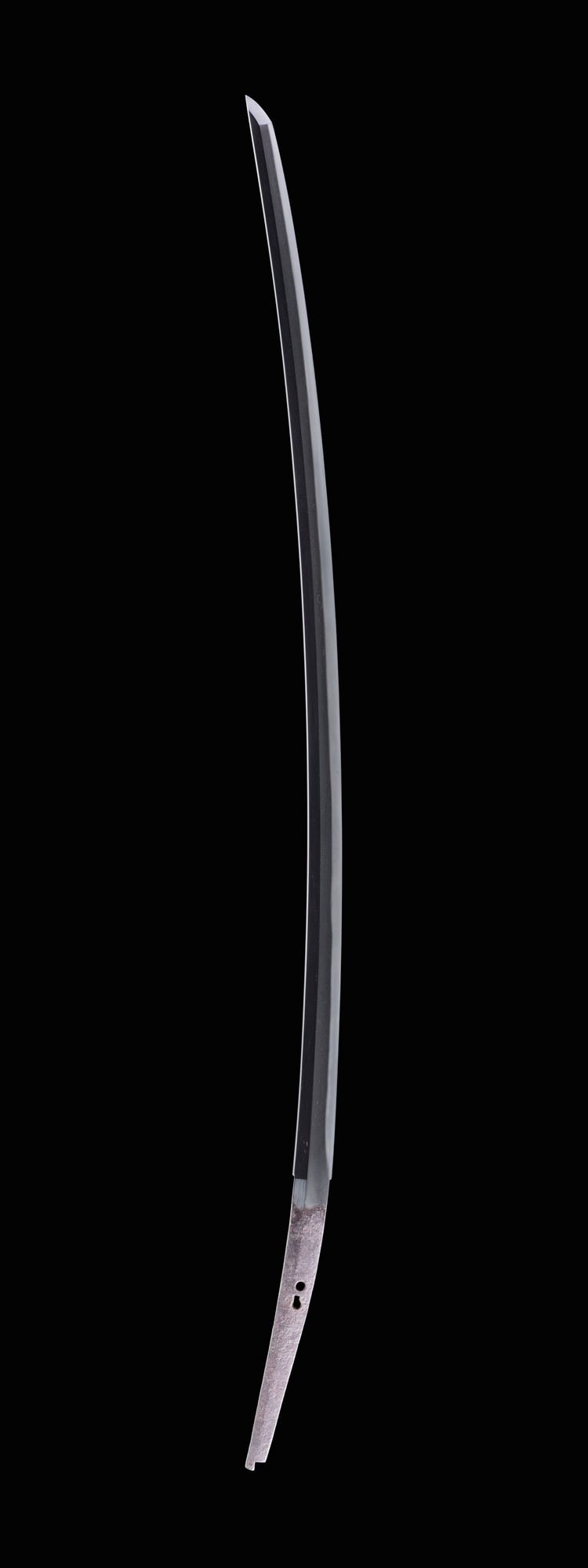
Tachi signed 国行 (Kuniyuki) of the Kyūshū National Museum: one side. Kyūshū National Museum, via ColBase · ColBase terms of use · source 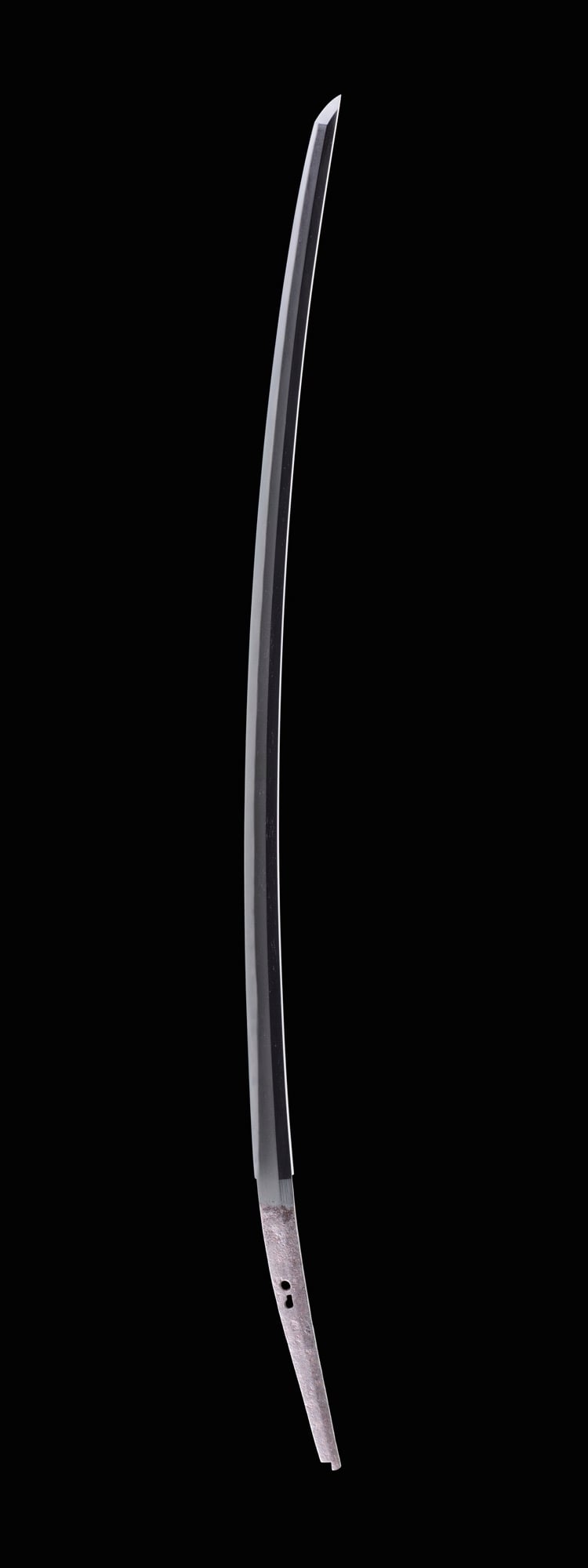
The same tachi, from the other side. Kyūshū National Museum, via ColBase · ColBase terms of use · source 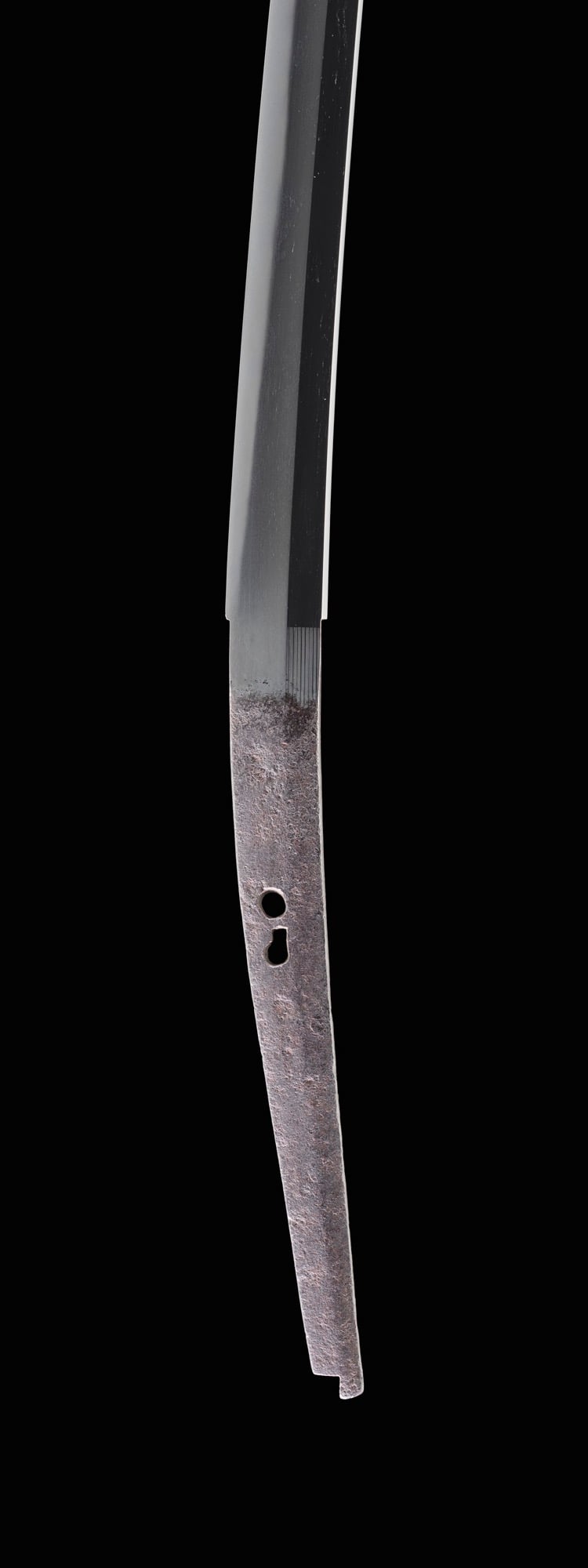
The nakago of the Kyūshū tachi, unshortened. Kyūshū National Museum, via ColBase · ColBase terms of use · source
A slender tachi
The Kyūshū National Museum describes its tachi 国行 (Kuniyuki): a slender sugata, deep koshizori and a small kissaki; well-tightened ko-itame with masame; a wide suguha with chōji, of ko-nie, with sunagashi and kinsuji; a bōshi with a ko-maru tip; a nakago with a hook-shaped tip. The museum sums up that his style has two modes, the robust and the slender, and that this tachi belongs to the second.