The name of the school
The Rai school worked in Yamashiro, in Kyoto, from the mid-Kamakura period to the Nanbokuchō. The 『観智院本銘尽』 (Kanchi-in-bon Meizukushi), an old book of smiths, says that they descended from immigrants from Koryŏ, in Korea, and that this is where the name 来 (rai, “to come”) comes from, according to the Japanese Wikipedia. Sesko points out that only the Rai signed with the family name; the other workshops of Kyoto did so with the name of their district (Sanjō, Gojō, Awataguchi, Ayanokōji). The first to sign “Rai” was his son Kunitoshi. By its style, the school seems related to Awataguchi, which dominated Kyoto at the time.
Kuniyoshi, the founder who cannot be seen
Tradition makes Kuniyoshi the founder, but no secure work of his survives. Sesko cites a single tachi signed “Kuniyoshi”, of 71.8 cm, which belonged to Hirai Chiba: the experts Honma and Tanobe do not dare to attribute it to him, because it is an isolated piece with nothing else to compare it with.
Dates
Tradition places him between the Jōgen era (承元, Jōgen, 1207–1211) and the Shōgen era (正元, Shōgen, 1259–1260). Sesko sees Jōgen as too early: his son Kunitoshi was born in 1240, according to a tachi of 1315 signed at the age of 75, and Kuniyuki fits better around Shōgen. The 『古刀銘尽大全』 (Kotō Meizukushi Taizen), late and unreliable, has him die in the Einin era (永仁, Einin), in 1297, aged 79; Sesko doubts that fact.
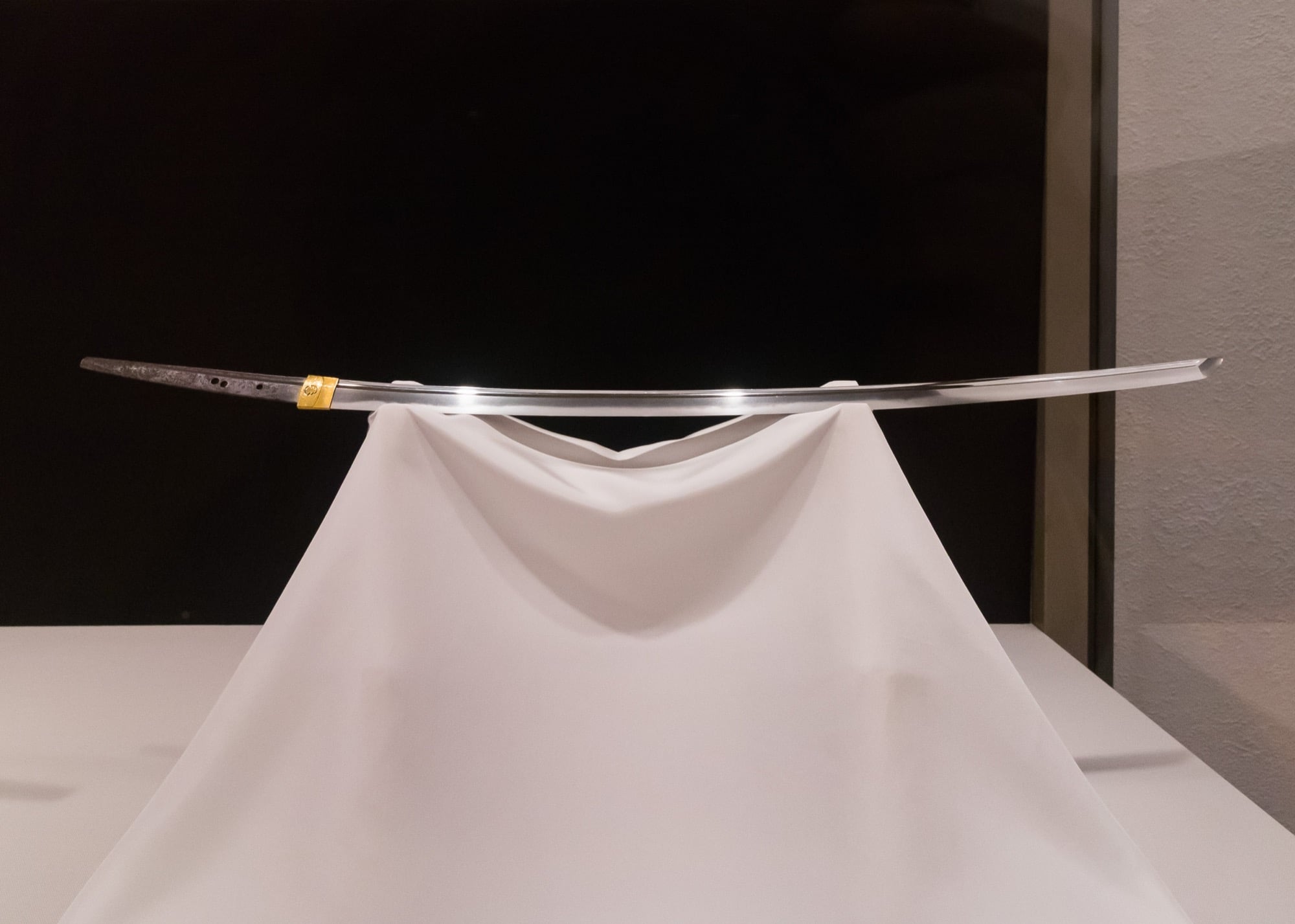

Lineage
The school comes from him: Kunitoshi, of whom there are two- and three-character signatures; then Kunimitsu, Kunitsugu and others. Kunimura (国村, Kunimura), son of a son-in-law of Kuniyuki, took the style to Higo, in Kyūshū, and founded the Enjū school (延寿, Enjū). The Kyūshū National Museum records the tradition that he was known by the family name 来太郎 (Rai Tarō).