On this page
Kantei keys
- Jihada. Soft and beautiful steel, of fine ko-mokume, according to Sesko; the Japanese Wikipedia speaks of very tight itame with ji-nie.
- Hamon. Relatively narrow, on a suguha base with ko-nie, with horizontal hataraki, a temper of several layers (nijūba, sanjūba), uchinoke and ko-ashi (Sesko). The Japanese Wikipedia: ko-midare, a deep nioiguchi with ko-nie and crescent-moon uchinoke.
- Bōshi. On the Mikazuki, double, ko-maru and with hakikake, according to its official record.
- Sugata. “Very elegant and slender”, to the aristocratic taste of Heian (Sesko).
- Nakago. On the Mikazuki, unshortened (ubu), in kijimomo shape and with two holes.
- Mei. He signed 宗近 (Munechika), two fine, small characters, on the haki-omote, or 三条 (Sanjō), somewhat larger, on the haki-ura; why one or the other is not known. The blades signed with the four characters 三条宗近 (Sanjō Munechika) have all been dismissed as false (gimei), according to Sesko.
The Mikazuki Munechika, according to its official record
Shinogi-zukuri and iori-mune, with a high koshizori, strong funbari and ko-kissaki. Tight ko-itame with ō-hada and thick ji-nie. Hamon of ko-midare with ko-ashi, a deep nioiguchi and ko-nie, with half-moon uchinoke over the edge of the temper; double bōshi, ko-maru with hakikake. Unshortened tang, in kijimomo shape, with two holes, and the signature on the haki-ura. An 80.0 cm blade, 2.7 cm of curvature, 2.9 cm wide at the base and 1.4 at the point.
A kantei feature: the signature 三条 (Sanjō) is on the haki-ura face (佩裏, haki-ura), not on the haki-omote, which is the usual place, next to the central hole. The Tokyo National Museum sums it up thus: a slim and strongly curved shape, a fine and complex temper and, over the temper, white half-moon lines.
The Mikazuki, up close

The Mikazuki Munechika (三日月宗近, Mikazuki Munechika), whole, from one face. Tokyo National Museum, via ColBase · ColBase terms of use · source 
The Mikazuki Munechika from the other face. Tokyo National Museum, via ColBase · ColBase terms of use · source 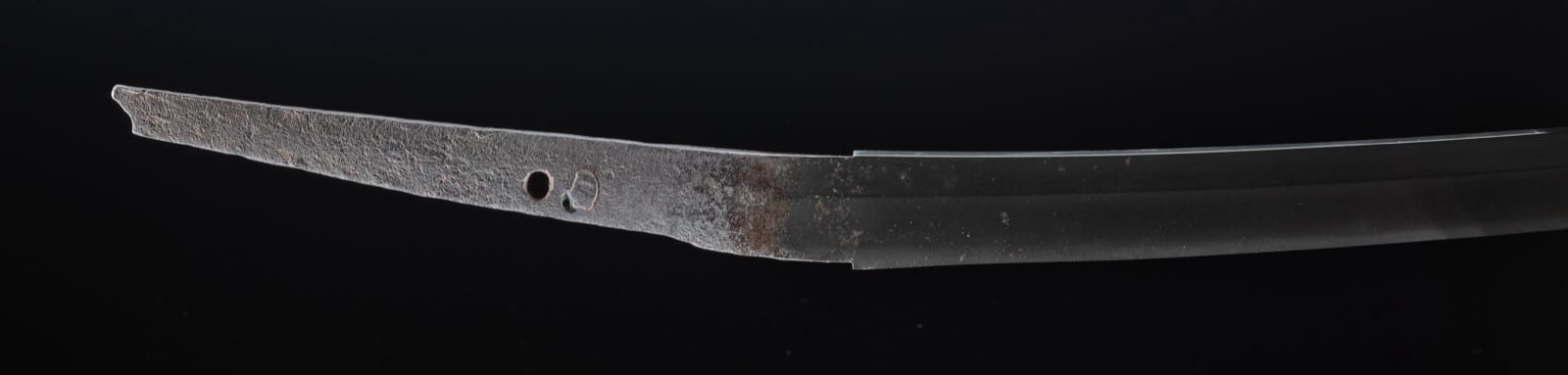
The tang and the base of the blade, with its two holes. Tokyo National Museum, via ColBase · ColBase terms of use · source 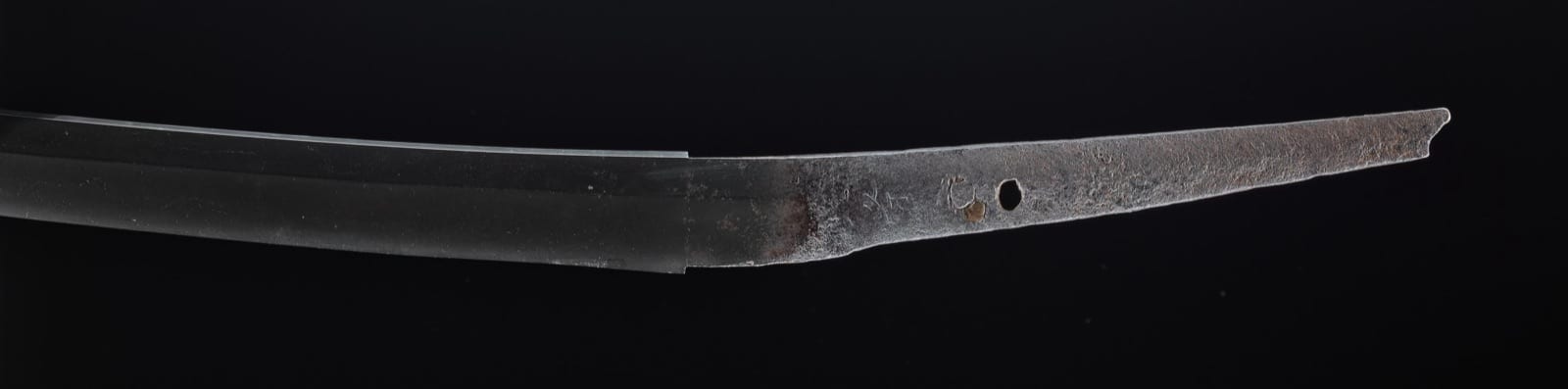
The tang from the haki-ura face, with the signature 三条 (Sanjō) next to the hole. Tokyo National Museum, via ColBase · ColBase terms of use · source 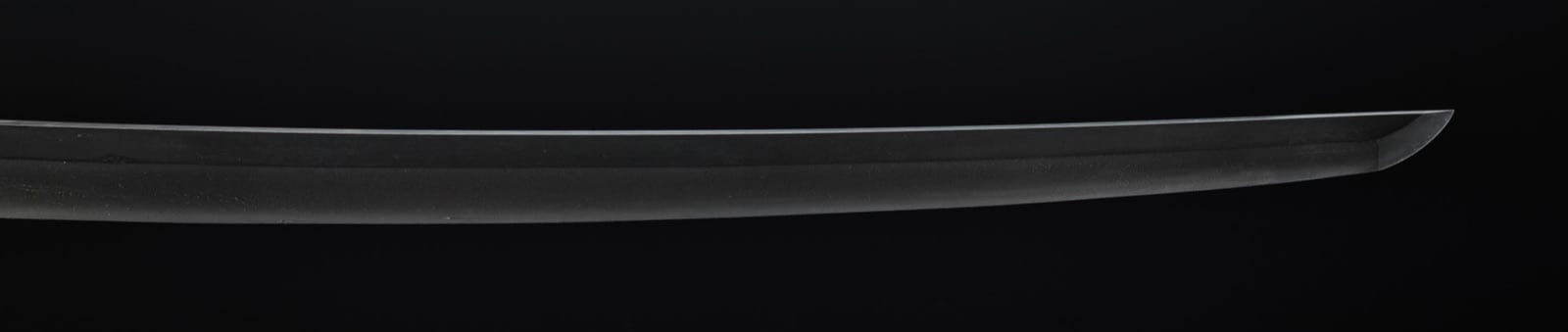
The point: a ko-kissaki. Tokyo National Museum, via ColBase · ColBase terms of use · source 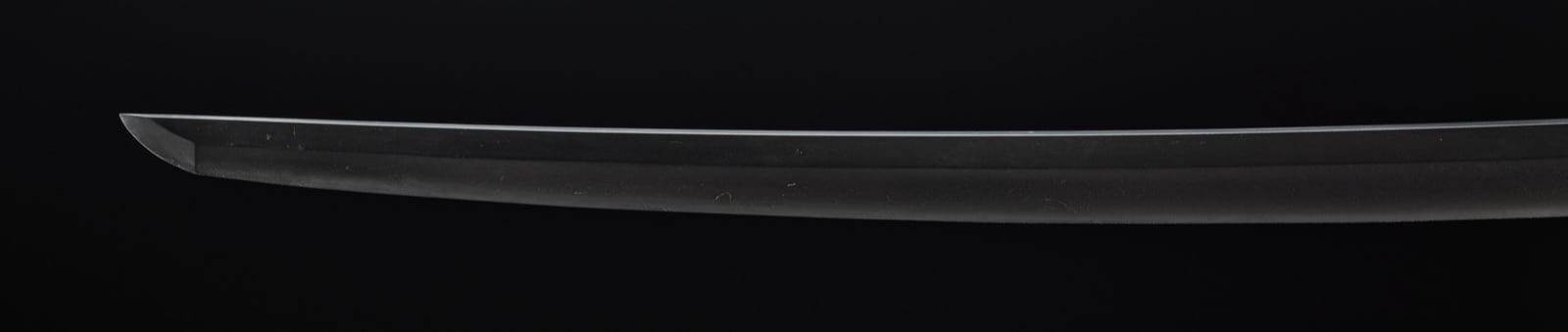
The point from the other face. Tokyo National Museum, via ColBase · ColBase terms of use · source 
The tang of the Mikazuki in a catalogue of the Tokyo Imperial Museum of 1938. Unknown author (1938), public domain, via Wikimedia Commons · Public domain · source
