On this page
His works
| Work | Type | Designation | Where it is |
|---|---|---|---|
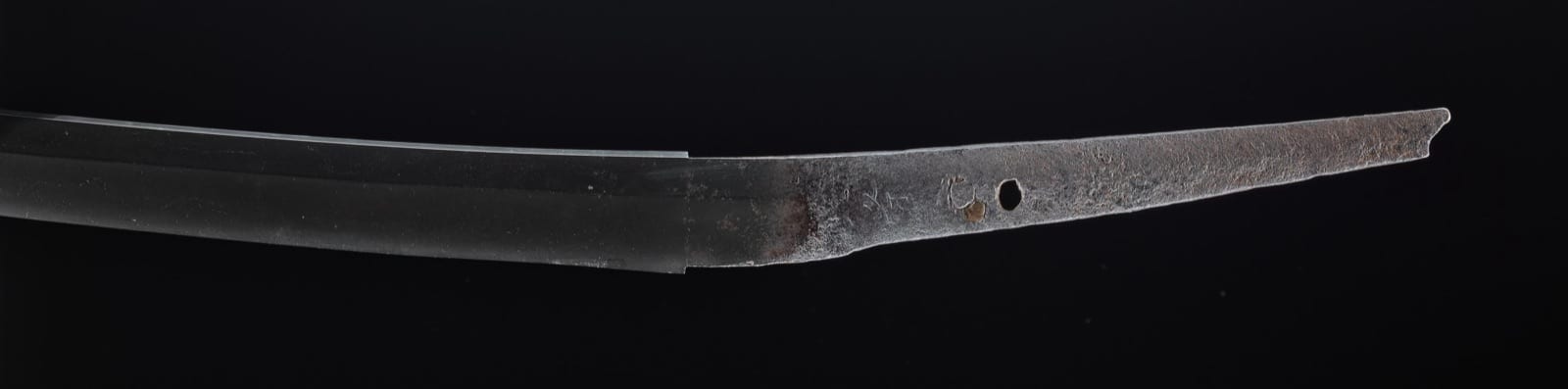
| 三日月宗近 (Mikazuki Munechika) | Tachi, 三条 (Sanjō) | National Treasure since 1951; designated in 1933 under the old law | Tokyo National Museum, by donation in 1992 |
| Tachi 三条 (Sanjō) | Tachi | Important Cultural Property since 1950 | Nangū Taisha shrine (南宮大社, Nangū Taisha), Gifu |
| Tachi 宗 (Mune)…近 (chika) | Tachi | Designated in 1912 under the old law (given by the Japanese Wikipedia) | Wakasahiko shrine (若狭彦神社, Wakasahiko Jinja), on deposit at the Tokyo National Museum |
| 山城国宗近御太刀 (Yamashiro-no-kuni Munechika gotachi) | Tachi | Imperial collection (gyobutsu) | Imperial Household Agency |
| Tachi attributed to Munechika | Tachi | Cultural property of Fukuoka Prefecture since 1956 | Hakozaki-gū shrine (筥崎宮, Hakozaki-gū) |
| 小狐丸 (Kogitsune-maru) | Tachi of the legend | — | Lost |
The Mikazuki Munechika
According to the Japanese Wikipedia, it belonged to Kōdai-in, the widow of Toyotomi Hideyoshi, and in 1624 passed to Tokugawa Hidetada and to the Tokugawa house, which parted with it at an unknown date; it then belonged to Nakajima and to Watanabe Saburō. Watanabe Seiichirō donated it to the Tokyo National Museum in 1992.
It is one of the 天下五剣 (tenka goken, “the five swords under heaven”): Dōjigiri, Onimaru, Mikazuki, Ōdenta and Juzumaru. The grouping appears in the 諸家名剣集 (Shoke Meikenshū), an Edo copy of the Kyōhō meibutsuchō (享保名物帳), and it is not known when the name was coined; the Shoke Meikenshū gives first place to the Onimaru, and the scholar Satō Kanzan to the Dōjigiri of Yasutsuna. The 長享銘尽 (Chōkyō meizukushi), of 1489, already cites the “Mikazuki of Sanjō Munechika”: it was known by the mid-Muromachi period at the latest.
The blades of the shrines and of the Imperial Household
The tachi signed 三条 (Sanjō) of the Nangū Taisha has been an Important Cultural Property since 29 August 1950, with the comment “work of the Heian period”, according to the official database. The Japanese Wikipedia gives another designation date, 30 January 1934 (under the old law), and says that it is shown to the public on 3 November.
The tachi of the imperial collection was given by Sakai Tadamichi to Emperor Meiji in 1909, and the tachi of Hakozaki-gū comes with the letter with which Ōuchi Yoshitaka donated it in 1543, according to the Japanese Wikipedia. For these, and for the tachi of the Wakasahiko shrine, the official record has not yet been consulted.
In the Kyōhō meibutsuchō
Besides the Mikazuki, two tantō of his are listed, according to the Japanese Wikipedia: the 海老名宗近 (Ebina Munechika), of Ashikaga Yoshimasa and of Hideyoshi, lost in the siege of Ōsaka and noted among the burned, and the 鷹巣三条 (Takanosu Sanjō), of Hideyoshi and later of the Shimazu. The Kogitsune-maru does not appear in what was consulted.
Another attributed blade
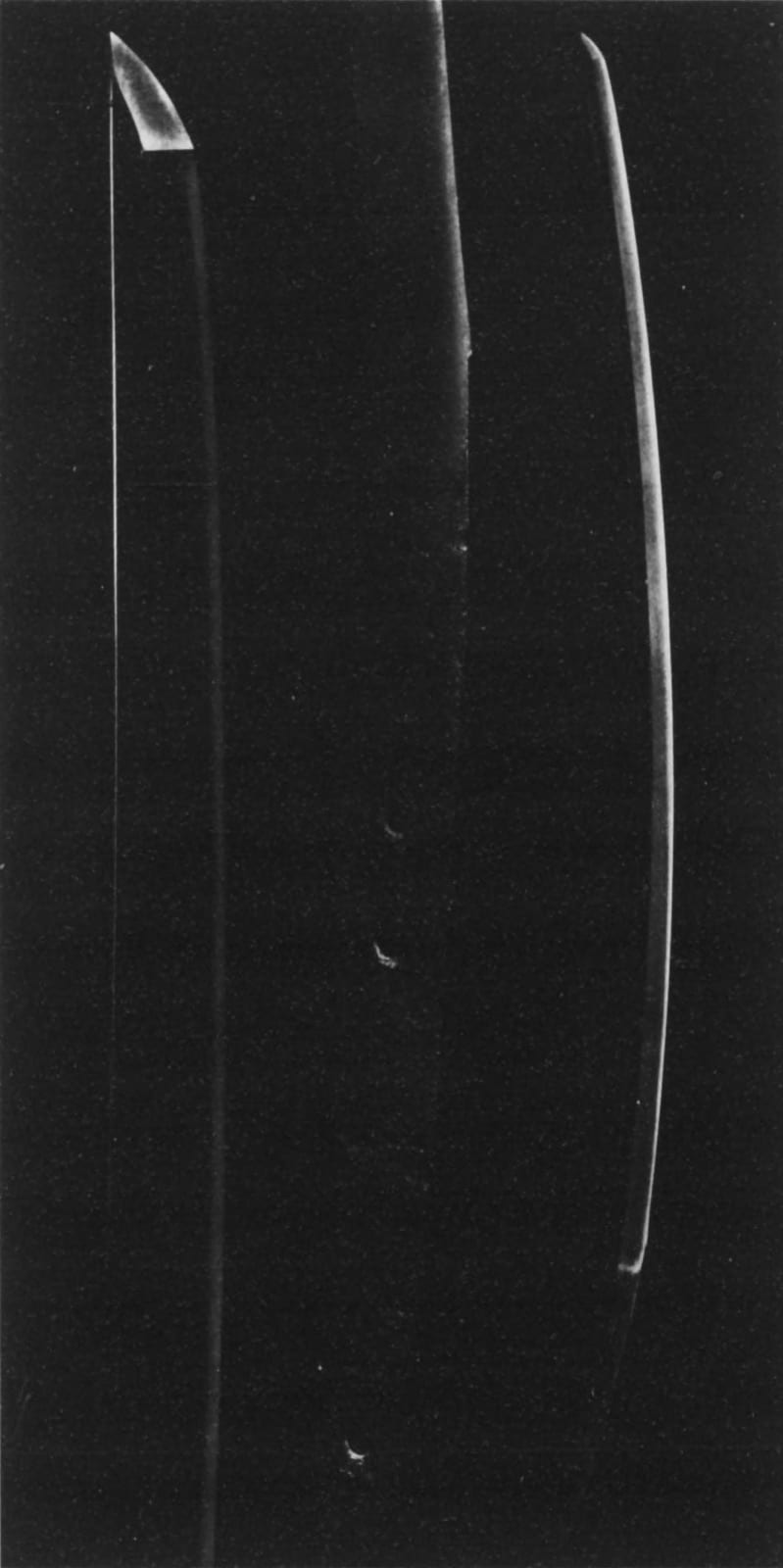
Tachi signed 宗 (Mune), the rest illegible, attributed to Munechika, of the 遊就館 (Yūshūkan), in an old catalogue. 遊就館 (Yūshūkan), public domain, via Wikimedia Commons · Public domain · source
