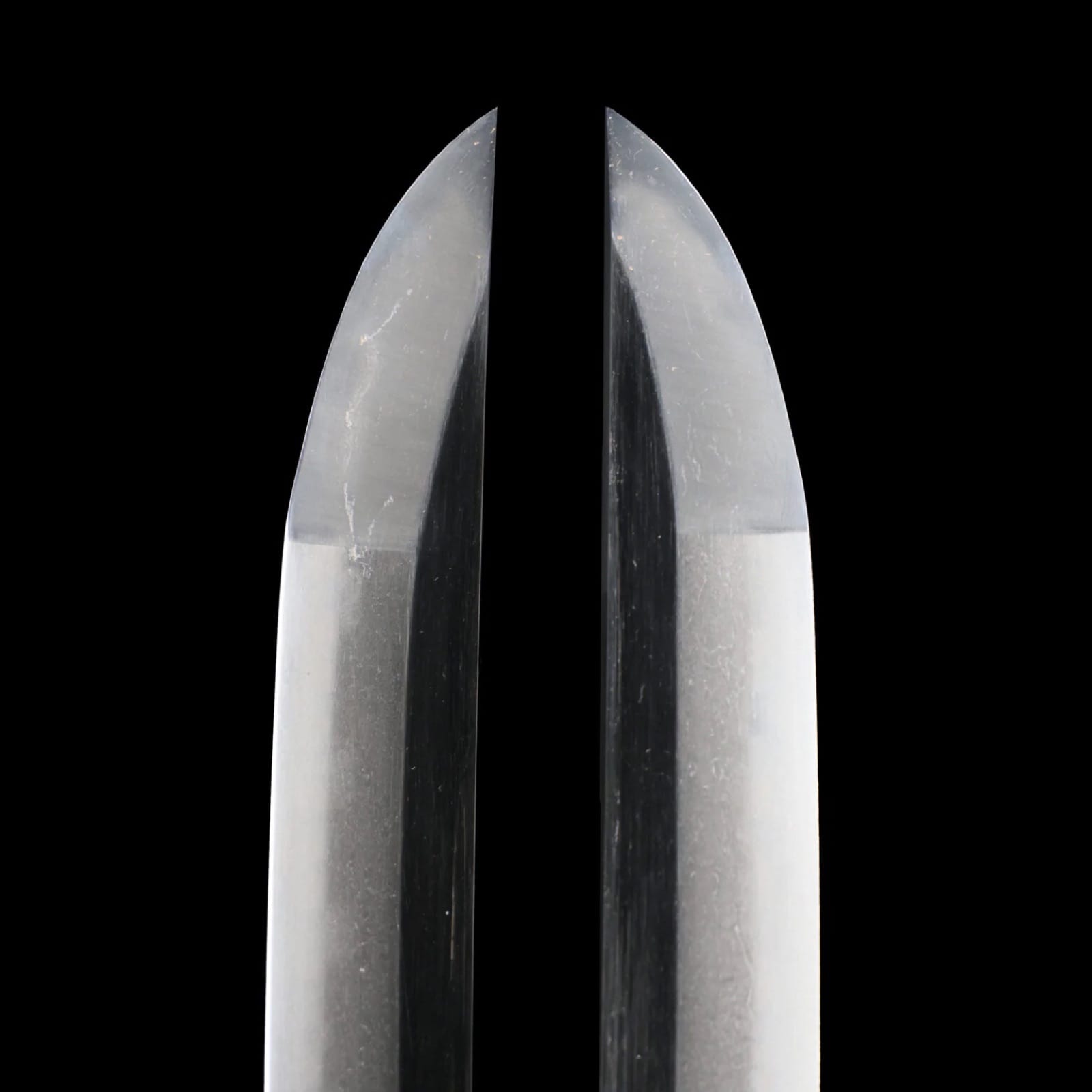
In the lists and the treatises
| Year | List or treatise | Rank |
|---|---|---|
| 1797, with reissues in 1805 and 1830 | Kaihō Kenjaku (懐宝剣尺) and Kokon Kaji Bikō (古今鍛冶備考), by Yamada Asaemon | 良業物 (yoki-wazamono), the third of four grades, for Seki Kanefusa and for Wakasa no Kami Ujifusa |
| Muromachi | Sesko’s classification of schools | Sue-Seki, with Kanehisa and Kanemura among the hira-zukuri ko-wakizashi |
| 1941 and 1942 | 6th sword exhibition and Kurihara Akihide’s banzuke | First place and a place in the banzuke, for the 23rd Kanefusa |
A blade with a cutting nickname
Sesko cites a blade by Kanefusa with the inscription ソット挟箱 (sotto hasamibako), a cutting nickname: so sharp that the enemy does not even notice, like a clothes box that falls without a sound.
In the museums
- A tantō signed 兼房作 (Kanefusa saku), with its mounting 合口拵 (aikuchi-goshirae), at the Tokyo National Museum, according to the title of its record in ColBase.
- A wakizashi signed 兼房 (Kanefusa), of 32.8 cm, from the late Muromachi period and of the Zenjō line, at the 関鍛冶伝承館 (Seki Kaji Denshōkan), according to a 2024 catalogue of the Gifu Prefectural Museum: it is one of the swords confiscated after the war and returned (赤羽刀, Akabane-tō).
The period and school of the Tokyo tantō, whose record could not be opened, remain to be checked.