On this page
Kantei keys
- Hamon. The Kanefusa-midare (兼房乱れ, Kanefusa-midare), also read kenbō-midare: for Sesko, a large-sized chōji-midare that goes back to the swordsmith Kanefusa; for the Heibonsha encyclopaedia, the 兼房丁子 (Kanefusa-chōji), a peculiar temper of gunome-chōji. A 1980 study by the Gifu Prefectural Museum says that Kanefusa created it.
- Nioiguchi. Tight, as in the rest of the Mino sword, falling towards the edge.
- Sugata. Among the hira-zukuri ko-wakizashi of the late Muromachi period, with a wide mihaba, full fukura and deep sakizori, Sesko counts those of the Sue-Seki school: Kanefusa, Kanehisa and Kanemura.
- Mei. 兼房 (Kanefusa), and also long signatures such as 濃州関住 (Nōshū Seki jū) followed by the name.
The Mino sword
The Heibonsha encyclopaedia gives the Seki sword a reputation for good cutting, with a usual temper of sunken nioiguchi, notare and togari-gunome, for practical use, and apart from that tempers of great character such as the Kanefusa-chōji and the sanbonsugi of Kanemoto. The Gifu Prefectural Museum describes the Mino sword as practical and light, with a Yamato heritage in a strong masame, thin kasane and tempers of togari-ba, sanbonsugi, yahazu-ba and the gunome-chōji Kanefusa-midare; both faces alike, a whitish utsuri (shirake-utsuri) and the tang with a kurijiri tip and higaki file marks.
A katana by Kanefusa
The photos on this page are of a katana by Seki Kanefusa from around the Eiroku era (1558–1570), with an NTHK certificate: the tang with its long signature, the temper and the point.
Gallery
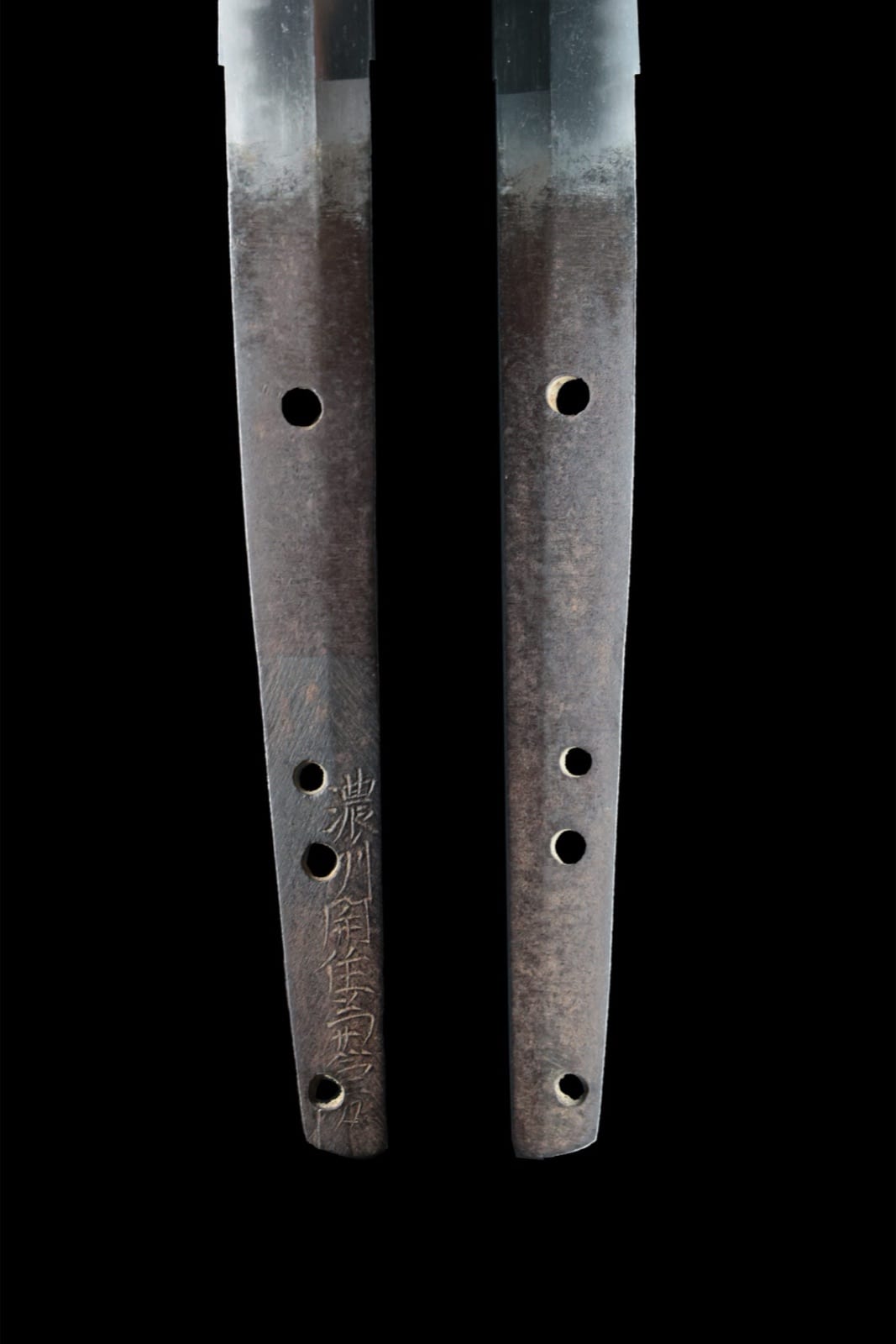
The tang of a katana with the signature of Kanefusa, which begins with 濃州関住 (Nōshū Seki jū, “resident of Seki, in Mino”). Photo: dealer in Japan 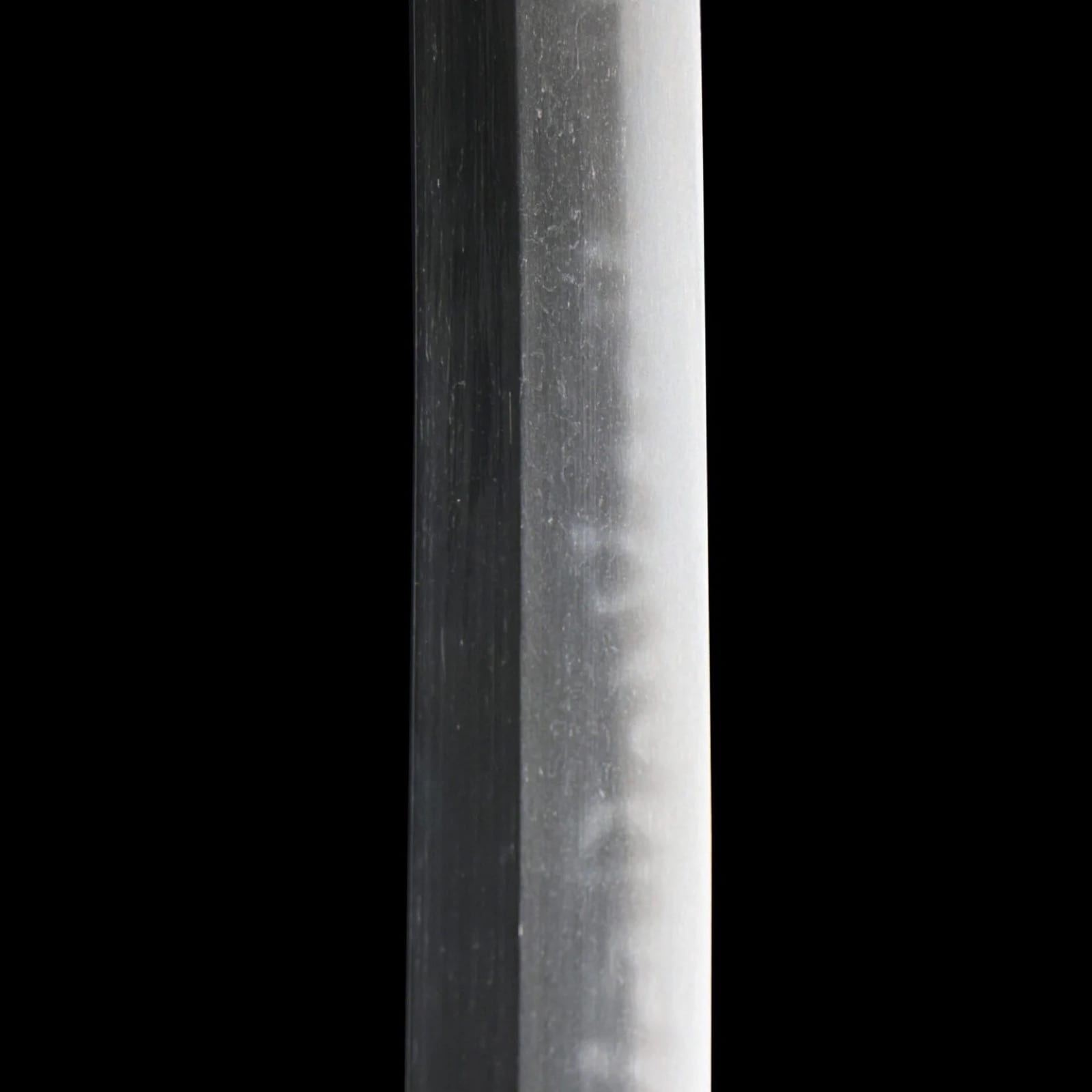
The temper of the same katana, in gunome-chōji. Photo: dealer in Japan 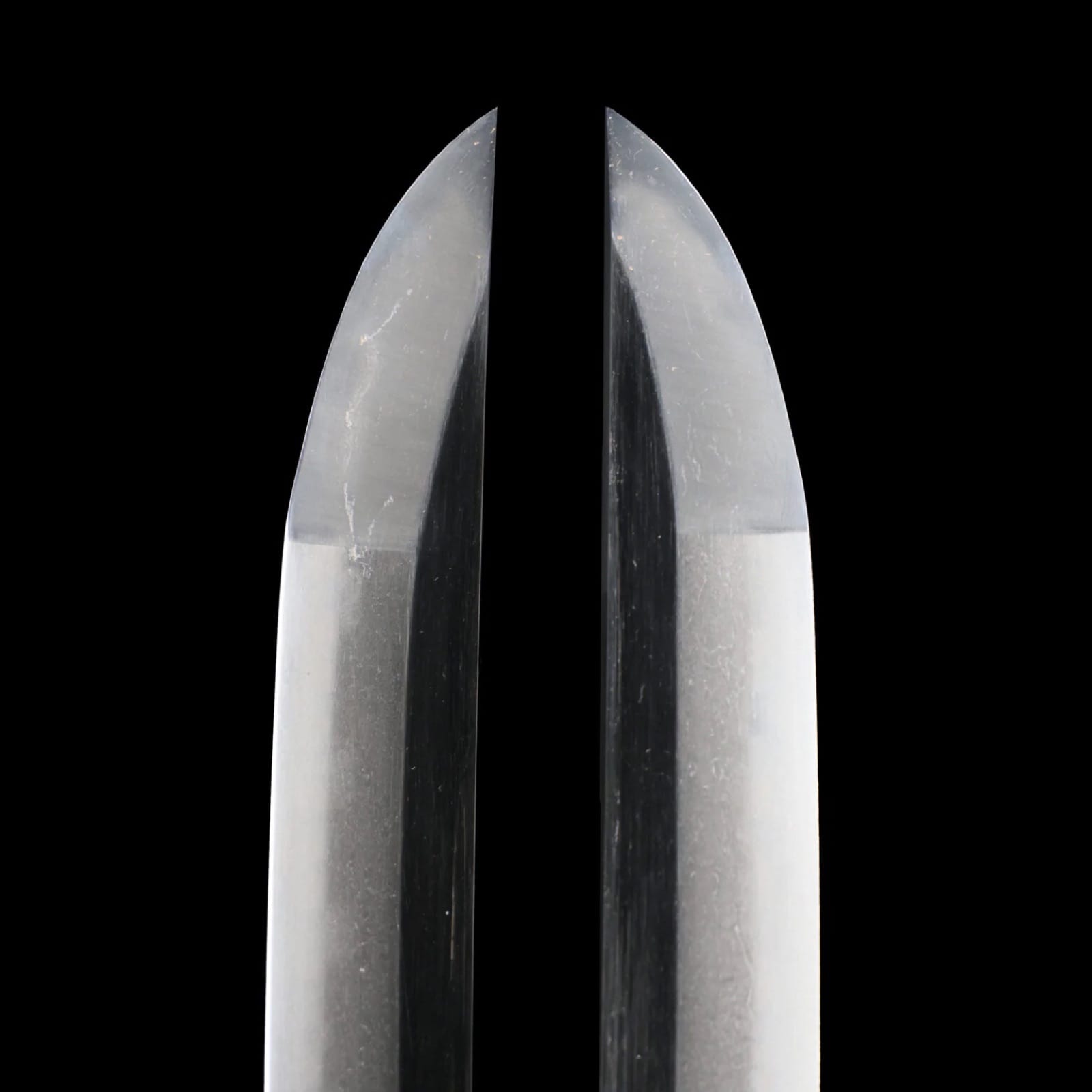
The point of the same katana, from both faces. Photo: dealer in Japan