On this page
What he forged
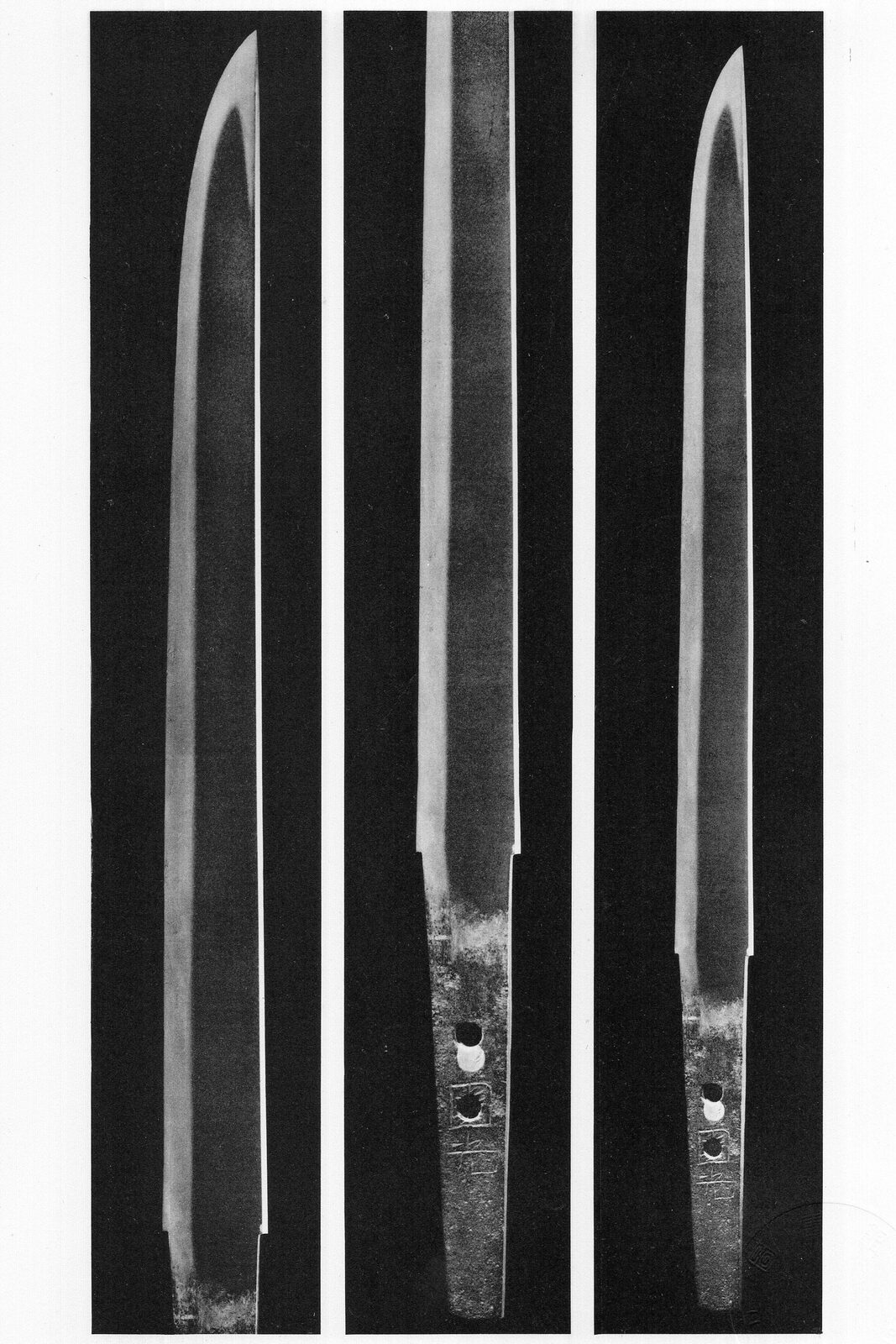
Above all tantō; his tachi are rare. His basis is the nobility of the Awataguchi suguha, but with more nie, with kinsuji and inazuma in the temper and a stronger steel: the foundation of the Sagami manner, according to the Japanese Wikipedia. For Markus Sesko his blades have more chikei and kinsuji than those of his contemporaries and more nie overall: the step from the Kyoto tradition to what would become the Sagami one.
Kantei keys
They are given, for his most representative work, by the official record of the Aizu Shintōgo:
- Jihada. Ko-itame with mokume, very tight, with thick ji-nie and plenty of chikei.
- Hamon. Deep nioi and well-settled nie; a suguha that starts narrow and widens upwards, with kinsuji. The record says he was skilled at the narrow suguha and showed uncommon mastery in the wide one.
- Bōshi. Komaru, with a somewhat deep turn-back.
- Sugata. Hira-zukuri, mitsu-mune and uchizori; 25.5 cm long and 2.4 cm wide at the base. The tantō of the Sano Art Museum is kanmuri-otoshi, a rare shape among his tantō.
- Nakago and mei. Unshortened tang, kurijiri tip, katte-sagari file marks and one hole; the two-character signature, 國光 (Kunimitsu), below the hole, on the omote side. The Japanese Wikipedia gives as a feature of his signature the 左字北冠 (sahi-ji kita-kanmuri): the inside of the character 国 (kuni) reversed from left to right and the top of 光 (mitsu) resembling 北 (kita).
His tantō

A tantō by Kunimitsu, an Important Cultural Property, in the Tokyo National Museum. Ihimutefu, CC BY-SA 4.0, via Wikimedia Commons · CC BY-SA 4.0 · source 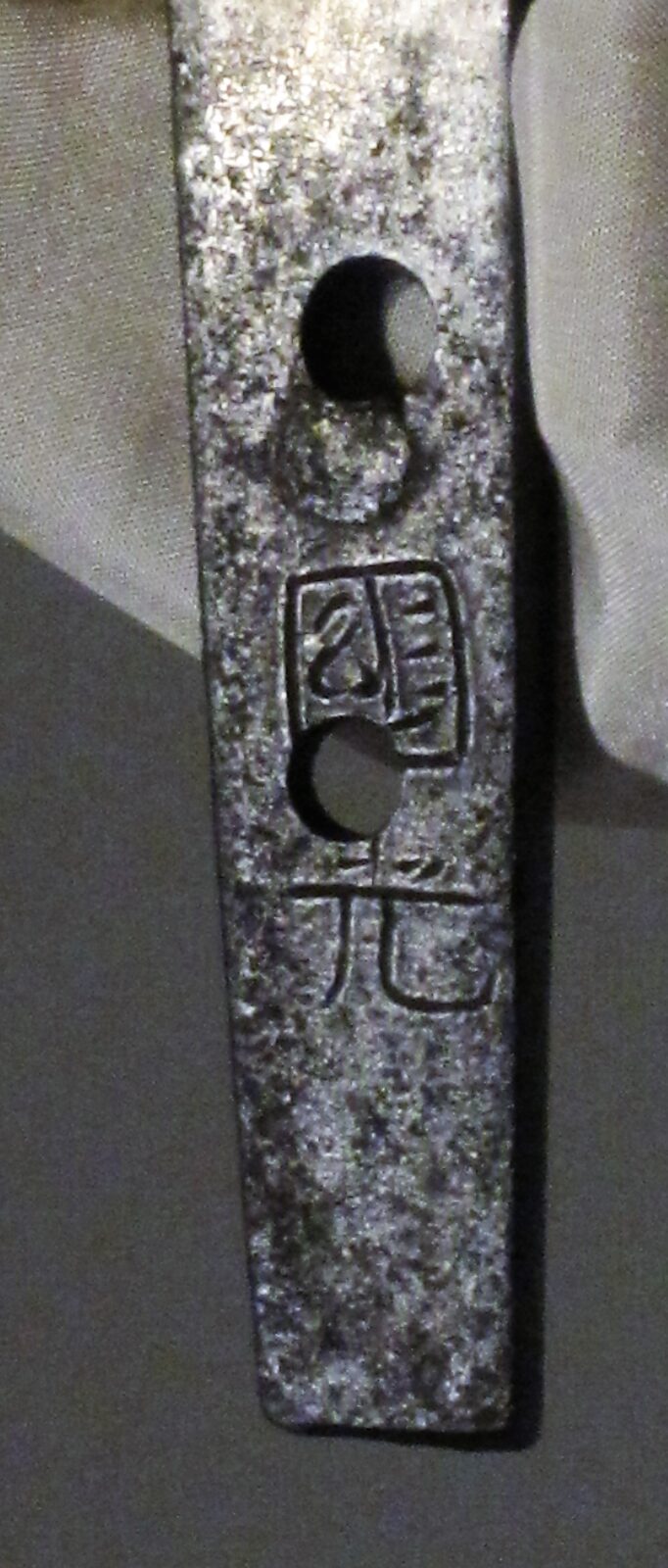
The tang of the same tantō, with the signature 國光 (Kunimitsu). Ihimutefu, CC BY-SA 4.0, via Wikimedia Commons · CC BY-SA 4.0 · source 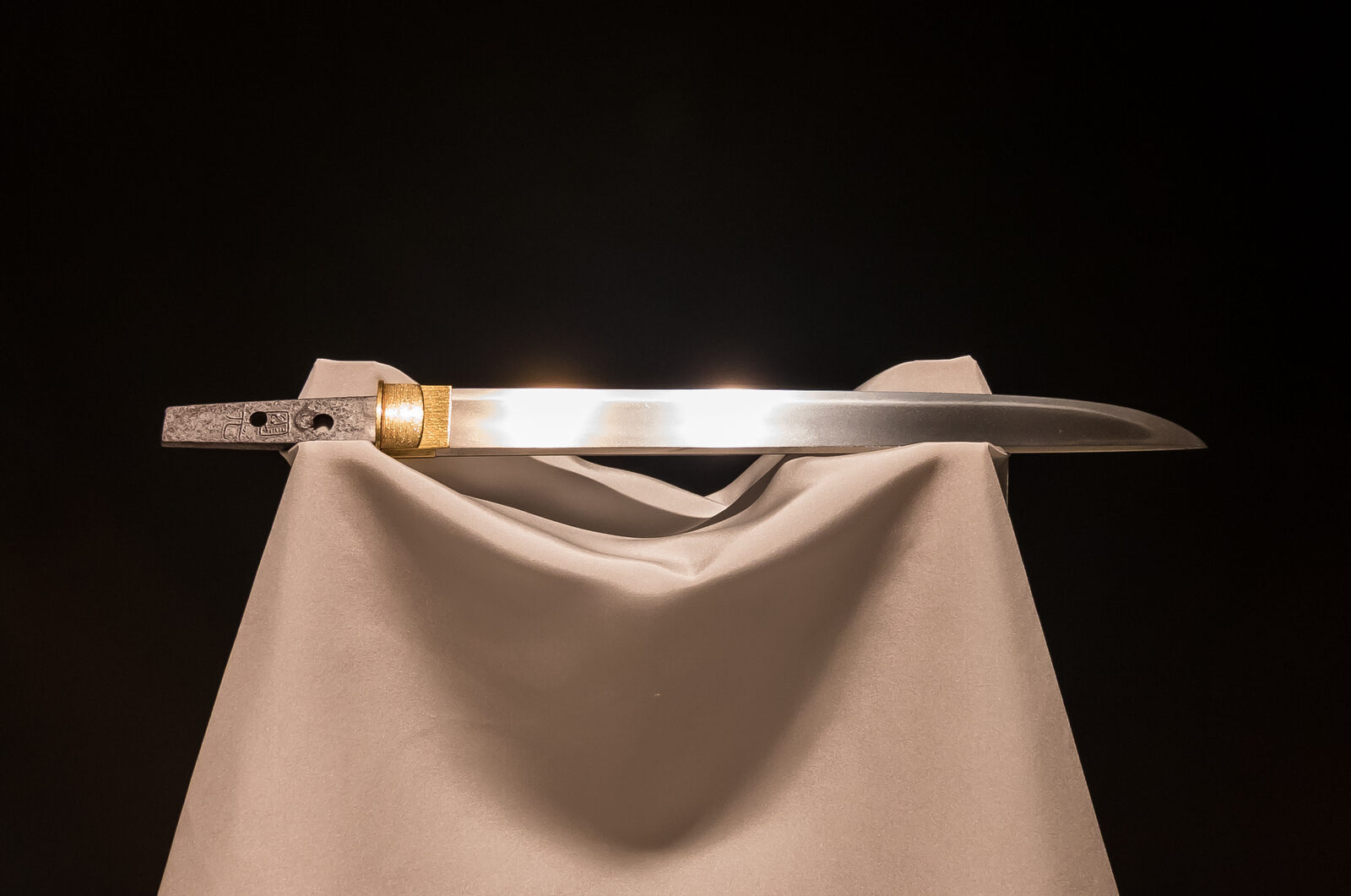
A tantō by Kunimitsu, an Important Cultural Property, in the display case of a Japanese national museum. Kakidai, CC BY-SA 4.0, via Wikimedia Commons · CC BY-SA 4.0 · source 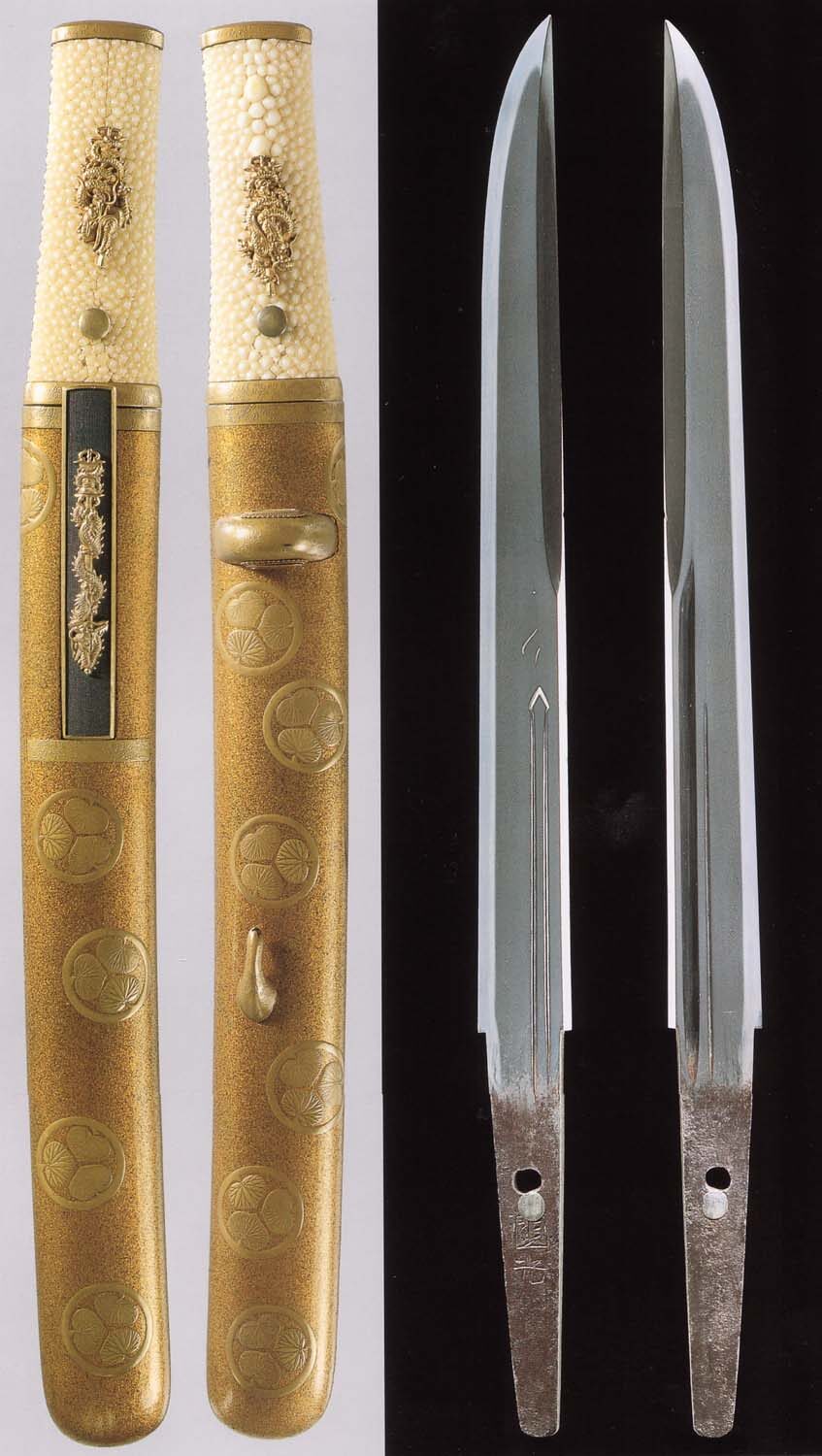
Tantō signed Kunimitsu with its koshirae, in the Sano Art Museum (佐野美術館, Sano Bijutsukan). Sano Art properties, CC BY-SA 2.5, via Wikimedia Commons · CC BY-SA 2.5 · source


