The tōran-ba
The NBTHK explains that Tsuda Echizen no Kami Sukehiro created the tōran-midare in Ōsaka in the Kanbun era and that, because its large waves were so showy, many shinshintō swordsmiths later recreated it: Suishinshi Masahide, Tegarayama Masashige, Ozaki Suketaka, Katō Tsunahide, the Tsunatoshi brothers and Ichige Tokurin. In the pattern of the slopes of each gunome, the blades of Suketaka, Tsunahide and Tsunatoshi follow Sukehiro, and those of Masashige and Tokurin, Masahide.
Sugata
The NBTHK gives as features common to these imitators the shinshintō shape: a shinogi-ji narrow for the width of the blade, little hiraniku and a long kissaki.
Jihada
Sesko writes that the extremely fine jihada of certain masters of the Ōsaka shintō, among them Ozaki Suketaka, is sometimes described as nashiji (梨子地) or close to nashiji, when it is on the border between a very fine, uniform ko-itame and muji, without pattern. The NBTHK sees in these imitators a very tight jihada, of mirror steel, with nie less fine and bright than Sukehiro’s.
Hamon
In the kantei of a katana by Tsunatoshi, the NBTHK rules out Suketaka: if it were his, the valleys of the midare would be square and the nioiguchi denser.
Who he is confused with
With the other tōran-ba swordsmiths: Katō Tsunahide and Tsunatoshi, who also follow Sukehiro’s pattern, and with Sukehiro himself, whose nie is finer and more even. Square valleys and a dense nioiguchi point to Suketaka.
Details
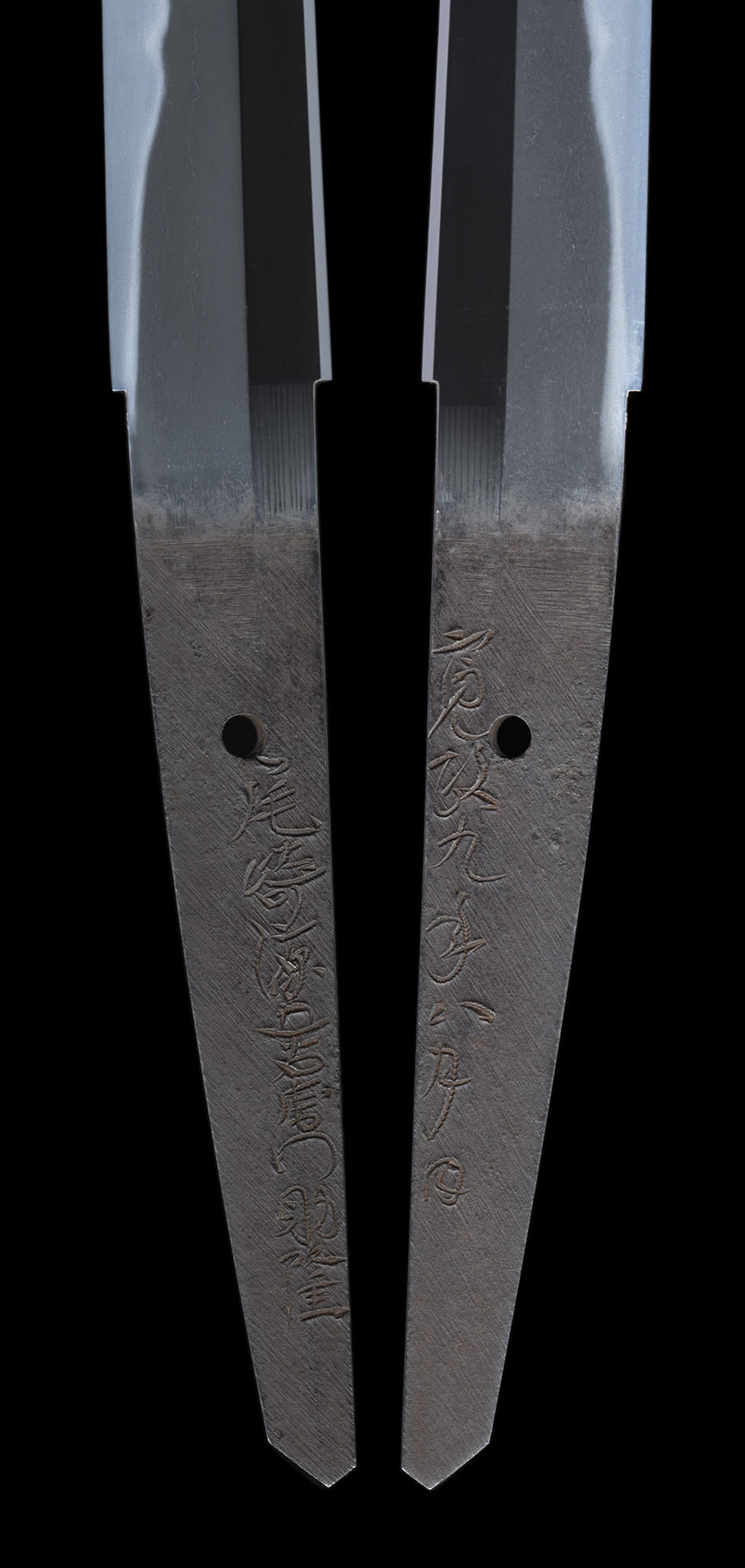
The same wakizashi: the tang from both sides, signed 尾崎源五右衛門助隆 (Ozaki Gengoemon Suketaka) and dated 寛政九年八月日 (Kansei kunen hachigatsu hi), the eighth month of 1797, in cursive script. Photo: dealer in Japan 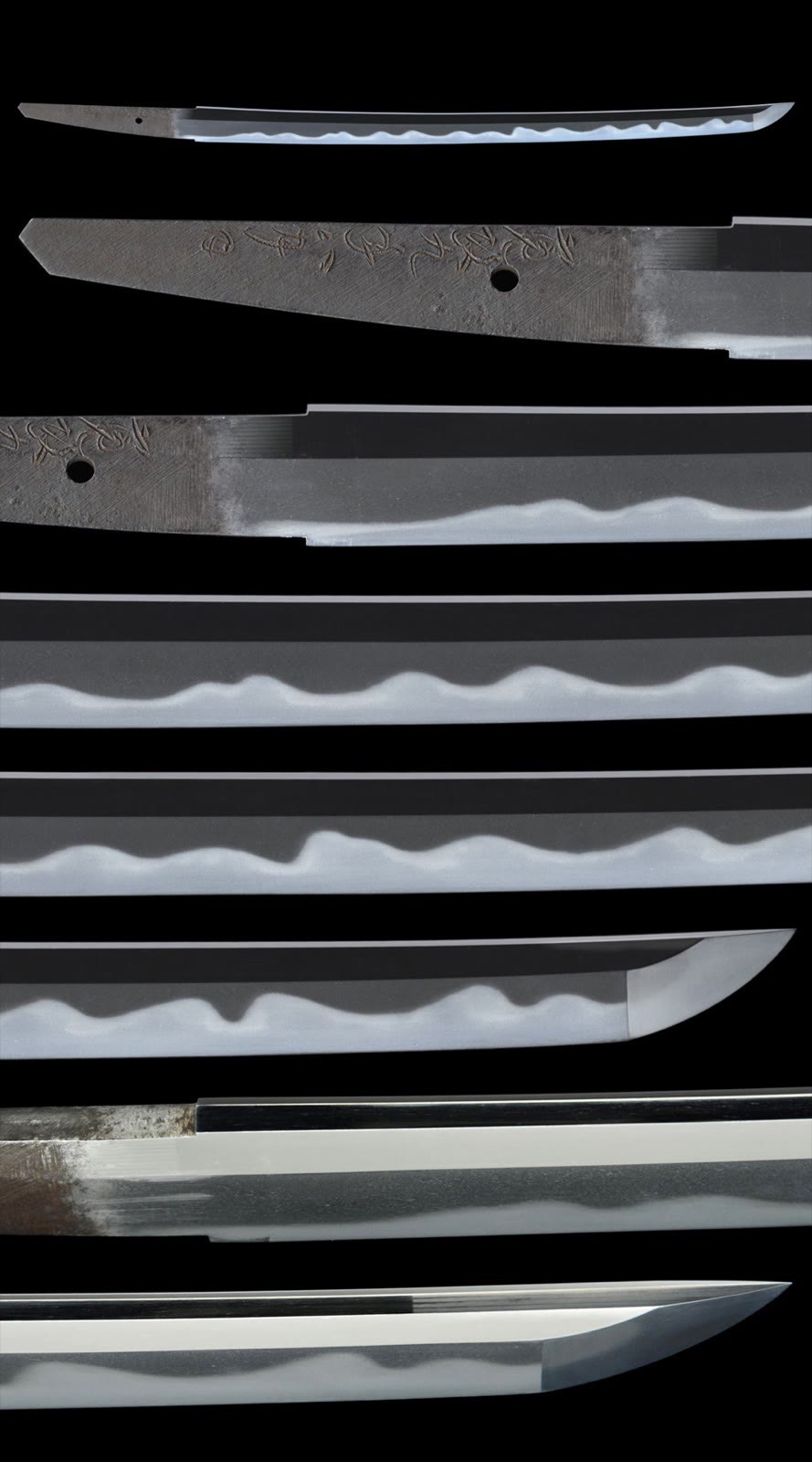
The same wakizashi, on the date side: the tang, the tōran-ba stretch by stretch and the point. Photo: dealer in Japan 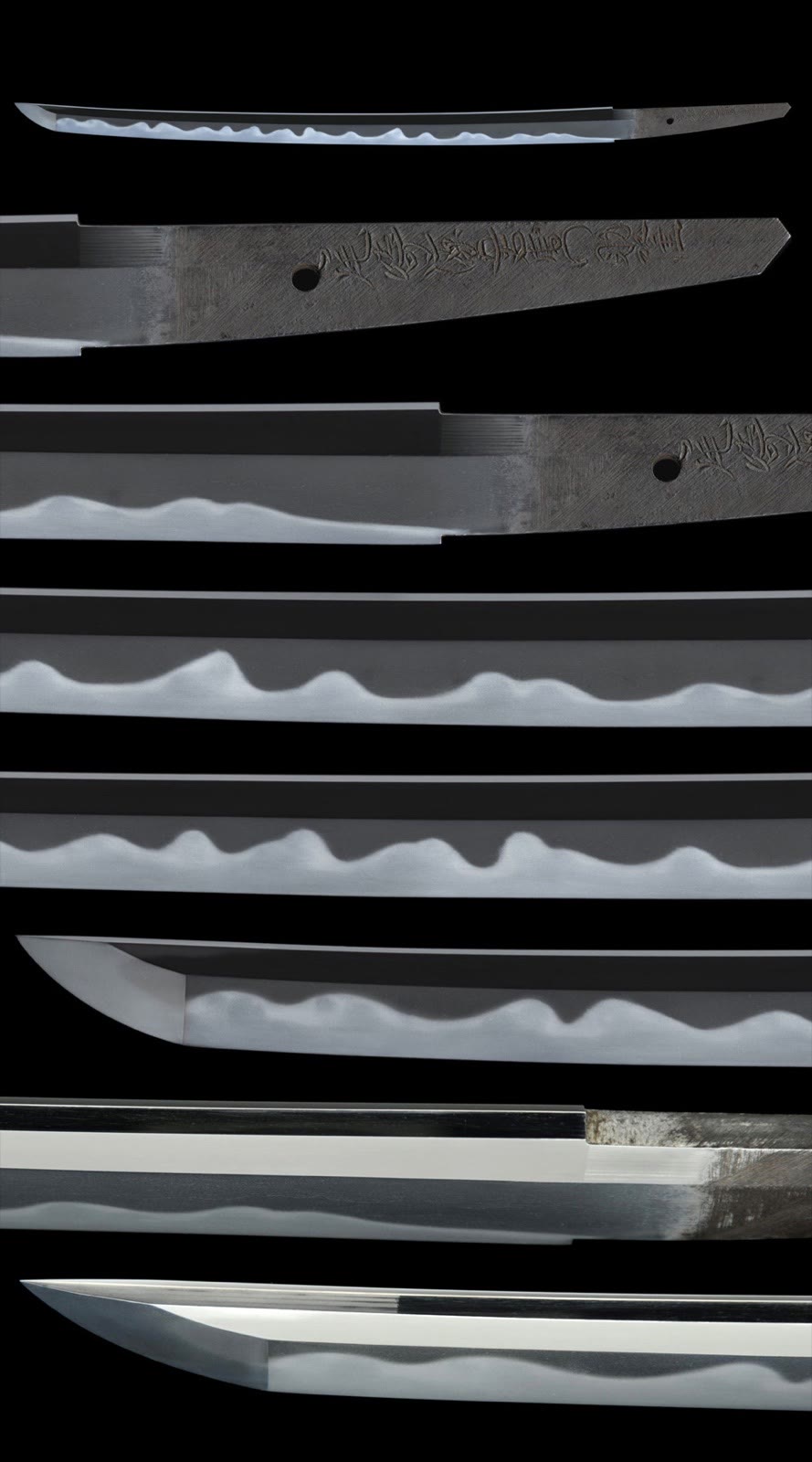
The same wakizashi, on the signature side. Photo: dealer in Japan