On this page
His designated works and those in museums
| Work | Date | Designation or location |
|---|---|---|
| Katana signed 出羽国大慶庄司直胤 (Dewa no kuni Taikei Shōji Naotane), commissioned by Sugihara Masakane (杉原正包); a copy of Kagemitsu or Kanemitsu | 1815 (Bunka 12) | Important Art Object (重要美術品, Jūyō Bijutsuhin), according to the NBTHK |
| Katana signed 造大慶直胤 (Taikei Naotane kore o tsukuru), 72.35 cm, a Sōshū work in the style of Gō Yoshihiro | 1834 (Tenpō 5) | Important Art Object, according to the NBTHK; exhibited in 2025 |
| Katana signed 藤原直胤 (Fujiwara Naotane), a Bizen copy | 1837 (Tenpō 8) | Important Cultural Property of Okayama Prefecture since 2003, privately owned; the prefecture places it in Tsuyama in its record and in Okayama in its list |
| Katana of 1847 signed 荘司筑前大掾藤直胤 (Shōji Chikuzen Daijō Fuji Naotane), naginata of 1810 and wakizashi of 1855 signed 七十八翁藤直胤 (shichijūhachi-ō Fuji Naotane, “the old man of 78”) | 1810-1855 | Tangible Cultural Property of Mie Prefecture since 1982, owned by a private individual in Matsusaka |
| Daishō signed 造大慶直胤 (Taikei Naotane kore o tsukuru), from the Sanada house of Matsushiro | 1836 (Tenpō 7) | Jūyō Tōken (重要刀剣) of the NBTHK, according to the Japanese Wikipedia |
| Katana signed 大慶庄司直胤 (Taikei Shōji Naotane), 75 cm, with a dragon and bonji, commissioned by Kakei Takahiro (筧孝寛), and its wakizashi, 44.8 cm | — | Tokyo National Museum |
| Katana dated 1839 and a wakizashi | 1839 (Tenpō 10) | The Metropolitan Museum of Art, New York, since 1891 |
In the lists and the treatises
- Edo sansaku (江戸三作), the three great smiths of Edo, with Suishinshi Masahide and Minamoto Kiyomaro: the NBTHK devoted an exhibition to the three at its museum in 2025, for the two hundredth anniversary of Masahide’s death.
- According to the NBTHK, he is the most outstanding pupil of the Suishinshi school, and what survives of him, in quantity and quality, is comparable to that of Koyama Munetsugu.
- In the ranking of Shintō swordsmiths that Tomita Kiyama made in 1933, published in 1935 in the 日本刀辞典 新刀篇 (Nihontō jiten Shintō-hen), he appears as 大慶庄司直胤 (Taikei Shōji Naotane) among the “sewanin” (世話人), a group of honour outside the eastern and western blocks.
- It is not recorded in the sources consulted that he appears in the Yamada cutting lists (1797-1830).
A blade of the school
The NBTHK’s 70th Jūyō Tōken designation (2025) includes a katana of 1815 signed by Suishinshi Masahide as swordsmith to the Akimoto, on which the names of Sadahide, Naotane and Mitsuhide also appear.
Gallery

The katana of the Tokyo National Museum (F-20273), whole. Tokyo National Museum, via Bunka Isan Online · © Tokyo National Museum · source 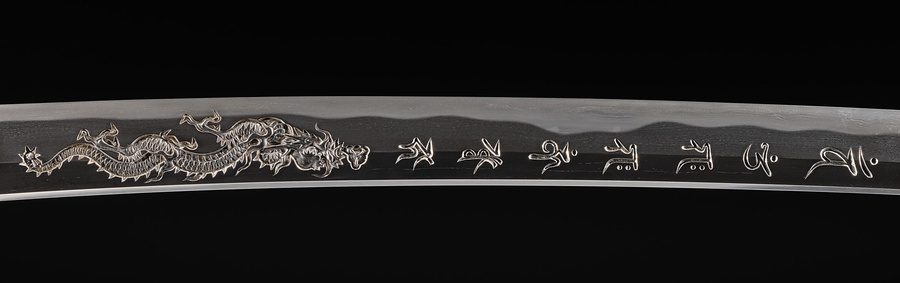
The dragon and the Sanskrit characters of the Tokyo katana; the museum believes the dragon was carved by Naotane himself. Tokyo National Museum, via Bunka Isan Online · © Tokyo National Museum · source 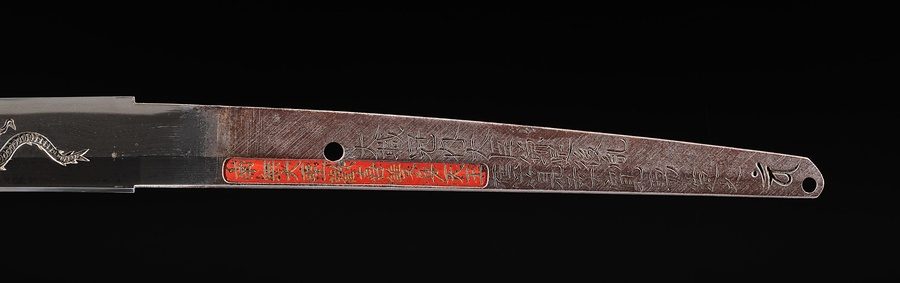
The other side of the tang, with the inscription of the commission by Kakei Takahiro (筧孝寛). Tokyo National Museum, via Bunka Isan Online · © Tokyo National Museum · source 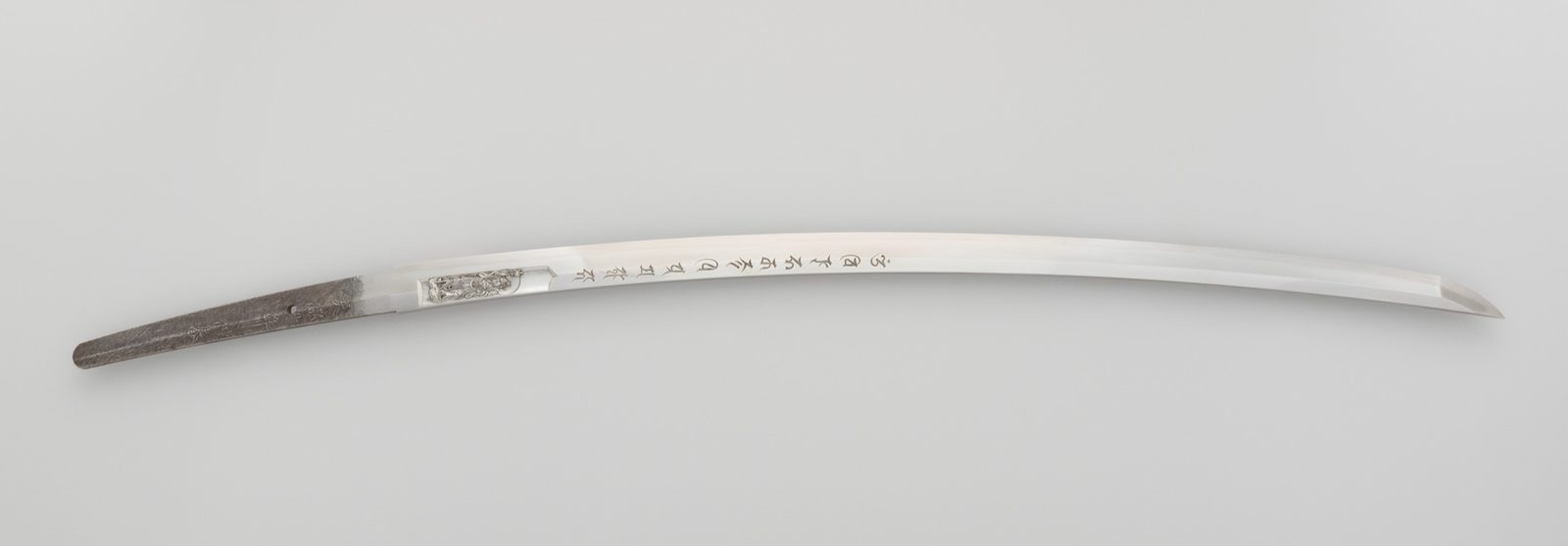
Katana by Naotane dated 1839, one side. The Metropolitan Museum of Art. The Metropolitan Museum of Art, New York · Public domain · source 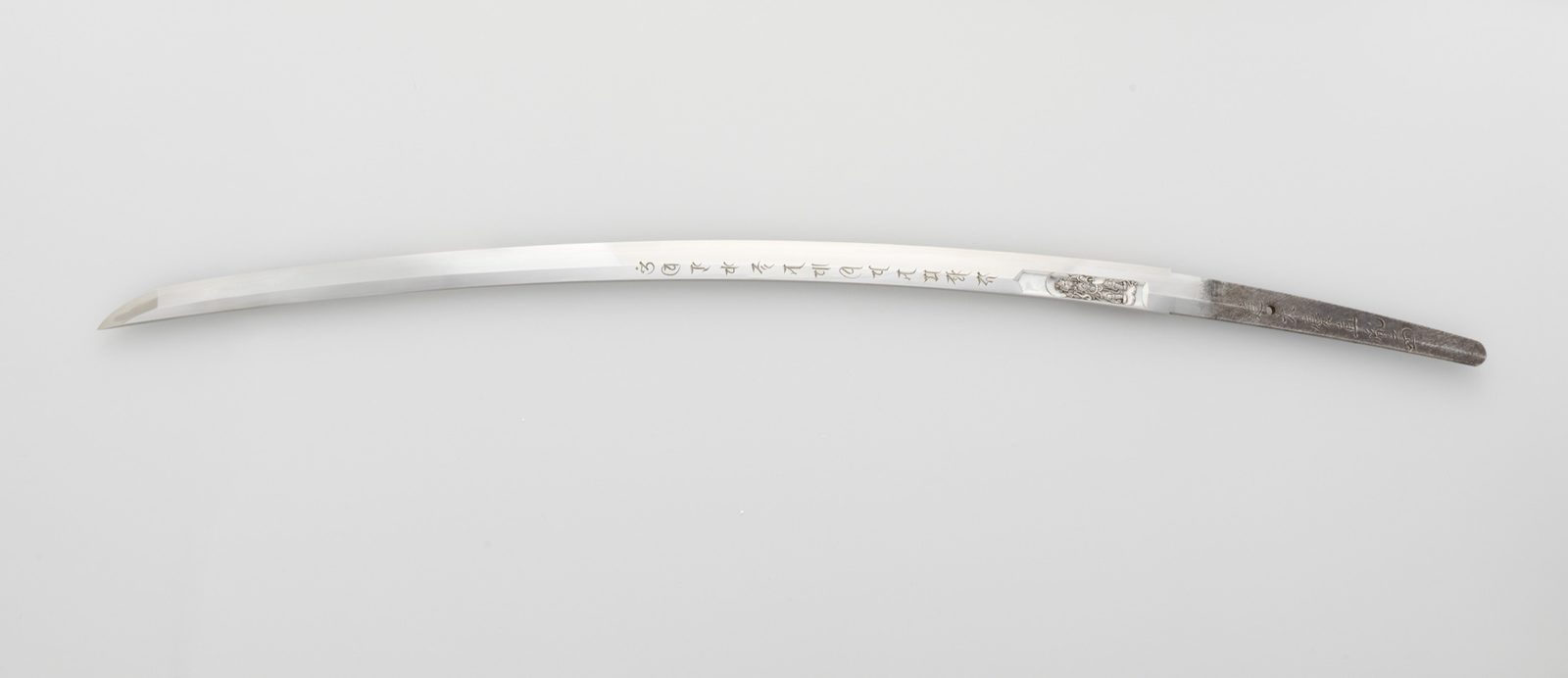
The same katana of 1839, the other side. The Metropolitan Museum of Art. The Metropolitan Museum of Art, New York · Public domain · source 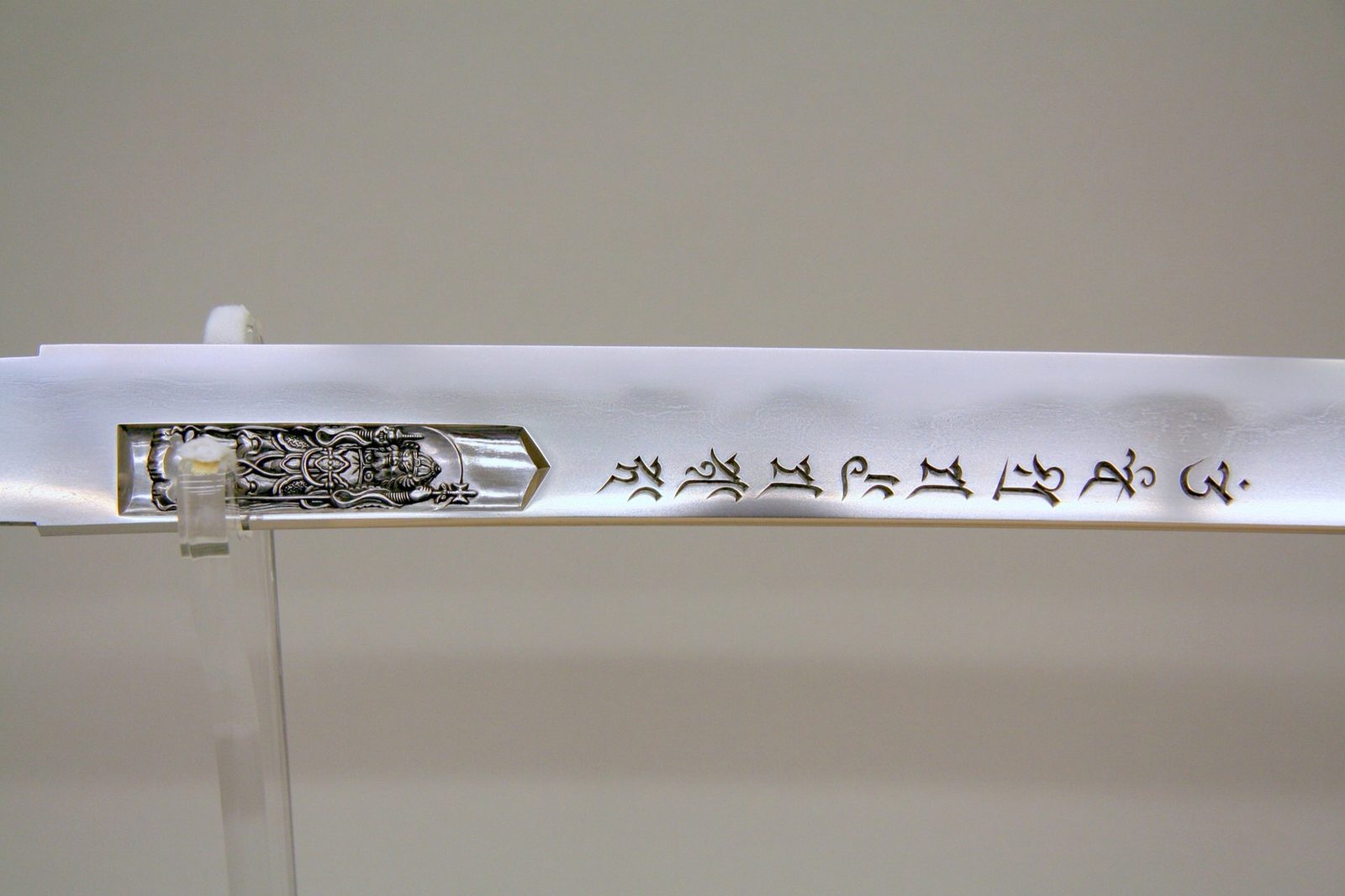
The carving of the same wakizashi: a figure in relief and Sanskrit characters (梵字, bonji). The Metropolitan Museum of Art. The Metropolitan Museum of Art, New York · Public domain · source 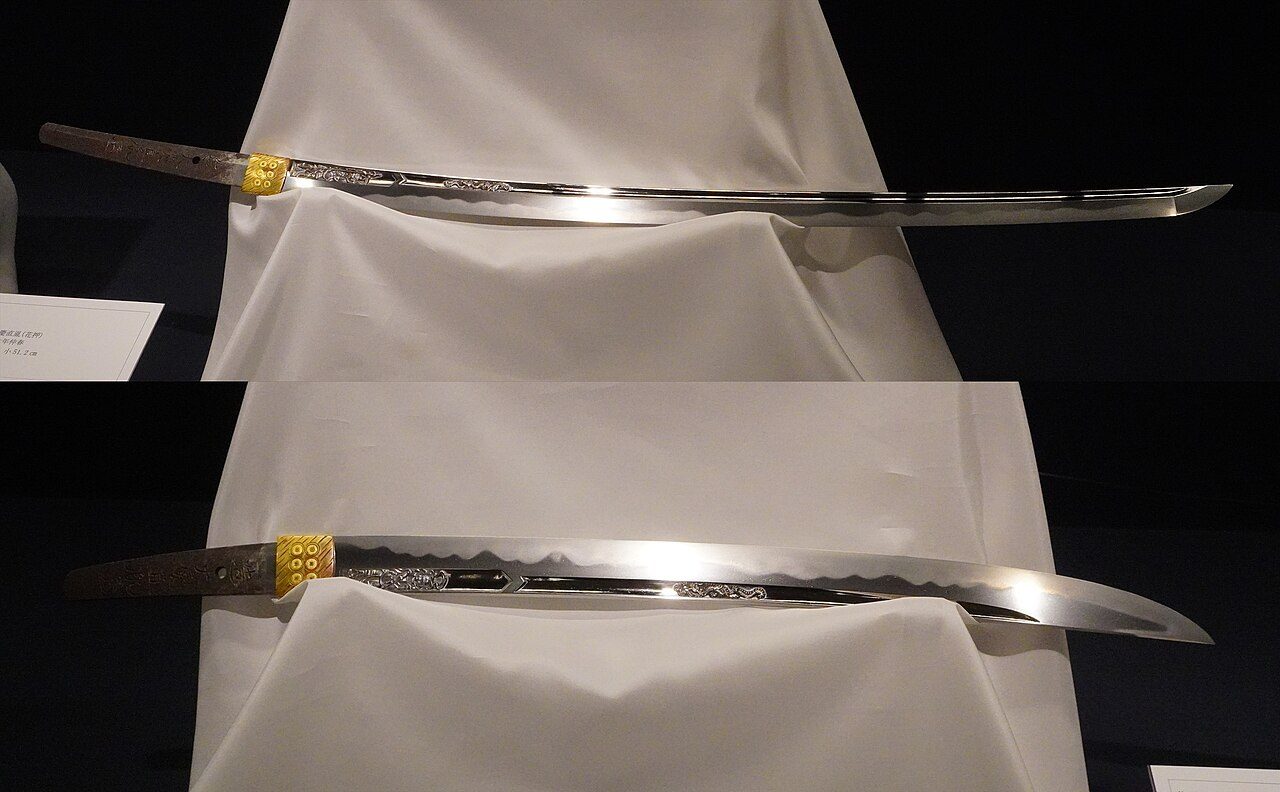
The daishō of Tenpō 7 (1836), signed 造大慶直胤 (Taikei Naotane kore o tsukuru), in an exhibition. SLIMHANNYA, CC BY-SA 4.0, via Wikimedia Commons · CC BY-SA 4.0 · source
