On this page
His style
The NBTHK places him within Masahide’s ideal of returning to the old swords (復古刀, fukkotō): copies of Ichimonji, Kagemitsu and Kanemitsu in the Bizen tradition, and Sōshū works. Sesko counts him among the smiths who concentrated on copies (写し, utsushi) of particular masters, above all of Osafune. A daishō of 1813 follows the model of the Kogarasu-maru (小烏丸, Kogarasu-maru), the sword of the imperial house attributed to Amakuni.
Kantei keys
- Sugata. In the Sōshū style, wide and with a long kissaki; in the Bizen, of normal width and with a marked curve. For the NBTHK, the shape gives him away as shinshintō: thick for its width and with little niku on the hira.
- Jihada. Ko-itame, itame and masame; sometimes an itame with swirling mokume (渦巻肌, uzumaki-hada), one of his hallmarks.
- Hamon. In his Bizen works, ko-chōji with ko-gunome, togari-ba, square gunome (角互の目, kaku-gunome), slanting ashi (逆足, sakaashi) and midare-utsuri; the long ashi reach almost to the edge of the temper, and the upper part of the temper merges into a “smoky” utsuri. In his Sōshū works, a midare tending towards notare, with abundant nie, kinsuji and sunagashi.
- Bōshi. In his copies of Kanemitsu, midare-komi with a turn-back (返り, kaeri).
- Nakago and mei. Marks of the place where he forged, such as Hisai (久居) in 1832, and half-moon seals on blades of the Bunka era; carvings by himself and by the engraver Yoshitane.
Who he is confused with
The NBTHK warns that his Bizen at first sight recalls Kanemitsu, but the almost patternless ko-itame jihada, the irregular temper and the ashi reaching the edge make it shinshintō; his compact utsuri with clear boundaries can make it pass for kotō or for the Ishidō school. Unlike Koyama Munetsugu, whose chōji repeats a regular pattern every 3 or 4 sun, and unlike Hosokawa Masayoshi, with tight fan-shaped chōji, Naotane gives a gunome with sloping sides (片落ち, kataochi) with utsuri.
His signature
Among other forms, he signed 出羽国大慶庄司直胤 (Dewa no kuni Taikei Shōji Naotane), 筑前大掾大慶藤直胤 (Chikuzen Daijō Taikei Fuji Naotane) and 美濃介直胤 (Mino no Suke Naotane), almost always with his monogram (花押, kaō). According to Sesko, from the age of 50 he sometimes added his age, and in old age he increased it: at 74 he put 75, and at 78, sometimes 80. The surname Fujiwara helps with dating: around Bunsei he wrote only 藤 (Fuji), around Tenpō the two characters 藤原 (Fujiwara), and around Kōka and Kaei a ligature that puts 原 (wara) inside 藤 (Fuji).
Naotane and the Naokatsu
The Tokyo National Museum says that Jirōtarō Naokatsu worked, like Naotane, in the Bizen and Sōshū styles; his katana of 1835 is a Sōshū work in nie, with visible grain and ō-midare. In the sources consulted there are no kantei keys that separate Naotane’s blades from those of his son-in-law; the signature is what tells them apart.
Gallery
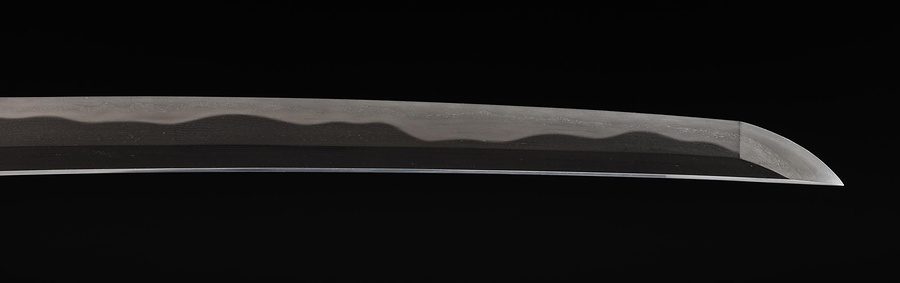
The point and the temper of the Tokyo katana. Tokyo National Museum, via Bunka Isan Online · © Tokyo National Museum · source 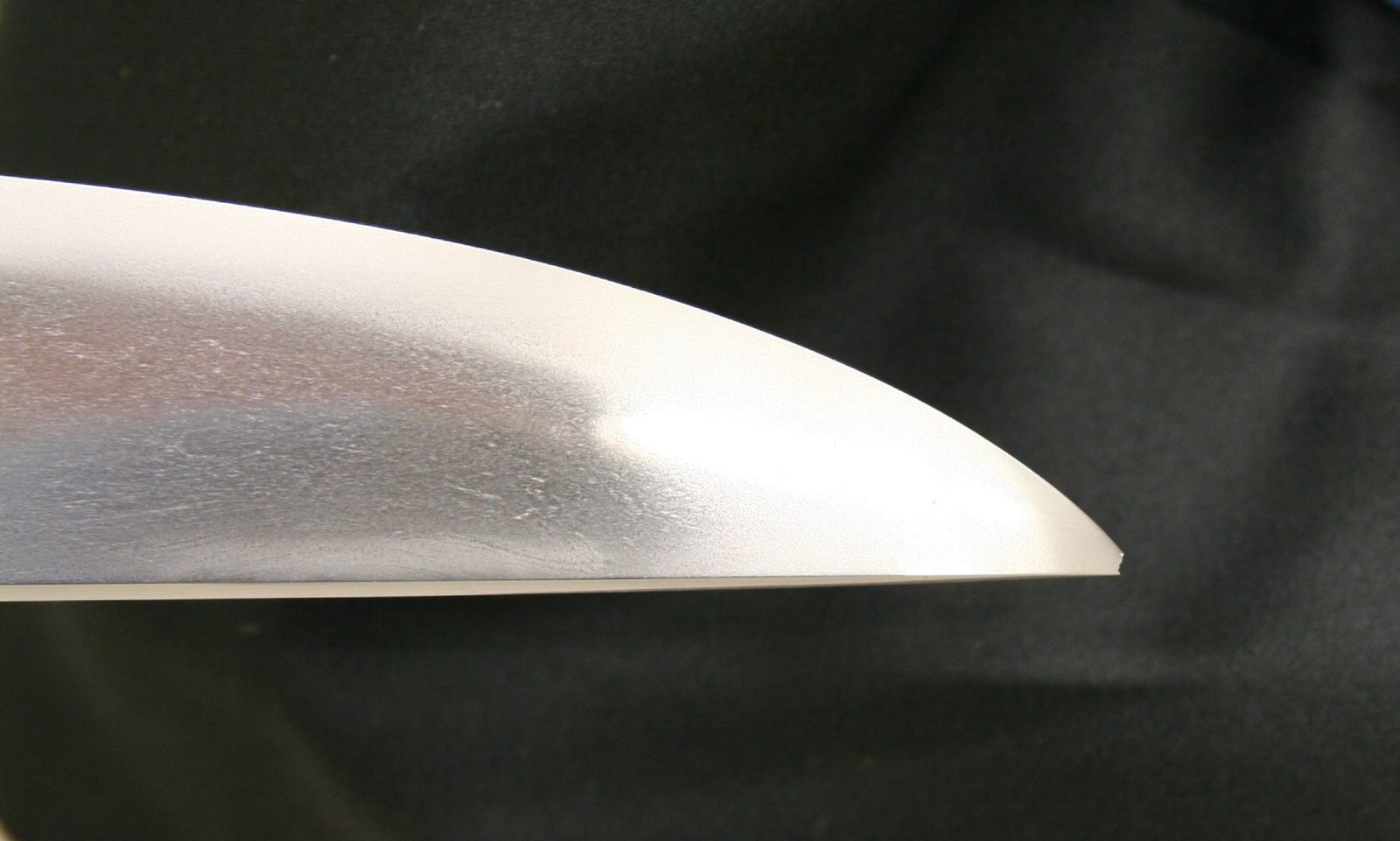
The point of the same wakizashi. The Metropolitan Museum of Art. The Metropolitan Museum of Art, New York · Public domain · source 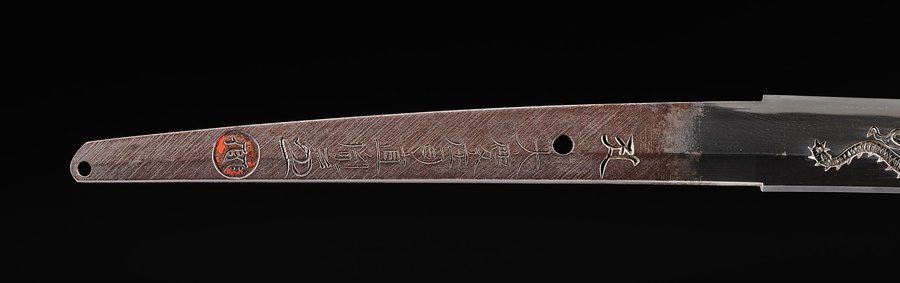
The tang of the Tokyo katana, with the signature 大慶庄司直胤 (Taikei Shōji Naotane) and his monogram. Tokyo National Museum, via Bunka Isan Online · © Tokyo National Museum · source 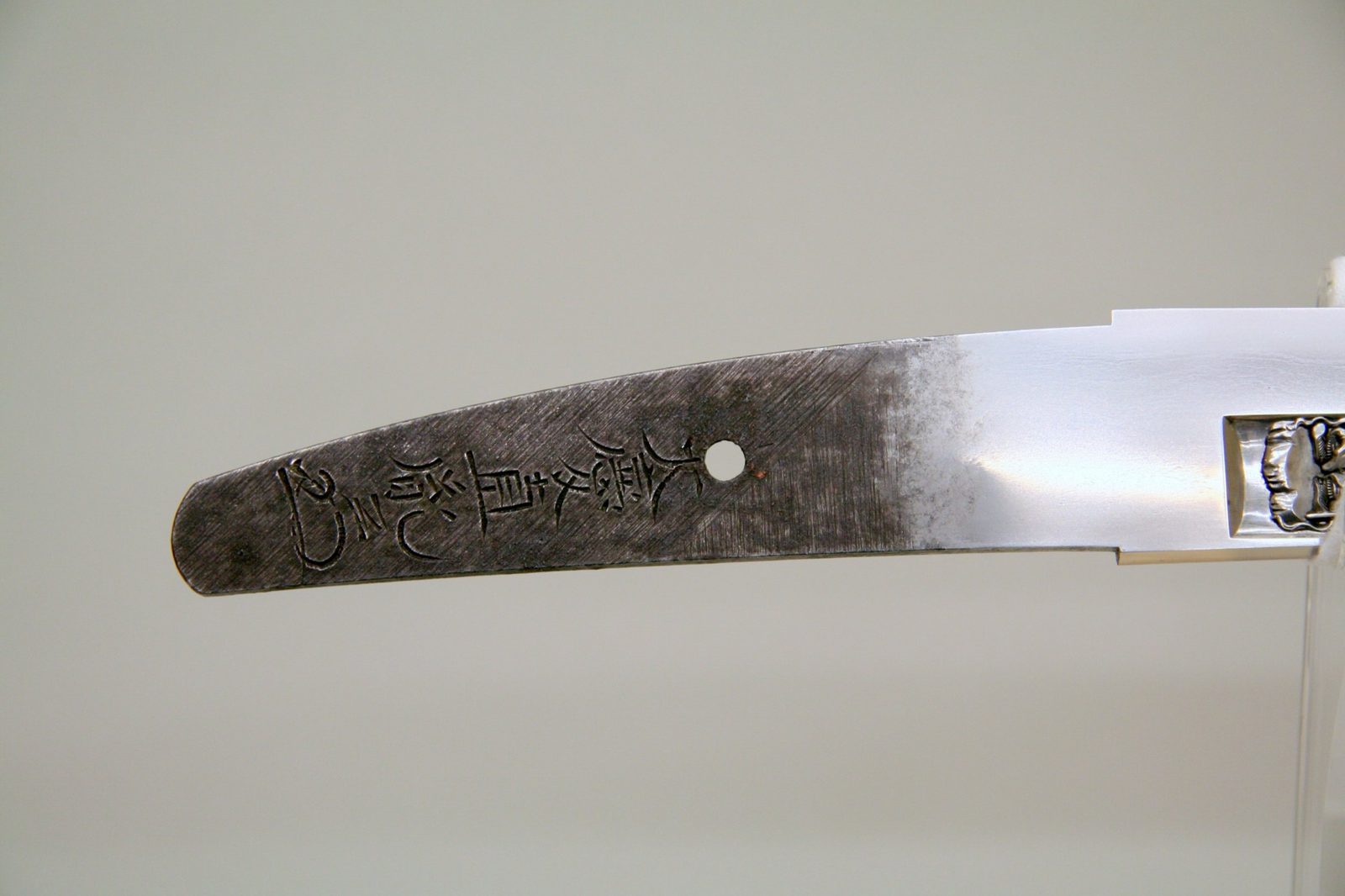
The tang of the same wakizashi, with the signature 大慶直胤 (Taikei Naotane) and his monogram (花押, kaō). The Metropolitan Museum of Art. The Metropolitan Museum of Art, New York · Public domain · source