On this page
National Treasures
- Atsu Tōshirō (厚藤四郎, Atsu Tōshirō), tantō signed 吉光 (Yoshimitsu), in the Tokyo National Museum, of 27.6 cm: designated in 1955 and a National Treasure since 1956. Its blade is very thick, about 11 mm at the base according to the Japanese Wikipedia. It passed through the Ashikaga, Hitotsuyanagi Naosue, Kuroda Josui, Toyotomi Hidetsugu and Hideyoshi, Mōri Hidemoto and Tokugawa Ietsuna, according to the e-Museum.
- Gotō Tōshirō (後藤藤四郎, Gotō Tōshirō), tantō of the Tokugawa Art Museum (Nagoya), of 27.7 cm: designated in 1953 and a National Treasure since 1954. It is named after Gotō Shōzaburō, master of the mint; it later belonged to Doi Toshikatsu, Tokugawa Iemitsu and Tokugawa Mitsutomo.
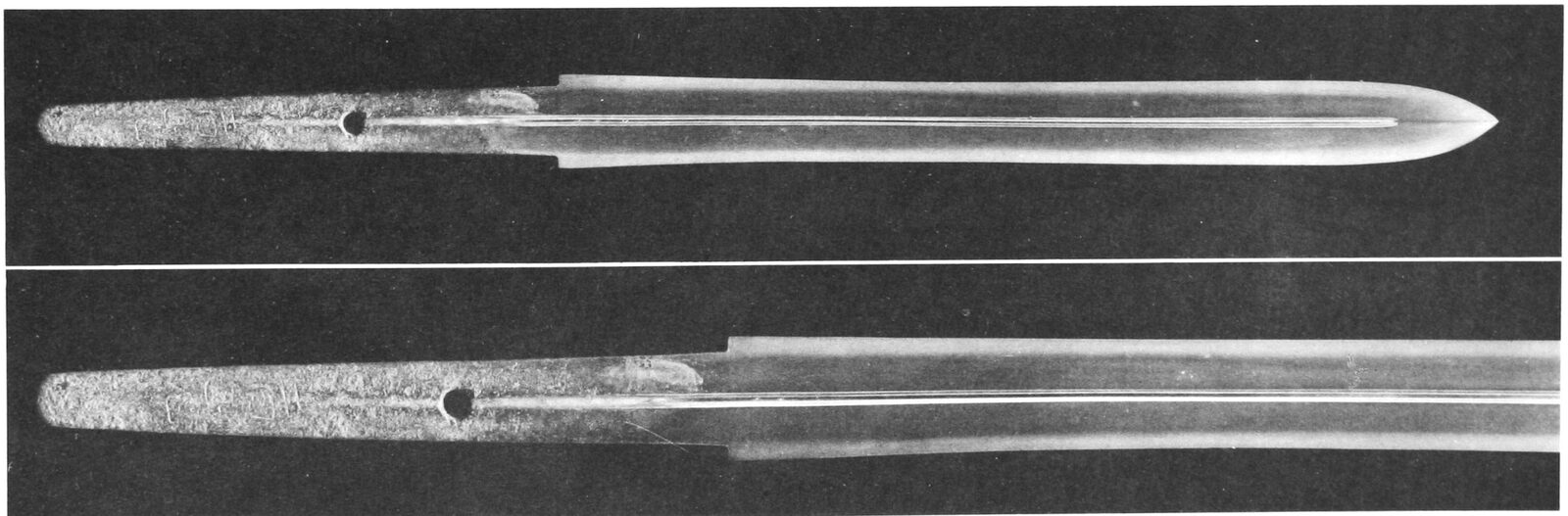
- Ken signed 吉光 (Yoshimitsu), the 白山吉光 (Hakusan Yoshimitsu), of the Hakusan-hime shrine (Ishikawa), of 22.9 cm: designated in 1909 and a National Treasure since 1952. The official record calls it an outstanding work, with stronger nie than his tantō.
- Tantō of the Tachibana, in the Tachibana family museum (Yanagawa, Fukuoka), of 23.3 cm: designated in 1935 and a National Treasure since 1953. It is wide for its length, with a hōchō shape. According to the NBTHK, Ashikaga Takauji gave it to Tachibana Sadanori in 1336.
The Atsu Tōshirō
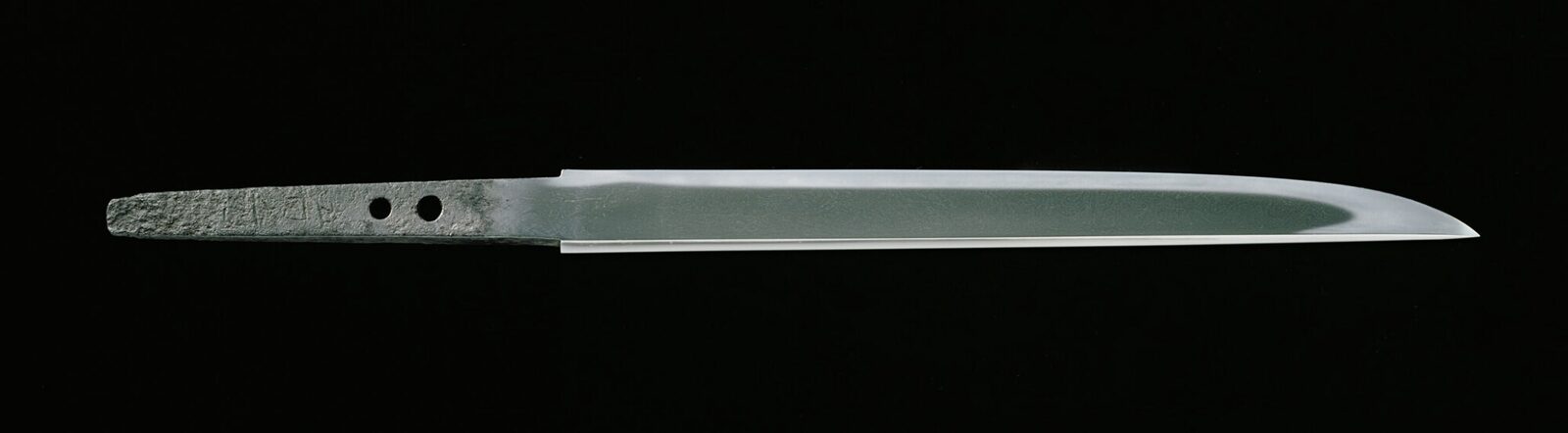
The Atsu Tōshirō, on the omote side. Tokyo National Museum, via e-Museum · ColBase terms of use · source 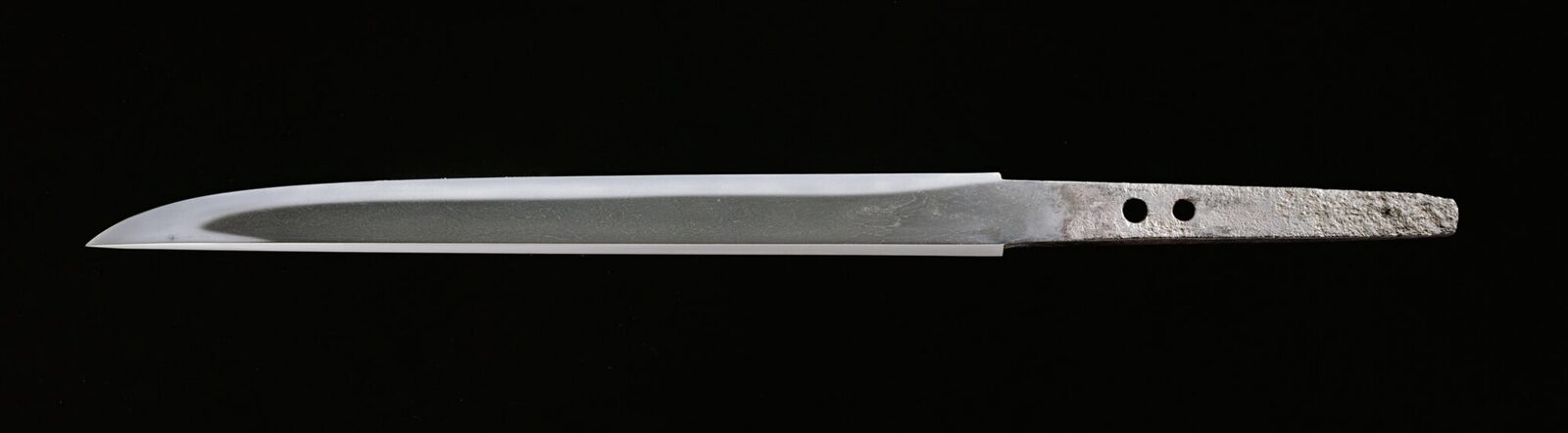
The Atsu Tōshirō, on the ura side. Tokyo National Museum, via e-Museum · ColBase terms of use · source 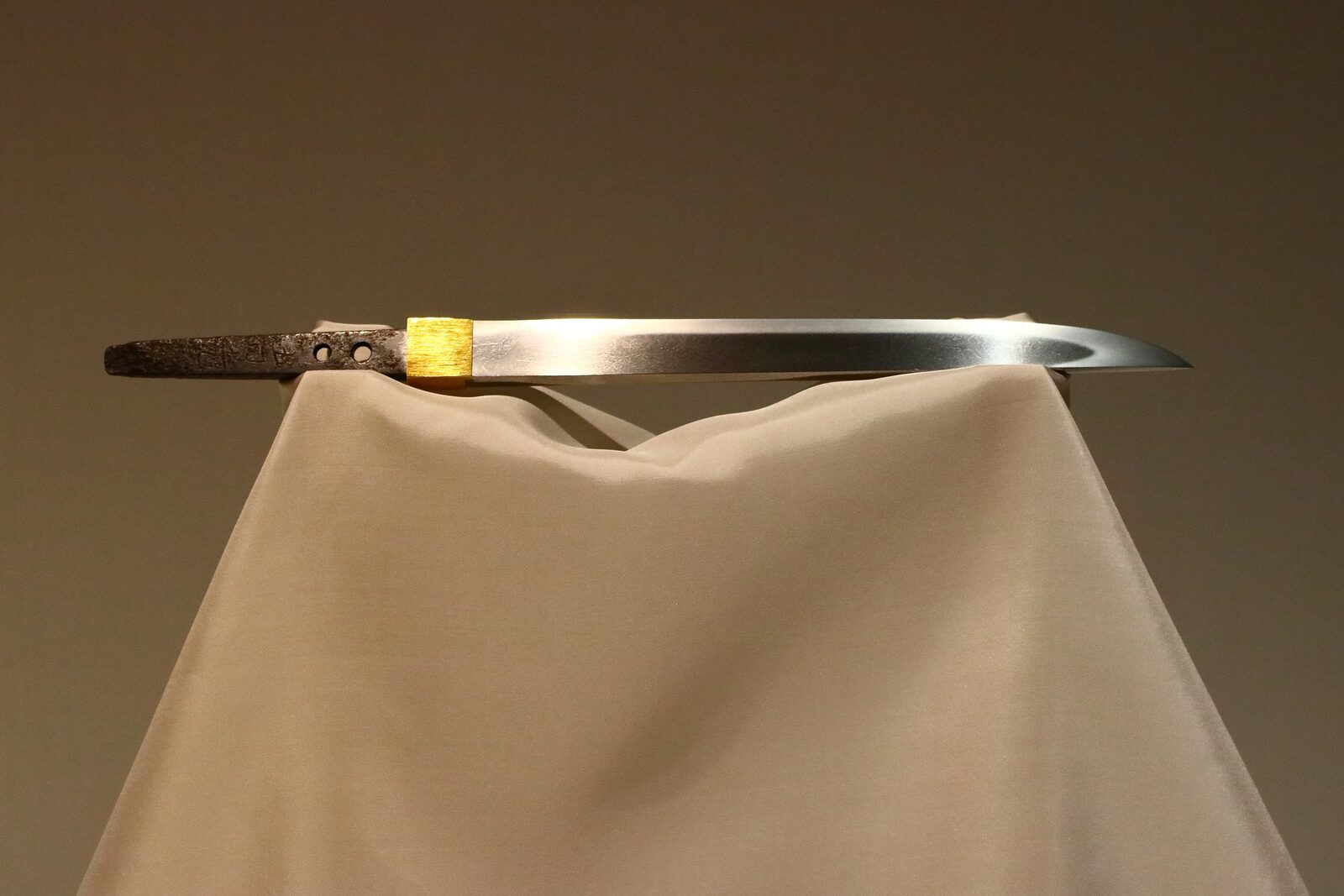
The Atsu Tōshirō, a National Treasure tantō, on display at the Tokyo National Museum. Kakidai, CC BY-SA 4.0, via Wikimedia Commons · CC BY-SA 4.0 · source
In the imperial collection
- Ichigo Hitofuri (一期一振, Ichigo Hitofuri): the only tachi of his that is known, shortened, with the signature cut out and inlaid (額銘, gaku-mei). It burned in the fall of Osaka, in 1615, and was retempered by Echizen Yasutsugu.
- Hirano Tōshirō (平野藤四郎, Hirano Tōshirō): a tantō of the Maeda, which Maeda Nariyasu presented to Emperor Meiji. Some copies of the Kyōhō meibutsuchō put it first in the list of Yoshimitsu.
Important Cultural Properties
Nine pieces with his name: the Shinano Tōshirō (Chidō Museum, Tsuruoka), the Maeda Tōshirō (Maeda Ikutokukai), the Akita Tōshirō (Kyoto National Museum), the Hakata Tōshirō (of the Agency for Cultural Affairs, in the Tokyo National Museum), the Iwakiri-Nagatsuka Tōshirō (Tokyo National Museum), a tantō of the Yōmei Bunko, a tantō of the Kaikō shrine (Osaka), a ken of the Atsuta shrine and the naginata-naoshi Honebami Tōshirō (骨喰藤四郎, Honebami Tōshirō), of the Toyokuni shrine (Kyoto), unsigned and attributed. The Honebami burned and was retempered; it is on deposit at the Kyoto National Museum.
The Iwakiri-Nagatsuka Tōshirō
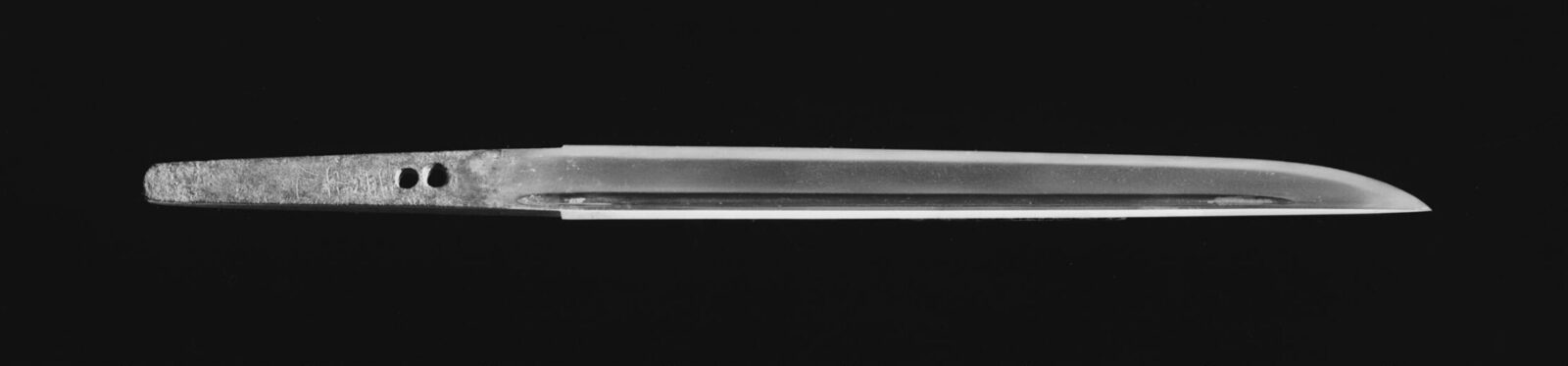
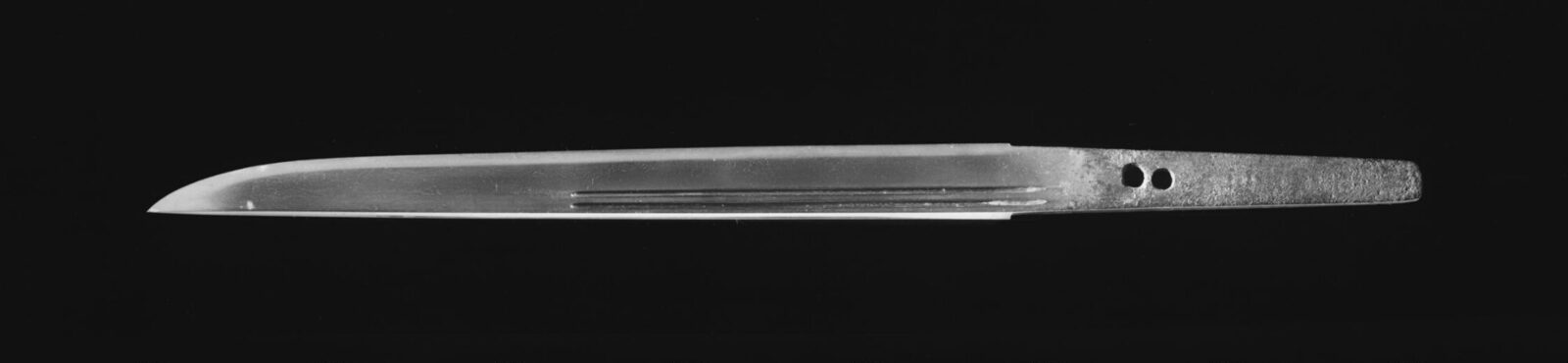


A tantō that passed through Hideyoshi’s hands
The Iwakiri-Nagatsuka Tōshirō (岩切長束藤四郎, Iwakiri-Nagatsuka Tōshirō), of 23.3 cm, is small, with a ko-itame jigane and a suguha of ko-nie, and carries an appraisal by Hon'ami Kōon of 1648, according to the e-Museum. Toyotomi Hideyoshi gave it to Nagatsuka Masaie; it later belonged to Fukushima Masanori and to the Okudaira.
Other named blades
- Namazuo Tōshirō (鯰尾藤四郎, Namazuo Tōshirō), in the Tokugawa Art Museum: burned and retempered.
- Okayama Tōshirō (岡山藤四郎, Okayama Tōshirō), in the Tokyo National Museum: it passed from Maeda Toshiie to Hideyoshi, Kobayakawa Hideaki, Tokugawa Ieyasu and Tokugawa Yoshinao, and reached the museum after the war. The source says that Tokugawa Yoshikatsu gave it to Emperor Meiji in 1863, but in 1863 Kōmei was reigning and Meiji did not ascend the throne until 1867: the year or the emperor remains to be checked. No designation is recorded in ColBase.
- Yagen Tōshirō (薬研藤四郎, Yagen Tōshirō): it is taken to have burned at Honnō-ji, in 1582; another tradition has it pass to Toyotomi Hideyori and Tokugawa Ieyasu. Its whereabouts are unknown.
In the old lists
Of the 274 swords of the Kyōhō meibutsuchō (1719), 34 are his, 16 that existed and 18 burned, against 59 by Masamune and 22 by Gō Yoshihiro, according to the Japanese Wikipedia. Heibonsha and the Nipponica give the same number for his, but 80 burned swords in all, not 81 as in the Wikipedia.
He is not in the 『懐宝剣尺』 (Kaihō Kenjaku), the list of wazamono: the Japanese Wikipedia explains that the “three makers”, Masamune, Yoshimitsu and Gō, are not included because they were treasures of the daimyō and could not be tested.