On this page
Awataguchi
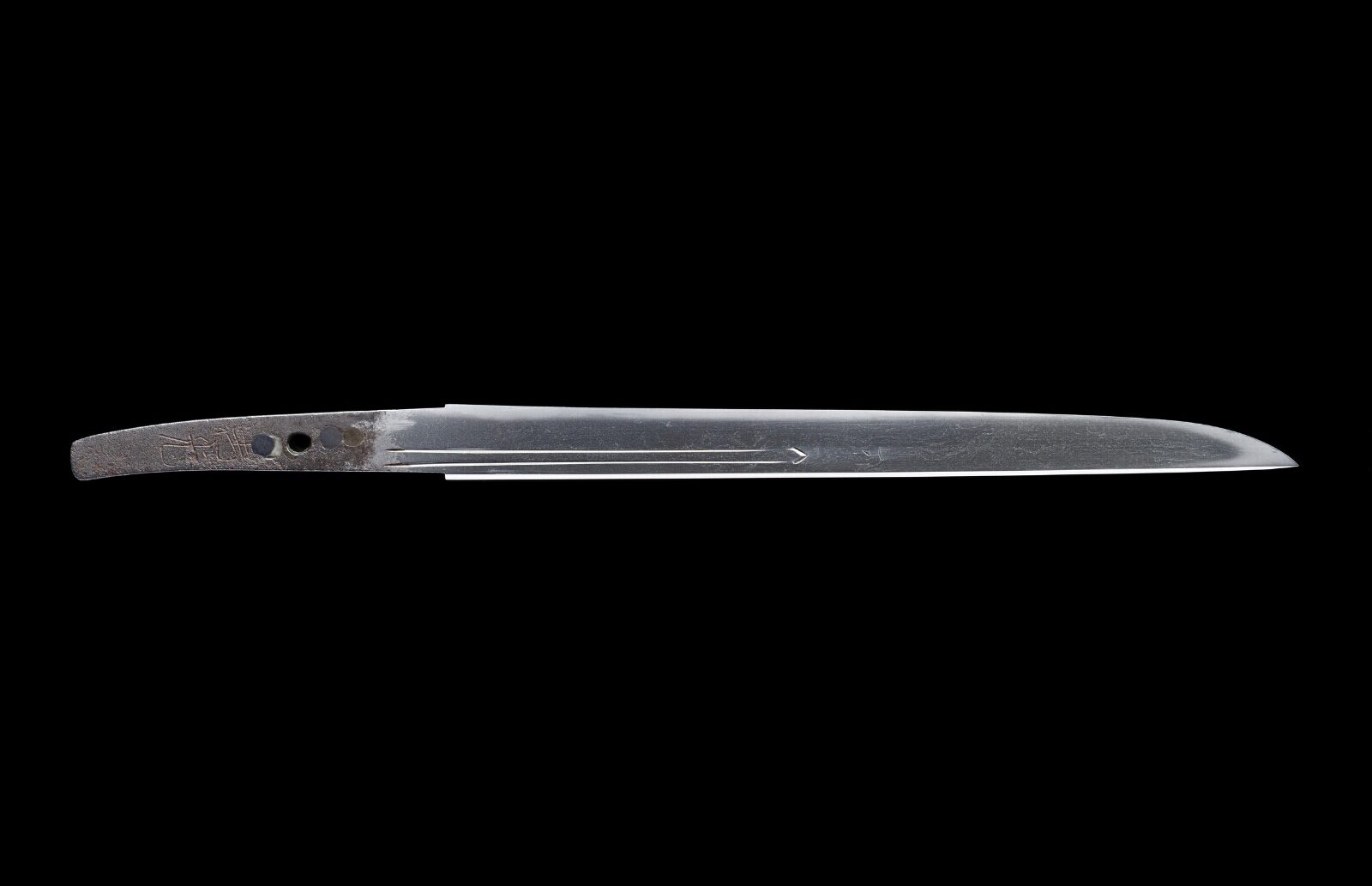
Yoshimitsu, common name Tōshirō (藤四郎, Tōshirō), was a swordsmith of Awataguchi, in Kyoto, of the middle or late Kamakura period. The Japanese Wikipedia places him around the 13th century. For the NBTHK he is the last great master of the Awataguchi school, which was active for a century during the Kamakura period.
Family and master
The sources do not agree. The Nihon kokugo daijiten makes him the son of 則国 (Norikuni); the Britannica, the son of 国吉 (Kuniyoshi), “it is said”; Heibonsha and the Nipponica, a pupil of Kuniyoshi; the record of the Agency for Cultural Affairs, the son of Norikuni or of Kuniyoshi; and the NBTHK, the son or pupil of Kuniyoshi.
Dates
There are no dated blades of his. The Nipponica places him around the era 正応 (Shōō, 1288–1293). The NBTHK says that the old records place him around Shōō and that Kuniyoshi’s blades dated in the eras 建治 (Kenji) and 弘安 (Kōan), from 1275 to 1288, make this reasonable. Another issue of the NBTHK journal speaks of the Kōan and Shōō eras, with dates, “1278-82”, that do not match those of these eras.
One of the three greats
Toyotomi Hideyoshi placed him with Masamune and Gō Yoshihiro among the three great swordsmiths of the realm (天下の三名工, tenka no san meikō). The Kyōhō meibutsuchō does the same: they are the “three makers” of the famous swords (名物三作, meibutsu sansaku, or 天下三作, tenka sansaku). The NBTHK adds that he is, with Shintōgo Kunimitsu, one of the two masters of the tantō.
Blades burned and retempered
Oda Nobunaga and Toyotomi Hideyoshi gathered many of his blades, and many burned in the fire at Honnō-ji and in the fall of Osaka Castle, in 1615. Tokugawa Ieyasu had them searched for, and the first 越前康継 (Echizen Yasutsugu) retempered the Ichigo Hitofuri and the Namazuo; the Honebami was retempered by a later Yasutsugu, after the great Meireki fire.
The legend of the Yagen Tōshirō
The Nipponica tells that Hatakeyama Masanaga tried to commit seppuku with a tantō by Yoshimitsu and the blade would not go in; he threw it away, and it stuck into a pharmacist’s mortar (薬研, yagen). Because of legends like this, the daimyō of the Edo period kept a tantō of his as an amulet that does not wound its owner.