
On this page
Quick profile
- Name
- Umetada Myōju; Myōju is his religious name, according to Kotobank AT
- Kanji and reading
- 埋忠明寿 (Umetada Myōju) HD
- Period
- Shintō: from Momoyama to the beginning of the Edo period AT
- Province
- Yamashiro (山城), in the quarter of Nishijin (西陣), in Kyoto, according to the signature on his tachi HD
- School
- The Umetada house (埋忠家, Umetada-ke), of swordsmiths, engravers and metalworkers AT
- Master
- His father, Umetada Shigetaka, also called 明欽 (Myōkin), according to Kotobank and Markus Sesko AT
- Title
- No honorary title is recorded in his signatures PC
- Pupils
- The first Hizen Tadayoshi, who signed Musashi Daijō Tadahiro from 1624: according to Markus Sesko and according to the inscription on his katana of 1629, which calls him a pupil of Myōju; Aki Teruhiro, according to the Sekai Daihyakka Jiten AT
- In the lists
- He does not appear in the Yamada cutting list; the Japanese Wikipedia places him among the very best of shintō (新刀最上作, shintō saijō-saku) AT
- What is documented
- The tachi signed and dated 1598 and tantō dated from 1607 to 1612; the designations of the tachi (1950) and of a tsuba (1954) HD
- The tradition
- That his house descended in the 25th generation from Sanjō Munechika, which the Nipponica encyclopaedia considers unbelievable, and that he served Ashikaga Yoshiaki AT
In short
The Umetada house worked by inheritance for the Ashikaga shōgun as swordsmiths and engravers, made habaki and seppa, shortened old blades and inlaid in gold the attribution of the Hon'ami; Myōju later worked for Toyotomi Hideyoshi and his nephew Hidetsugu. The encyclopaedias do not agree about his forging: the Nipponica sees it as a secondary activity and places his worth in his tsuba; the Japanese Wikipedia says that he made few blades, but among the very best of shintō. The record of the Kyoto National Museum gives his tachi of 1598 as, probably, his only authentic long blade.
Sections
-
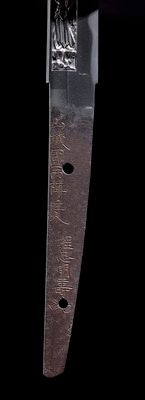 The Umetada house
Life and times
His names, the Nishijin workshop, his lords and his pupils.
-
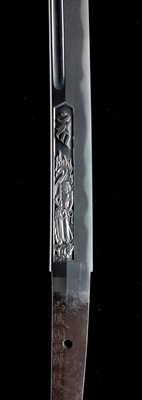 Blades, carvings and tsuba
Work and style
The tachi of 1598, the carved tantō, the signature and the tsuba of coloured metals.
-
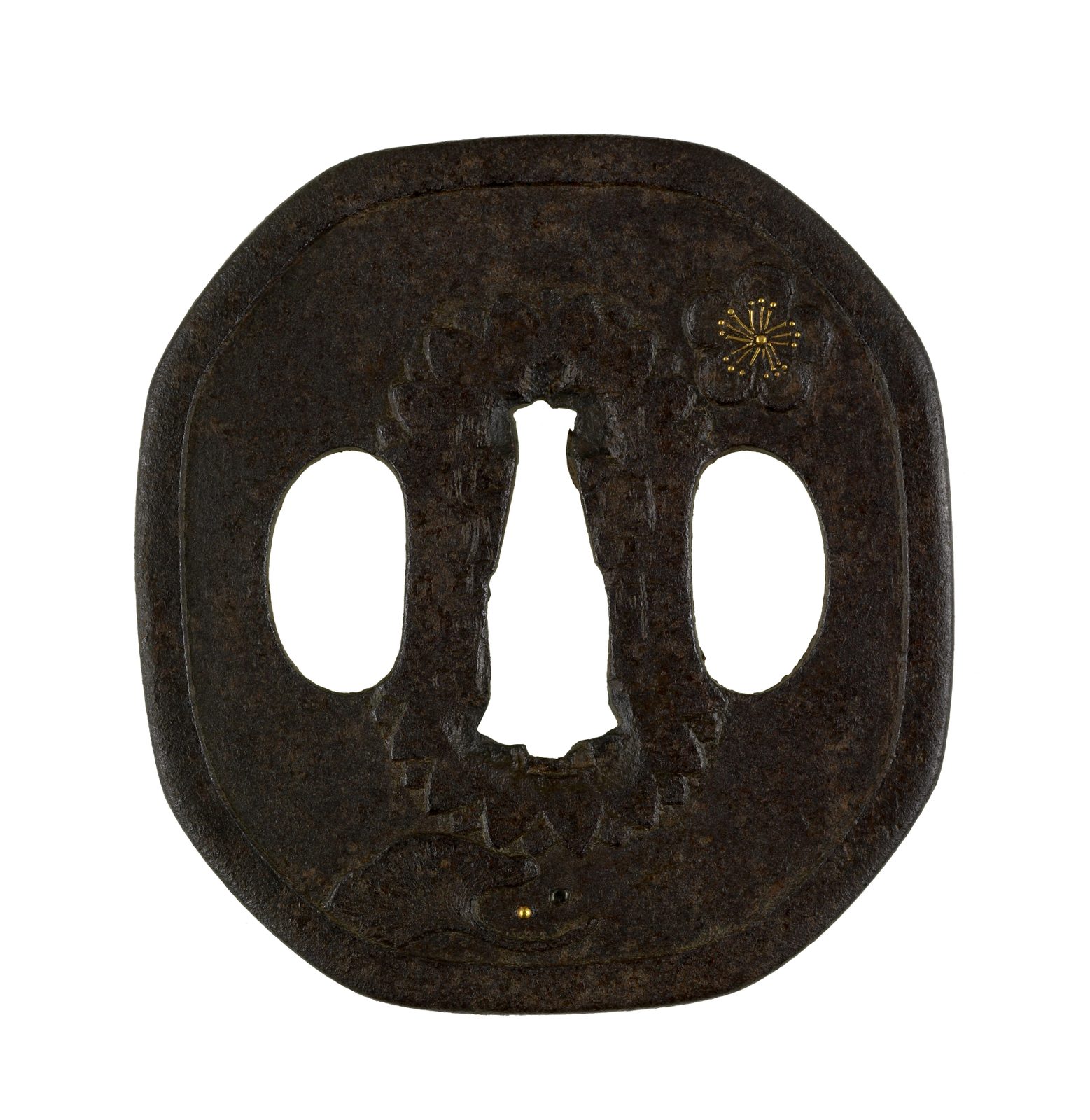 In museums and lists
Famous works
Two Important Cultural Properties, his works in museums and the workshop of the famous swords.
-
 Bibliography and credits
Sources
The sources consulted and the image credits.