Sugata
Only tachi of his survive, neither tantō nor straight blades: shinogi-zukuri and iori-mune, of slender shape, with a high koshizori, funbari and ko-kissaki. The curvature eases from the middle to the point, without reaching the shape of the Ko-Bizen, according to the Japanese Wikipedia. The official record of the Dōjigiri adds a good hiraniku.
Jihada
Large, flowing itame, with interlinked chikei, plenty of ji-nie and a nie-utsuri. The steel is dark and somewhat archaic in appearance, less refined than Munechika’s: traces remain of the early forging of hard and soft steels, according to the Japanese Wikipedia. On the Dōjigiri, the official record gives ko-itame with thick ji-nie, irregular nie-utsuri and chikei.
Hamon
Ko-midare of nie (nie-deki) with ashi, kinsuji and sunagashi, sometimes with a hint of chōji; a thick nioiguchi and plenty of ko-nie. The temper stops about 7 or 8 bu from the habaki: this is the yaki-otoshi (焼き落とし). The official record of the Dōjigiri gives ko-midare with ashi and kinsuji, and the yaki-otoshi above the ha-machi.
Bōshi
On the Dōjigiri, a midare bōshi (帽子), with a komaru tip, with hakikake, that turns back, according to the official record. The NBTHK compares with it the wide yakiba of the bōshi of a tachi by Sanemori, an Important Cultural Property of the Matsudaira of Takamatsu.
Nakago and mei
The nakago of the Dōjigiri is unshortened, with the tip in kurijiri, kiri file marks, a single hole and the signature above the hole, towards the mune. He signed with two characters, 安綱 (Yasutsuna): the 綱 (tsuna) is larger than the 安 (yasu), and the lower part of the 安 (yasu) leans towards the edge of the tang; this is the habit of his hand, according to the Japanese Wikipedia. The NBTHK points out as features seen in his work the signature above the hole towards the mune and a shallow kurijiri.
Kantei keys
For the NBTHK, Ko-Hōki has a dark steel with a large hada, yaki-otoshi at the base, dense nie and a ko-gunome or ko-midare of nie with kinsuji and sunagashi: a “rustic” beauty. Sanemori’s midare is smaller than Yasutsuna’s. Honma Kunzan said that Yasutsuna does not make showy or florid work. In a kantei, a tachi by Ko-Bizen Kunitsuna was mistaken for Ko-Hōki; the NBTHK explains that in Kunitsuna’s the steel is not so dark and the ha-nie shines, whereas the Ko-Hōki tachi have plenty of hiraniku.
The Dōjigiri Yasutsuna
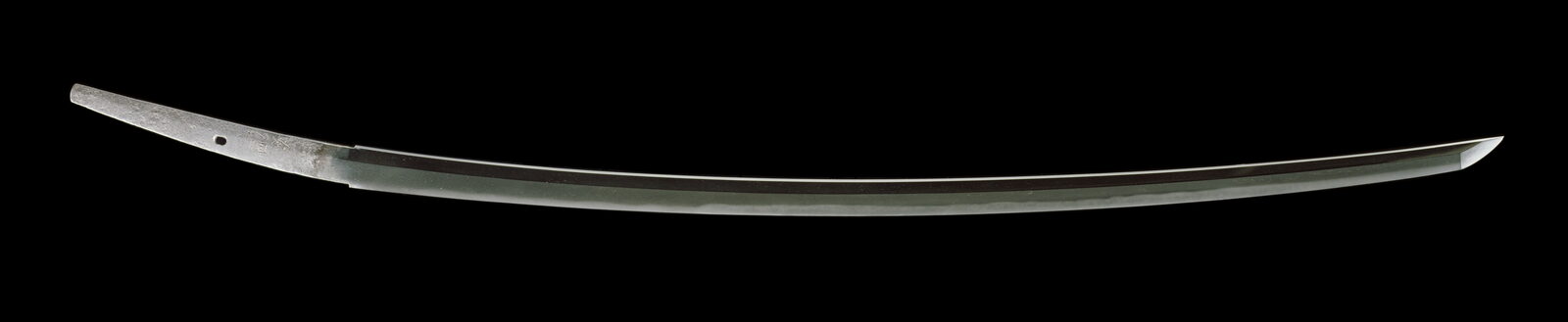
The Dōjigiri Yasutsuna, whole, on the omote side. 国立文化財機構 (Kokuritsu Bunkazai Kikō, National Institutes for Cultural Heritage), CC BY 4.0, via Wikimedia Commons · CC BY 4.0 · source 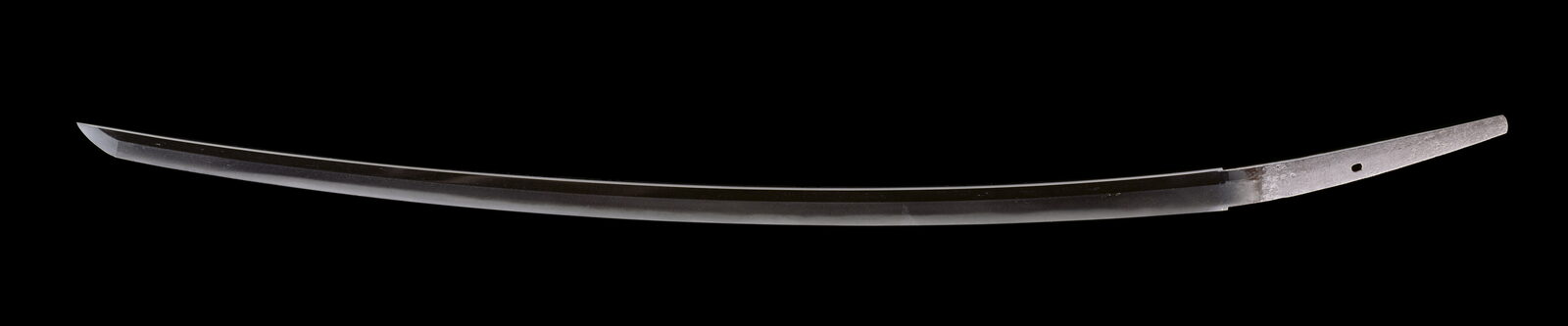
The Dōjigiri Yasutsuna, whole, on the ura side. 国立文化財機構 (Kokuritsu Bunkazai Kikō, National Institutes for Cultural Heritage), CC BY 4.0, via Wikimedia Commons · CC BY 4.0 · source 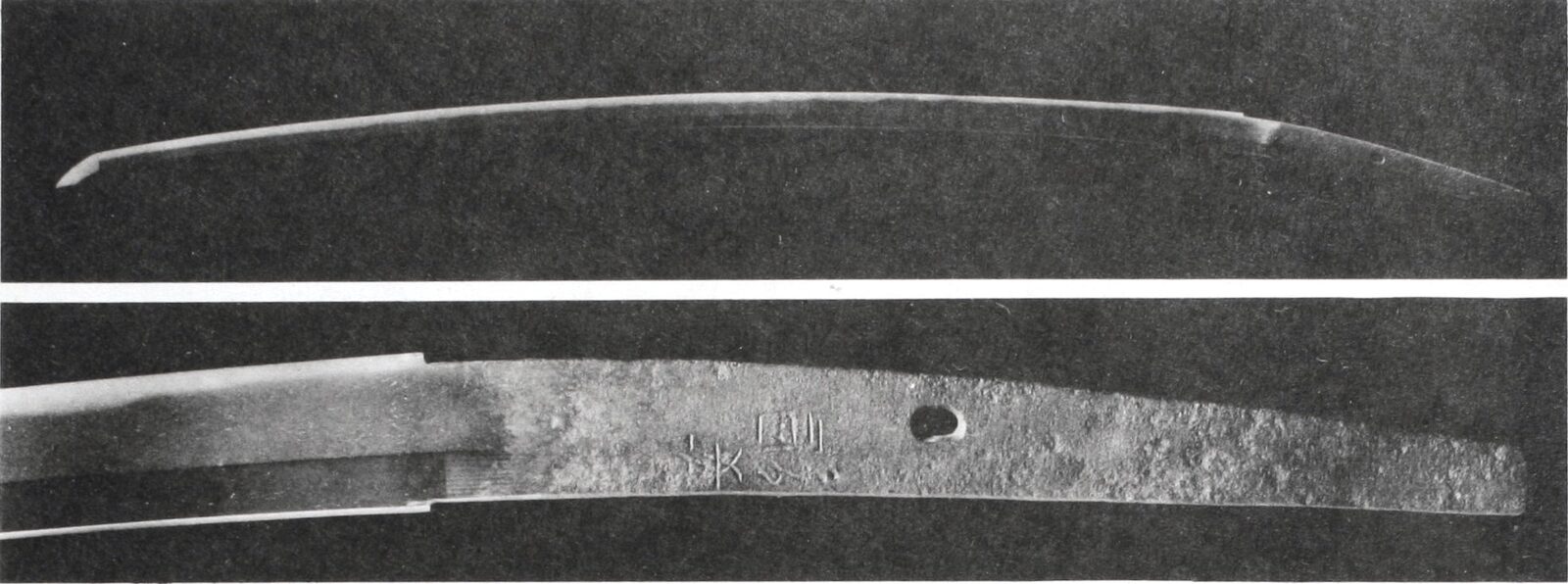
The Dōjigiri: the point and the nakago with the signature 安綱 (Yasutsuna), in the 1955 plates of National Treasures. Association of Cultural Properties, “Portfolio of National Treasures”, vol. 3 (1955), Public domain, via Wikimedia Commons · Public domain · source


