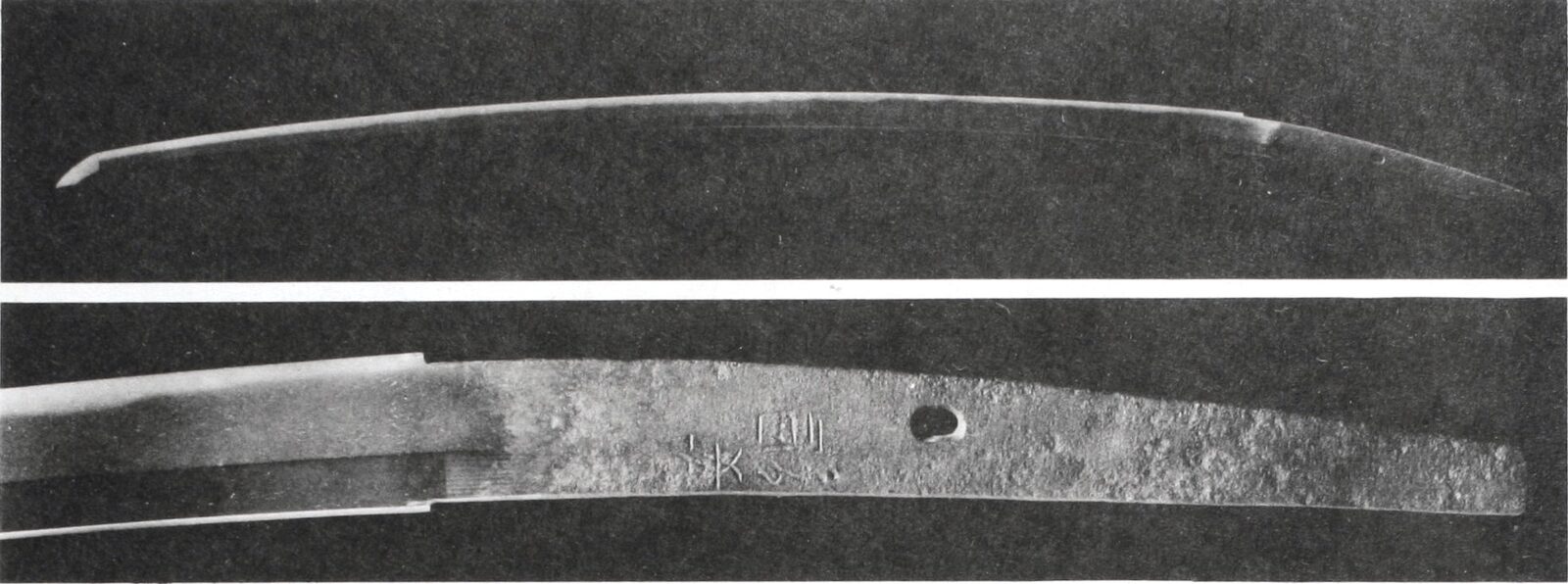
A swordsmith of Hōki
Yasutsuna was a swordsmith of Hōki province in the Heian period. He is assumed to have worked in Ōhara, and that is why he is also called Hōki Yasutsuna or Ōhara Yasutsuna, according to the Japanese Wikipedia. The oldest treatise on swords, the 『観智院本銘尽』 (Kanchi-in-bon Meizukushi), of the late Kamakura period, cites him as 伯耆国小原安綱 (Hōki no kuni Ohara Yasutsuna). But it is not certain that he lived in Ōhara, and there is no work signed with that name: it would come from the signature of his son, Sanemori. The 『太平記』 (Taiheiki) speaks of “the swordsmith Ōhara Gorō-dayū Yasutsuna”, of the Aimi district; it is a literary mention, not a document.
The dates
The old books place him in the era 大同 (Daidō, 806–810) or in the era 弘仁 (Kōnin, 810–824), and the Nihon-koku Kaji Sōyaku, by Hasegawa Chūemon, of the early Edo period, gives him 749 to 811, at 63 years of age. That chronology was repeated throughout the Edo period. The Japanese Wikipedia considers it an invention of the treatises: at that time straight blades (直刀, chokutō) were still being made, and the tachi shape became established in the second half of the Heian period.
The Tokyo National Museum today dates his Dōjigiri to the Heian period, between the 10th and 12th centuries: an already curved tachi, with a high koshizori. The English Wikipedia records three opinions: the Daidō era, around the year 900, or, more probably, the time of Sanjō Munechika, in the era 永延 (Eien, 987–989). The first curved swords are attributed to the two of them.
Ko-Hōki
He is held to be the founder of the Ko-Hōki (古伯耆, Ko-Hōki) swordsmiths. His son, according to tradition, is 大原真守 (Ōhara Sanemori), and the group also includes Sadatsuna, Aritsuna, Sanekage and Yasuie, all with signed work. The NBTHK records that the old books make Sanemori the son of Yasutsuna, and that 安家 (Yasuie), son or pupil, has a very direct relationship with him. For Yasuie’s dates there are two opinions, the Eien era (987–989) or the era 平治 (Heiji, 1159), and the NBTHK says that more study is needed.
His fame
According to the Japanese Wikipedia, the appraiser Utsunomiya Mikawa-nyūdō, of the early Muromachi period, put Yasutsuna of Hōki at the head of the eleven best swordsmiths of the era of Emperor Ichijō, followed by Sanjō Munechika and Kanehira. Satō Kanzan called the Dōjigiri the “yokozuna” of the Japanese sword.
Legends and places
An old book of swordsmiths, of the late Muromachi period according to the Japanese Wikipedia, tells that beside a lagoon in Hōki a man appeared with a white ox laden with iron; Yasutsuna saw him bury it and afterwards took the name Amahara Hiteru. The Wikipedia itself adds that they are held to be two different people: it is tradition, not fact.
In Hōki there are places of tradition: a 1985 monument to the place where he forged, with an inscription by Gassan Sadakazu, Living National Treasure, the Yamabushi-zuka and the Hana-no-gozen shrine. A 2024 excavation found remains of ironworking, but no report links them to Yasutsuna or to Sanemori.