On this page
Dōjigiri Yasutsuna (童子切安綱)
Tachi signed 安綱 (Yasutsuna), in the Tokyo National Museum (F-19931), with its mounting 糸巻太刀拵 (itomaki no tachi koshirae). Designated in 1933 and a National Treasure since 1951. It measures 80.0 cm of blade, 2.7 cm of curvature, 2.9 cm wide at the base and 1.9 at the point, and 3.1 cm of kissaki; the nakago is unshortened.
The 『享保名物帳』 (Kyōhō meibutsuchō) records it as “meibutsu Dōjigiri” with the legend of Minamoto no Yorimitsu, who is said to have killed the demon Shuten-dōji with it. The Japanese Wikipedia qualifies that the name already appears earlier in the records of the Matsudaira and that it was formerly called “Onikiri”. According to the museum’s record, it belonged to Toyotomi Hideyoshi, to Tokugawa Ieyasu and to Hidetada, who gave it to Matsudaira Tadanao, of Echizen; it later passed to the Matsudaira of Tsuyama. What comes before the Ashikaga is legend, and the Japanese Wikipedia warns that this sequence has no support in sources of its time.
One of the five swords under heaven
The Dōjigiri is one of the 天下五剣 (tenka goken), with the Onimaru Kunitsuna, the Mikazuki Munechika, the Ōdenta Mitsuyo and the Juzumaru Tsunetsugu. The five appear together, at least, in the Shoke Meikenshū, a copy of the Kyōhō meibutsuchō of 1719. The Japanese Wikipedia says that it is not known since when they have been called this; the English Wikipedia cites, after Fukunaga, the Yorozu Kaimono Chōhōki of 1692-1693.
At the Tokyo National Museum
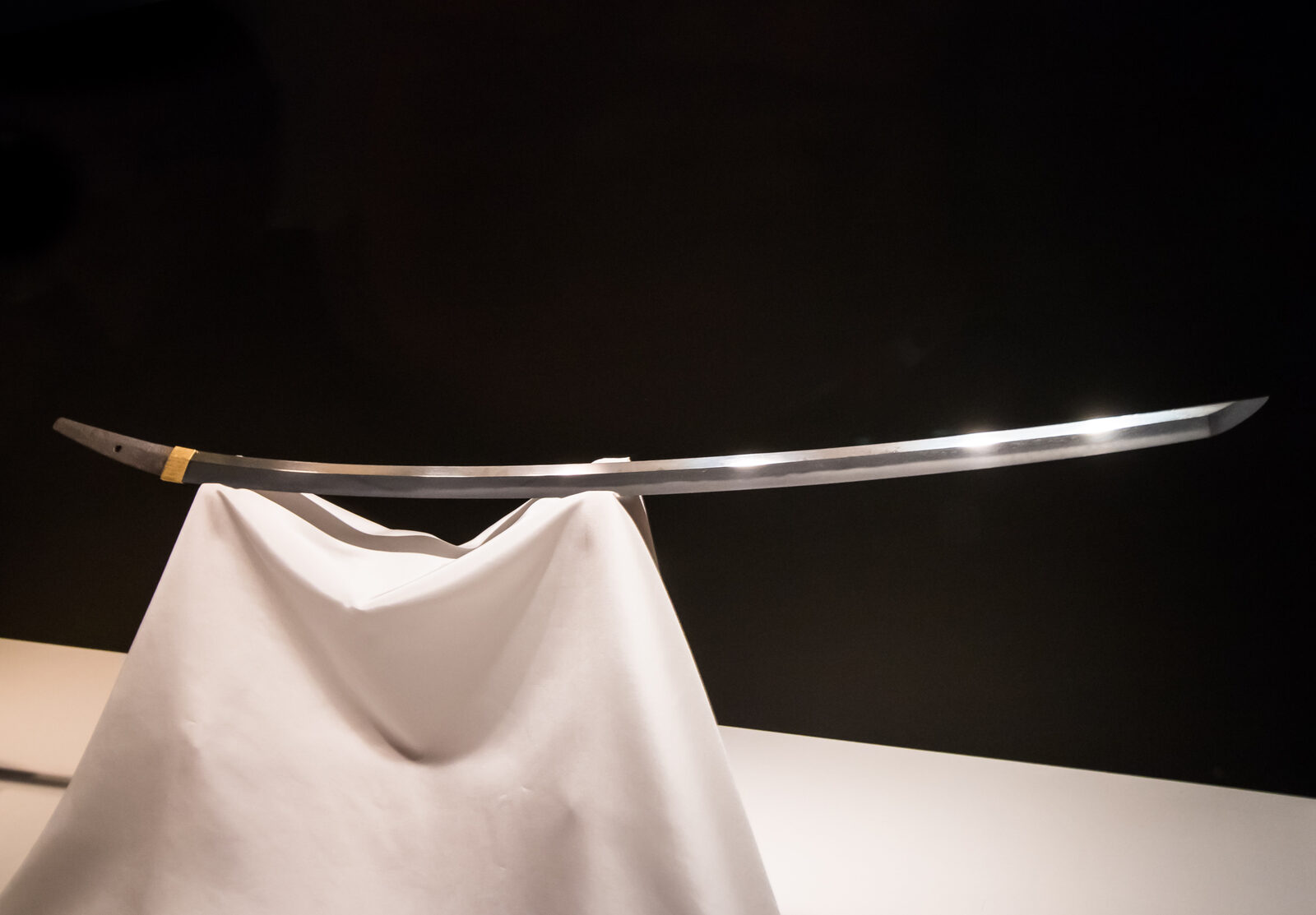
The Dōjigiri Yasutsuna on display at the Tokyo National Museum. Kakidai, CC BY-SA 4.0, via Wikimedia Commons · CC BY-SA 4.0 · source 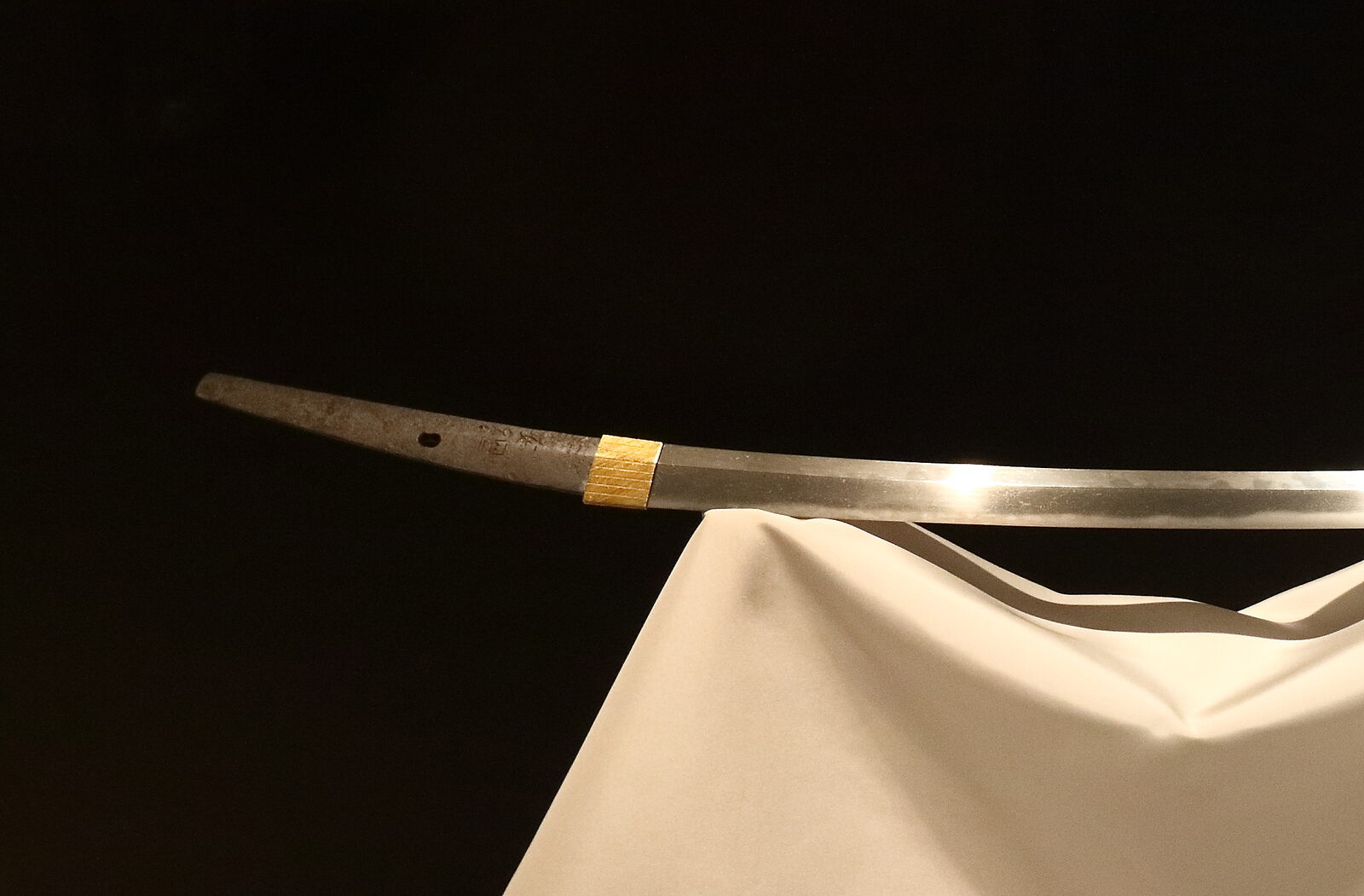
The nakago and the habaki of the Dōjigiri Yasutsuna in its display case at the Tokyo National Museum. Kakidai, CC BY-SA 4.0, via Wikimedia Commons · CC BY-SA 4.0 · source


Important Cultural Properties
- Tachi 安綱 (Yasutsuna) that belonged to Hoshina Masayuki, in the Seikadō Bunko Art Museum (Tokyo): 69.4 cm, shortened; designated in 1940.
- Tachi 安綱 (Yasutsuna) of the Kishū Tōshōgū (Wakayama), donated by Tokugawa Yorinobu in 1665: 80.6 cm, unshortened, with its mounting; designated in 1913.
- The Onikiri (鬼切, Onikiri) of the Shimazu: an Important Art Object in 1933 and an Important Cultural Property since 1954. The Agency for Cultural Affairs bought it in 2011, and the Tokyo National Museum keeps it. Tradition has it come from the Sōjō-in of the Tsurugaoka Hachimangū shrine, in Kamakura, and links it to Minamoto no Yoritomo.
These designations are given by the Japanese Wikipedia; they have not been checked in the official database.
Important Art Objects
- The Hannya-maru (般若丸, Hannya-maru), of 78.2 cm and unshortened, of the Japanese Sword Museum foundation (Tokyo); designated in 1933.
- The tachi of Matsudaira Shungaku, of 71.7 cm and unshortened, in the Tokyo National Museum; designated in 1935. It is lent to exhibitions in place of the Dōjigiri, such as those at the Kremlin in 2008 and at the Metropolitan in 2008 and 2009.
- The Tenkōmaru (天光丸, Tenkōmaru), of 76.8 cm and unshortened, of the Tsuboi Hachiman shrine; designated in 1935.
- A tachi of 67.7 cm with the shortening signature of Osafune Sukehira, of the Ikeda of Okayama; designated in 1936.
There is also a tachi of his that has been a cultural property of Shizuoka prefecture since 1956, Tokubetsu Jūyō of the NBTHK in 1980. All this is given by the Japanese Wikipedia; it has not been checked in the official database.
In the old lists
He does not appear in the wazamono lists recorded by the Japanese Wikipedia, nor is there a cutting rating of his, as is usual for a swordsmith of the Heian period.