Tradition and models
He works in the two traditions of Mino (美濃伝, Mino-den), that of his master in Seki, and of Sōshū (相州伝, Sōshū-den), and takes as his models Minamoto Kiyomaro (源清麿, Minamoto Kiyomaro) and Shizu (志津, Shizu). He mainly makes protection swords (守り刀, mamori-gatana).
He says his swords can be recognised by their proportions and by the undulating hamon that comes from folding the steel. In the photos of his blades one does indeed see a hamon of broad, regular waves.
How he forges
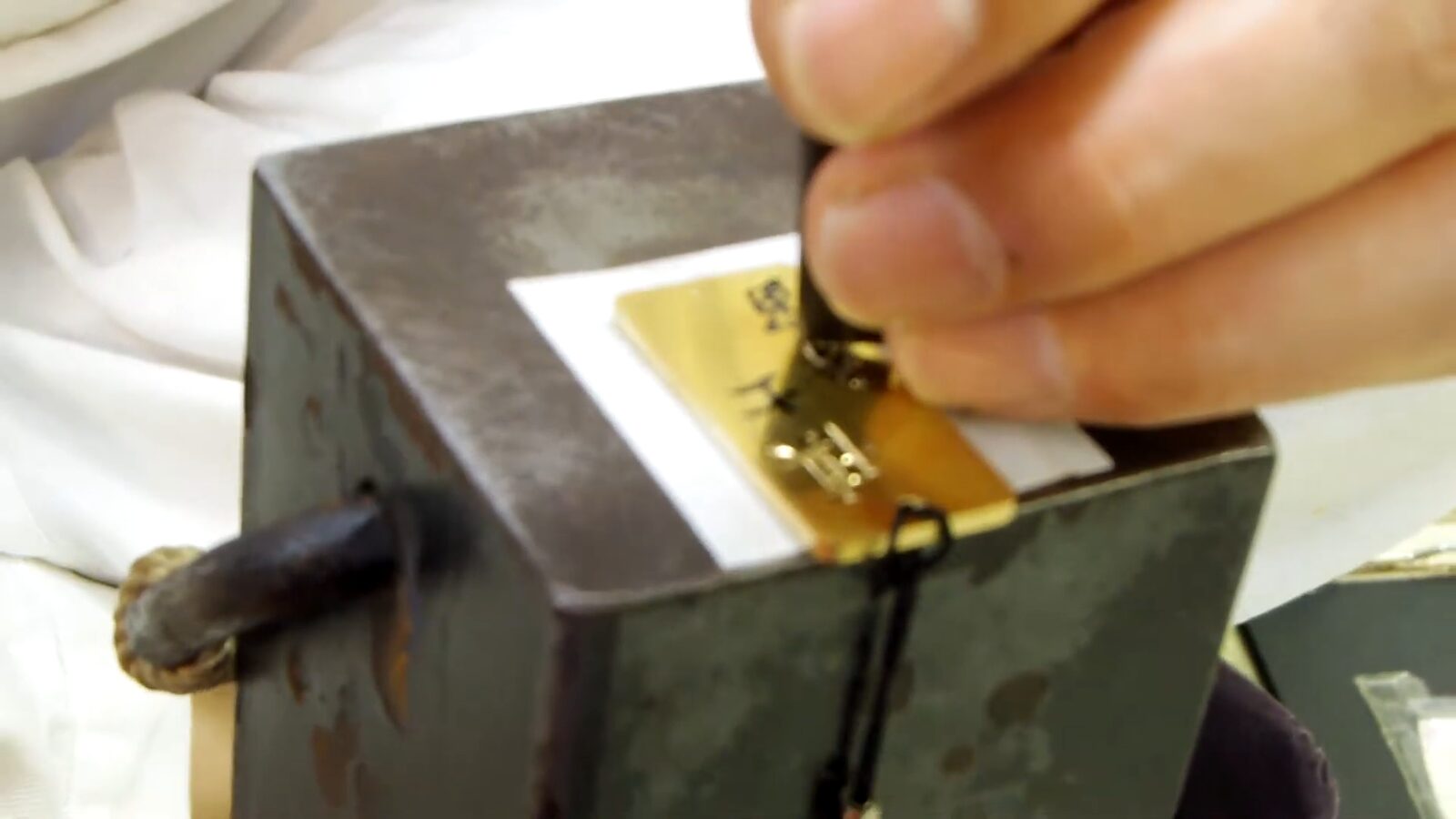
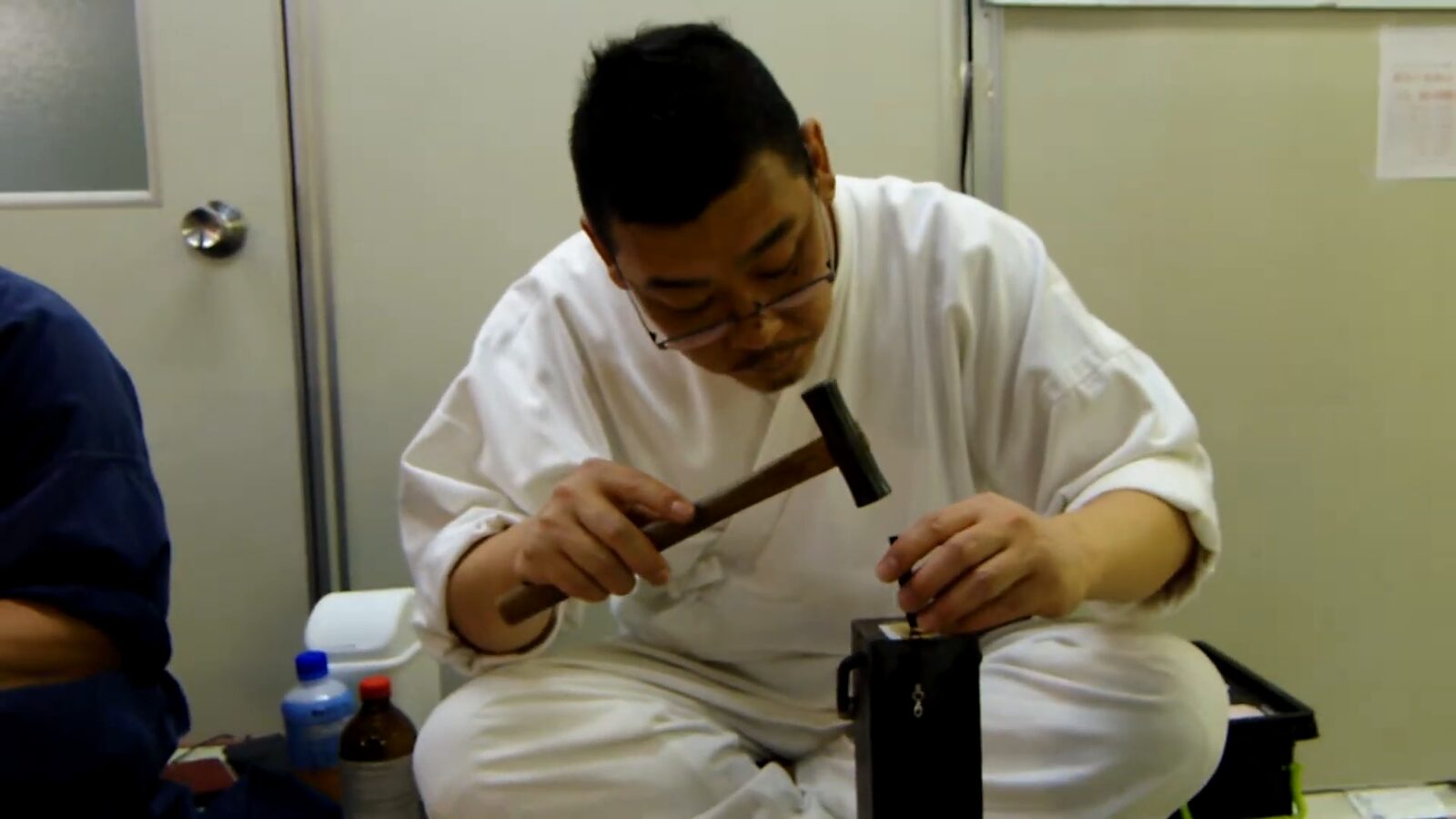
He forges with tamahagane (玉鋼, tamahagane), which he folds more than a dozen times, with a hand hammer and a power hammer. His process runs from breaking up the tamahagane and sorting it by hardness to stacking (積み沸かし, tsumi-wakashi), the base and finishing forging (下鍛え, shita-gitae; 上げ鍛え, age-gitae), assembling the steels (造り込み, tsukurikomi), drawing out (素延べ, sunobe), forging the shape (火造り, hizukuri), the clay (土置き, tsuchi-oki), the hardening (焼き入れ, yaki-ire), the smith’s polishing (鍛冶研ぎ, kaji-togi), the tang, the signature (銘切り, mei-kiri), the habaki (はばき, habaki) and the plain wooden scabbard (白鞘, shirasaya). A blade can take him a month, and more than a year with the mountings.