Sugata
The Japanese Sword Index describes a strong sugata, a well-controlled suguha and a ko-maru bōshi.
Jihada
For the NBTHK, the ko-itame is very tight, with a fine, visible ji-nie: the 小糠肌 (konuka-hada), “rice-bran skin”, typical of Hizen. Compared with that of Yasutsugu, of Echizen, darker and with a rough nioiguchi, Tadayoshi’s is more refined, with a denser and wider nioiguchi.
Hamon
According to the NBTHK, the typical hardening is a chū-suguha of fine nie with a “ribbon-shaped” nioiguchi and ashi, sometimes with a gentle notare or ko-gunome, and with kuichigai-ba and nijūba. The suguha of Masatsune, of Owari, has more hotsure and ko-ashi and looks mixed with ko-gunome.
The Japanese Sword Index adds that the collateral branches also made an adapted Bizen-den with chōji.
Bōshi
For the NBTHK, the bōshi runs parallel to the fukura and ends in ko-maru with a turn-back.
Nakago and mei
The NBTHK describes the tangs as follows. Those of the first generation, in his Tadayoshi period, end in kuri-jiri and bear faint katte-sagari file marks; in his Tadahiro period, in iriyama-gata, with kiri file marks. Those of the second generation, in iriyama-gata, with kiri and sometimes katte-sagari file marks; on hira-zukuri tantō, a long signature on the omote side, towards the mune.
The katana of 1600 in the Tokyo National Museum bears the five-character signature 肥前国忠吉 (Hizen no kuni Tadayoshi) and the date 慶長五年八月吉日 (Keichō gonen hachigatsu kichijitsu). That of 1629 bears a four-line inscription: 武蔵大掾藤原忠広 此忠広埋忠明寿弟子 寛永六年九月廿四日 切物明寿七十二才時 (Musashi Daijō Fujiwara Tadahiro kono Tadahiro Umetada Myōju deshi Kan'ei rokunen kugatsu nijūyokka kirimono Myōju shichijūni-sai no toki).
According to the Japanese Sword Index, the five-character signature is the most forged in the lineage.
How to tell the generations apart
The Japanese Sword Index sees the first generation trying out several old styles, and the second generation fixing the classic Hizen-tō, the suguha and the konuka-hada, starting from the Yamashiro style of Kamakura, above all that of the Rai school.
In practice, the signature is the first clue: 忠吉 (Tadayoshi) with 肥前国 (Hizen no kuni) or 住人 (jūnin), the founder before 1624; 武蔵大掾 (Musashi Daijō), the founder afterwards; 近江大掾 (Ōmi Daijō), the second or the fourth generation; 陸奥守 (Mutsu no Kami), the third. Several generations signed the same way, and the shape of the tang helps to separate them.
Details

The point and the bōshi of the katana of 1629. Tokyo National Museum, via ColBase · ColBase terms of use · source 
The tang of the katana of 1629, with the inscription that names Umetada Myōju, and the engraving on the blade. Tokyo National Museum, via ColBase · ColBase terms of use · source 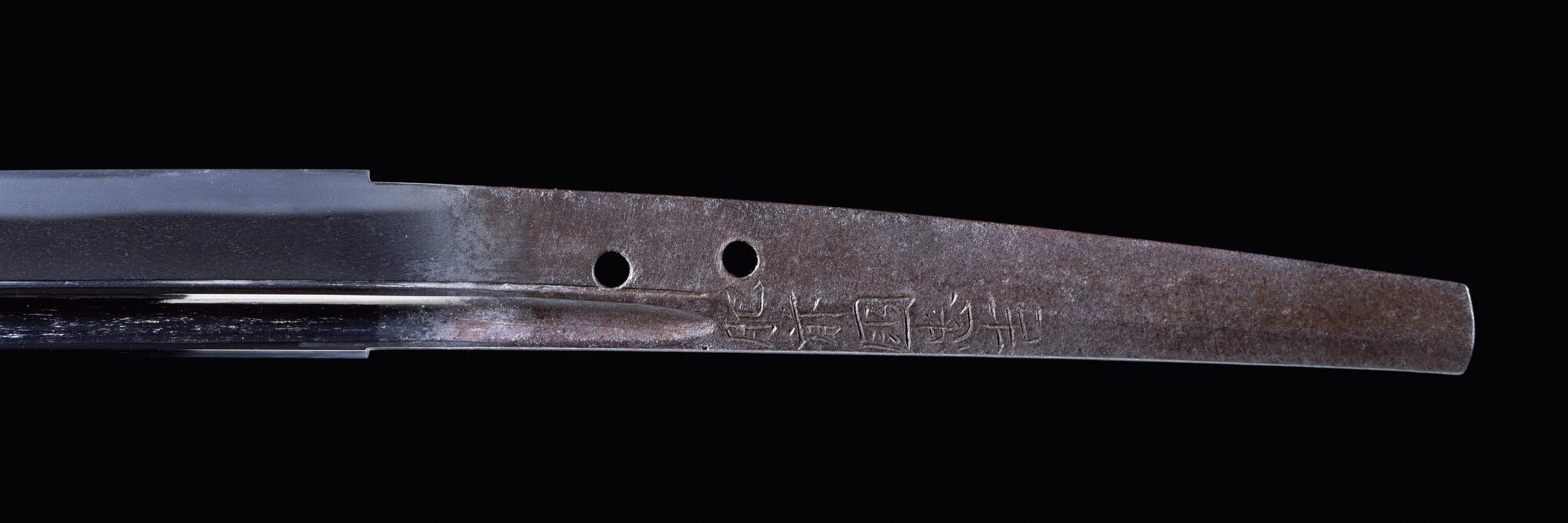
The tang of the katana of 1600, with the five-character signature 肥前国忠吉 (Hizen no kuni Tadayoshi). Tokyo National Museum, via ColBase · ColBase terms of use · source 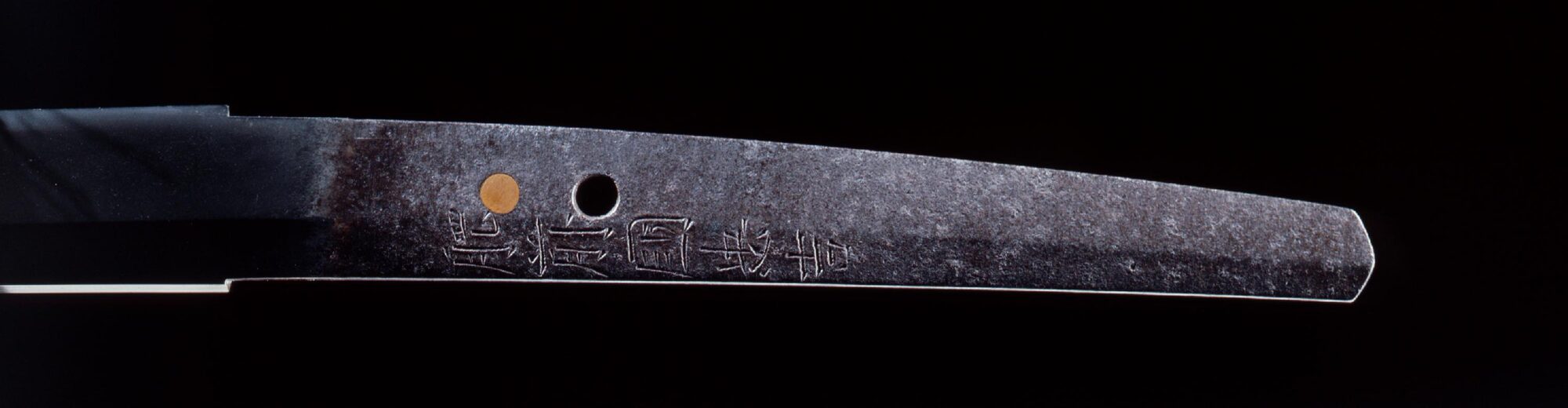
The tang of the katana signed 南無観世音菩薩 肥前国忠吉 (Namu Kanzeon Bosatsu Hizen no kuni Tadayoshi). Tokyo National Museum. Tokyo National Museum, via ColBase · ColBase terms of use · source 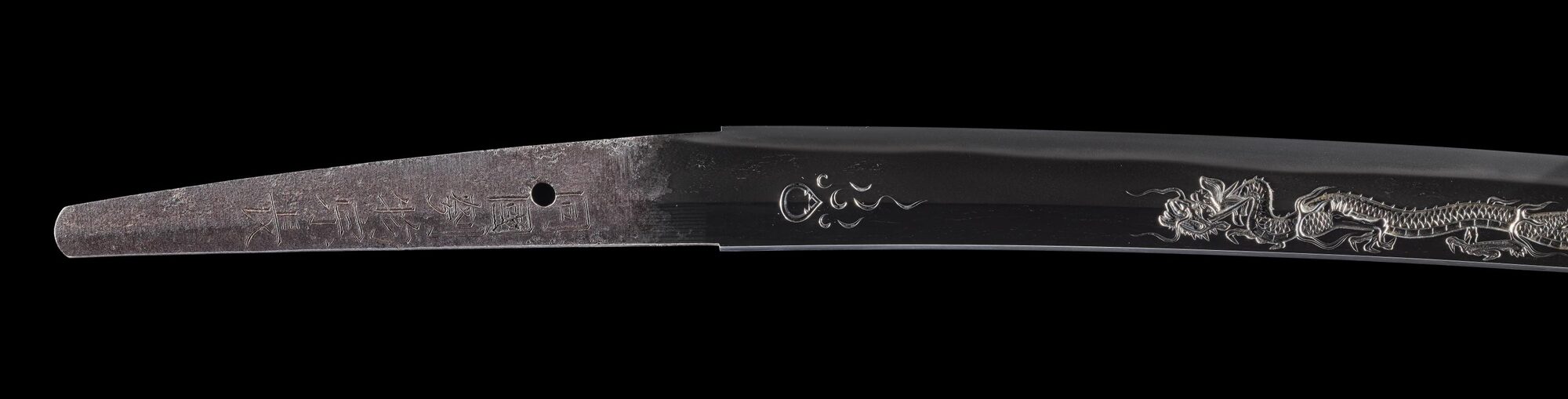
The engraving of the katana with Munenaga: the Kurikara flame and the dragon. Tokyo National Museum, via ColBase · ColBase terms of use · source