Year by year
The son of a collector
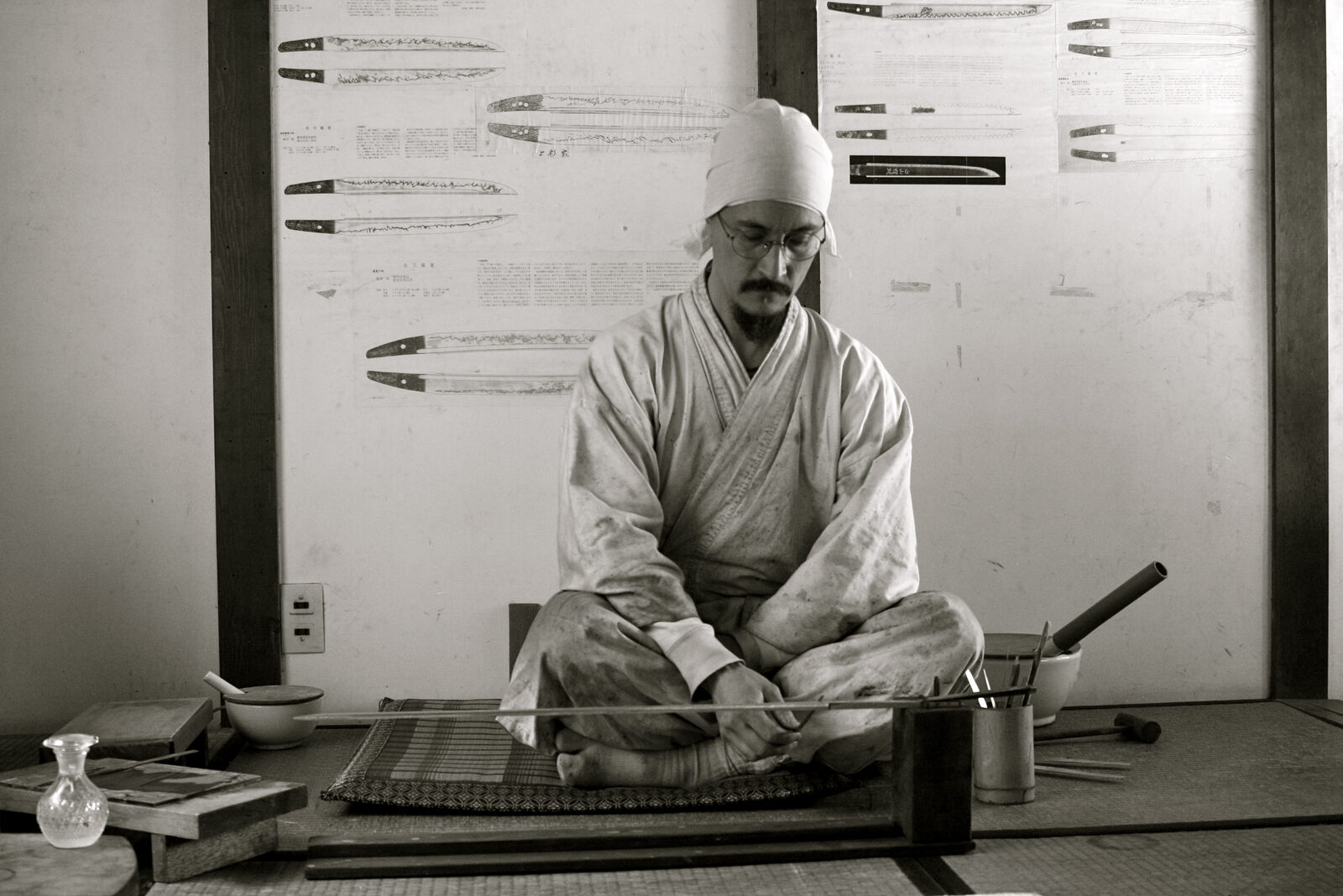
His father practised martial arts, collected swords and, during his childhood, organised appraisal meetings (鑑定, kantei) every year; he published a book on the subject. Through him he met his master, then Matsuba Kunimasa.
The examination and the craft
He describes the swordsmith’s examination as an eight-day test by the Agency for Cultural Affairs (文化庁, Bunkachō), with a wakizashi made by traditional methods, which can only be taken after five years of full-time apprenticeship with a licensed master. He lives in his workshop and works seven days a week.
He sums up his idea of the craft in two English mottoes, “Formless Forging” and “Master the Darkness”: the sword as a symbol of self-mastery and as a talisman, and the wish to make a sword “with the power to inspire”.
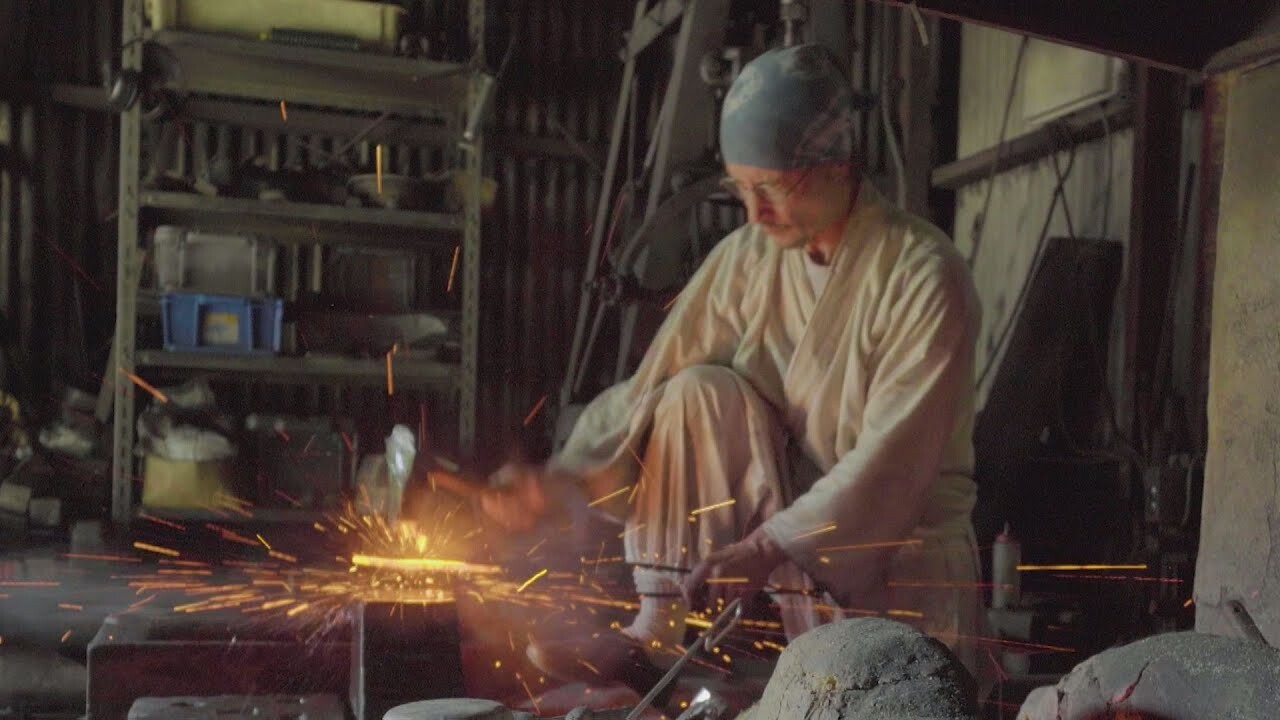 Play: どき生百景 (probable reading: Dokiiki hyakkei) vol. 61, スウェーデン生まれの刀匠 (Suwēden umare no tōshō; the Swedish-born swordsmith), 防府市 (Hōfu-shi)
どき生百景 (probable reading: Dokiiki hyakkei) vol. 61, スウェーデン生まれの刀匠 (Suwēden umare no tōshō; the Swedish-born swordsmith), 防府市 (Hōfu-shi) · yabチャンネル (yab channeru)
2:50 · 4 September 2021
In his Hōfu forge: at 1:00, “分からなかったら師匠からよく叱られた” (wakaranakattara shishō kara yoku shikarareta, “if I didn’t understand, my master scolded me a lot”); at 1:40, the year before he made seven blades, tantō and wakizashi included. The master does not appear.
The forge, in pictures
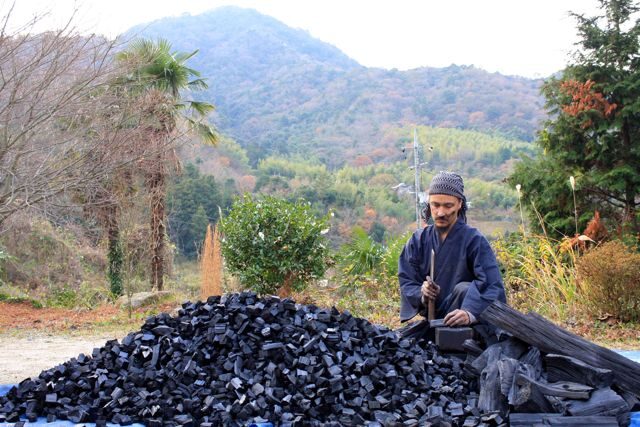
Next to the charcoal chopped for the forge. Photo: the smith himself 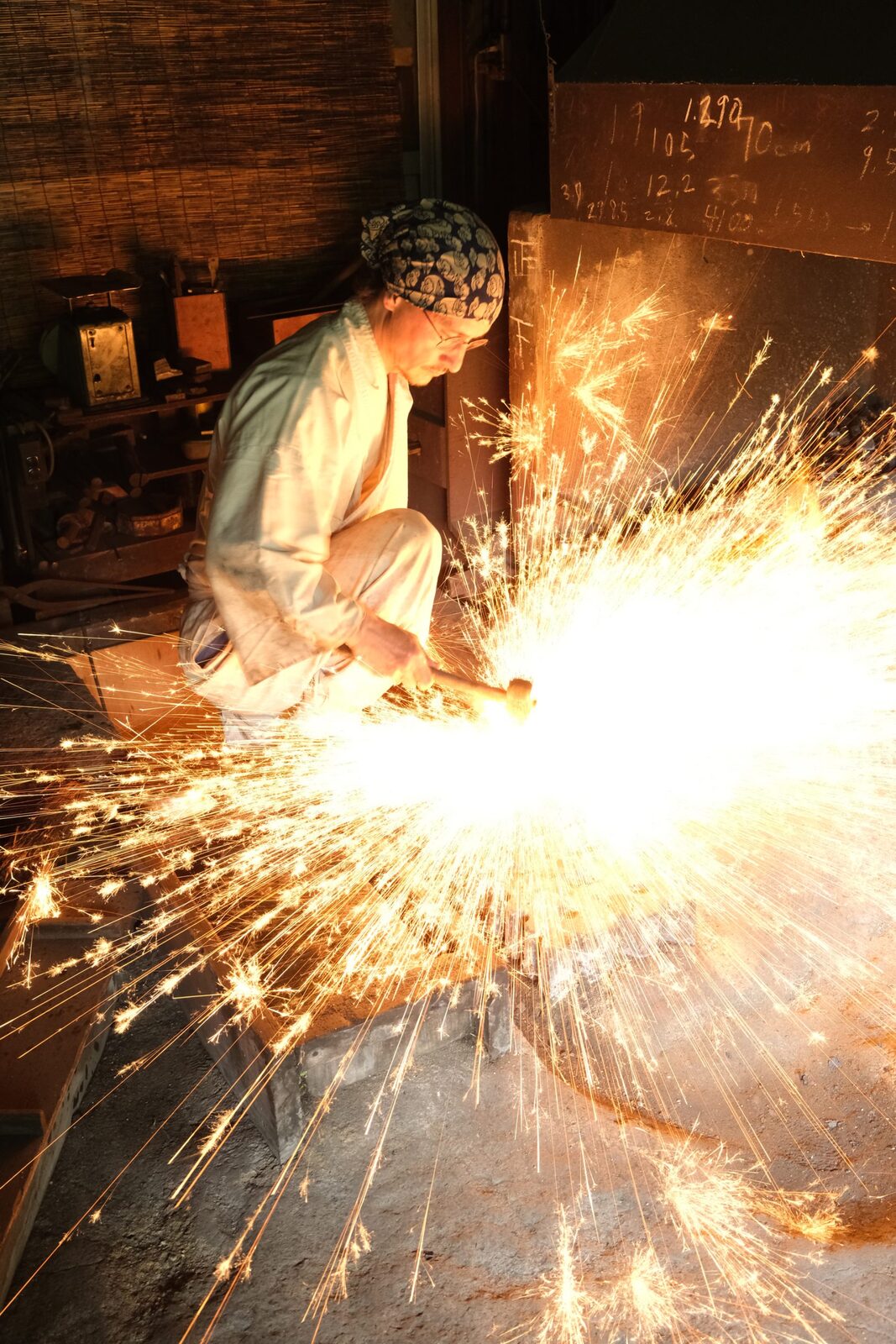
The forge, amid sparks. Photo: the smith himself 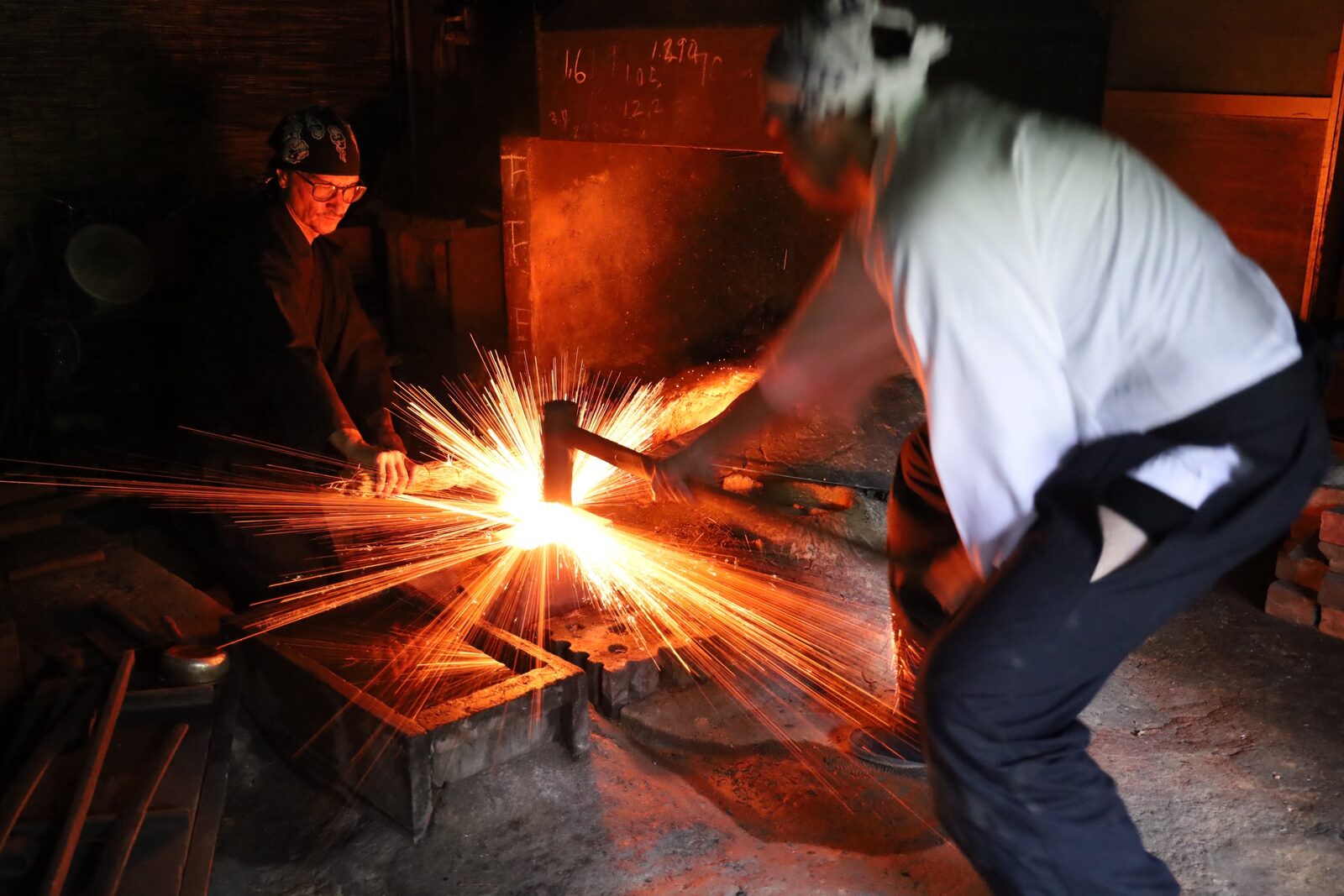
Forging with two hammers. Photo: the smith himself 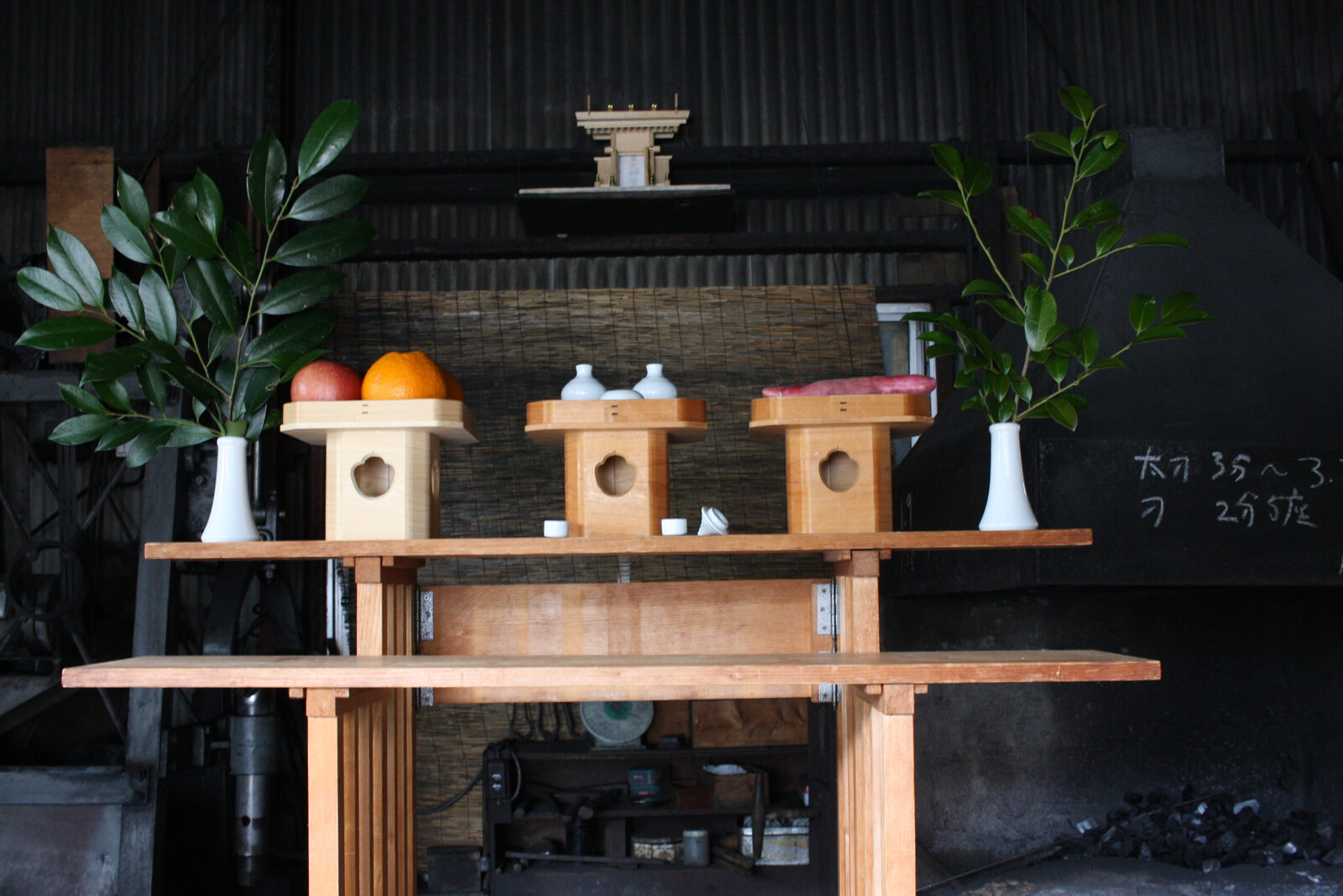
The Shintō altar (神棚, kamidana) of the forge. Photo: the smith himself