On this page
National Treasures
| Work | Type and nagasa | Where it is |
|---|---|---|
| Kanze Masamune (観世正宗, Kanze Masamune) | Unsigned katana, 64.4 cm; Important Cultural Property in 1958 and National Treasure in 1959 | Tokyo National Museum (F-19916) |
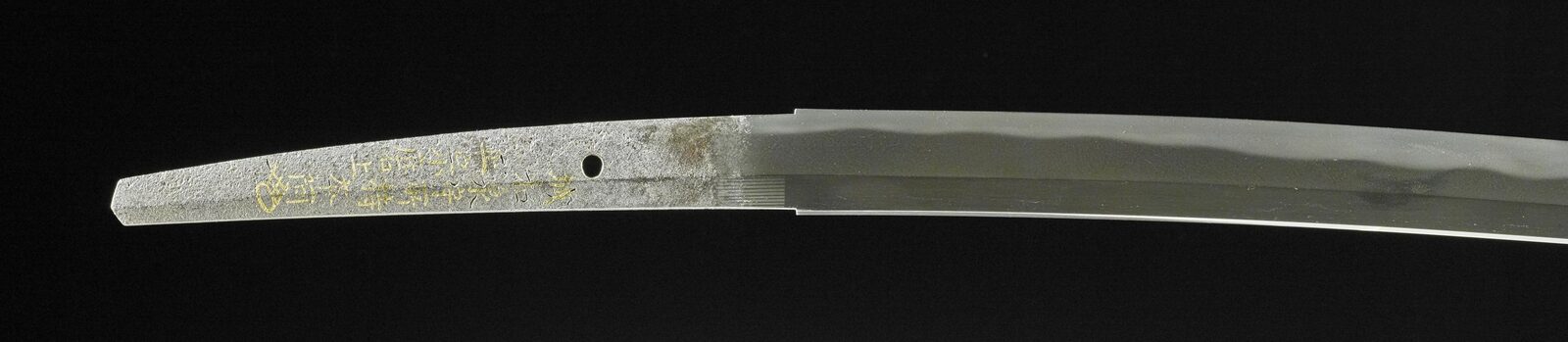
| Tsugaru Masamune (津軽正宗, Tsugaru Masamune) | Katana with a gold inscription by Hon'ami, 70.6 cm | Tokyo National Museum (F-19975) |
| Nakatsukasa Masamune (中務正宗, Nakatsukasa Masamune), also Kuwana Masamune | Katana with a gold inscription by Hon'ami, 67.0 cm; Designated in 1941 under the old law and National Treasure in 1957 | Tokyo National Museum; it belongs to the State (Agency for Cultural Affairs) |
| Tarōsaku Masamune (太郎作正宗, Tarōsaku Masamune) | Unsigned katana, ō-suriage, 64.3 cm | Maeda Ikutokukai, Tokyo |
| Hōchō Masamune (庖丁正宗, Hōchō Masamune), three tantō | 24.1 cm (Tokugawa Art Museum); 21.8 cm (Eisei Bunko: Designated in 1937 under the old law and National Treasure in 1952); 21.7 cm (a foundation in Osaka) | Tokugawa Art Museum, Eisei Bunko and Osaka |
| Hyūga Masamune (日向正宗, Hyūga Masamune) | Unsigned tantō, 24.7 cm; Designated in 1941 under the old law and National Treasure in 1952 | Mitsui Memorial Museum, Tokyo |
| Kuki Masamune (九鬼正宗, Kuki Masamune) | Unsigned tantō, 24.8 cm | Hayashibara Museum of Art, Okayama |
According to the English Wikipedia, as of August 2024 he is credited with 9 of the 122 sword National Treasures (4 katana and 5 tantō) and 10 of the 790 Important Cultural Properties (6 katana, 3 tantō and 1 wakizashi). Of the nine treasures, only the Tsugaru Masamune is not in the Kyōhō meibutsuchō. The designation dates of the Tsugaru Masamune have not been checked in the database of the Agency for Cultural Affairs.
From hand to hand
- Kanze: it passed from the Kanze family, of nō actors, to Tokugawa Ieyasu; Hidetada gave it to the Honda as part of Senhime’s dowry, it returned to the shōgun, and Tokugawa Yoshinobu gave it in the Meiji era to Prince Arisugawa-no-miya Taruhito.
- Tsugaru: it belonged to Jō Izumi-no-kami Masamochi (城昌茂, Jō Masamochi), vassal of the Takeda and later of Ieyasu; Hon'ami Kōtoku attributed it to Masamune and Umetada Jusai made the gold inscription; afterwards it belonged to the Tsugaru house, of Mutsu. The museum’s record says that its nie is softer than that of the Kanze.
- Nakatsukasa: from Honda Nakatsukasa-taifu Tadakatsu it passed in 1606 to Tokugawa Ieyasu, and from there to the Mito, to Tokugawa Tsunatoyo of Kōfu and to the shōgun’s house.
- Tarōsaku: from Mizuno Tarōsaku Masashige it passed to Tokugawa Hidetada and to the Maeda of Kaga. The English Wikipedia records the tradition that it was used at Anegawa against a helmet.
- Hyūga: from Ishida Mitsunari to Fukuhara Nagataka; at Sekigahara it was taken by Mizuno Hyūga-no-kami Katsunari, and afterwards it belonged to the Tokugawa of Kishū until an auction in the Shōwa era.
- Kuki: from Kuki Moritaka it passed to Ieyasu, to the Tokugawa of Kishū and to the Matsudaira of Saijō.
Important Cultural Properties and Art Objects
- Ishida Masamune (石田正宗, Ishida Masamune), also Kirikomi Masamune: unsigned katana of 68.8 cm, Important Cultural Property since 1953, at the Tokyo National Museum. It belonged to Mōri Wakasa-no-kami, Ukita Hideie, Ishida Mitsunari, Yūki Hideyasu and the Matsudaira of Tsuyama.
- Fudō Masamune (不動正宗, Fudō Masamune): signed tantō of 24.9 cm, Important Cultural Property since 1953, at the Tokugawa Art Museum in Nagoya. The Japanese Wikipedia gives it 25.1 cm, and the English Wikipedia places it at the Tokyo National Museum; here the official record and the Japanese Wikipedia, which place it at the Tokugawa Art Museum, are followed.
- Musashi Masamune (武蔵正宗, Musashi Masamune): unsigned katana of 74.0 cm, Important Art Object (重要美術品, jūyō bijutsuhin). It belonged to Tokugawa Yoshinobu, Yamaoka Tesshū and Iwakura Tomomi; the NBTHK acquired it in 2000 and exhibited it in 2022 at the Japanese Sword Museum.
- Kinoshita Masamune (木下正宗, Kinoshita Masamune): Important Art Object since 1935, the only long blade that is accepted as signed by him.
Lost and in the imperial collection
- Honjō Masamune (本庄正宗, Honjō Masamune): National Treasure since 1939. It belonged to Honjō Shigenaga in 1561 and passed through Toyotomi Hidetsugu, Hideyoshi, the Shimazu, Ieyasu and the Tokugawa of Kishū to the shōgun’s house. In December 1945 Tokugawa Iemasa handed it over to the Mejiro police, and it has been missing ever since. Its oshigata, published in 1928, survives.
- Edo chōmei Masamune: the tantō dated 1314, lost; it is known only from the Kyōhō meibutsuchō.
- Kotegiri Masamune (籠手切正宗, Kotegiri Masamune): the Maeda gave it to Emperor Meiji in 1882, and it is kept at the Tokyo National Museum. Markus Sesko holds it to be a doubtful attribution: under Sano Nobuyoshi it was attributed to Yukimitsu, and the Hon'ami certificate to Masamune is later. Oda Nobunaga shortened it in 1575 and gave it to Ōtsu Denjūrō.
In the old lists
- The 享保名物帳 (Kyōhō meibutsuchō), which Hon'ami Kōchū made in 1719 on the commission of the eighth shōgun, Tokugawa Yoshimune, gives him 59 blades: 41 preserved and 18 lost, the highest count for a swordsmith. He is followed by Awataguchi Yoshimitsu, with 34, and Gō Yoshihiro, with 22: they are the “three greats” (天下三作, Tenka sansaku).
- The sources do not agree on the total of the list: the Japanese Wikipedia entry on Masamune and the English Wikipedia entry say 248 swords, 80 of them lost; the Japanese Wikipedia entry on the Kyōhō meibutsuchō itself says 274, with 81 lost and 25 added in later copies. Masamune’s 59 are the same in both.
- He is not in Yamada Asaemon’s cutting classification (業物, wazamono), nor are the other two “greats”: the Japanese Wikipedia explains this by Yamada’s caution before the shōgun and because they were swords of daimyō houses that could not be tested.
- His name is borne by the Masamune Prize, which the competition for new Japanese swords awards, not every year, to an exceptional work.
Gallery of works
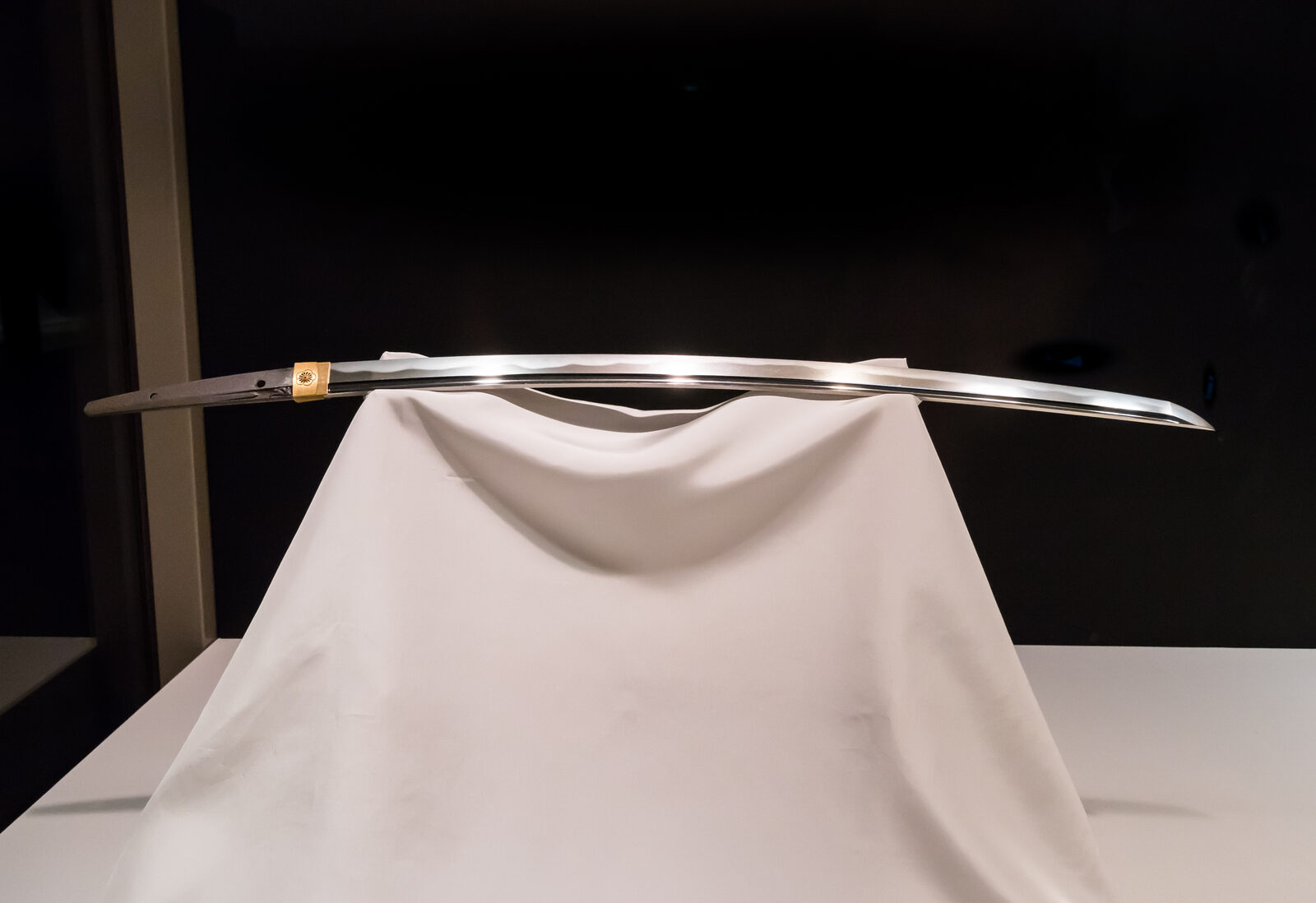
The Kanze Masamune, National Treasure, at the Tokyo National Museum. Kakidai, CC BY-SA 4.0, via Wikimedia Commons · CC BY-SA 4.0 · source 
The Tsugaru Masamune, National Treasure, in full. Tokyo National Museum, via ColBase · ColBase terms of use · source 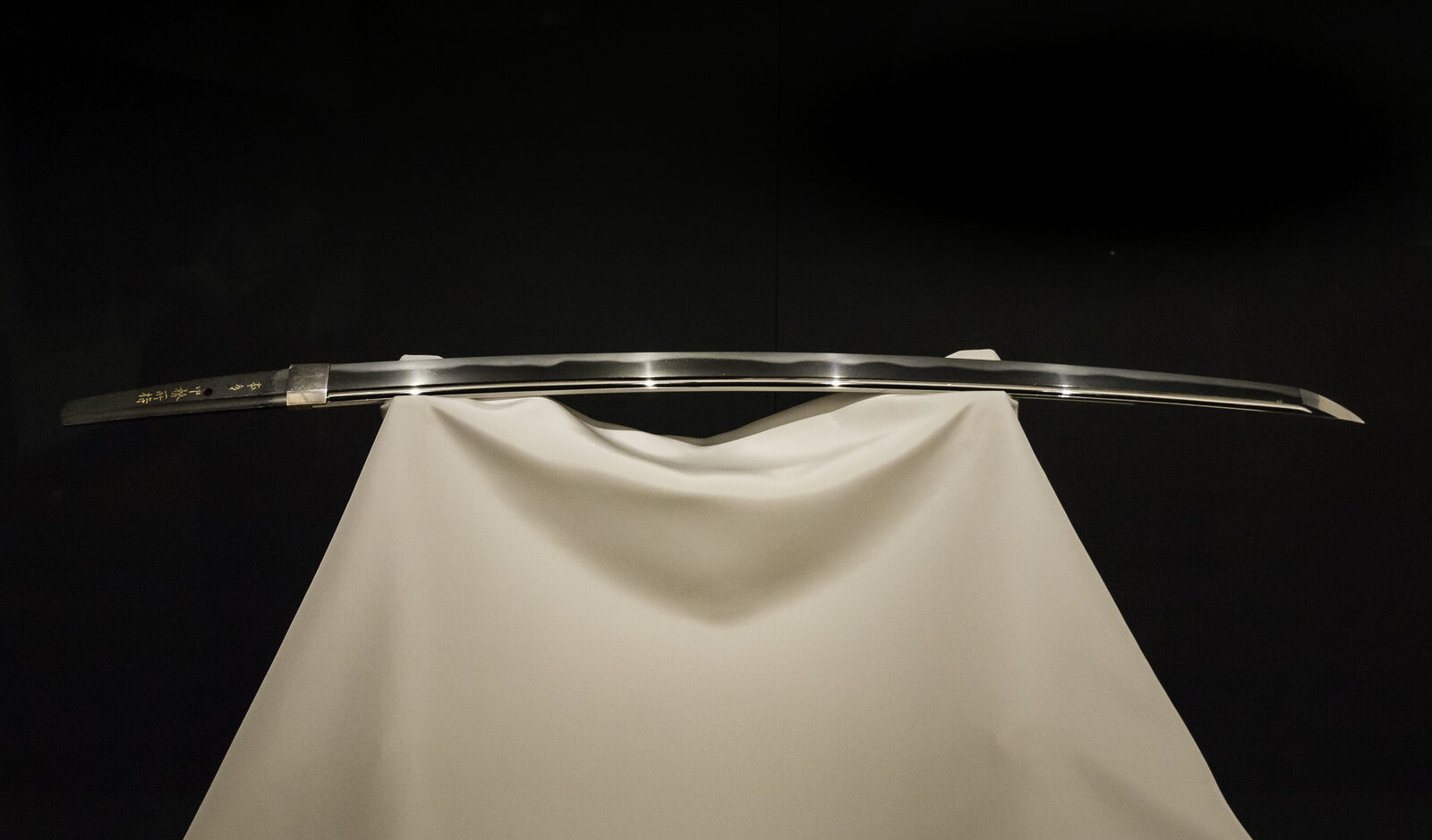
The Nakatsukasa Masamune, National Treasure, with its gold inscription. Kakidai, CC BY-SA 4.0, via Wikimedia Commons · CC BY-SA 4.0 · source 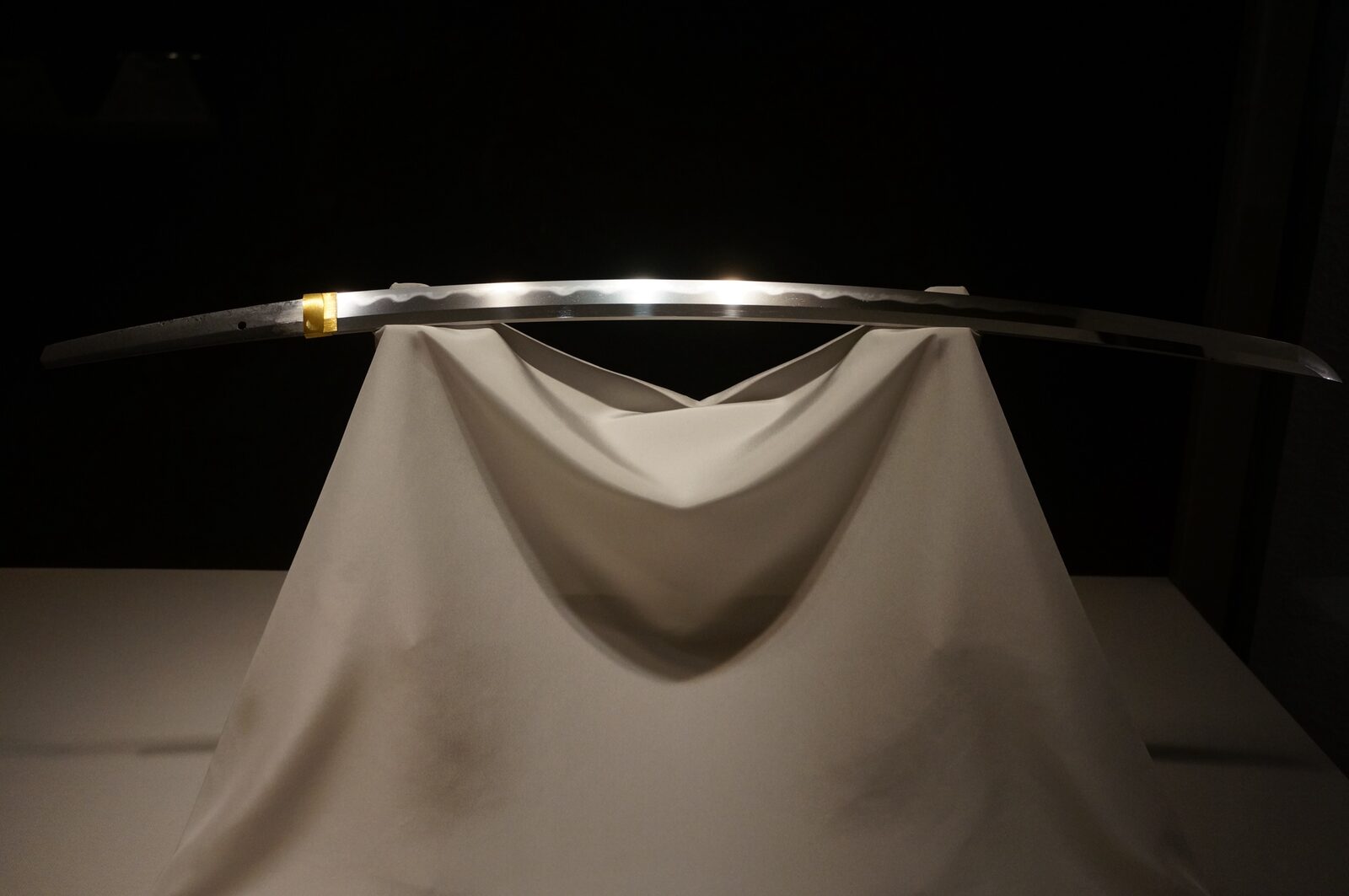
The Ishida Masamune, Important Cultural Property, at the Tokyo National Museum. SLIMHANNYA, CC BY-SA 4.0, via Wikimedia Commons · CC BY-SA 4.0 · source 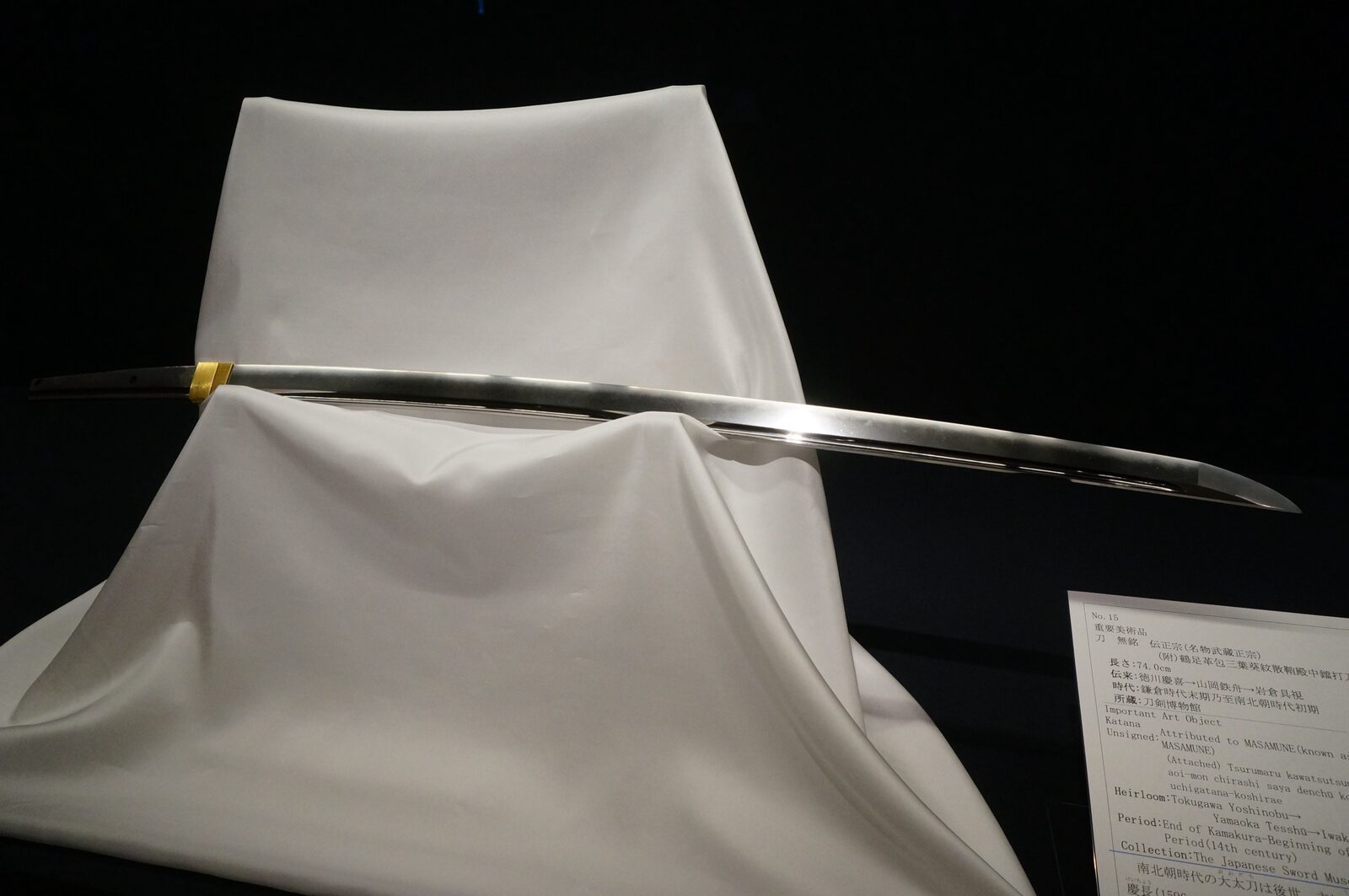
The Musashi Masamune, Important Art Object, at the Japanese Sword Museum. SLIMHANNYA, CC BY-SA 4.0, via Wikimedia Commons · CC BY-SA 4.0 · source 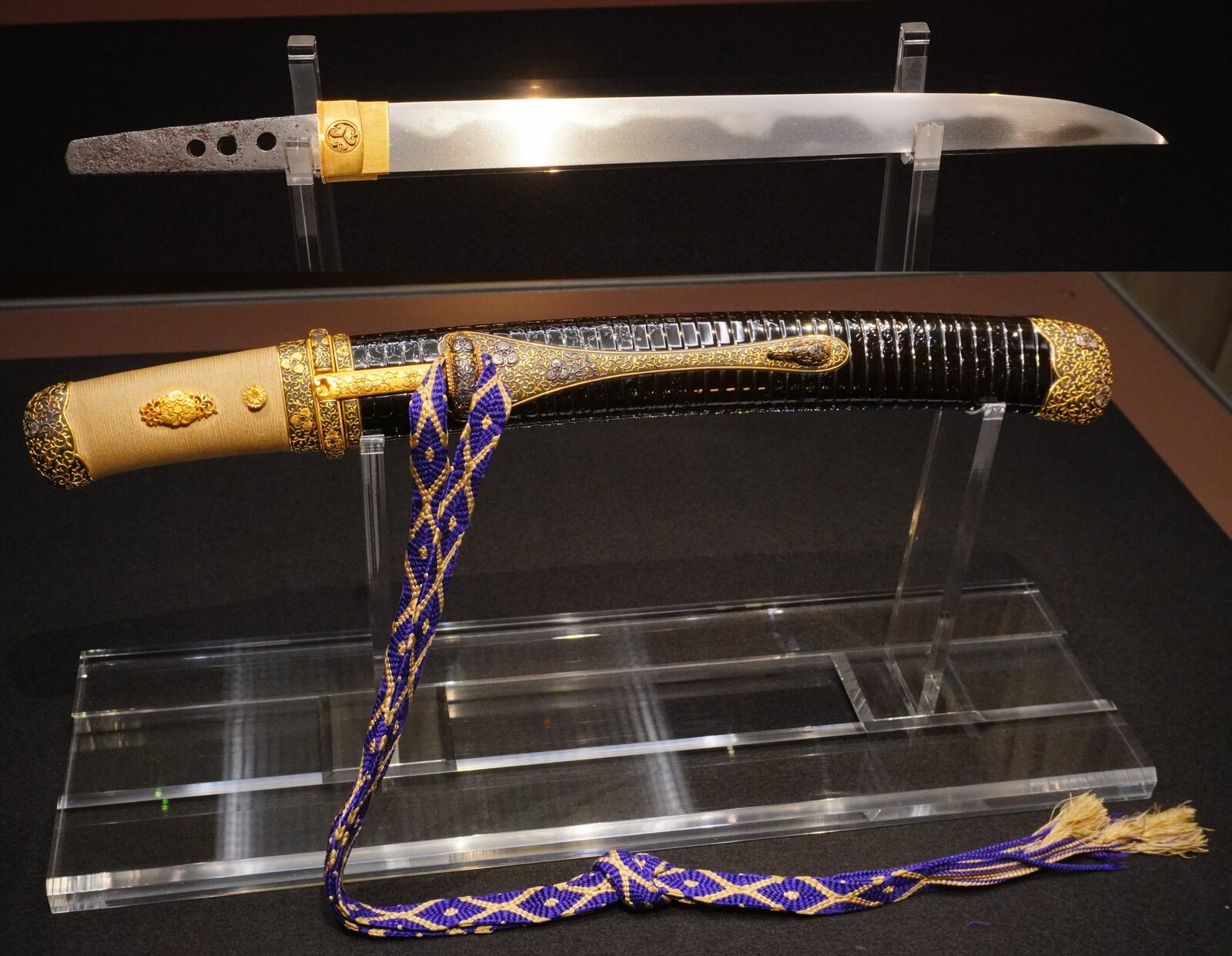
The Hyūga Masamune, National Treasure, with its mounting, at the Mitsui Memorial Museum. SLIMHANNYA, CC BY-SA 4.0, via Wikimedia Commons · CC BY-SA 4.0 · source 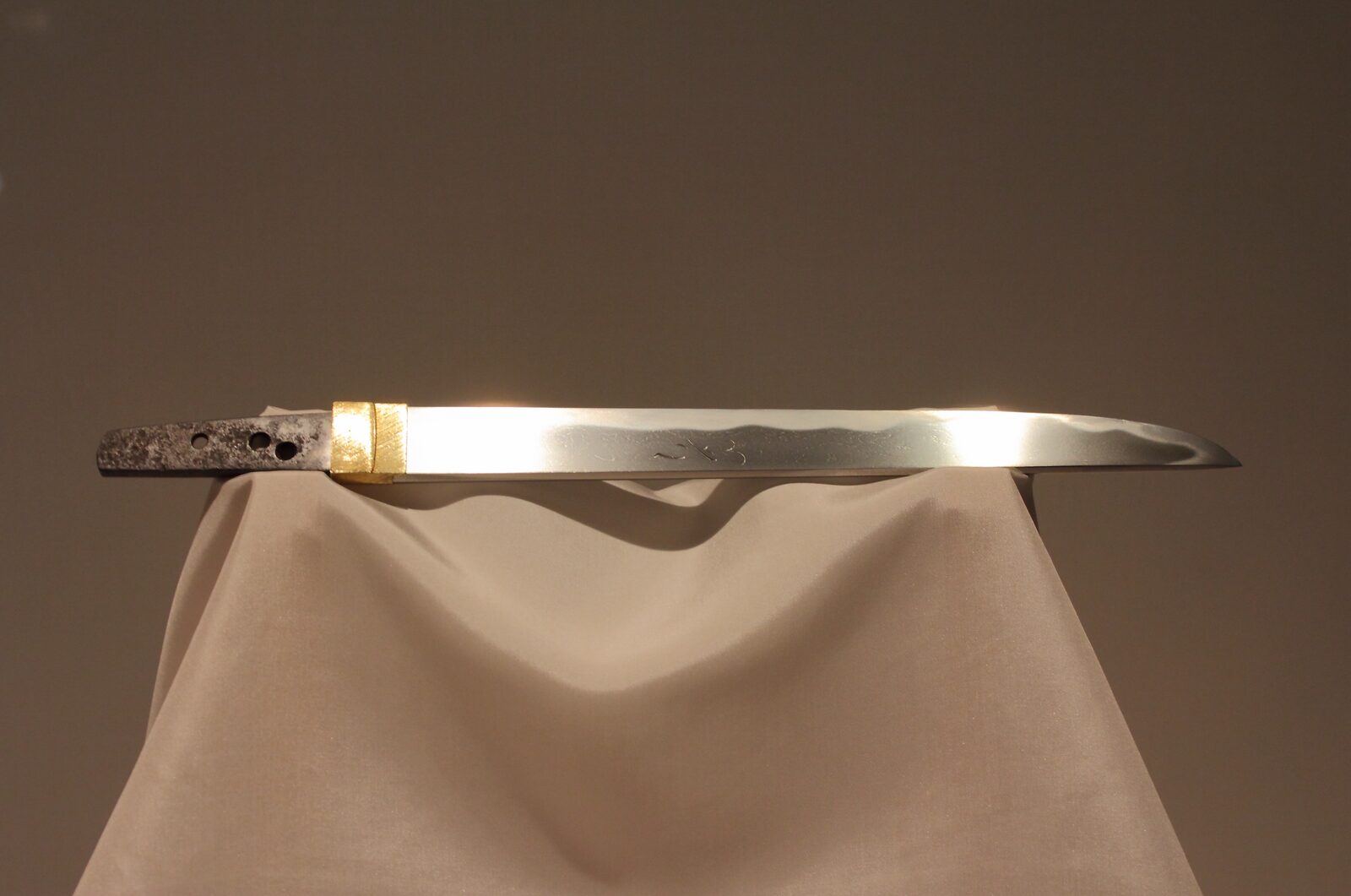
An unsigned tantō attributed to Masamune, Important Art Object, at the Tokyo National Museum. Kakidai, CC BY-SA 3.0, via Wikimedia Commons · CC BY-SA 3.0 · source 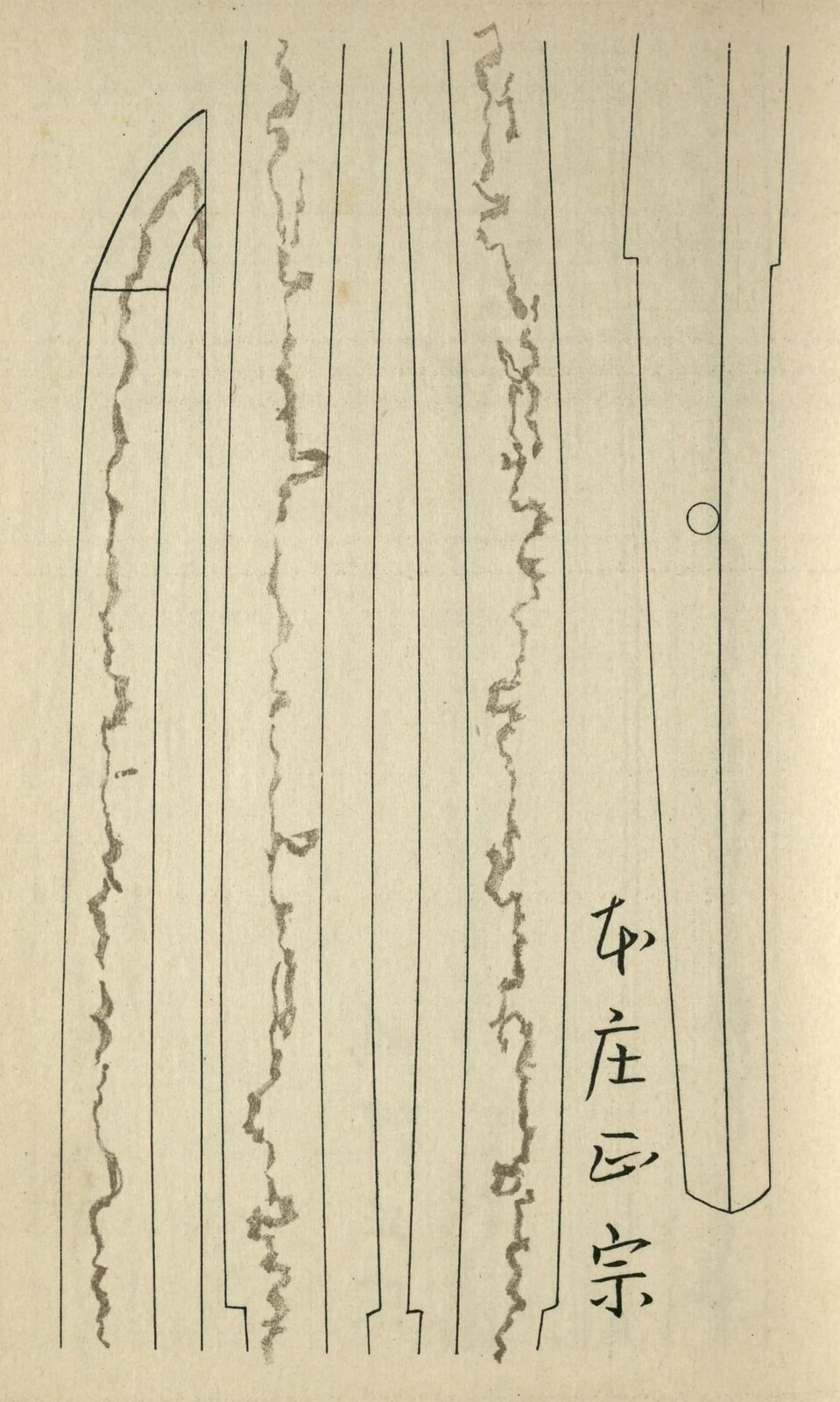
Oshigata of the Honjō Masamune, lost since 1945, published in 1928. Unknown author, public domain, via Wikimedia Commons · Public domain · source


