On this page
The budōka swordsmith
- His practice. Kendō from the age of 11, iai, karate, battōjutsu, Chinese kenpō, aikidō with 砂泊諴秀 (Sunadomari Kanshū) of the Manseikan for more than twenty years, Jikishinkage-ryū with 秋吉博光 (probable reading: Akiyoshi Hiromitsu) and Shintaidō. He gives aikidō and kenjutsu seminars in Europe and the United States.
- He came to the forge by commissioning an iai sword.
- A hundred thousand bamboos. Hiden magazine headlined in November 2016 “試斬十万本!” (shizan jūman-bon, “a hundred thousand test cuts!”): “長年自己所有の竹林で斬ってきた竹の本数はなんと「十万本」” (“the bamboos he has cut over the years in his own grove number no fewer than a hundred thousand”).
- His idea of the sword, in the summary of his 2017 book: “日本刀は武器であり、戦いのツールで、それ以外のものではない” (“the Japanese sword is a weapon, a tool of combat, and nothing else”).
Bamboo cuts: he cuts, the blade is not identified
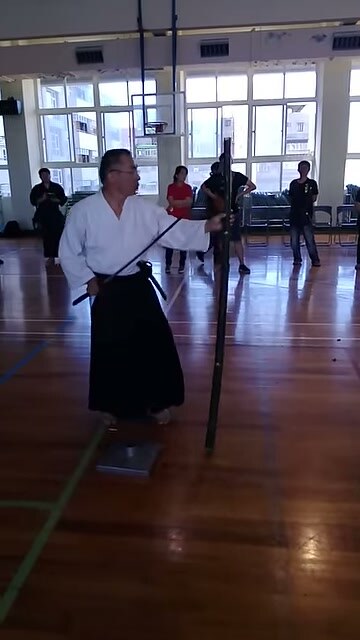
Bamboo cut in Taipei (2016); the blade is not identified. 台大居合道社 (Taidai iaidō-sha), the iai club of National Taiwan University · © 台大居合道社 (Taidai iaidō-sha) · source 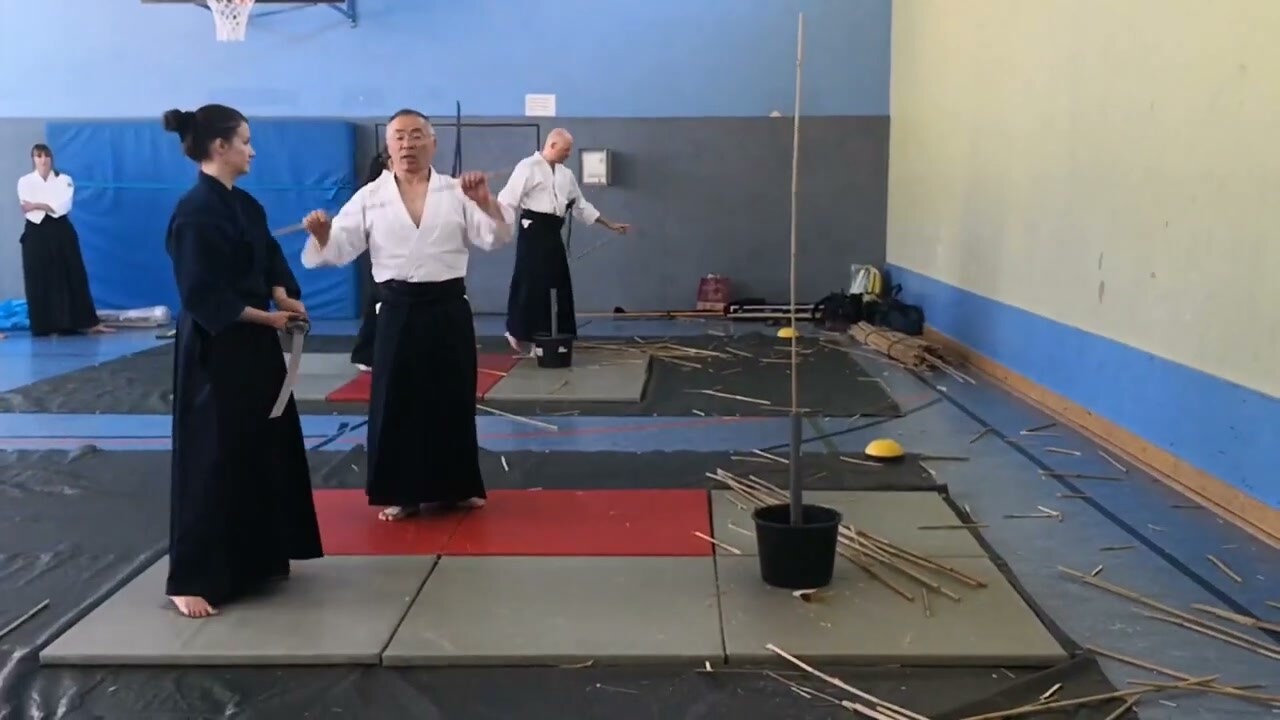
Tameshigiri in Saarbrücken (2019); the blade is not identified. Aikido Nancy SC - Le PUNCH · © Aikido Nancy SC · source 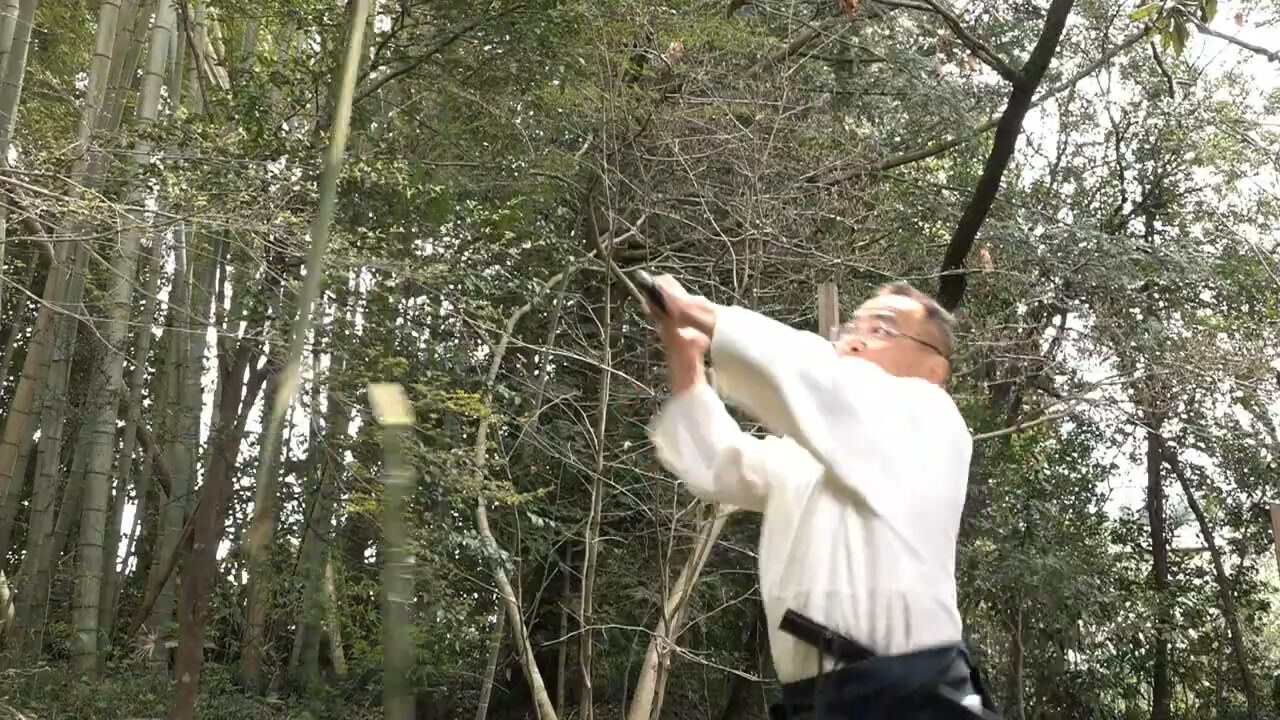
He cuts bamboo in his bamboo grove, in the second Quest DVD (2017). questchannel (Quest) · © Quest · source 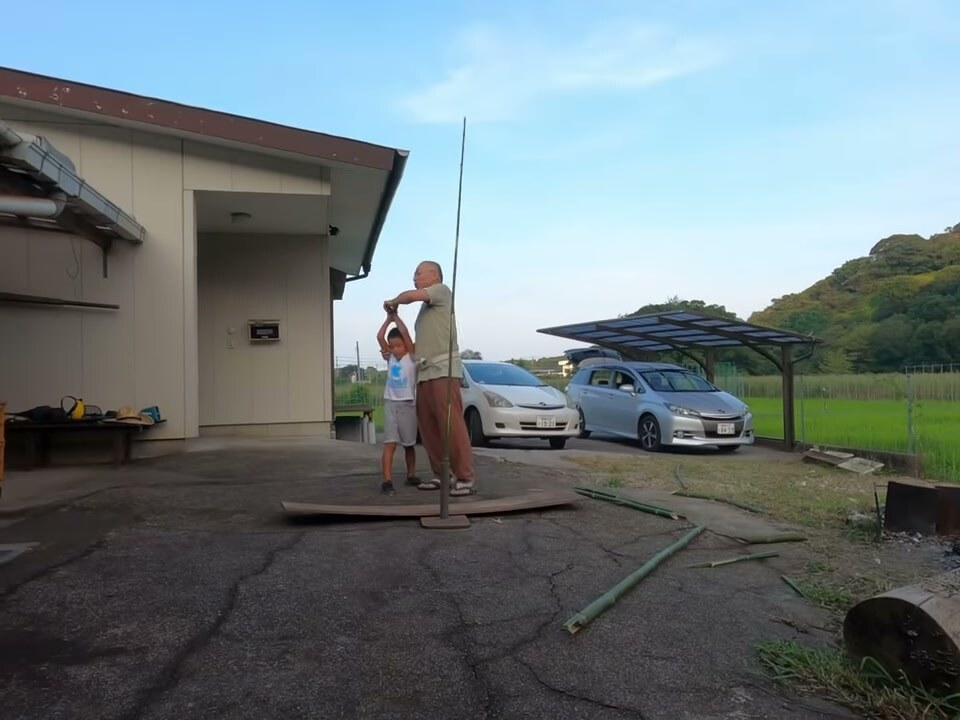
He cuts bamboo in front of the Hyūga forge, on his channel (2022). Photo: the smith himself 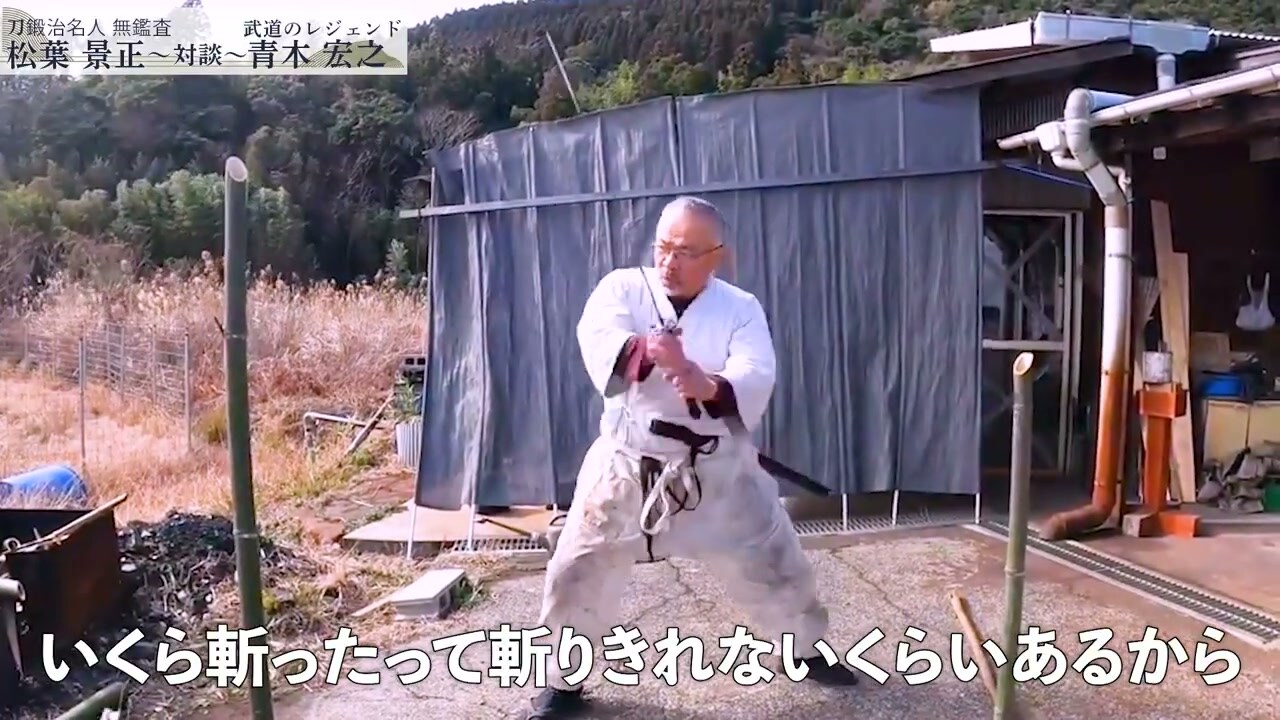
A photo of him cutting in his field, in the talk with Aoki (2024). Hiroyuki Aoki Channel (青木宏之, Aoki Hiroyuki) · © Hiroyuki Aoki Channel · source 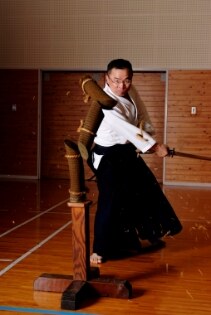
Kunimasa cuts bamboo in a gym. Photo: the smith himself 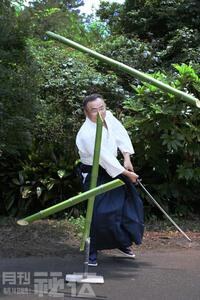
Bamboo cutting, in the Hiden report (2016). 月刊『秘伝』 (Gekkan Hiden), by BAB Japan, on Web Hiden · © BAB Japan · source 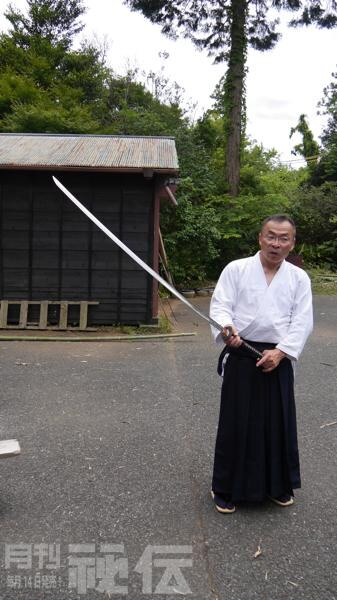
With a very long blade, in the Hiden report (2016). 月刊『秘伝』 (Gekkan Hiden), by BAB Japan, on Web Hiden · © BAB Japan · source
Aikidō, kenjutsu and seminars
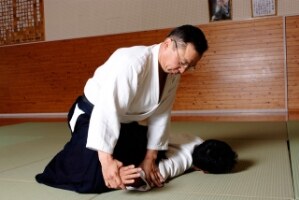
Kunimasa performing an aikidō technique. Photo: the smith himself 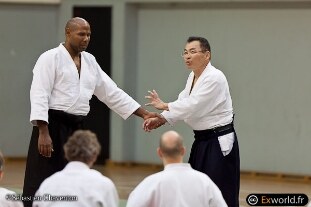
Aikidō at a seminar in France (photo by Exworld.fr). Photo: Exworld.fr · © Exworld.fr 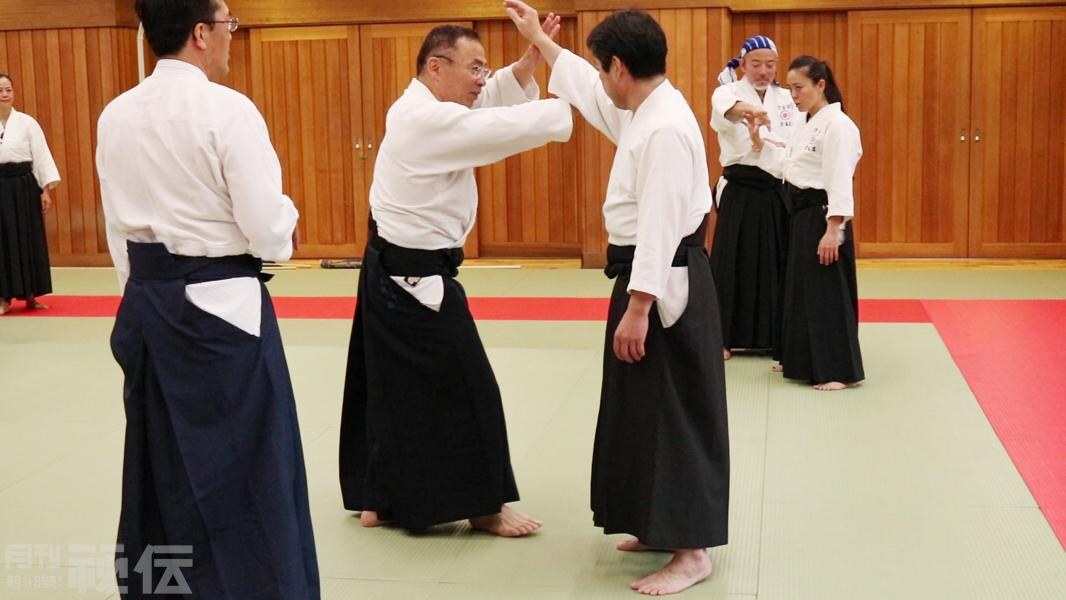
Aikidō, in the Hiden report (2016). 月刊『秘伝』 (Gekkan Hiden), by BAB Japan, on Web Hiden · © BAB Japan · source 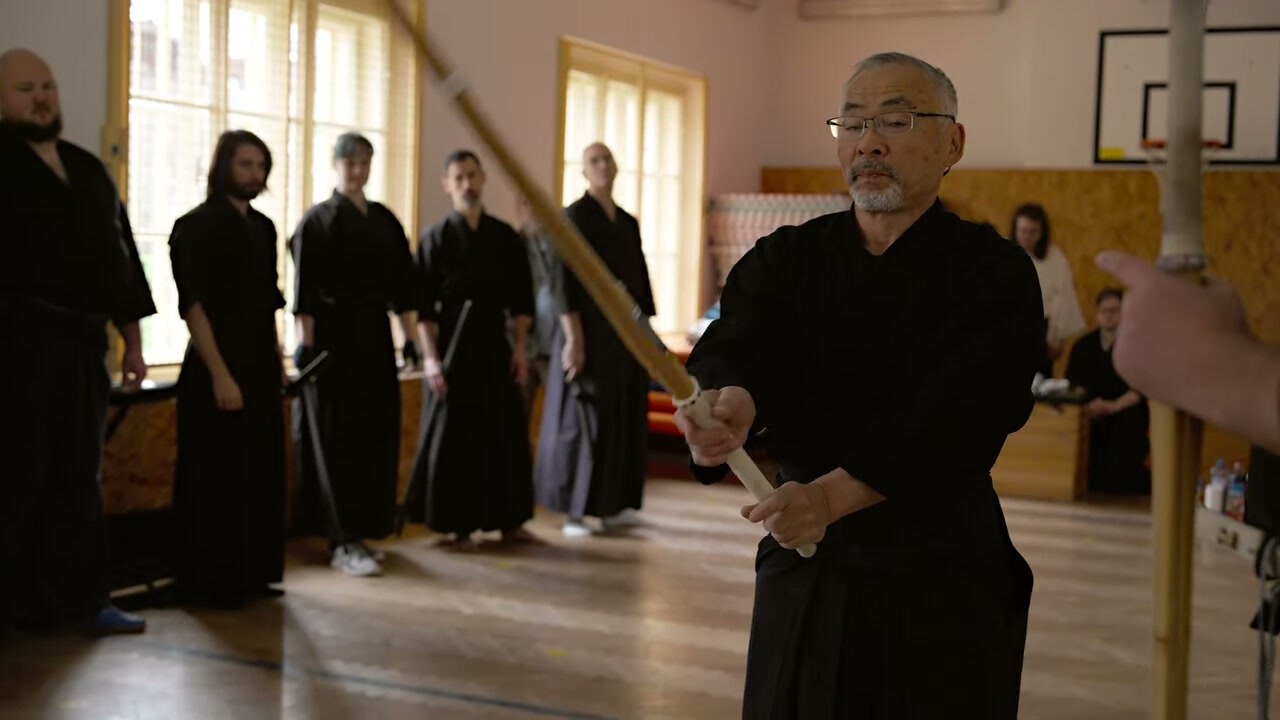
Kenjutsu class at the Hakuzan Dojo in Prague (2023). Hakuzan Dojo · © Hakuzan Dojo · source 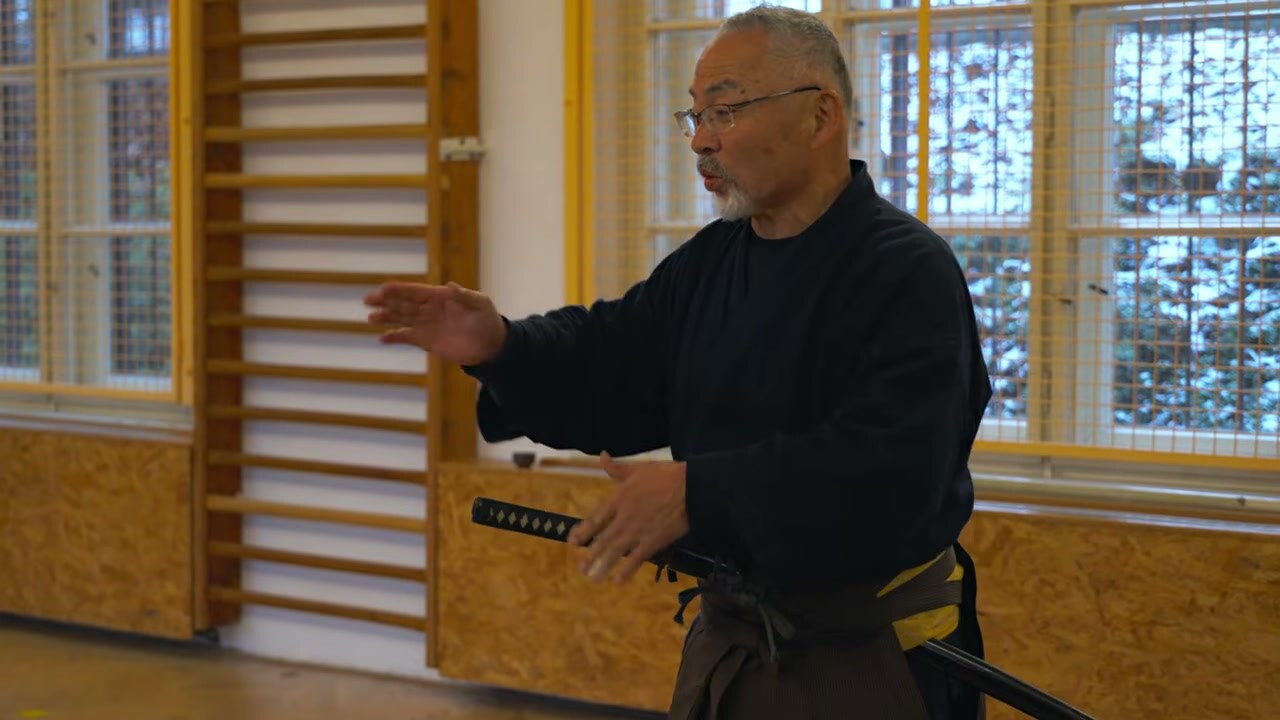
At the Hakuzan Dojo in Prague (2025). Hakuzan Dojo · © Hakuzan Dojo · source 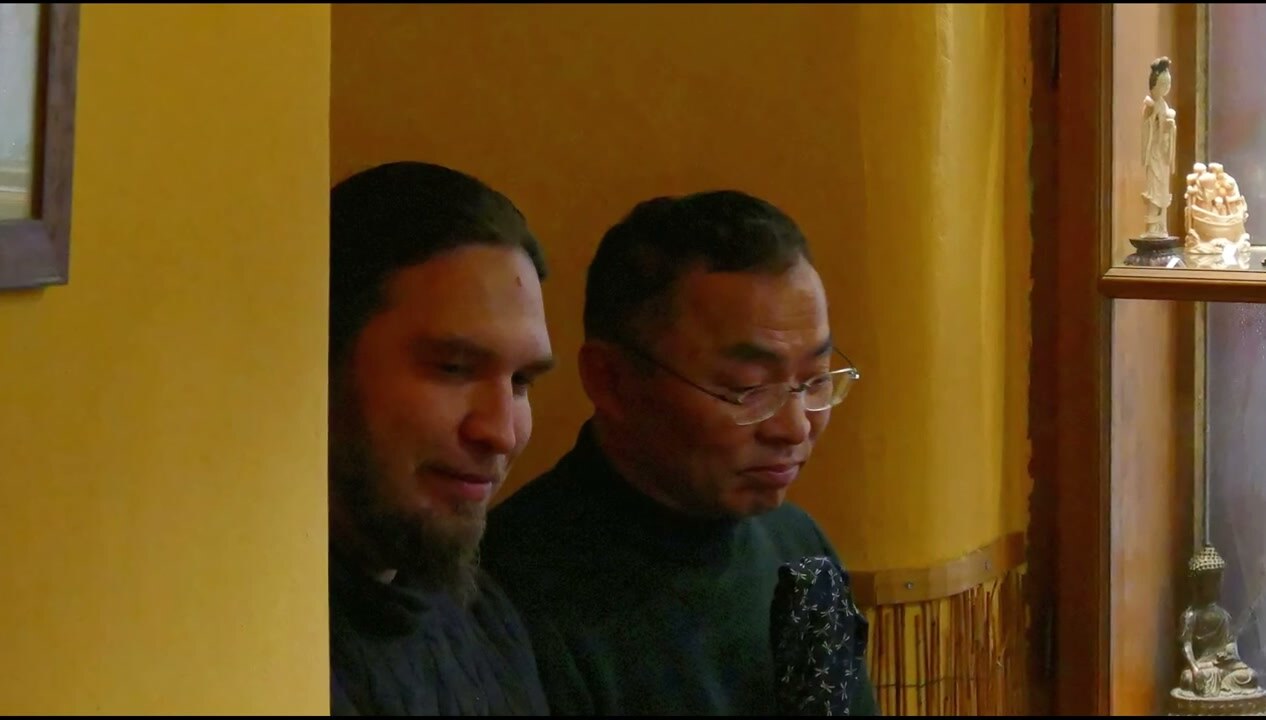
The 2017 Prague talk. Kolibrik Films · © Kolibrik Films · source 
A talk at a high school’s 立志式 (risshi-shiki) ceremony. Photo: the smith himself
The 2002 katana for use
A client from Amsterdam describes it on a collectors’ forum (2012): 72 cm nagasa, 0.8 cm kasane, very pronounced hamaguri-ba, tamahagane alone, kōbuse. He used it for some years at tameshigiri seminars: “cut more than 5000 Bamboo, used loughly by more than 300 different level of people. but, it is still fine” (it cut more than 5,000 bamboos, more than 300 people of all levels used it roughly, and it is still fine). He says that Matsuba polishes swords for use with shitaji-togi only and leaves the edge somewhat blunt so that it does not chip. The client lives in Amsterdam, where Matsuba gave seminars: he may be a student of his.
The 2002 katana for use, on a collectors’ forum
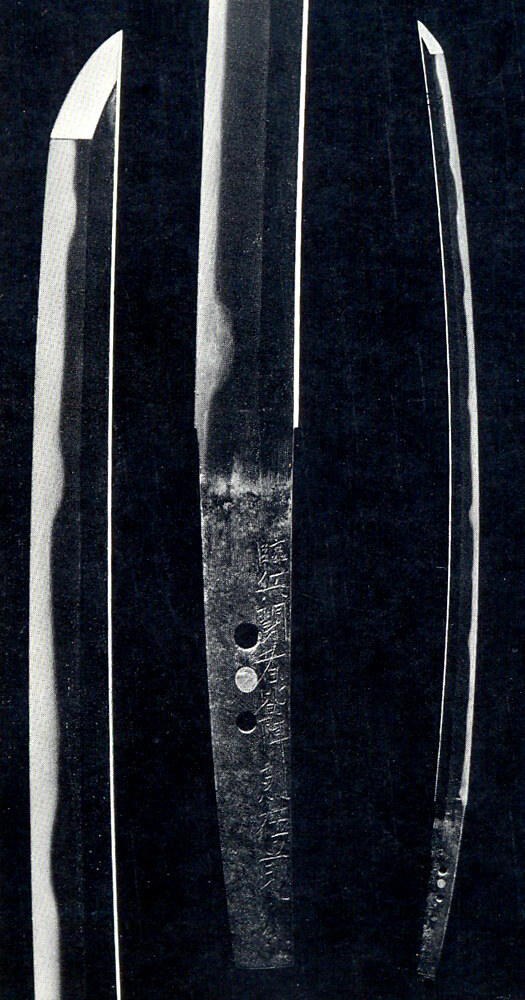
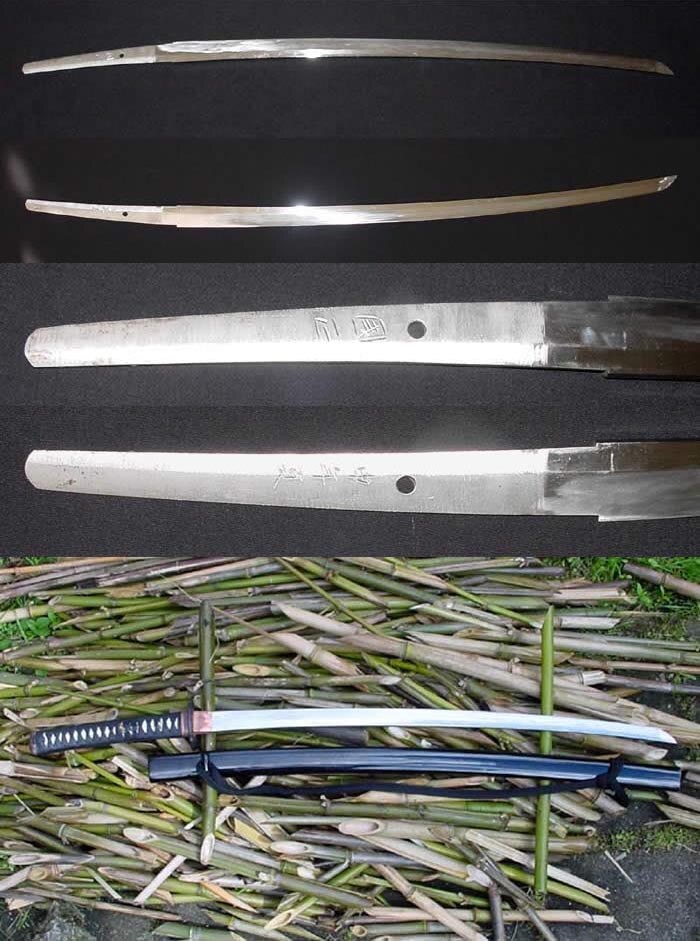
The blade of the 2002 katana for use. Photo: a collector 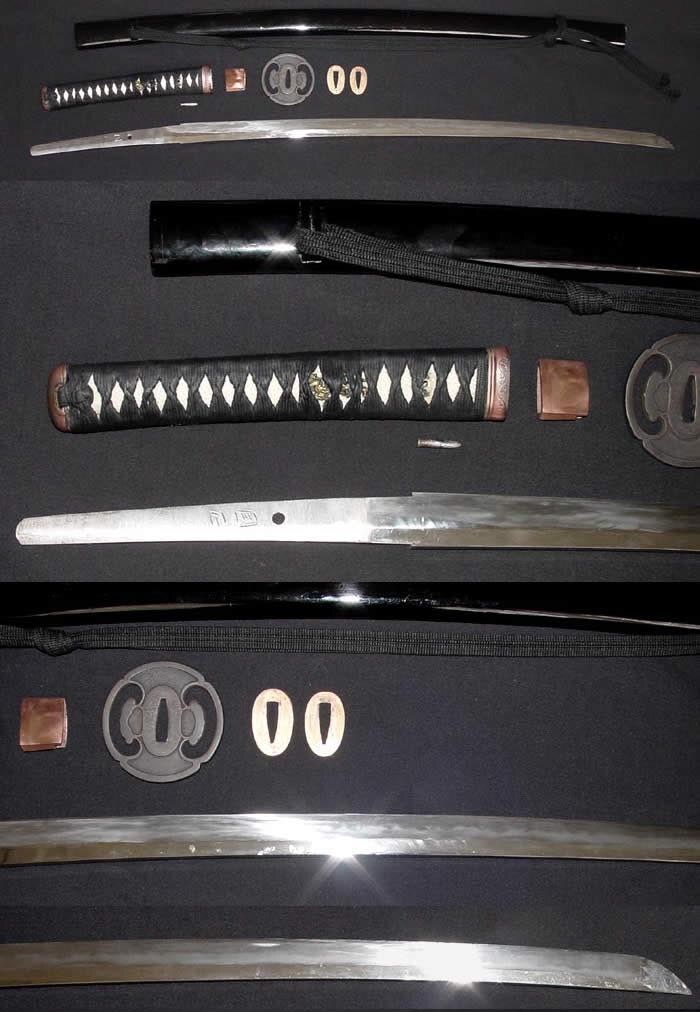
The 2002 katana for use with its koshirae, among others. Photo: a collector
What the dealers say
- A dealer sold his 2013 katana (72.8 cm) with a Musashi-style koshirae “武用本位” (buyō hon'i, designed above all for use).
- Two other dealers quote him: “a swordsmith should be familiar with handling the Katana in order to know the specific requirements”.
The 2013 katana, at a dealer
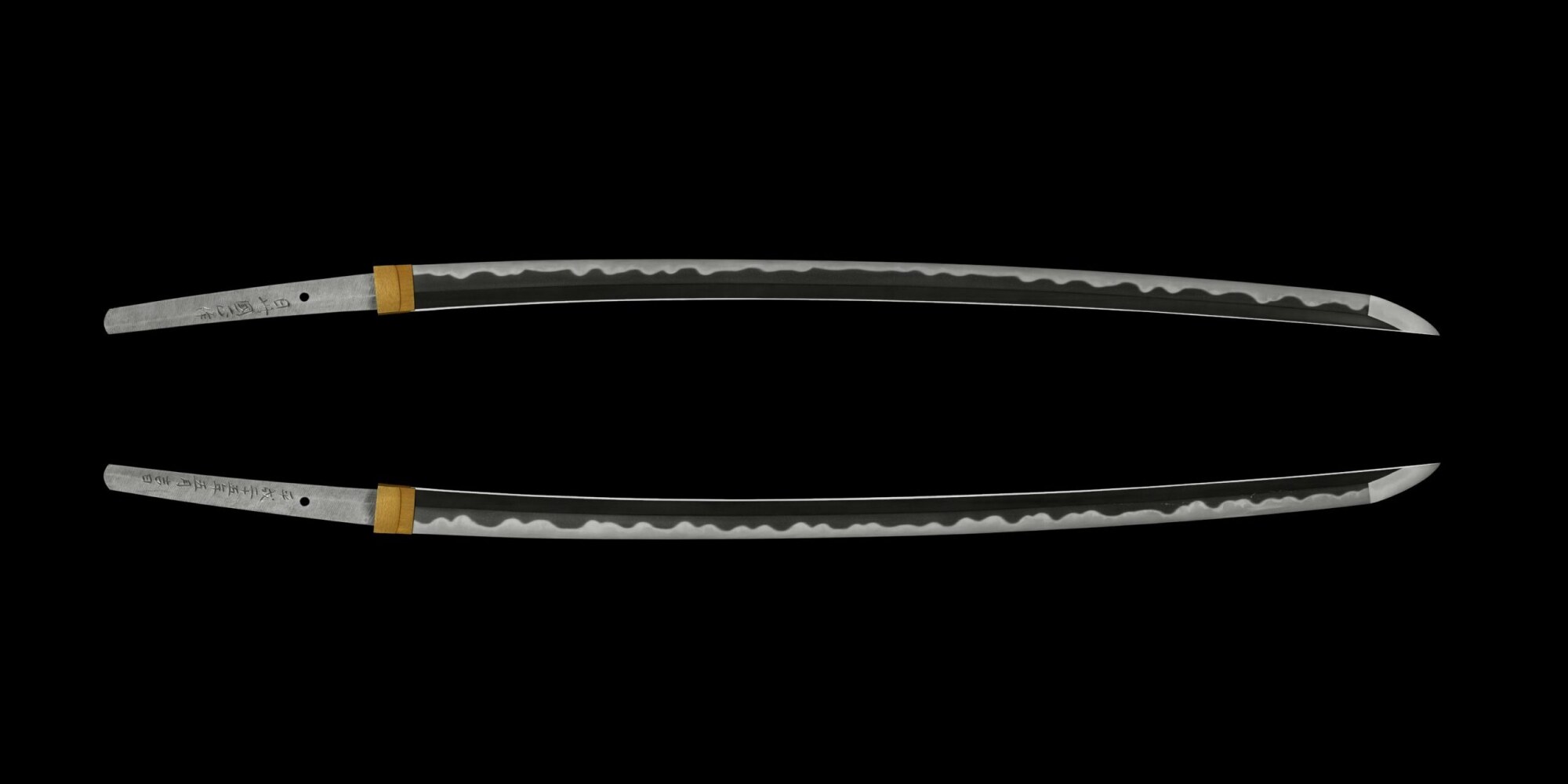
The 2013 katana sold by a dealer, 72.8 cm, both sides. Photo: dealer in Japan 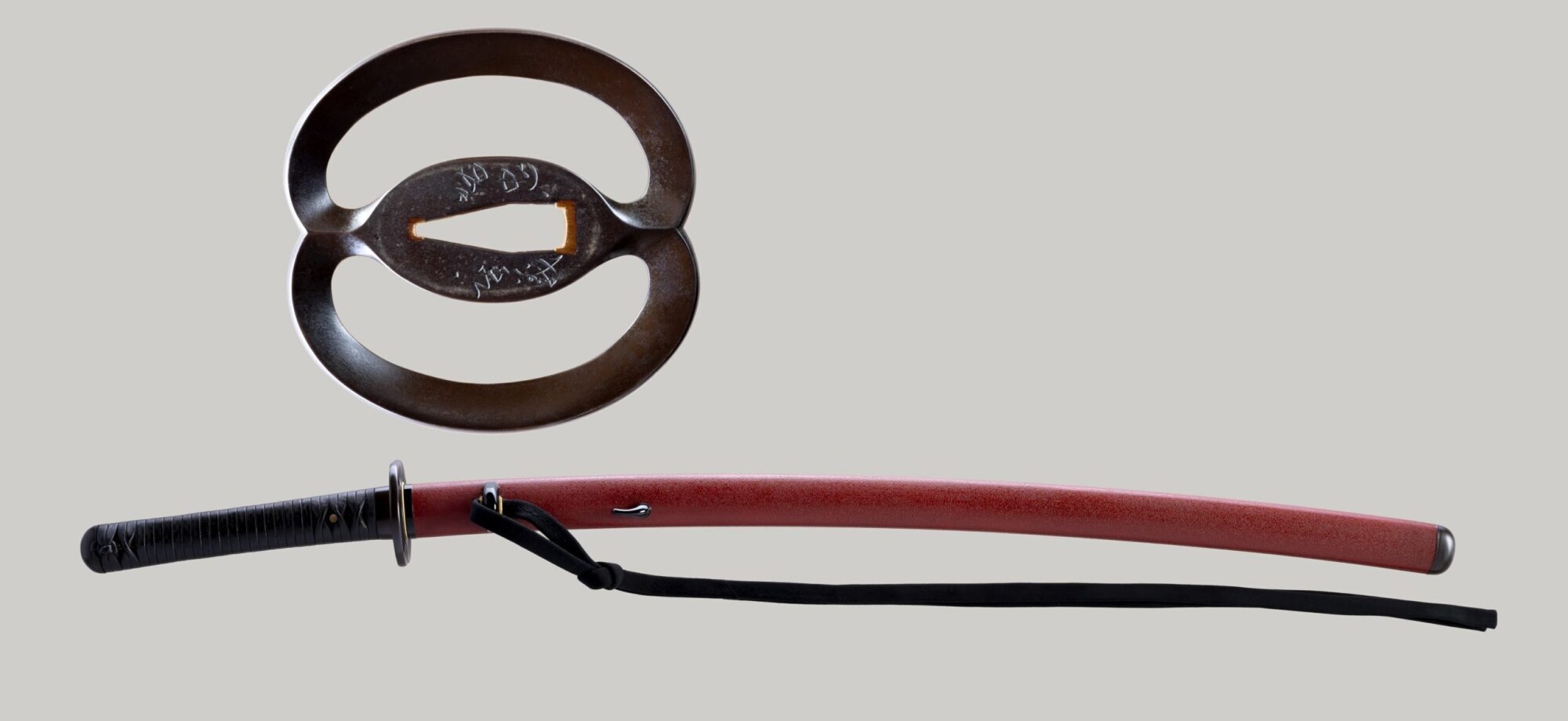
The Musashi-style koshirae for use of the 2013 katana. Photo: dealer in Japan
What there is not
There are five videos in which he cuts bamboo himself, from 2016 to 2022 (see “Videos and press”). In none of them is the blade he cuts with identified: it is probably his, but it has not been checked. There is no federation or tameshigiri champion vouching for his blades, nor the weight of any of them.
Reading II
- It is the opposite case to Kanemitsu: there the reputation for use came from the budō shops; here it comes from his own practice, from his master, the man of the “斬鉄剣” (zantetsuken), and from how he tells it.
- The only technical data on a blade of his for use is that of 2002 (72 cm, 0.8 cm kasane, pronounced hamaguri).
- The risk: his most ambitious art work is the hitatsura and the extremely long tachi. A sword of his for use calls for a hamon of restrained height, without tobiyaki in the monouchi, and a weight designed for use.