On this page
In short
What we know. Matsuba Kagemasa, a member of the Zen Nihon Tōshōkai (全日本刀匠会), the swordsmiths’ association, appears as mukansa (無鑑査, exempt from judging) in the official NBTHK catalogues for the fiscal years 2017, 2019, 2022 and 2023. On 8 September 2022 Miyazaki Prefecture designated his sword-making technique (日本刀制作技術, nihontō seisaku gijutsu) an intangible cultural property, and the Hyūga city record says that his model is Chōgi (長義), the great Bizen master of the Nanbokuchō period. In October 2023 his workshop and his house in Hyūga burned down, and today he has a new forge in Hinokage (日之影), in the mountains of the north of the prefecture.
How we know it. From the NBTHK catalogues and results lists, from the Hyūga city record of the cultural property, from the lists of the Zen Nihon Tōshōkai, from the Miyazaki press and from what he publishes himself, in what can be seen directly. Almost all of his record before 2017, his apprenticeship and his licence are told by him, and repeated by the dealers: the official lists of those years are not online.
What we do not know. Whether he keeps the mukansa title after three years in a row without exhibiting (2024, 2025 and 2026), how he works today in the new forge, beyond what he says in his 2024 talks, and his forging method in detail, which he describes in a 2017 book we have not read.
Why this monograph II
Kagemasa is a high-ranking swordsmith (mukansa in the NBTHK catalogues from 2017 to 2023; his standing today unconfirmed) who is also a budōka: he has practised kendō, iai, kenjutsu and aikidō for decades. This monograph gathers what is known of him, of his art work and of his blades for use, and compares him with another swordsmith of today, Akamatsu Tarō Kanemitsu (Kanemitsu).
The route: the swordsmith, his masters and his school, his style, his steel and his works, his awards and the mukansa, his blades for use, the comparison with Kanemitsu, the videos and the press, the glossary and the sources. It carries photos from the press, from dealers and from him, and video stills, each with its credit in “Sources”, and twenty-seven videos that play when clicked.
How to read the levels II
Each fact carries one of these four levels, the same as in the dossier on which the monograph is based:
- HD, documented fact: an official or primary source gives it (the NBTHK, the Zen Nihon Tōshōkai, Hyūga city, Miyazaki Prefecture) or it can be seen directly in a dated publication.
- AT, attribution: Matsuba himself says it (what he publishes, his books, his interviews) or a secondary source without documentary backing, such as a dealer’s description or a forum.
- II, our interpretation: calculations, comparisons and reasoned readings.
- PC, yet to be confirmed: the source is missing or there is an unresolved contradiction.
The dealers and forums that are the source of a fact are not named: they are referred to generically, and their photos carry a generic credit.
Sections
-
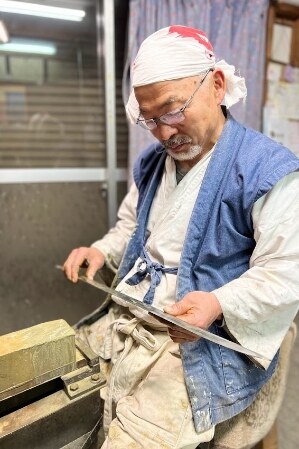
 Profile and biography
The swordsmith
Quick profile, his three smith names, his biography year by year, the 2023 fire, the new forge and what could not be checked.
-
 Kobayashi Yasuhiro · Andō Hirokiyo
Masters and school
His two masters, the one of the “斬鉄剣” (zantetsuken) and his senior pupil, and the pupils of the Matsuba school.
-
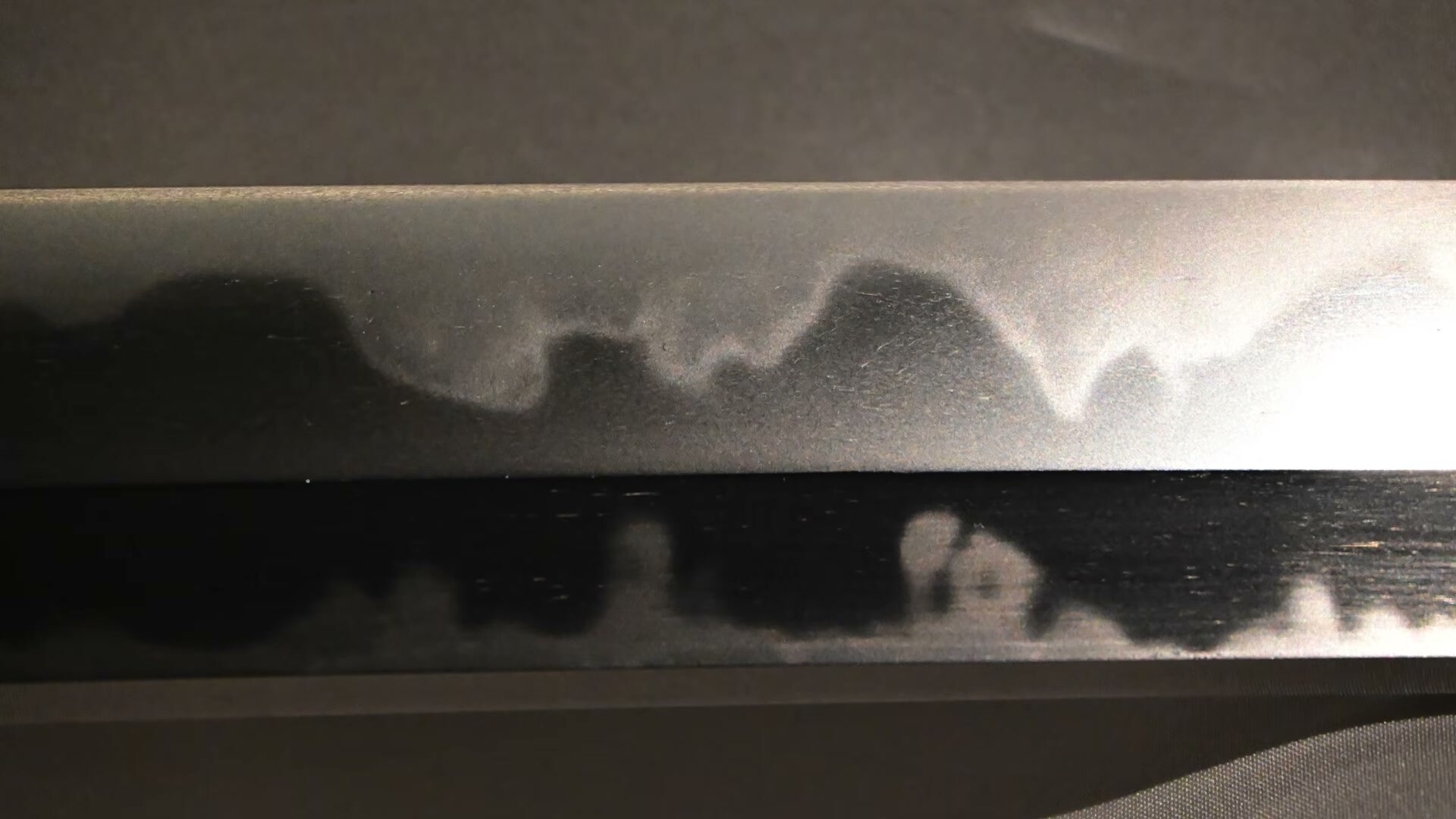 Sōden-Bizen · Chōgi · hitatsura
Style, steel and works
What he is after, the steel he works with and his documented works: measurements, signatures and models, from the competition piece to the blade for use.
-
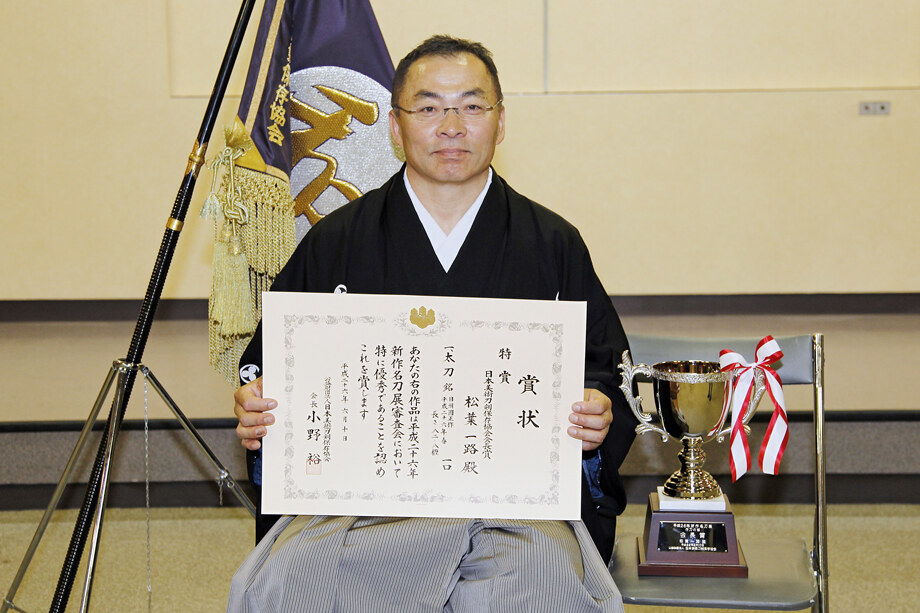 What is verified and what is missing
Awards and mukansa
His awards from the NBTHK and the Zen Nihon Tōshōkai, how he became mukansa and the question of whether he still is.
-
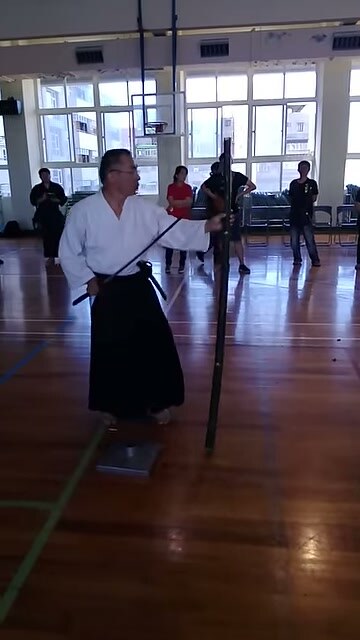 Iaidō, kenjutsu and tameshigiri
His blades for use
The budōka swordsmith: his practice, the 2002 katana for use and what is lacking to vouch for his cutting blades.
-
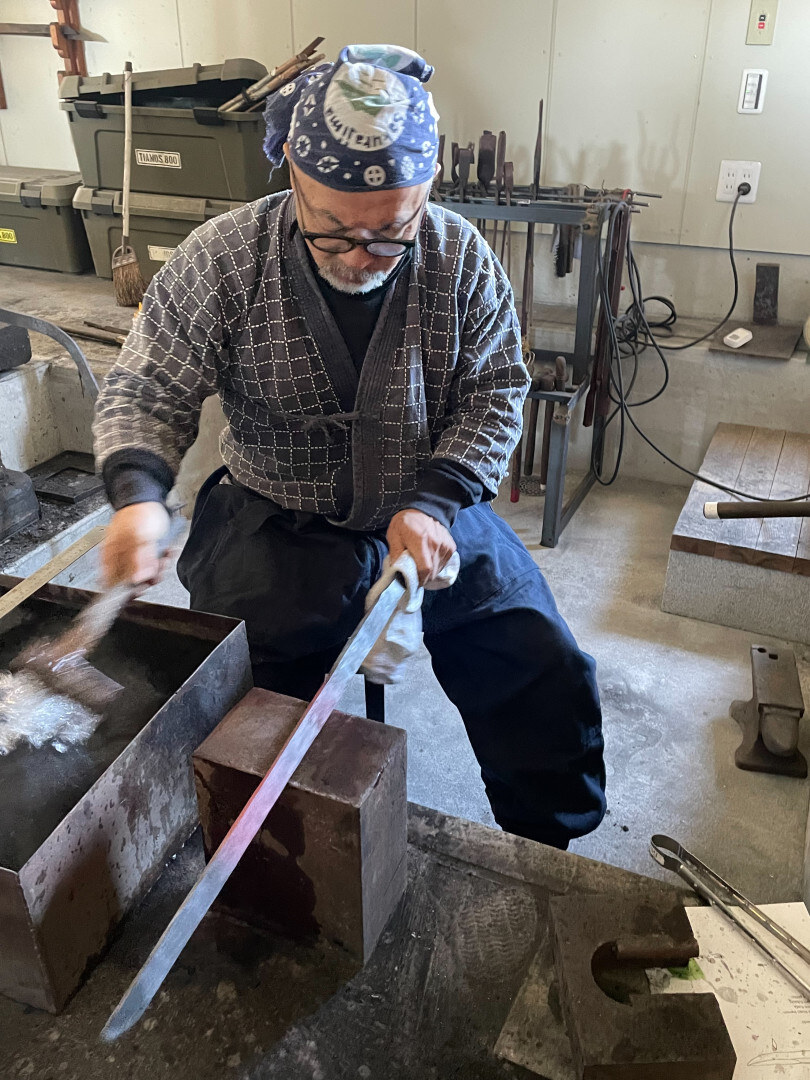 Criterion by criterion
Against Kanemitsu
Kagemasa and Akamatsu Tarō Kanemitsu, criterion by criterion: their rank, their forging, their style, their steel and their practice.
-
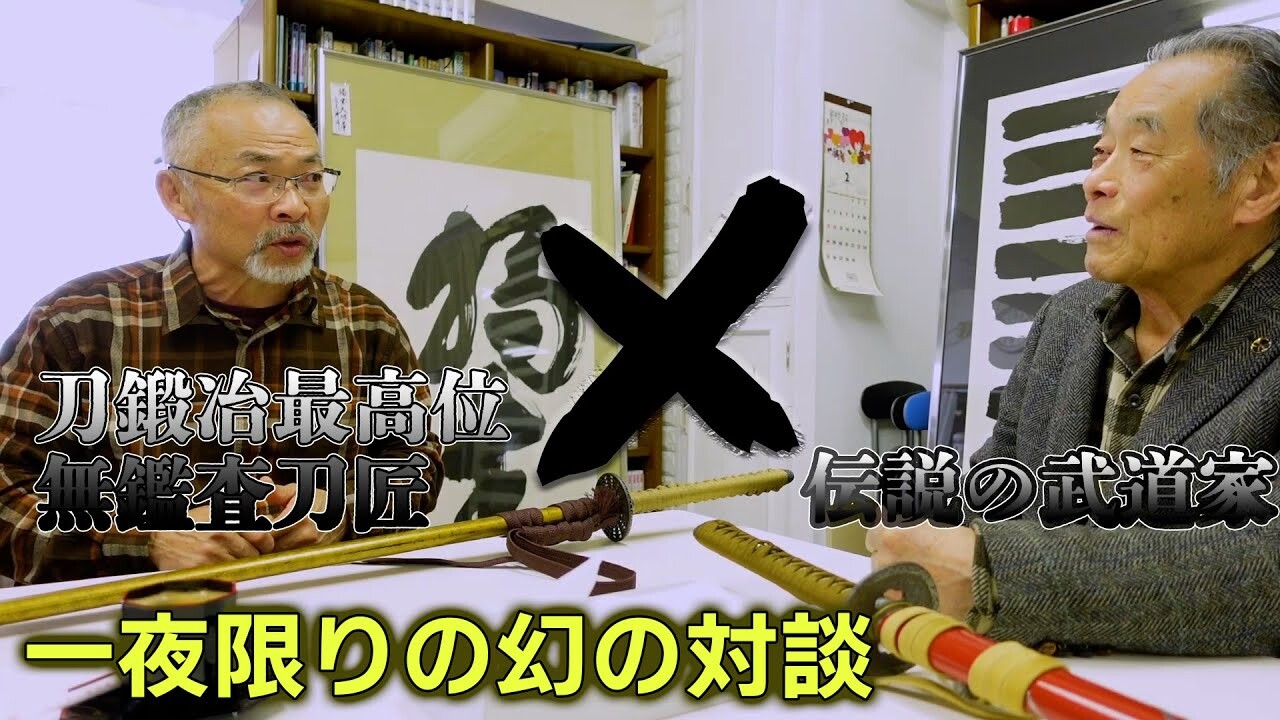 Reports, talks, cuts and works
Videos and press
Twenty-seven videos, from the 2024 report on the fire to his competition works, and the television, press, magazines and his books.
-
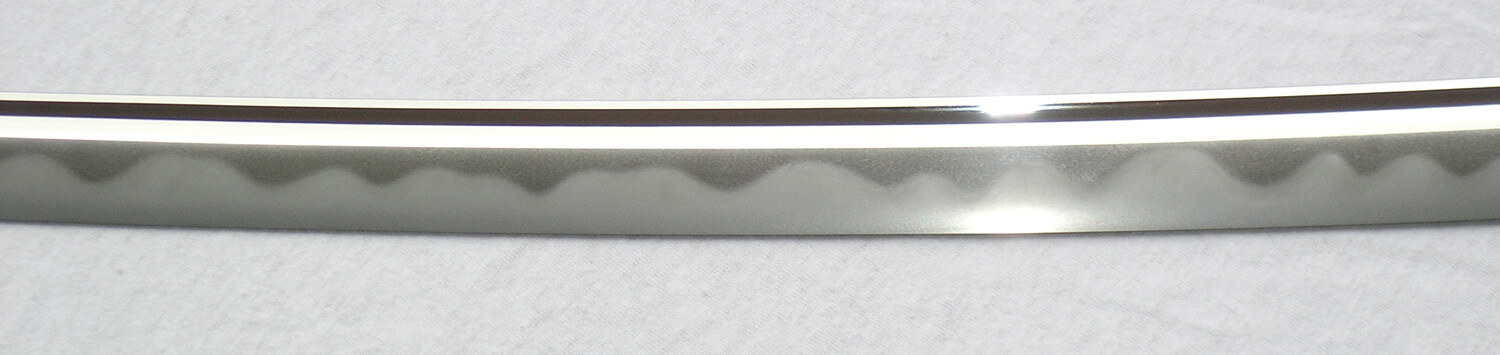 Japanese terms
Glossary
The Japanese terms of the monograph, with their original script.
-
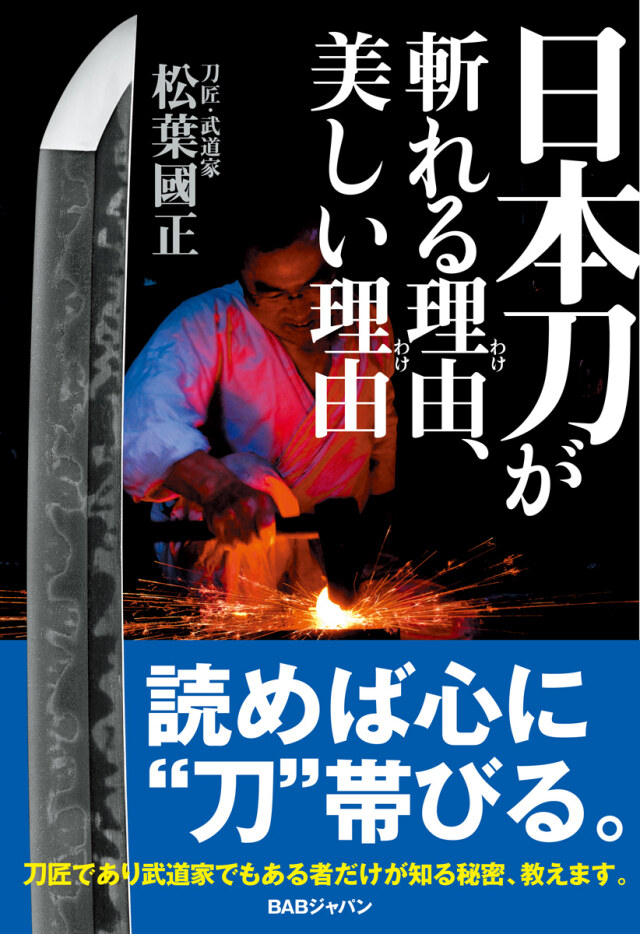 Bibliography
Sources
The sources consulted on 30 September 2026, with their link, and the credit of each image.