On this page
- What he is after
- Documented works
- The 2023 mukansa katana (NBTHK) and its soejō
- The 2022 mukansa tachi (NBTHK)
- The 唐柏 (Karakashiwa) in hitatsura
- His gallery of works: whole blades, tangs and points
- A 2008 katana, filmed in the studio
- A 2010 wakizashi and a 2006 tantō, on video
- His Hyūga exhibition (2021)
- The Udo shrine exhibition (2023)
- Works at a dealer
- Blades at dealers and exhibitions
- What his works say
- The steel and the method
What he is after
- Chōgi (長義). Hyūga city, in the record of the cultural property, writes that he submitted to the NBTHK works “南北朝時代の名工「備前長船長義」を模範とした作品” (“taking as their model the great master of the Nanbokuchō period Bizen Osafune Chōgi”). He said so himself in 2012: “相伝備前長義を目指す” (Sōden Bizen Chōgi o mezasu, “I am after the Sōden-Bizen of Chōgi”). A dealer speaks of gunome-chōji over a base of large undulations and of a jigane with a large hada.
- From the tachi to the katana. He began with Bizen-den tachi and then moved on to the katana.
- The hitatsura of the 唐柏 (Karakashiwa). In 2017 he made a hitatsura katana following the oshigata of the 唐柏 (Karakashiwa), a tachi by 長谷部國信 (Hasebe Kuninobu) that belonged to the Uesugi, like the Sanchōmō. With the help of an NBTHK curator he was able to hold it in his hands, and he decided “残りの刀鍛冶人生をこの皆焼刃の完成に賭けよう” (“to devote the rest of my life as a swordsmith to perfecting this hitatsura”). At the exhibition of fiscal year 2017 he exhibited as mukansa a 70.9 cm katana; according to him, it belongs to that series.
- Kogarasu-maru (kissaki-moroha-zukuri): he says he has made more than ten.
- Extremely long tachi. Several from 2008 to 2014 measure from 82.6 to 108.1 cm, and the 2023 ōdachi about 160 cm. His idea: the long tachi of the Nanbokuchō “長寸でも比較的バランスのよい、自在に使える重量だったに違いない” (“even though long, must have had a well-balanced, manageable weight”).
- Muramasa. No work of his described as a Muramasa utsushi (村正写し, Muramasa-utsushi) has been found. Perhaps it was confused with Kanemitsu’s “写村正” (utsushi Muramasa).
- Engravings. A dealer shows a horimono of Fudō Myōō on one of his blades; it is not on record whether he carves them himself.
Documented works
Measurements in centimetres. The level of each row is that of its source: HD if the NBTHK gives it; AT if he or a dealer gives it.
| Work | Signature | Measurements | Hamon and notes |
|---|---|---|---|
| Katana for use, 2002 | — | 72 cm; sori 2.0; motohaba 3.2; kasane 0.8 cm; sakihaba 2.0; sakikasane 0.45 | Very pronounced hamaguri-ba; polish for use; described by a client on a forum (see “His blades for use”) |
| Tachi, 2008 | 日向國住國正作之 (Hyūga no Kuni-jū Kunimasa kore o saku) / 平成二十年春 (Heisei nijū-nen haru) | 96.3 cm; sori 3.7 | Reconstruction of an ubu tachi of the Nanbokuchō |
| Tachi, 2009 | 日向國住國正作 (Hyūga no Kuni-jū Kunimasa saku) / 平成二十一年春 (Heisei nijūichi-nen haru) | 82.6 cm; sori 3.0 | — |
| Tachi, 2010 | 日州國住國正作 (Nisshū Kuni-jū Kunimasa saku) | 91.0 cm; sori 2.64 | — |
| Tachi, 2010 | 日州國住國正作之 (Nisshū Kuni-jū Kunimasa kore o saku) | 108.1 cm; sori 4.20 | — |
| Katana, 2012 | 日州國正 (Nisshū Kunimasa) | 82.2 cm; sori 2.9; motohaba 3.49; sakihaba 2.52; kasane 0.64 cm; sakikasane 0.507 | “Soden-Bizen style Choji”, itame (a dealer’s description) |
| Katana, 2013 | 日州國正之 (Nisshū Kunimasa kore o) / 平成二十五年五月吉日 (Heisei nijūgo-nen gogatsu kichijitsu) | 72.8 cm; sori 1.7 | Gunome-chōji; Musashi-style mounting for use (a dealer’s description) |
| Tachi, 2014 | — | 82.8 cm; wide mihaba, ō-kissaki | Homage to Chōgi; ko-itame, ji-nie, chikei (text from Tōken Bijutsu, translated by a dealer) |
| Katana, 2016 | 似隕鐵國正作 (probable reading: nii intetsu Kunimasa saku) | 70.2 cm; sori 2.0 | Shōbu-zukuri, with meteoric iron |
| Katana, FY 2017 (mukansa) | 日州國正作 (Nisshū Kunimasa saku) / 平成二十九年春 (Heisei nijūkyū-nen haru) | 70.9 cm (71.1 cm, he says) | Hitatsura in the line of the 唐柏 (Karakashiwa), as he tells it |
| Tachi, NBTHK 2019 (mukansa) | 日州國正作 (Nisshū Kunimasa saku) / 平成三十一年春 (Heisei sanjūichi-nen haru) / 應村田正樹需 (Murata Masaki no motome ni ōjite) | 78.6 cm | Commissioned by a client, as the inscription says |
| Tachi, 2019–2020 | 日州國正作 (Nisshū Kunimasa saku) / 令和2年春 (Reiwa ni-nen haru) | 80.0 cm; sori 2.4 | Second utsushi of the 唐柏 (Karakashiwa); hitatsura |
| Katana, 2020 | 日州國正作 (Nisshū Kunimasa saku) / 令和2年春 (Reiwa ni-nen haru) | 73.7 cm; sori 1.7 | Late-Edo wazori; narrower blade “so that it fits a good koshirae” |
| Tachi, NBTHK 2022 (mukansa) | 日向國住景正作之 (Hyūga no Kuni-jū Kagemasa kore o saku) / 令和四年五月吉日 (Reiwa yo-nen gogatsu kichijitsu) | 78.8 cm | — |
| Katana, NBTHK 2023 (mukansa) | 日向國住景正作之 (Hyūga no Kuni-jū Kagemasa kore o saku) / 令和五年二月日 (Reiwa go-nen nigatsu hi) | 71.6 cm | — |
| Ōdachi, 2023 | — | 5 shaku 3 sun (about 160 cm), without joins | Modelled on that of Makara Naotaka; “the forging of six tachi of 2 shaku 5 sun and four full months of hizukuri”, according to him |
| Others | — | — | A Masamune utsushi with koshirae, daishō and tantō, according to a dealer |
The 2023 mukansa katana (NBTHK) and its soejō
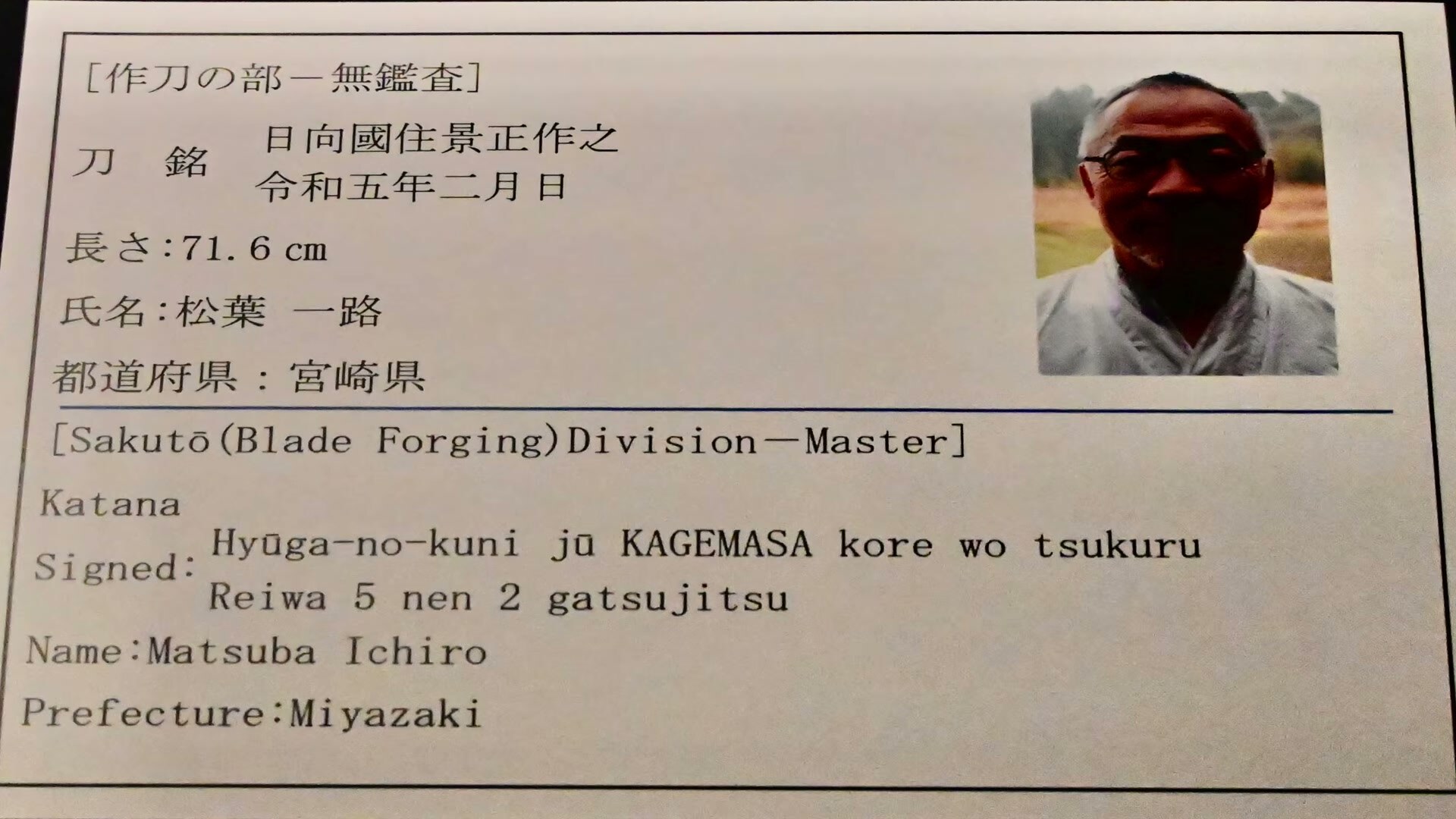
The NBTHK information sheet for his 2023 katana: 71.6 cm, 日向國住景正作之 (Hyūga no Kuni-jū Kagemasa kore o saku). 迫田貫路 (probable reading: Sakoda Kanji) · © 迫田貫路 (probable reading: Sakoda Kanji) · source 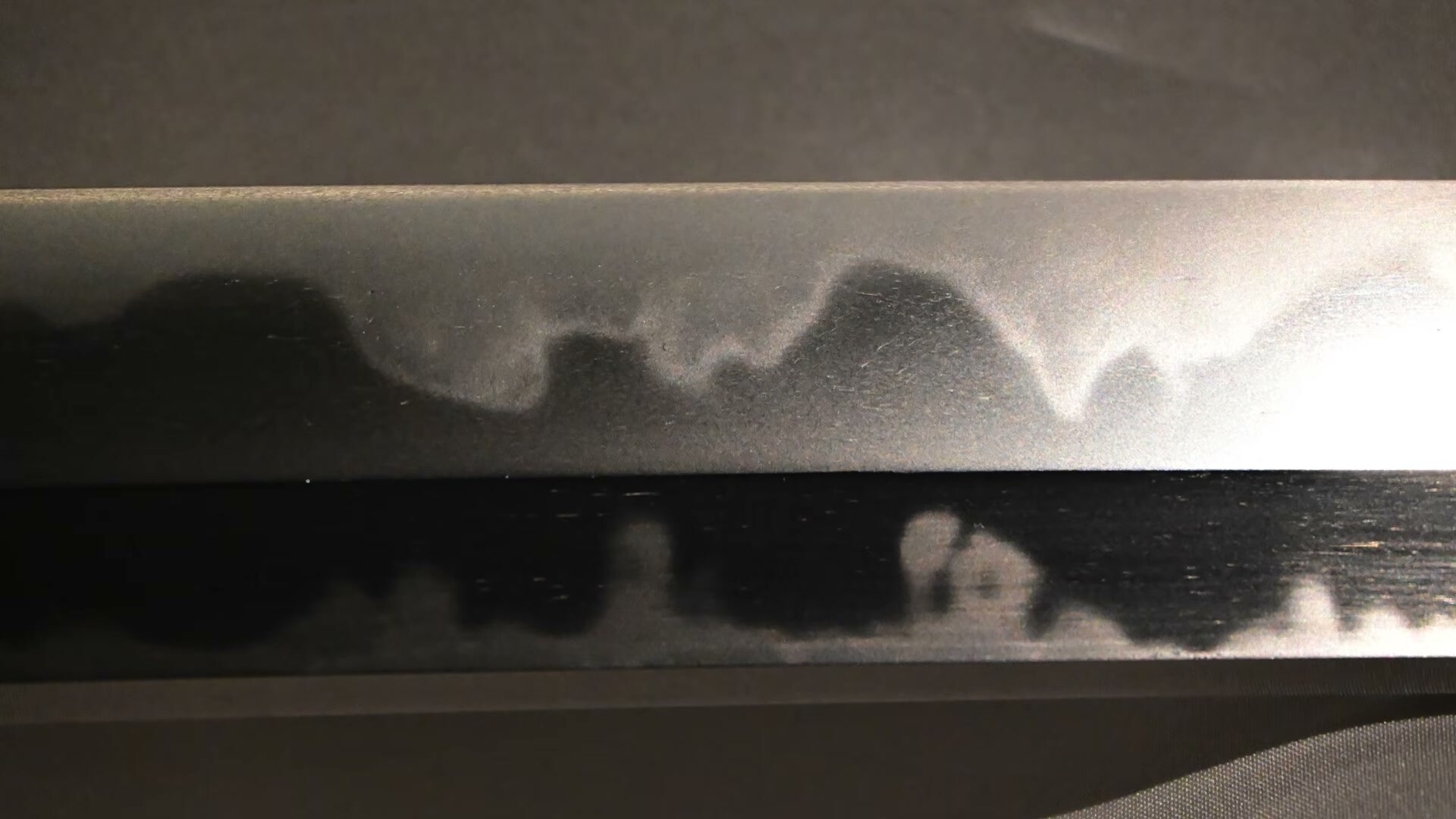
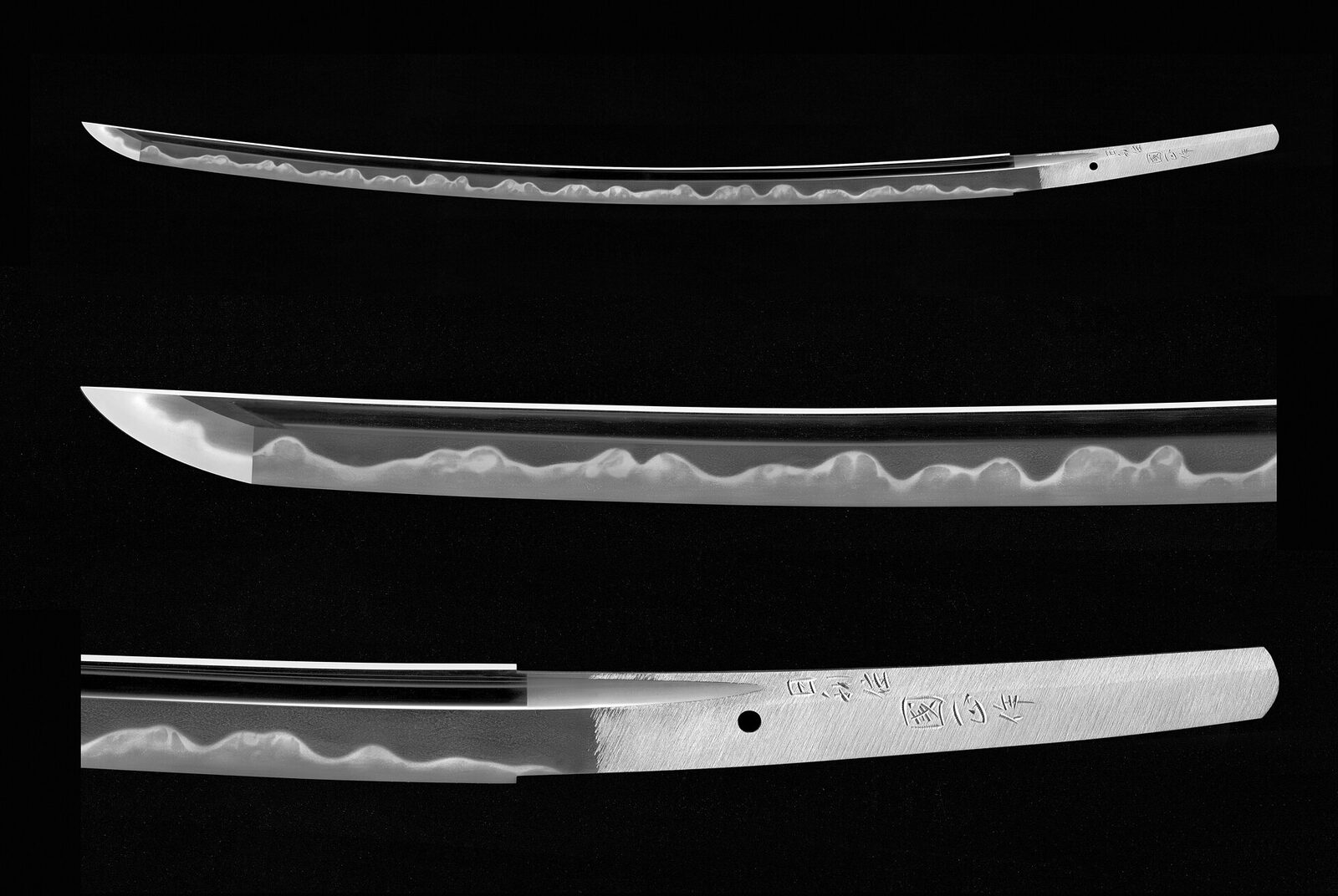
The hamon of the 2023 katana: wide gunome with tobiyaki. 迫田貫路 (probable reading: Sakoda Kanji) · © 迫田貫路 (probable reading: Sakoda Kanji) · source 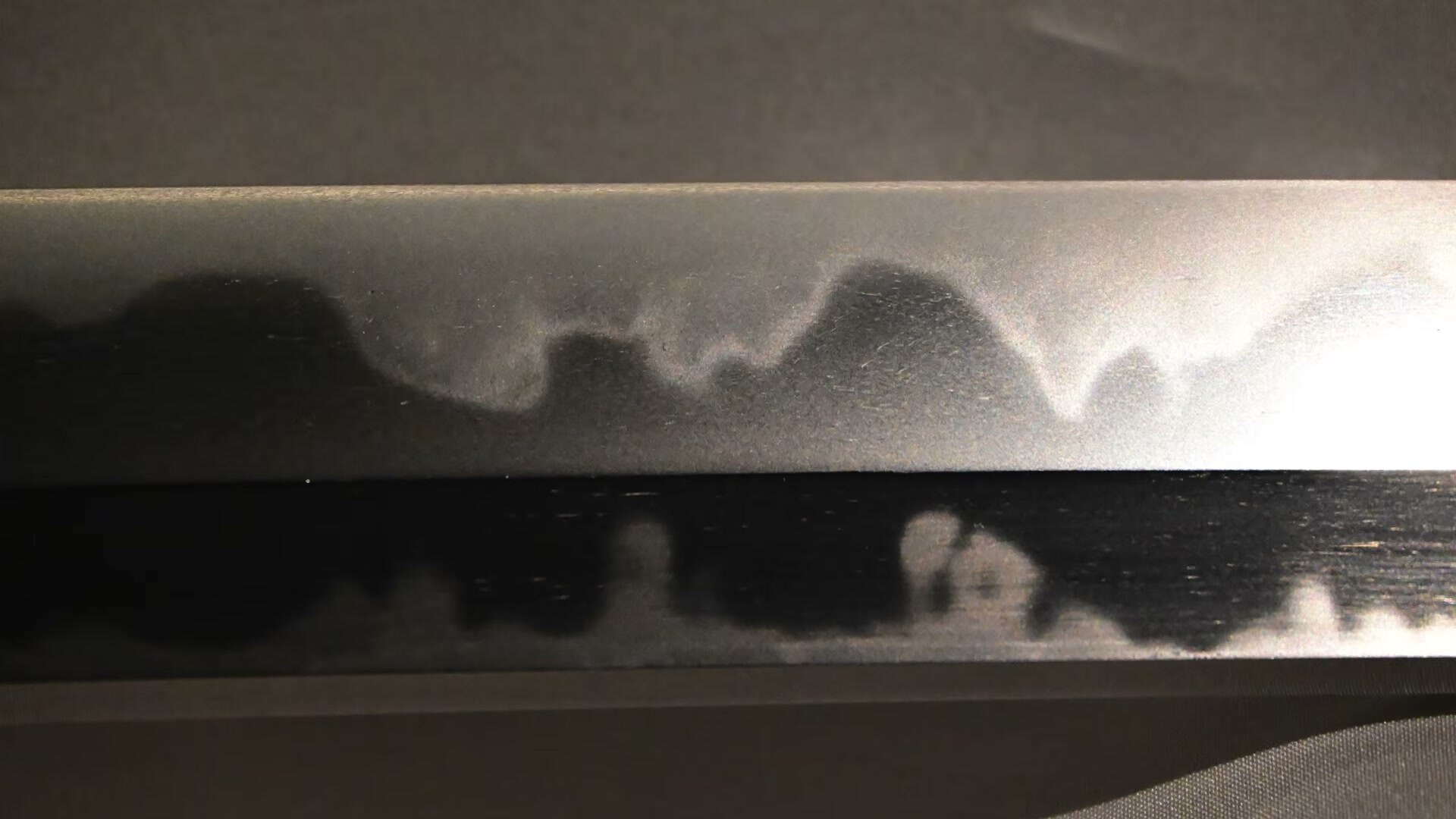
Another stretch of the hamon of the 2023 katana. 迫田貫路 (probable reading: Sakoda Kanji) · © 迫田貫路 (probable reading: Sakoda Kanji) · source 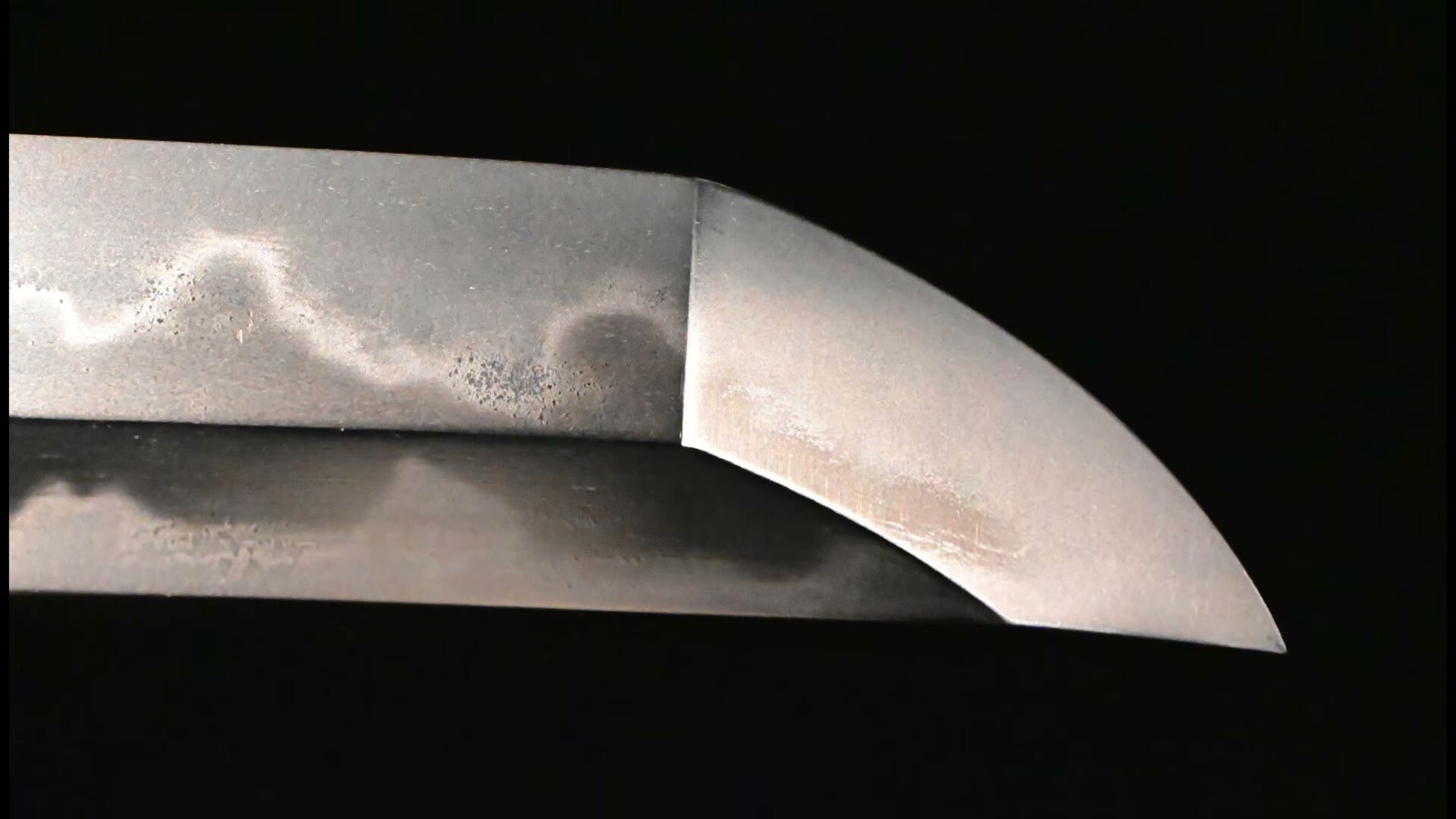
The point of the 2023 katana. 迫田貫路 (probable reading: Sakoda Kanji) · © 迫田貫路 (probable reading: Sakoda Kanji) · source 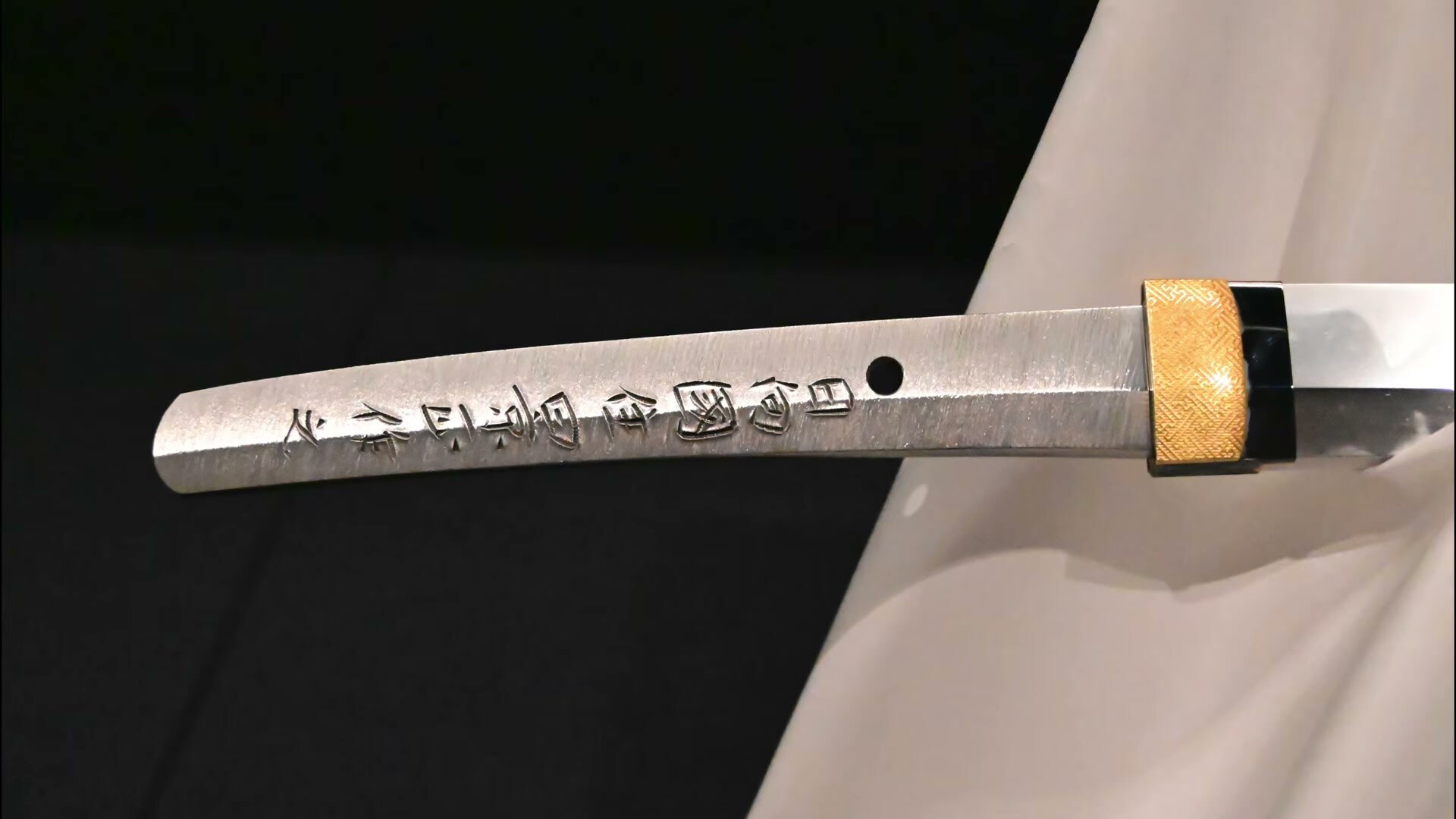
The tang of the 2023 katana, with the gold habaki. 迫田貫路 (probable reading: Sakoda Kanji) · © 迫田貫路 (probable reading: Sakoda Kanji) · source 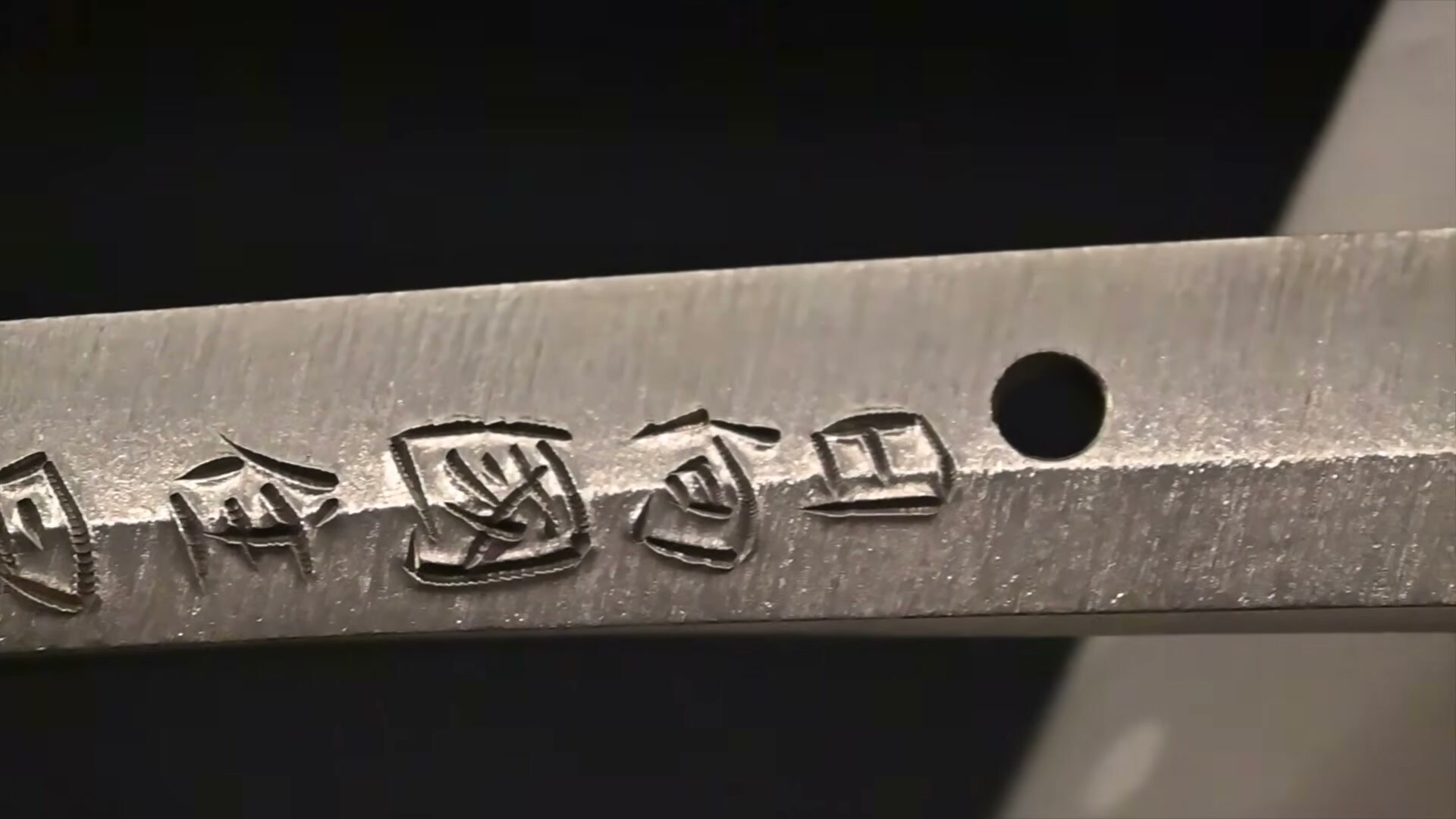
The signature of the 2023 katana. 迫田貫路 (probable reading: Sakoda Kanji) · © 迫田貫路 (probable reading: Sakoda Kanji) · source 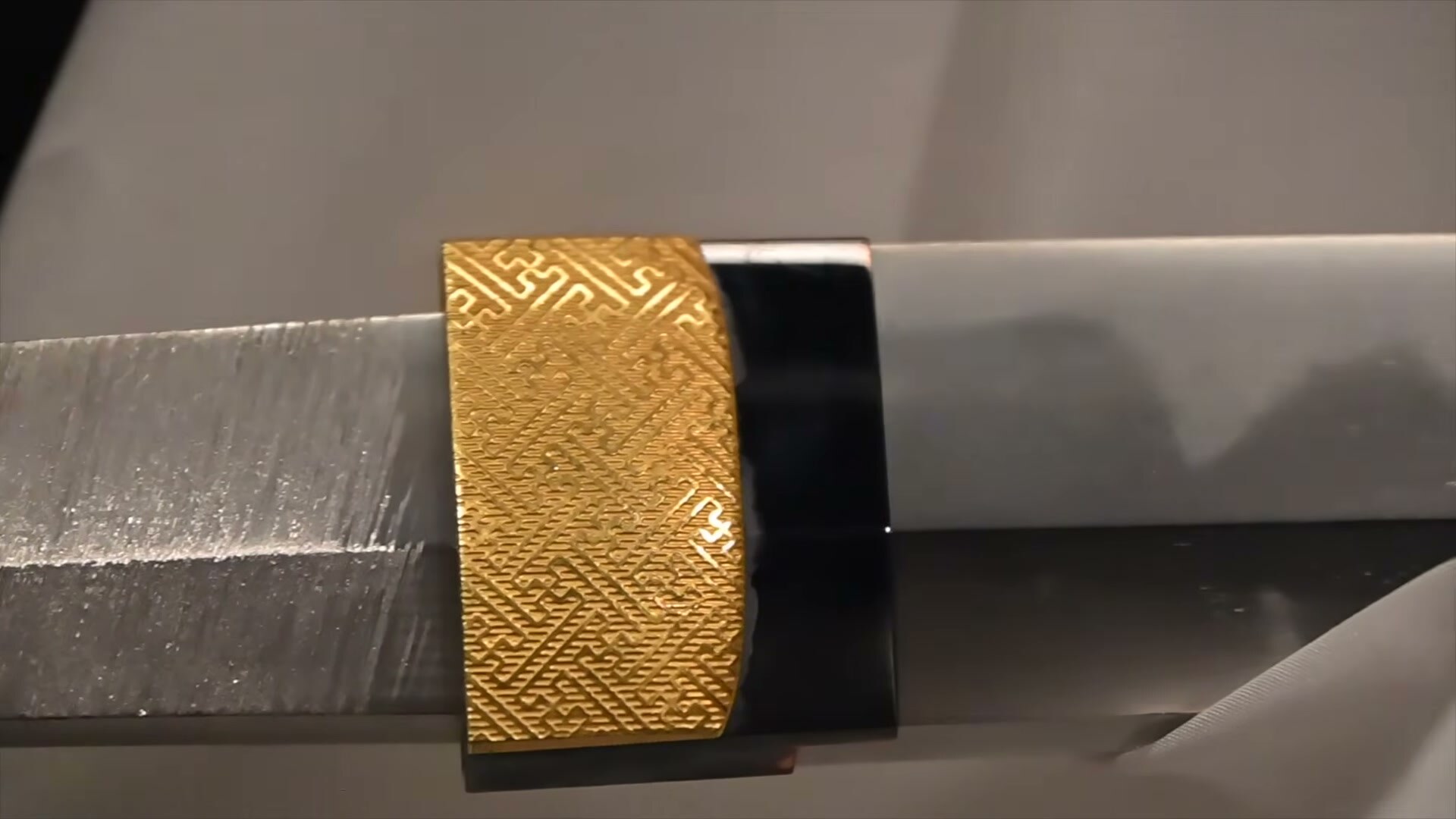
The gold habaki of the 2023 katana. 迫田貫路 (probable reading: Sakoda Kanji) · © 迫田貫路 (probable reading: Sakoda Kanji) · source 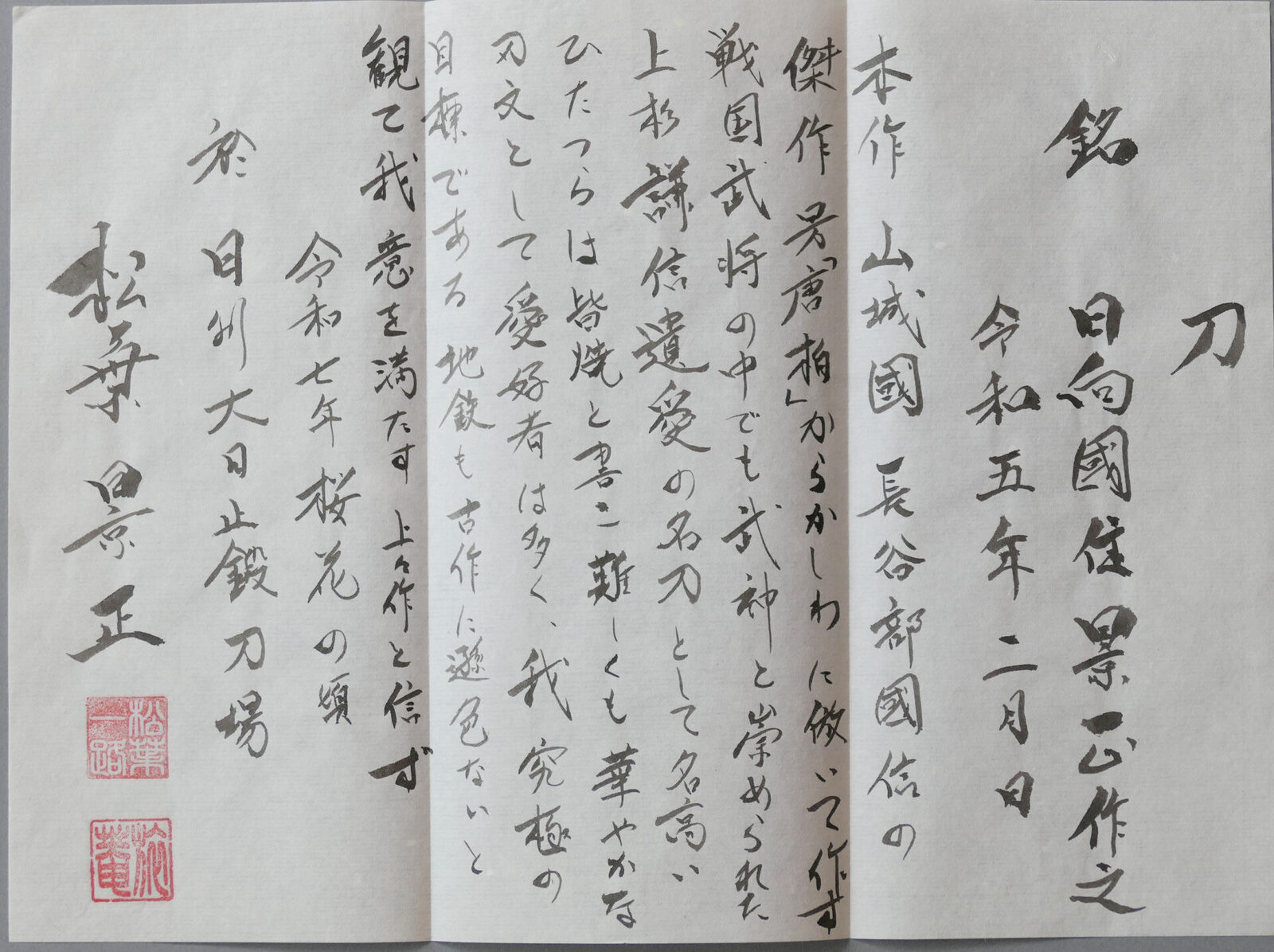
The soejō he wrote in 2025 for the 2023 katana: he describes it as made in the manner of the 唐柏 (Karakashiwa). Photo: dealer outside Japan
The 2022 mukansa tachi (NBTHK)
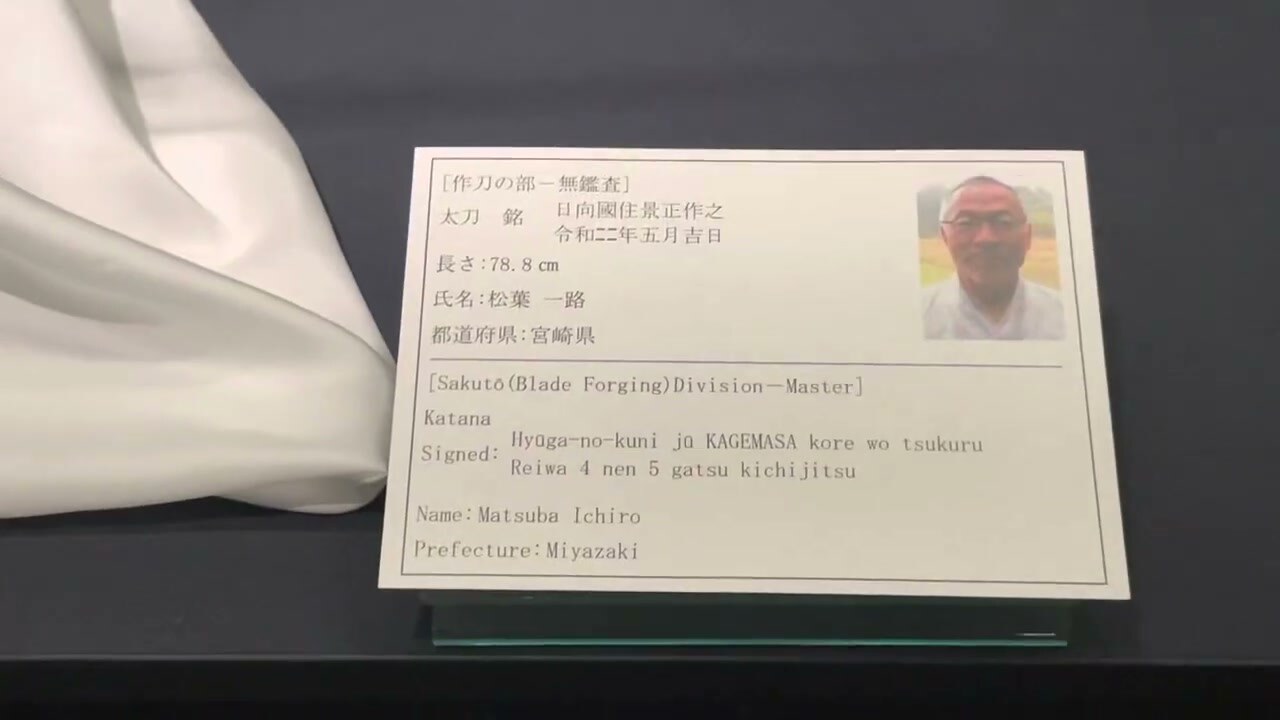
The NBTHK information sheet for his 2022 tachi: 78.8 cm, 日向國住景正作之 (Hyūga no Kuni-jū Kagemasa kore o saku). 永野照男 (probable reading: Nagano Teruo) · © 永野照男 (probable reading: Nagano Teruo) · source 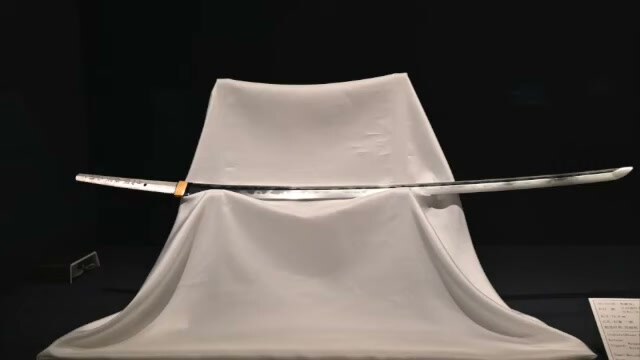
The 2022 tachi on its stand, at the Sword Museum. 迫田貫路 (probable reading: Sakoda Kanji) · © 迫田貫路 (probable reading: Sakoda Kanji) · source 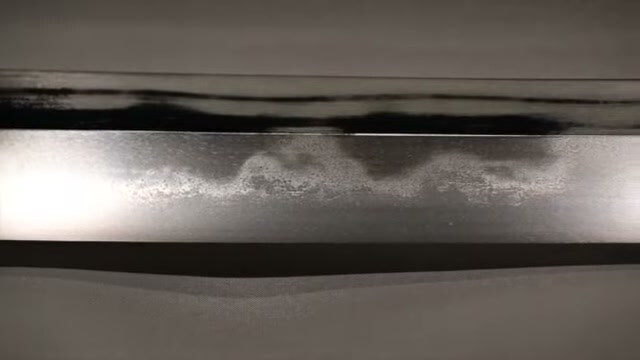
The hamon of the 2022 tachi, with tobiyaki. 迫田貫路 (probable reading: Sakoda Kanji) · © 迫田貫路 (probable reading: Sakoda Kanji) · source 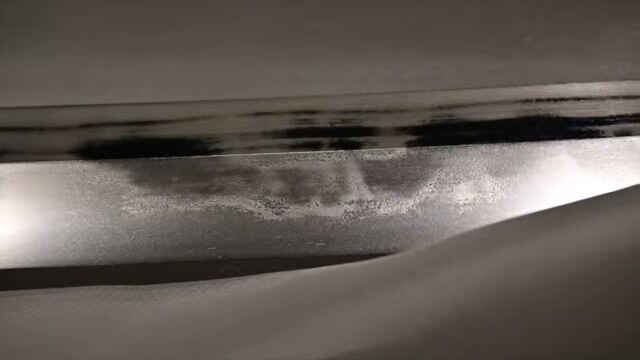
Another stretch of the hamon of the 2022 tachi. 迫田貫路 (probable reading: Sakoda Kanji) · © 迫田貫路 (probable reading: Sakoda Kanji) · source 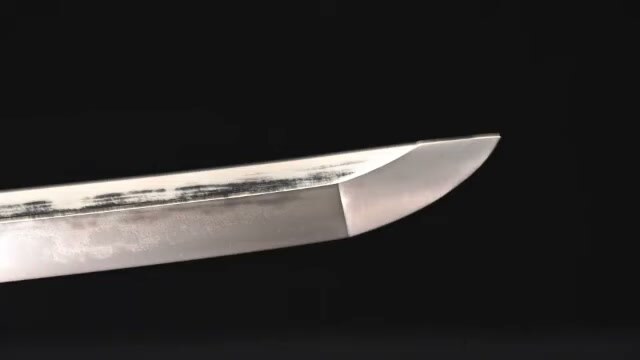
The point of the 2022 tachi. 迫田貫路 (probable reading: Sakoda Kanji) · © 迫田貫路 (probable reading: Sakoda Kanji) · source 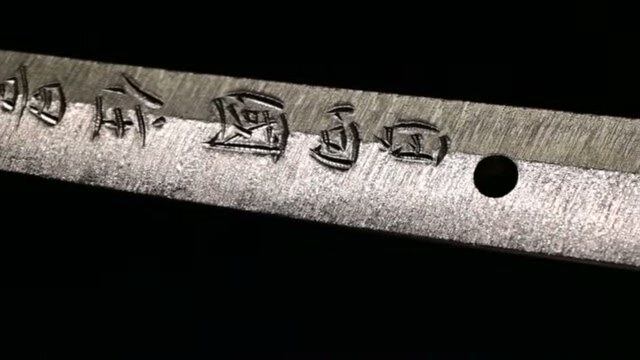
The signature of the 2022 tachi. 迫田貫路 (probable reading: Sakoda Kanji) · © 迫田貫路 (probable reading: Sakoda Kanji) · source 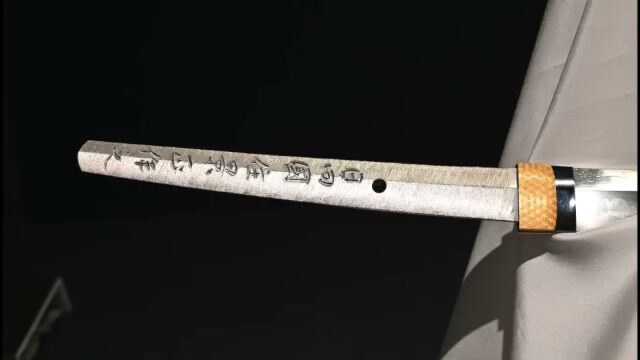
The tang of the 2022 tachi. 迫田貫路 (probable reading: Sakoda Kanji) · © 迫田貫路 (probable reading: Sakoda Kanji) · source
The 唐柏 (Karakashiwa) in hitatsura
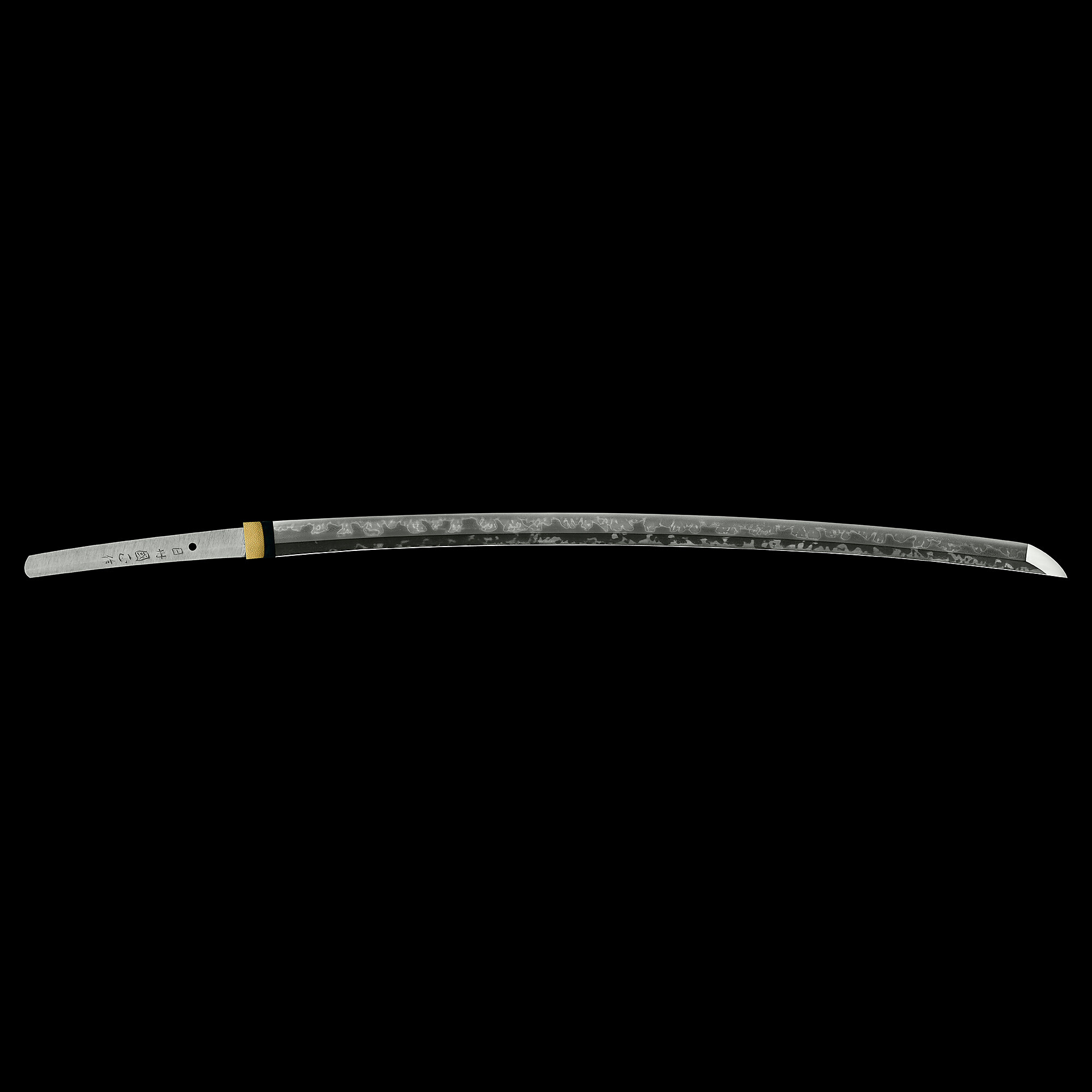
2017 katana in hitatsura, in the manner of the 唐柏 (Karakashiwa) according to him. Photo: the smith himself 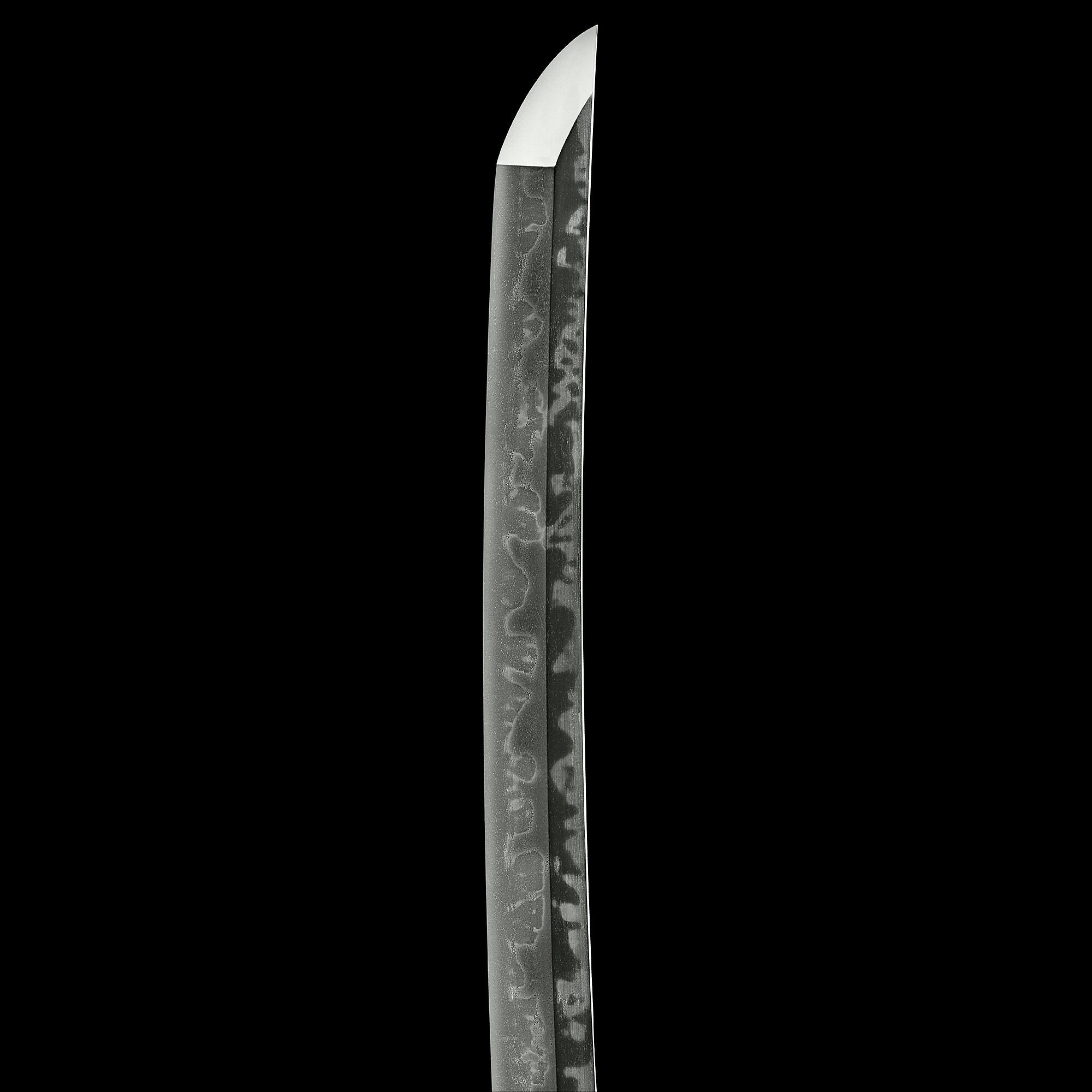
The point of the 2017 hitatsura katana. Photo: the smith himself 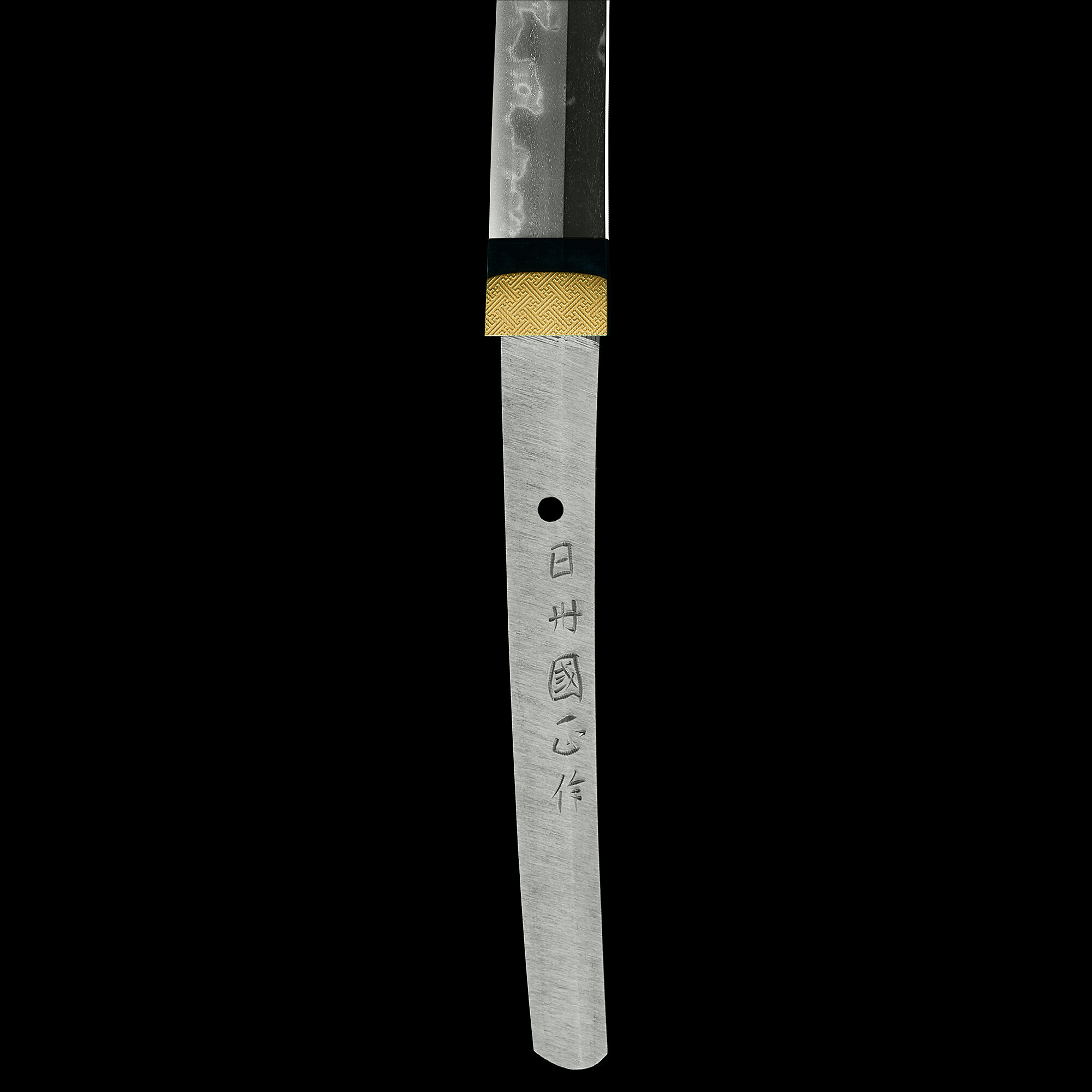
The tang of the 2017 hitatsura katana. Photo: the smith himself 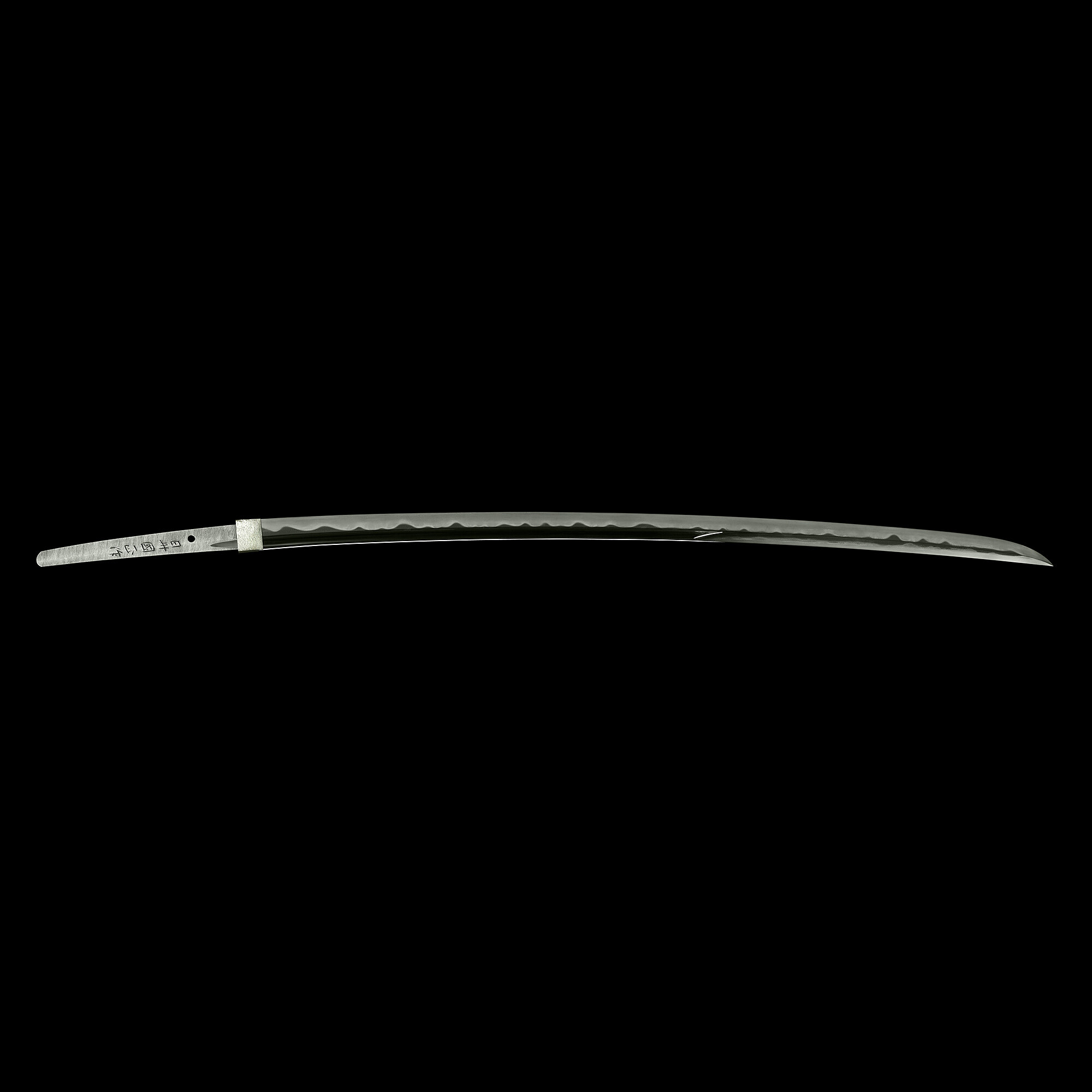
2020 tachi, 80.0 cm, second version of the 唐柏 (Karakashiwa) according to him. Photo: the smith himself 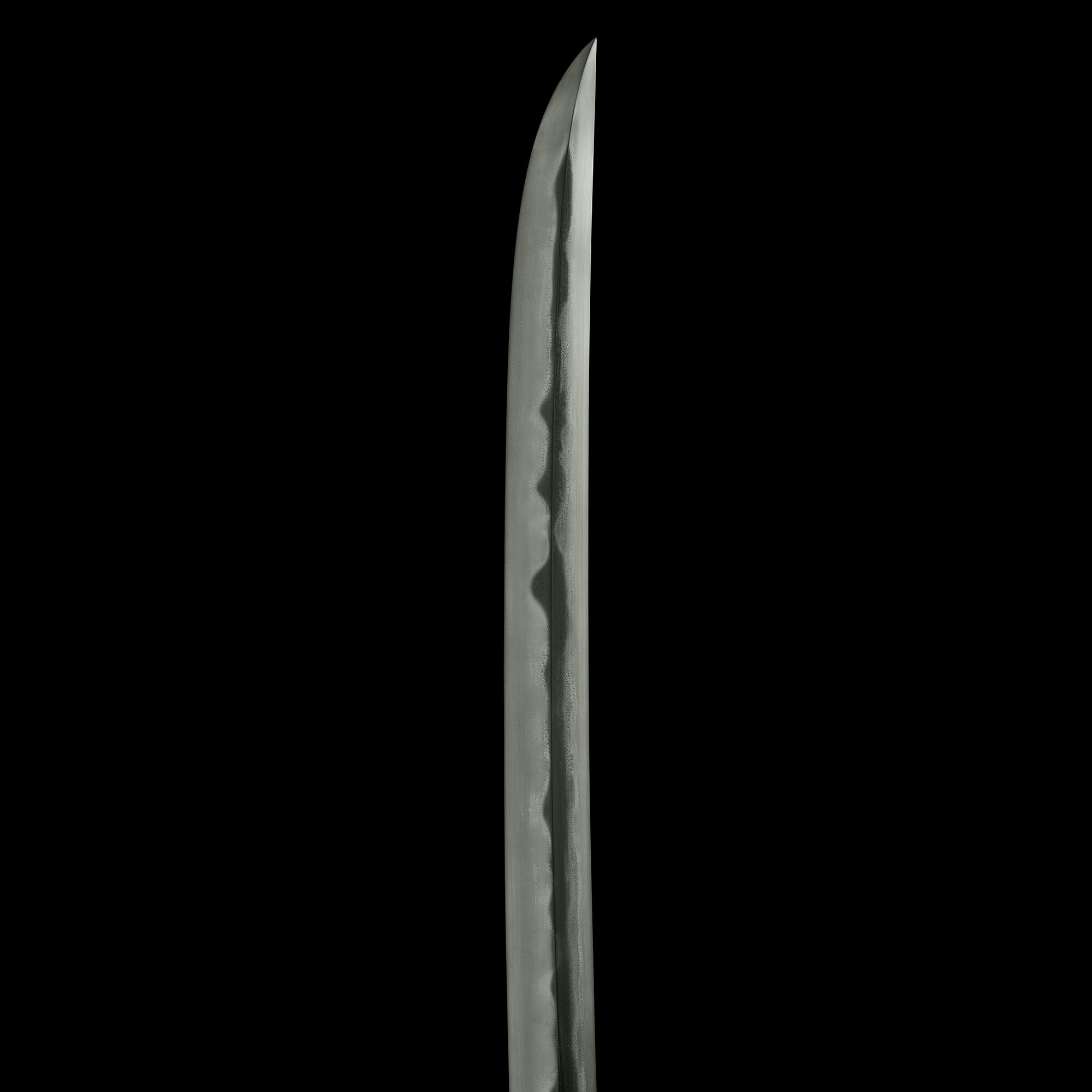
The point of the 2020 tachi. Photo: the smith himself 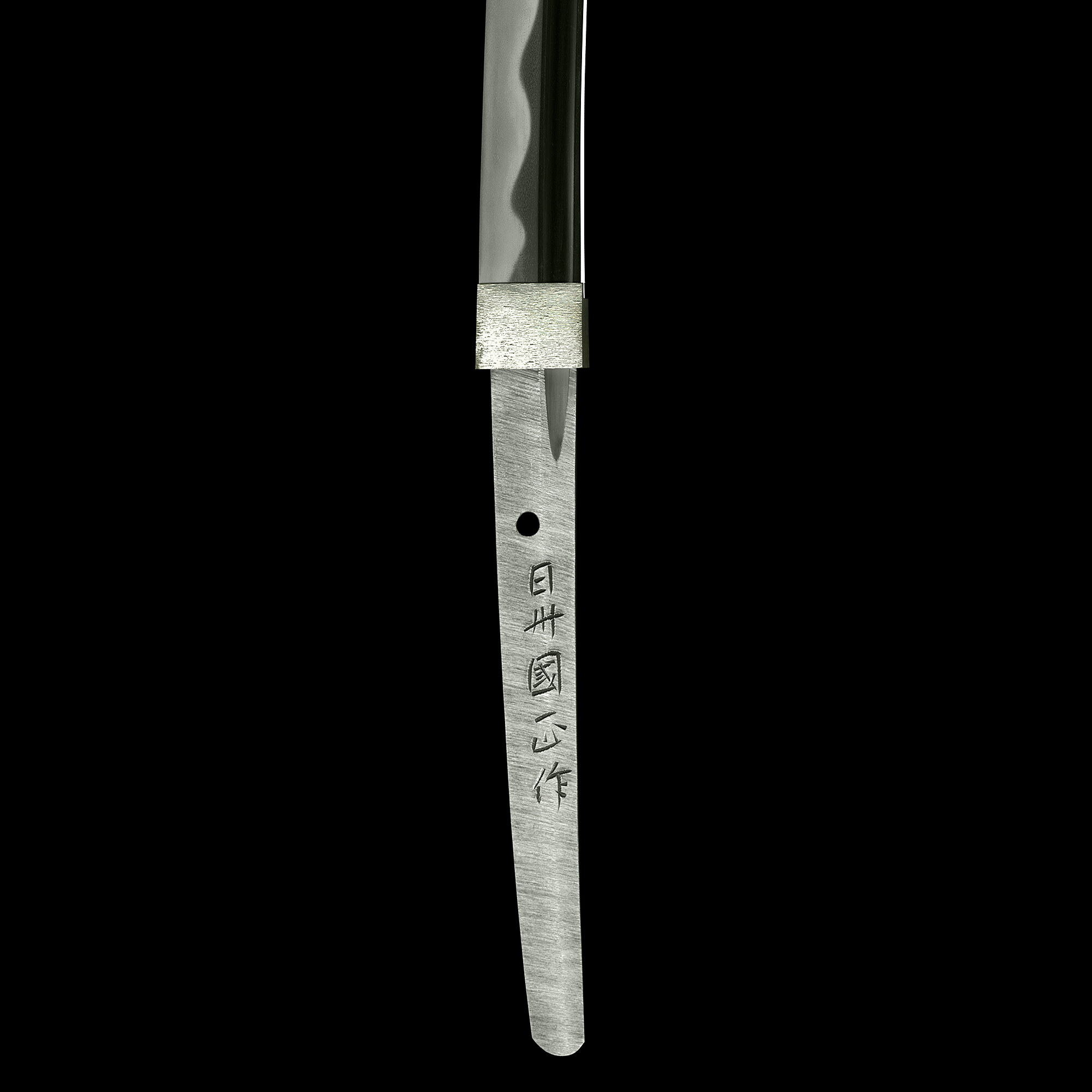
The tang of the 2020 tachi. Photo: the smith himself 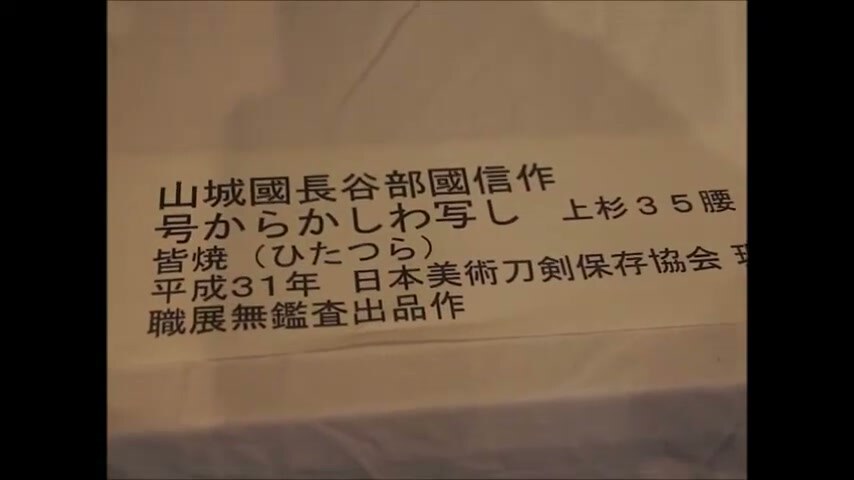
The 2021 label: utsushi of the “号からかしわ” (gō Karakashiwa) in 皆焼 (hitatsura), a mukansa work of 平成31年 (Heisei 31, 2019). 若杉広美 (probable reading: Wakasugi Hiromi) · © 若杉広美 (probable reading: Wakasugi Hiromi) · source 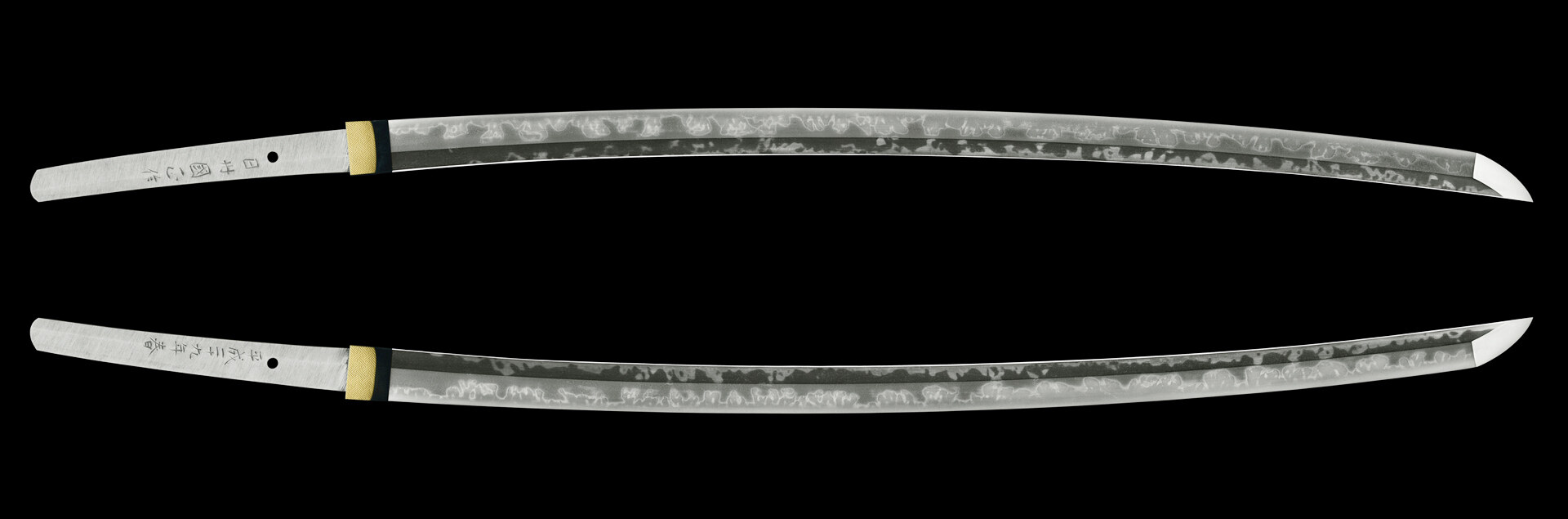
A hitatsura katana. Photo: dealer outside Japan 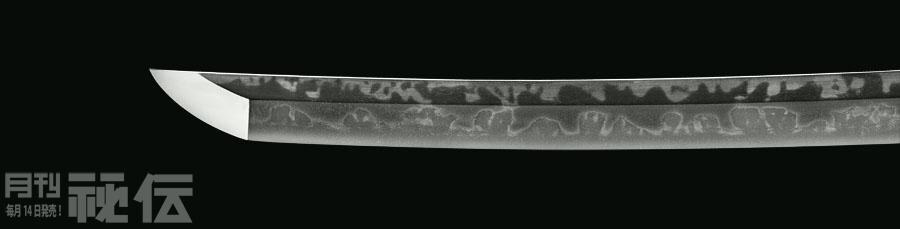
A hitatsura blade, in the Hiden report (2016). 月刊『秘伝』 (Gekkan Hiden), by BAB Japan, on Web Hiden · © BAB Japan · source
His gallery of works: whole blades, tangs and points
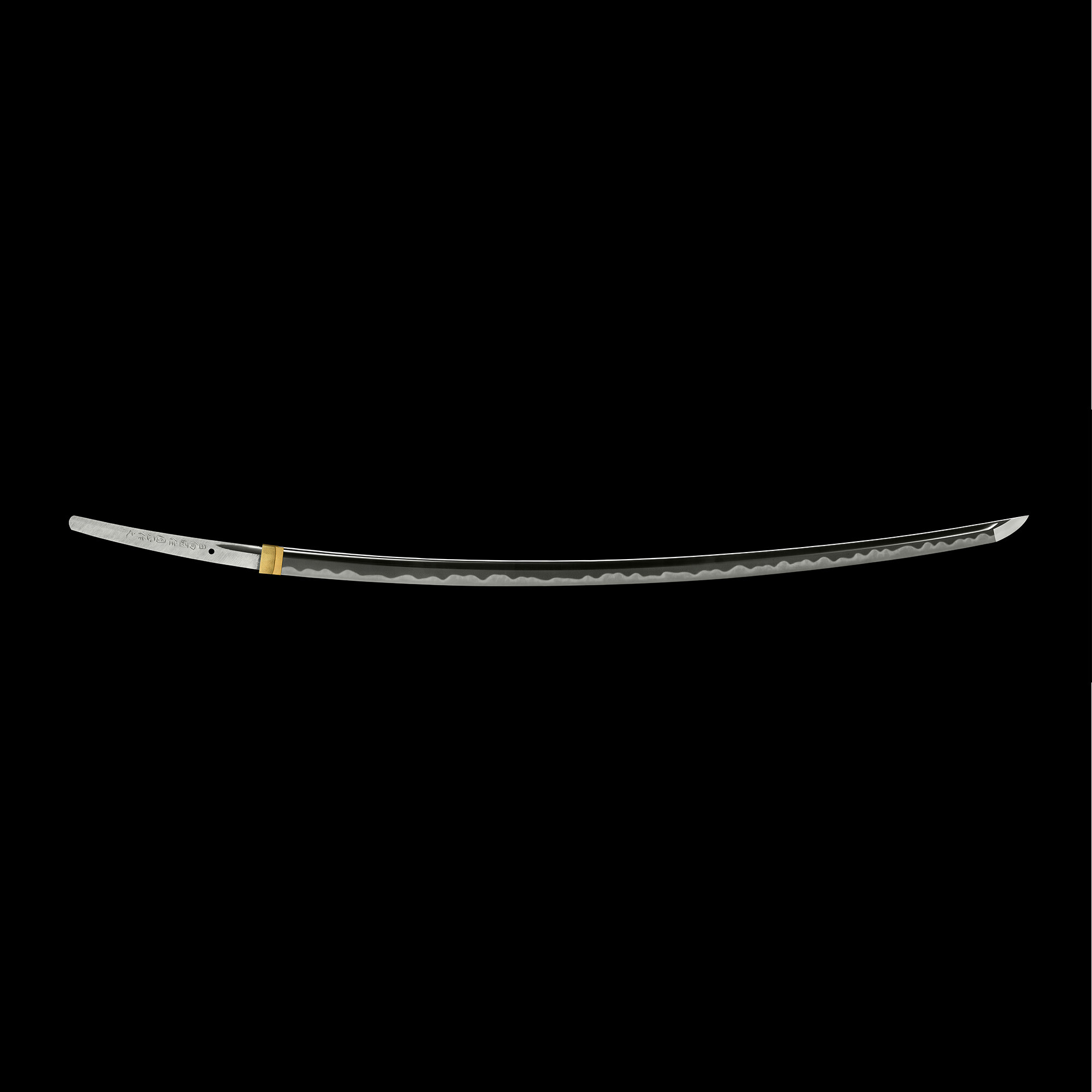
2008 tachi, 96.3 cm (会長賞, Kaichōshō, according to him). Photo: the smith himself 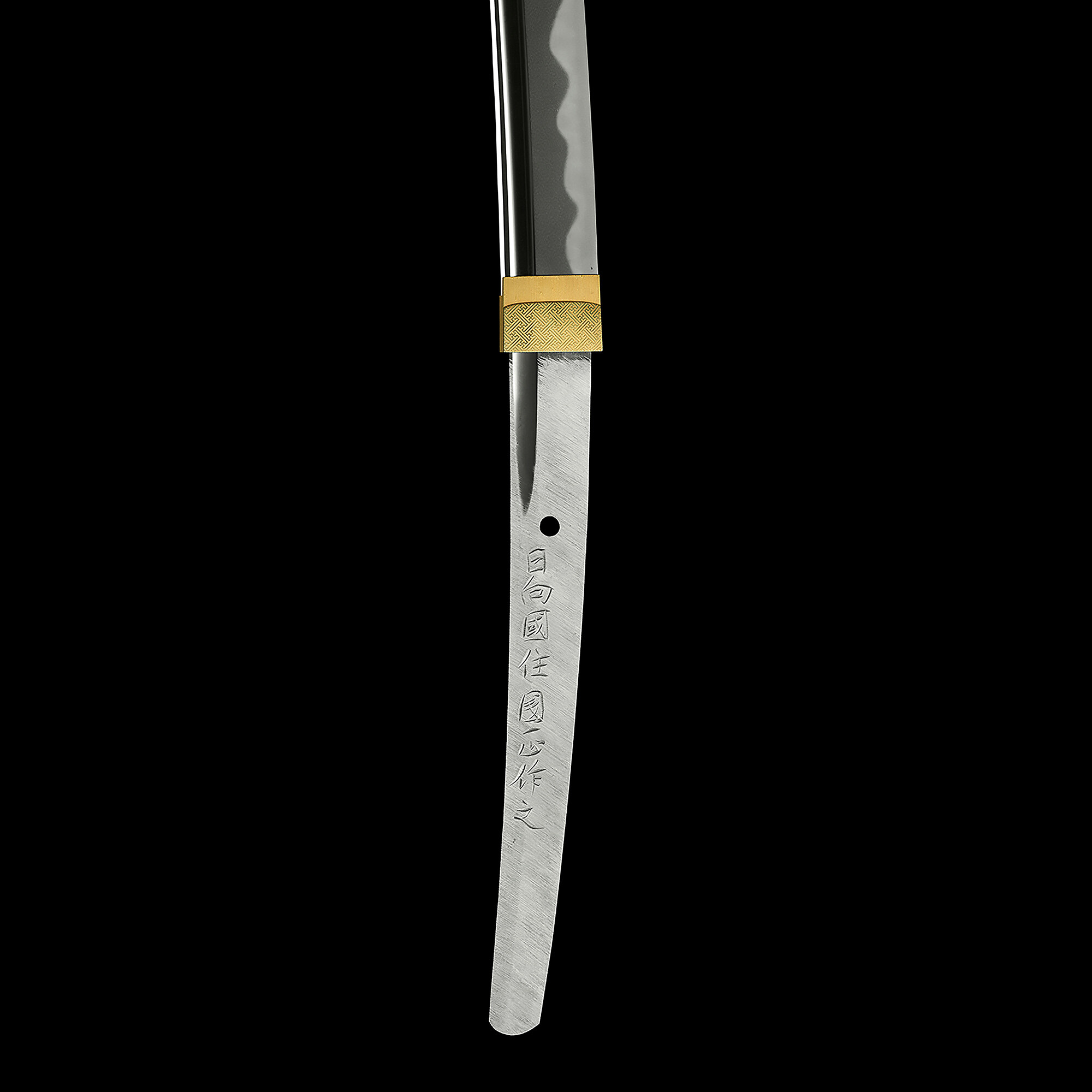
The tang of the 2008 tachi, with its signature. Photo: the smith himself 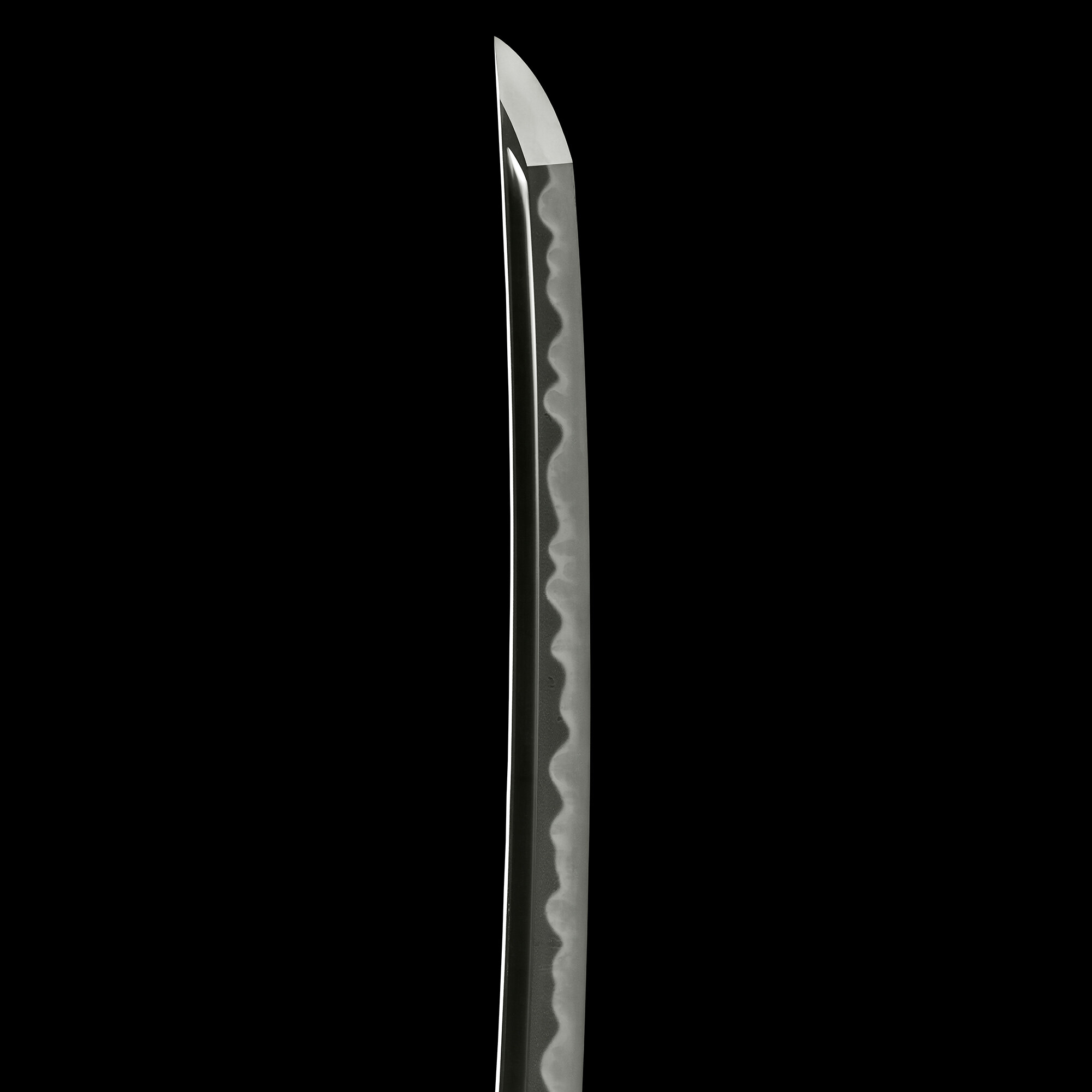
The point of the 2008 tachi. Photo: the smith himself 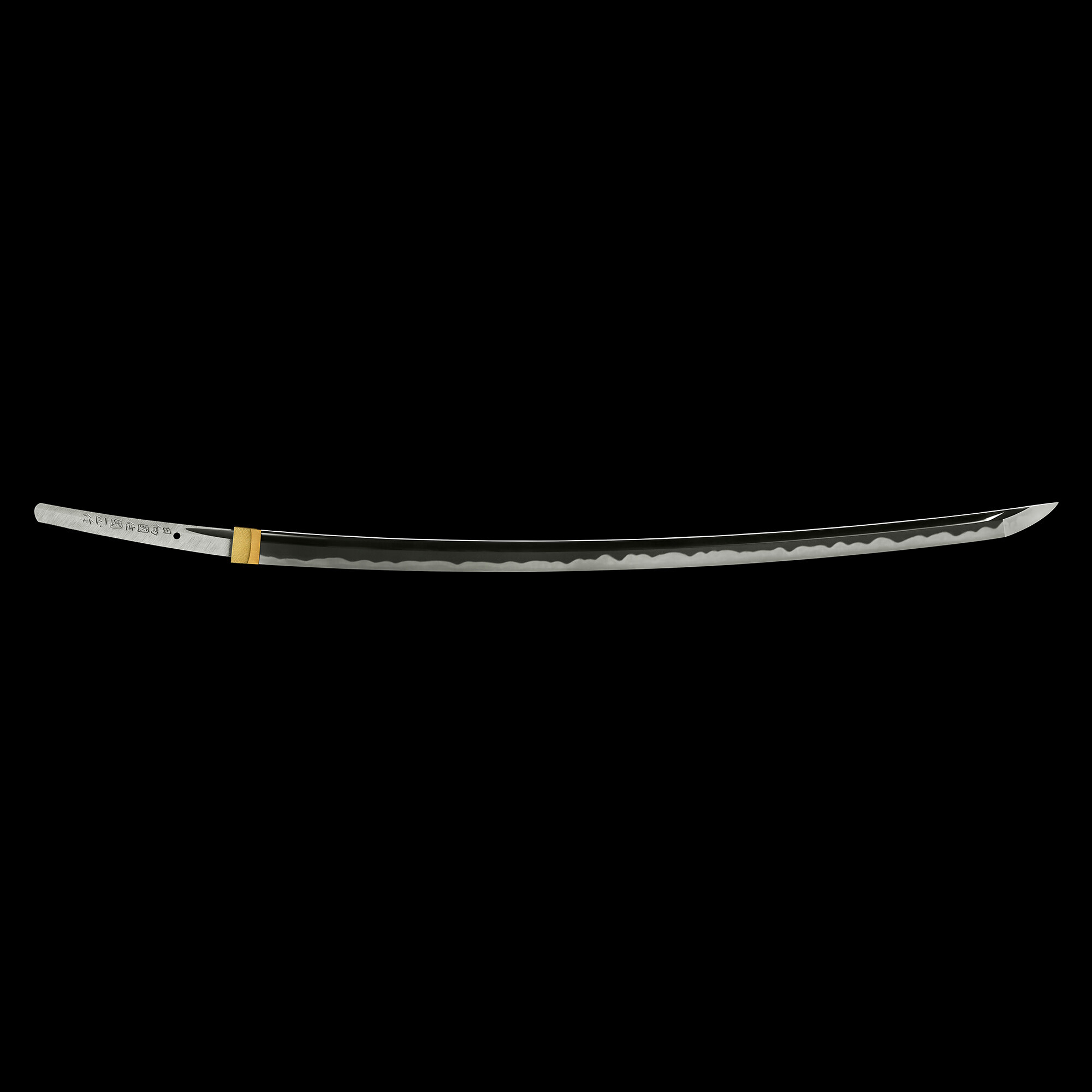
2009 tachi, 82.6 cm (寒山賞, Kanzanshō, according to him). Photo: the smith himself 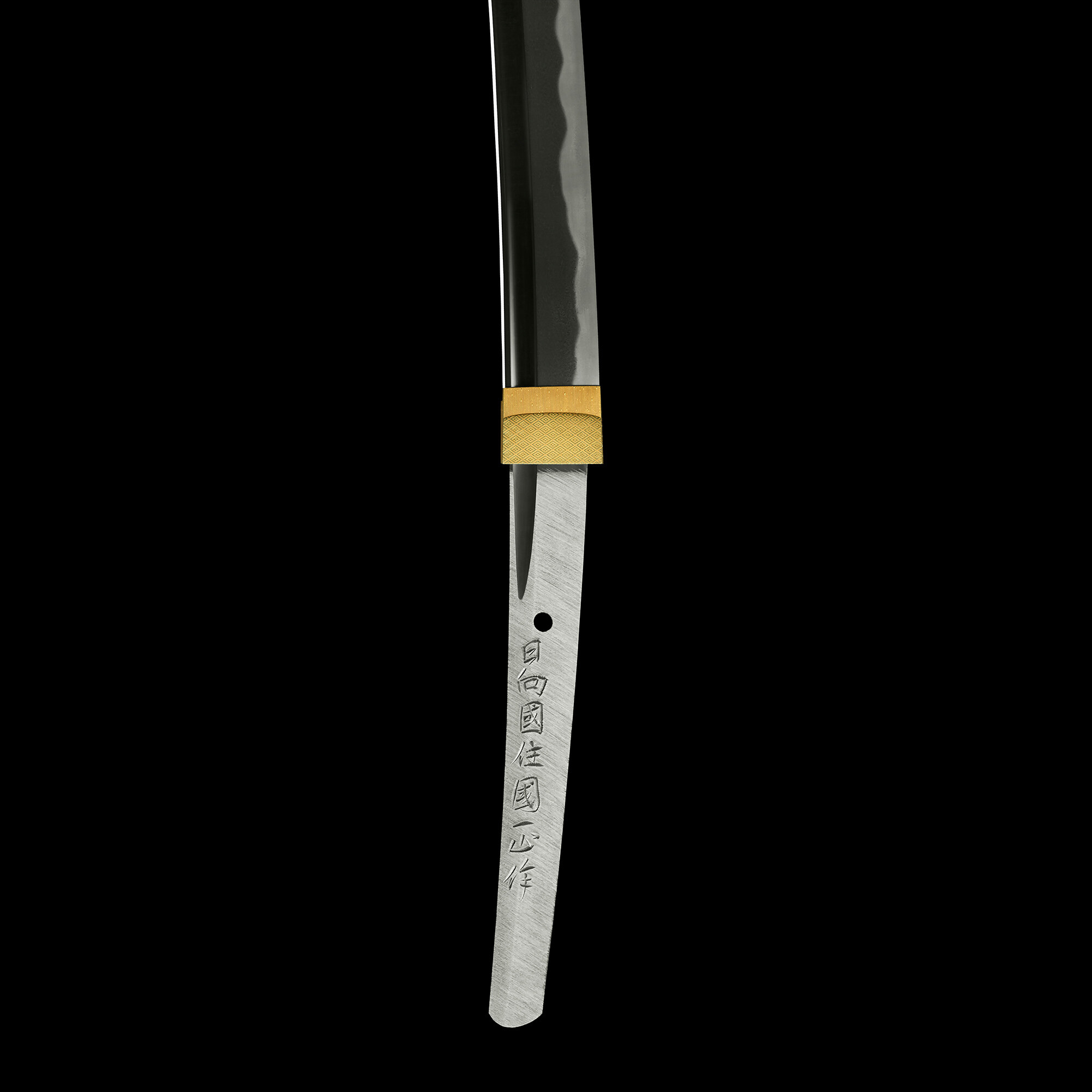
The tang of the 2009 tachi, with its signature. Photo: the smith himself 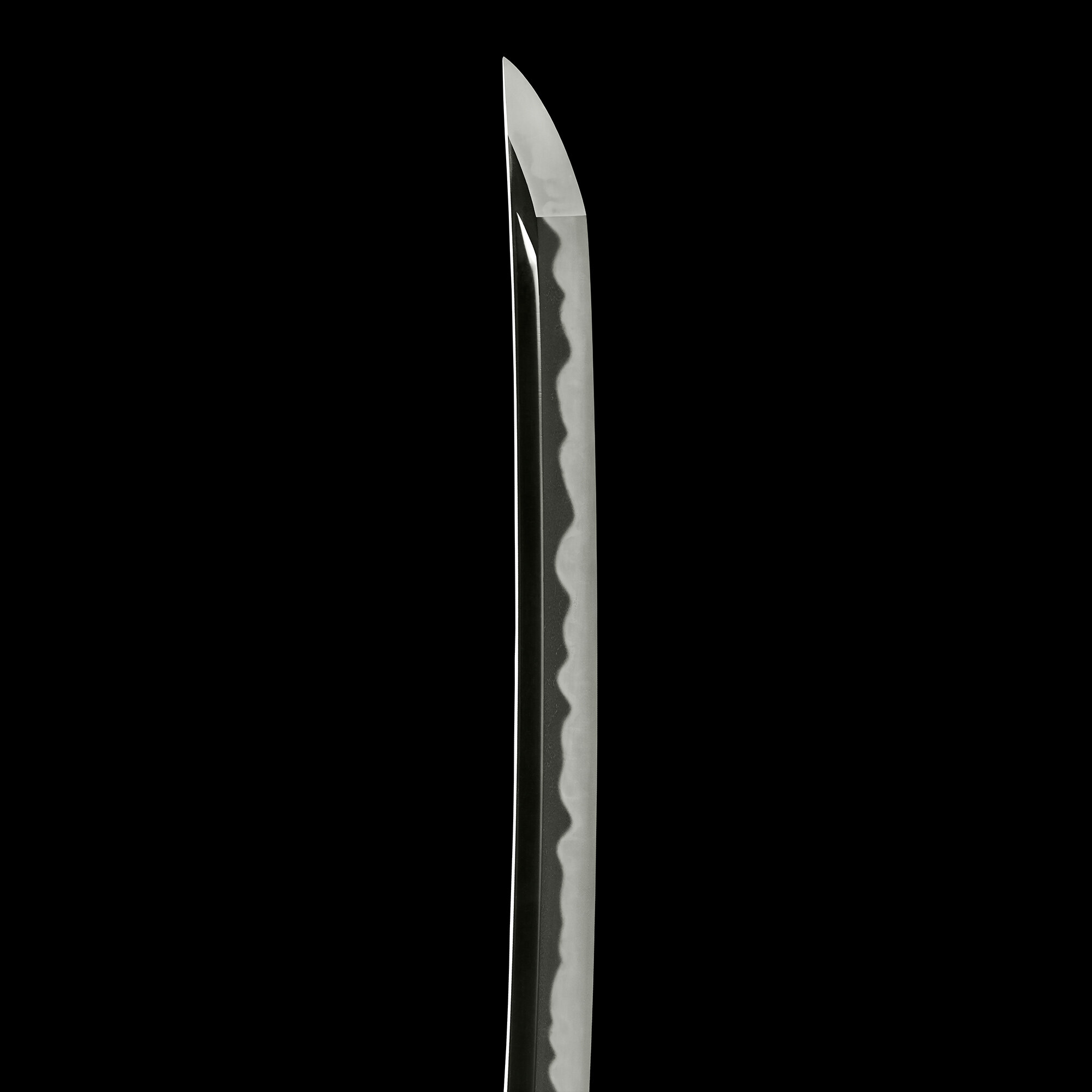
The point of the 2009 tachi. Photo: the smith himself 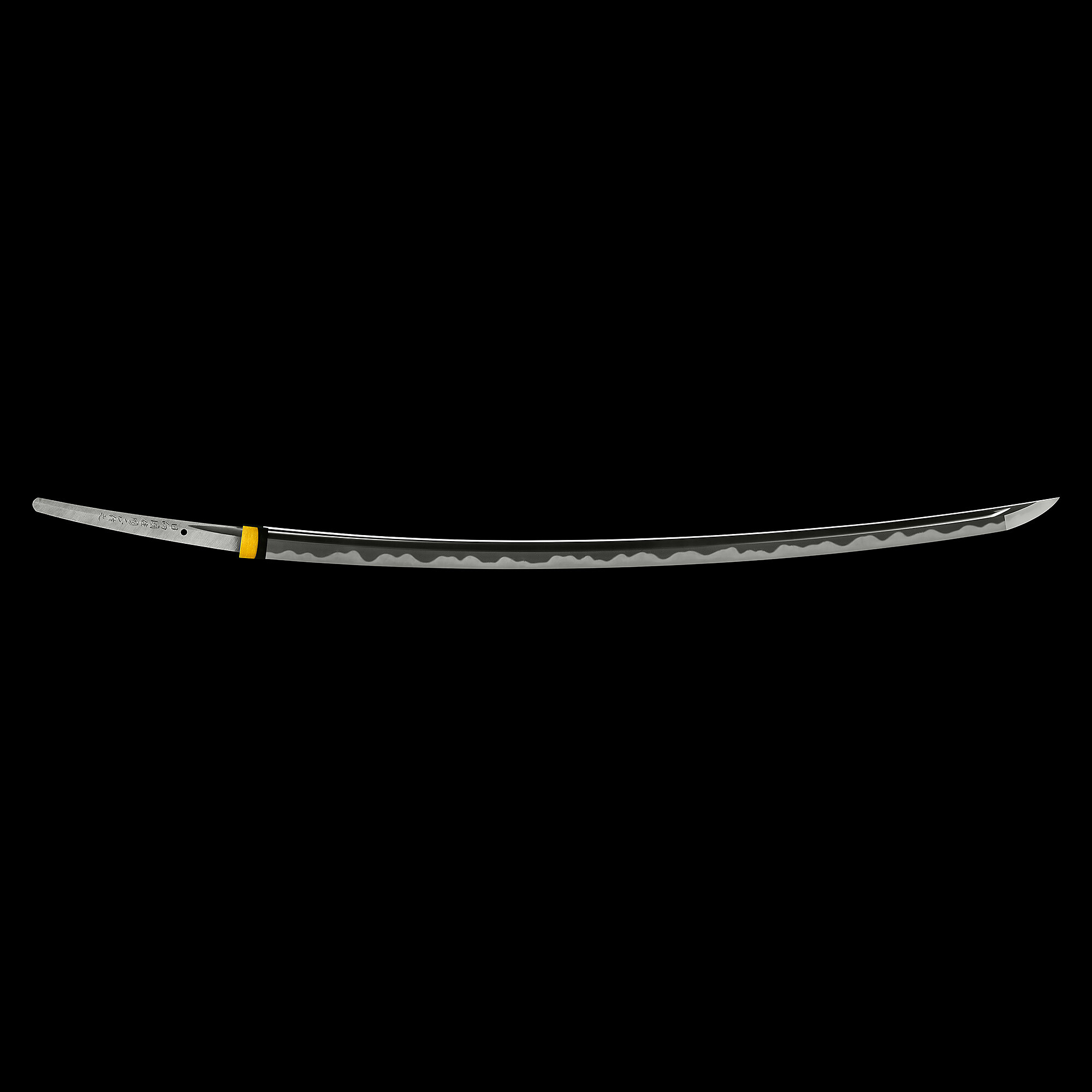
91.0 cm tachi (2010, according to him). Photo: the smith himself 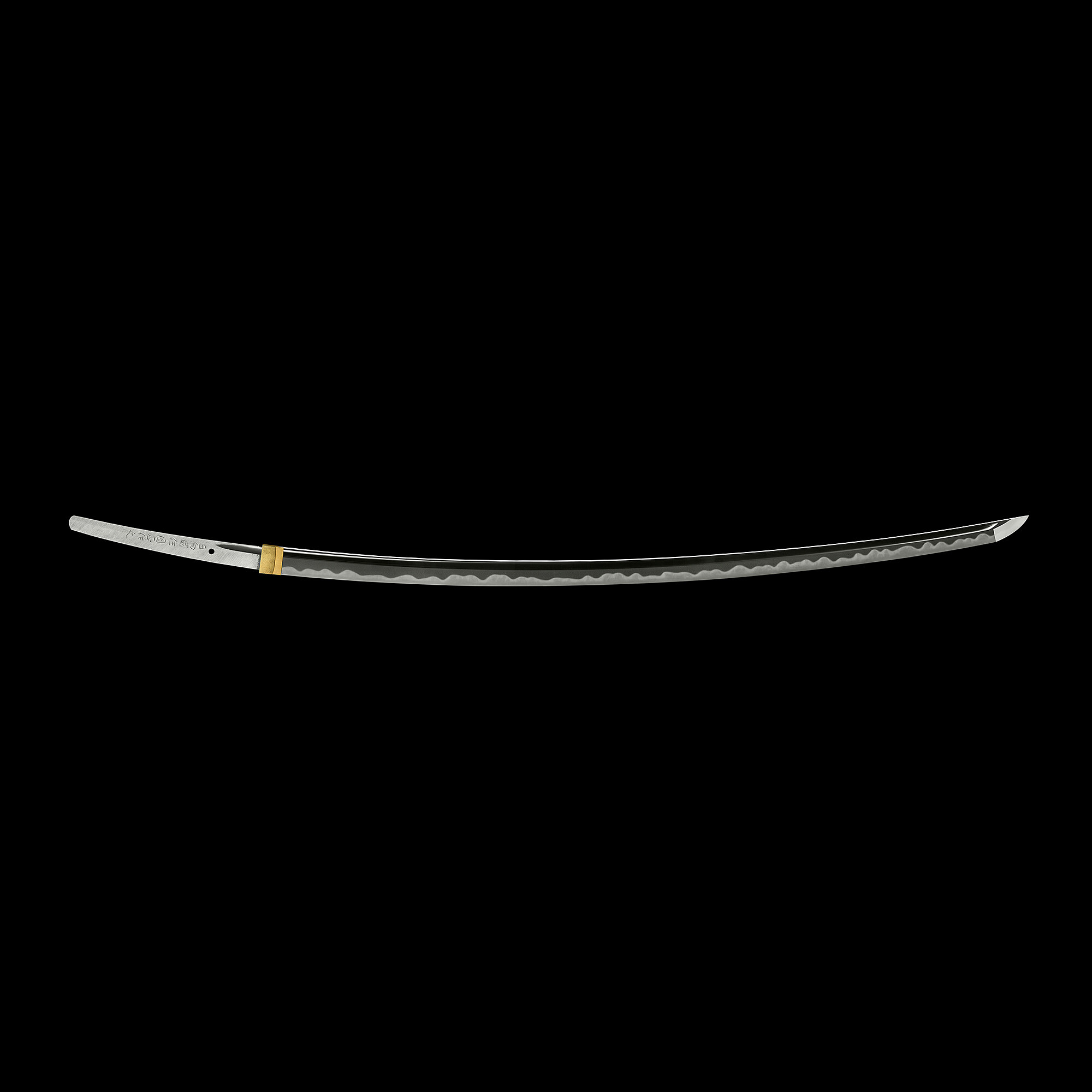
108.1 cm tachi (2010, according to him). Photo: the smith himself 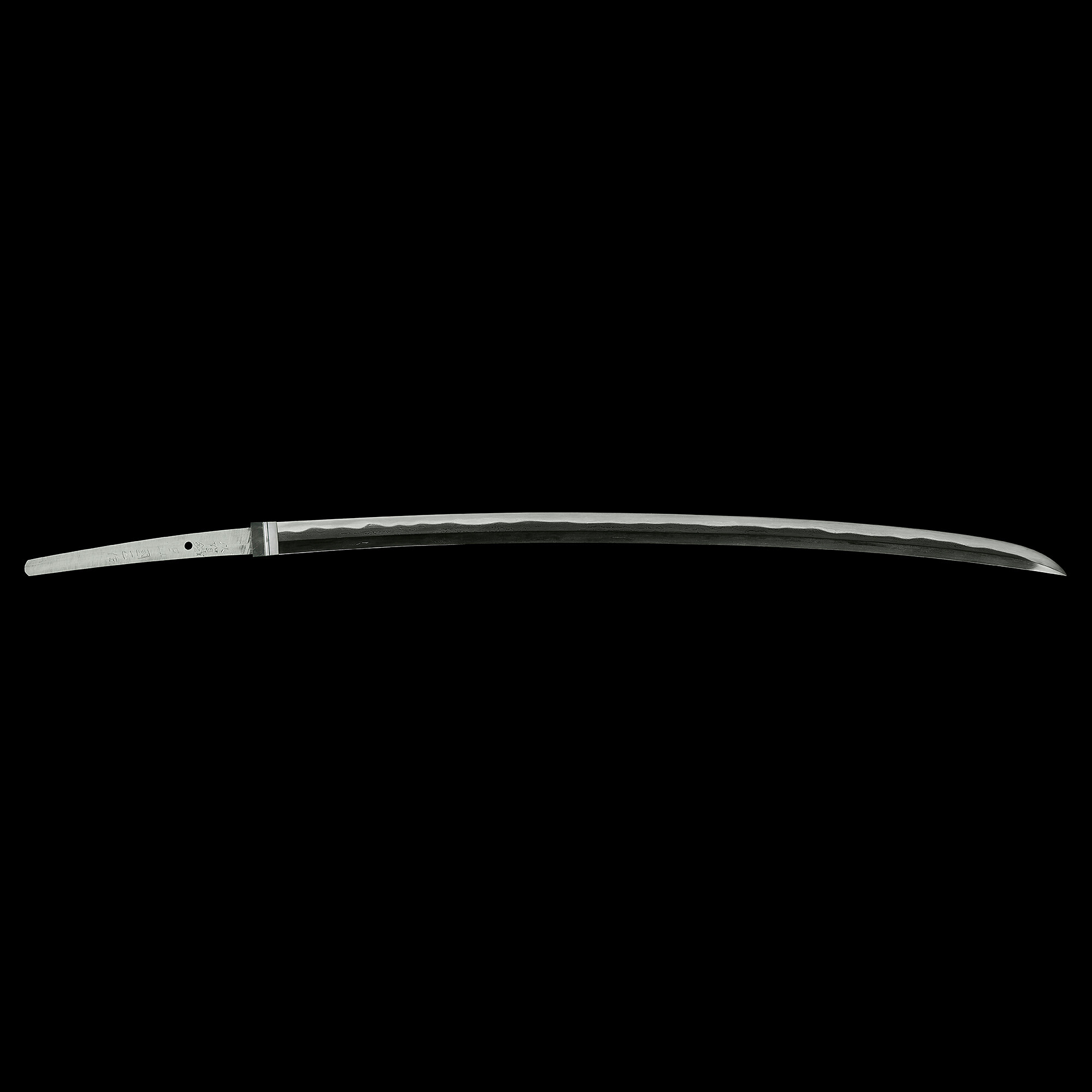
2016 shōbu-zukuri blade with meteoric iron, according to him. Photo: the smith himself 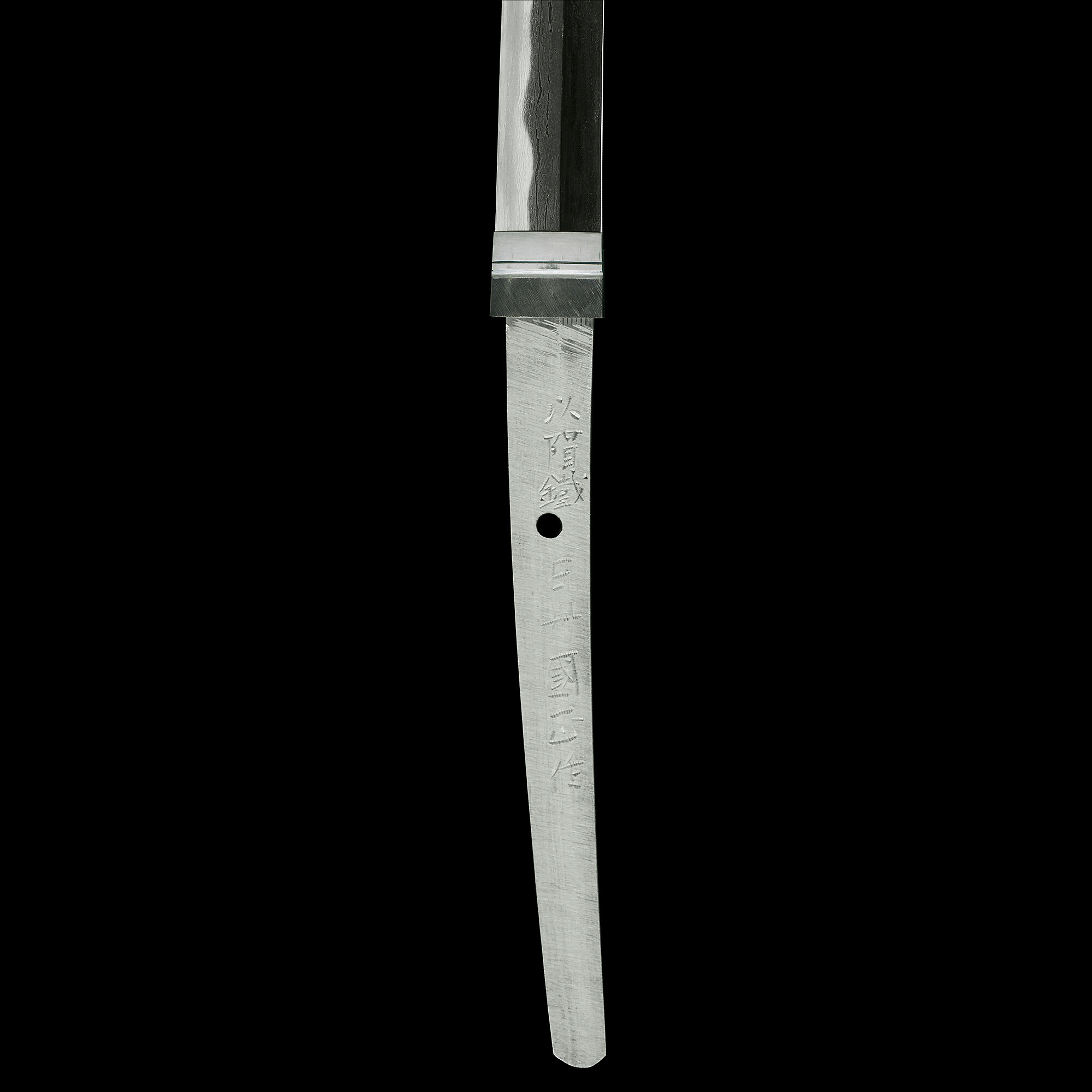
The tang of the 2016 meteoric-iron blade. Photo: the smith himself 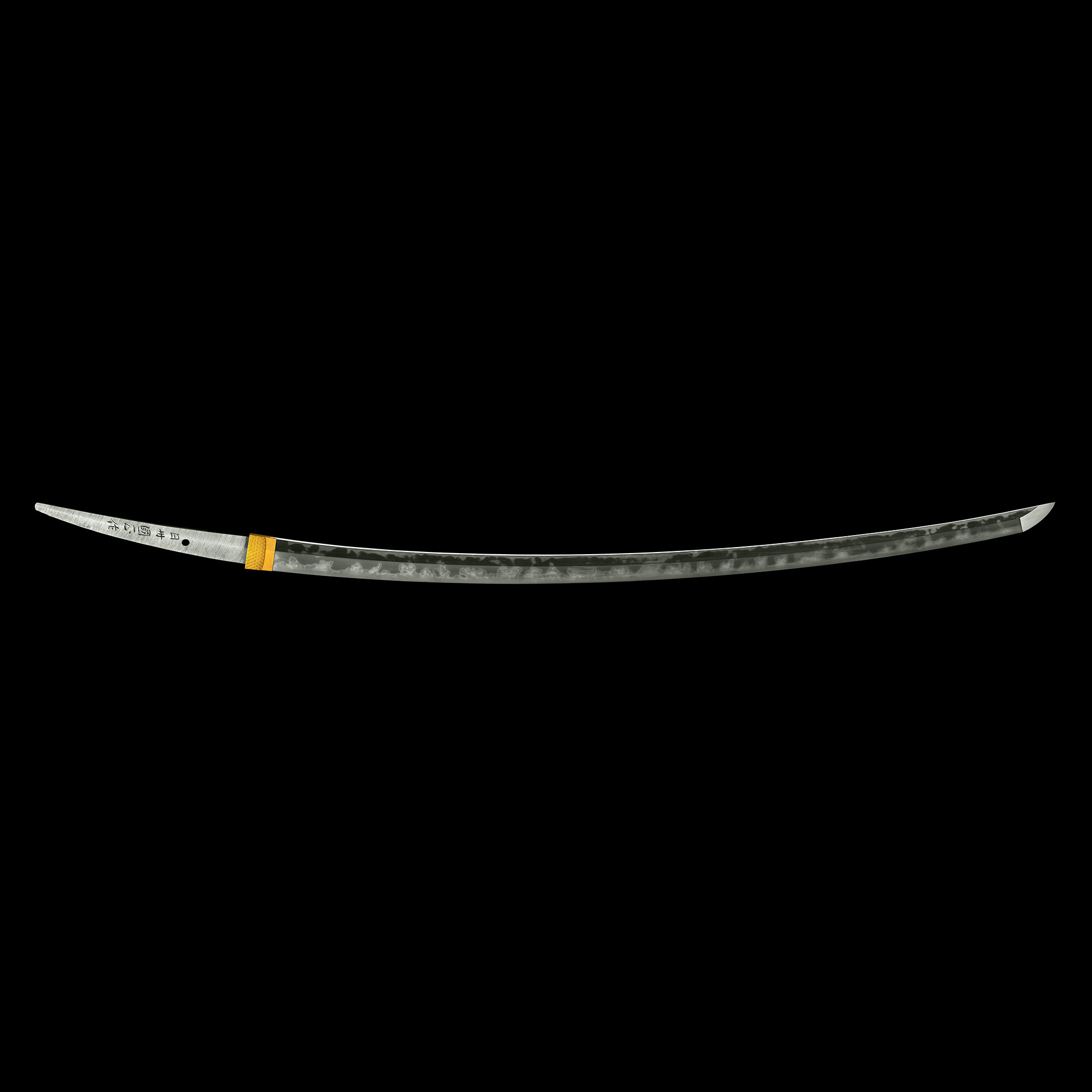
2020 katana, 73.7 cm, with shallow curvature (wazori), according to him. Photo: the smith himself 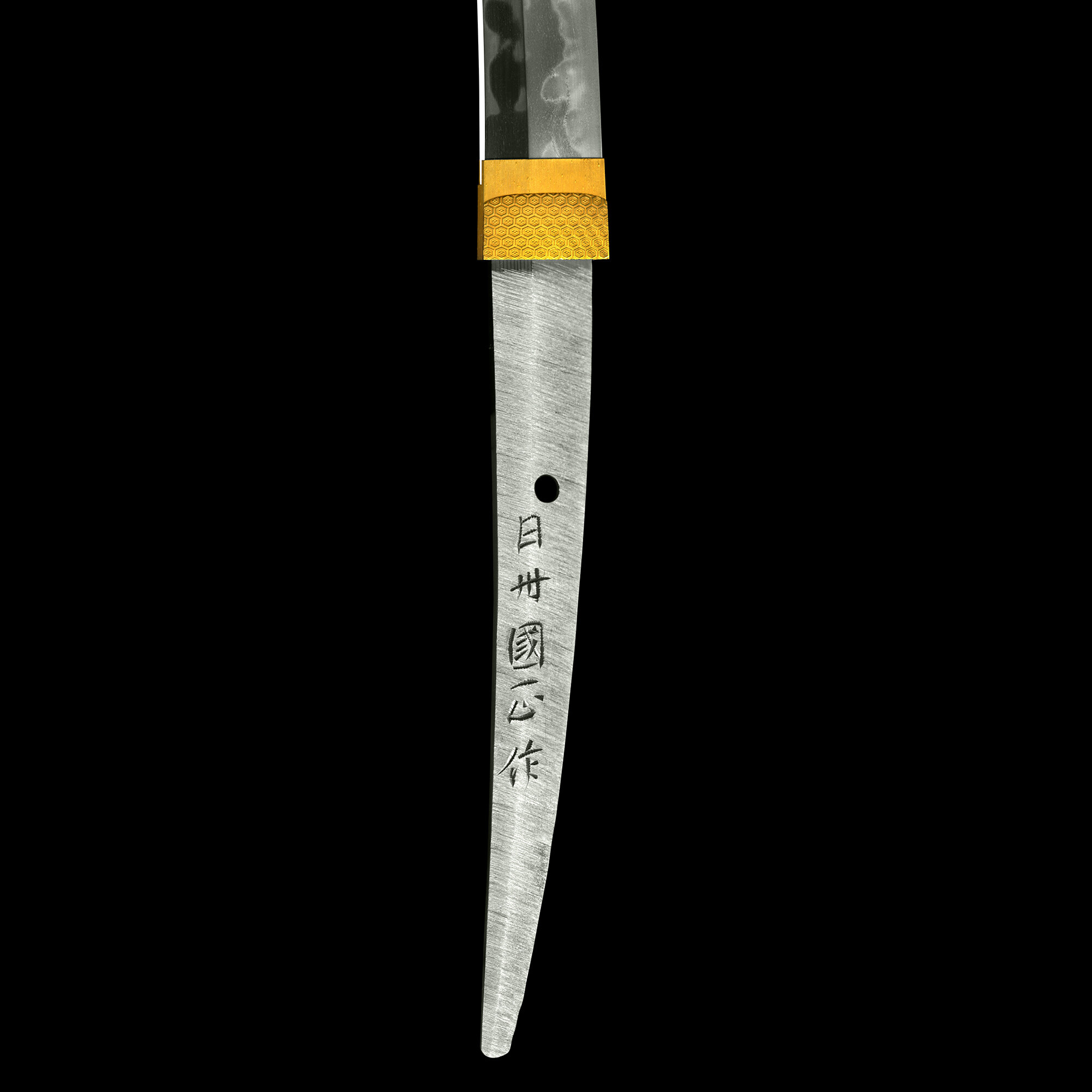
The tang of the 2020 katana: 日州國正作 (Nisshū Kunimasa saku). Photo: the smith himself 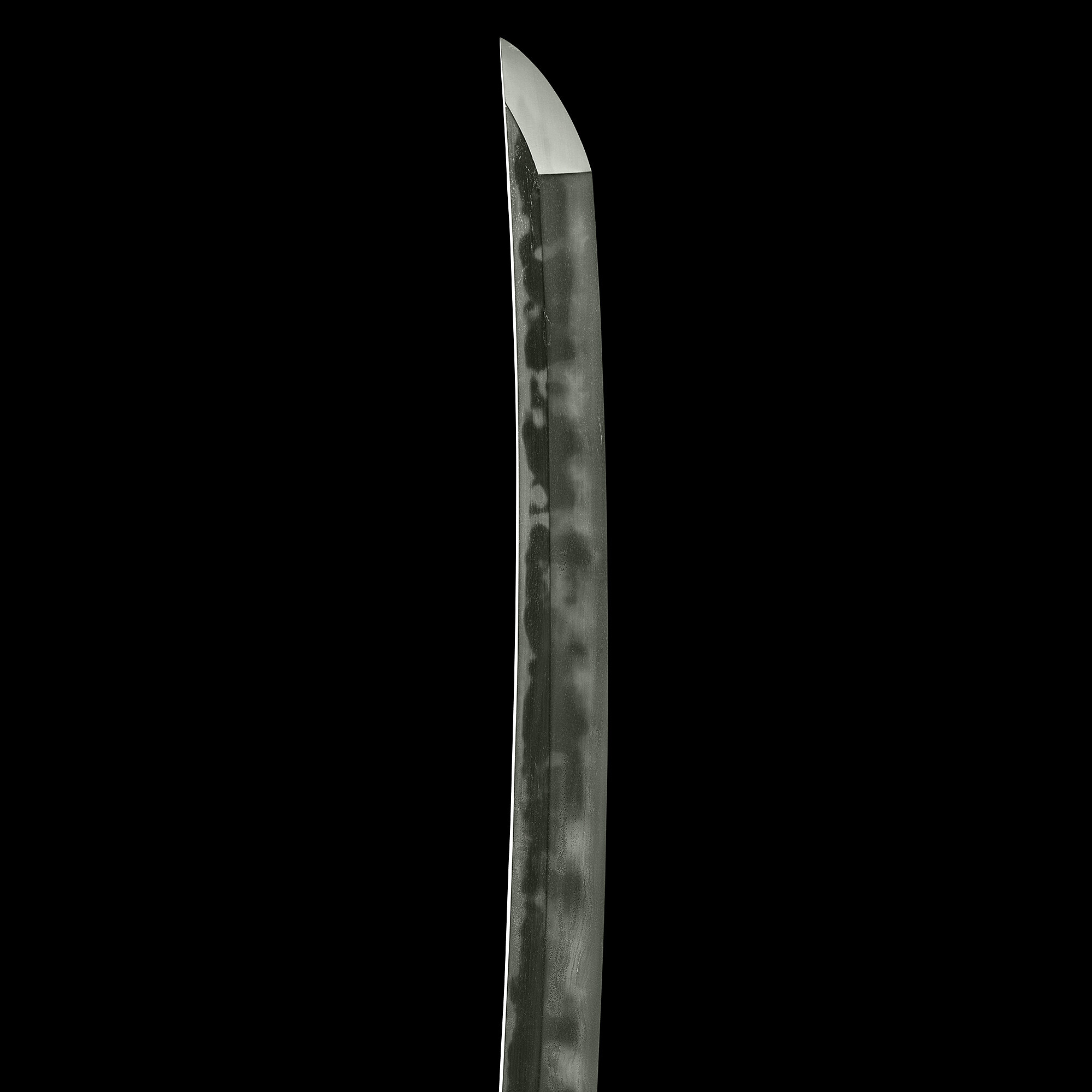
The point of the 2020 katana. Photo: the smith himself 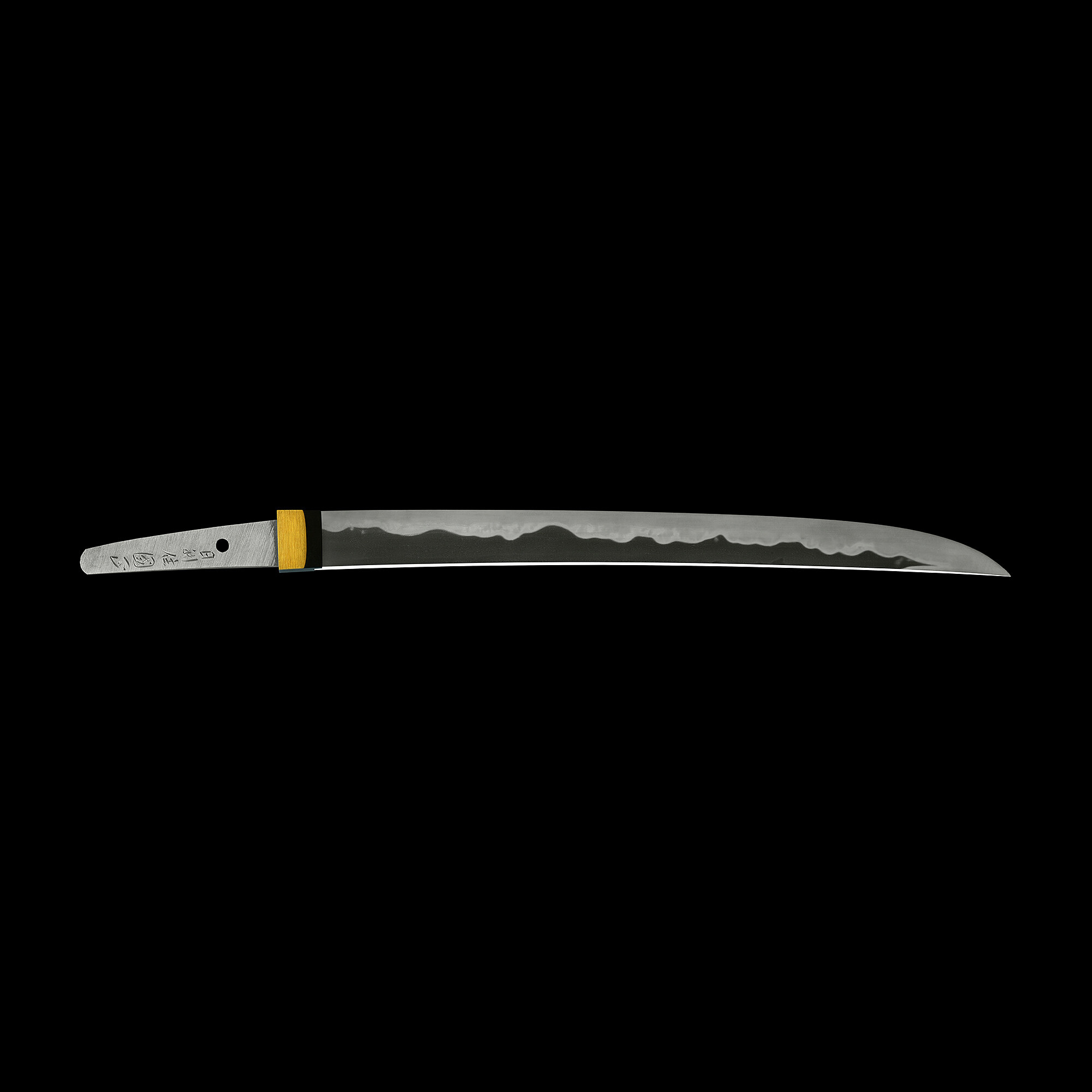
A tantō from his gallery of works. Photo: the smith himself 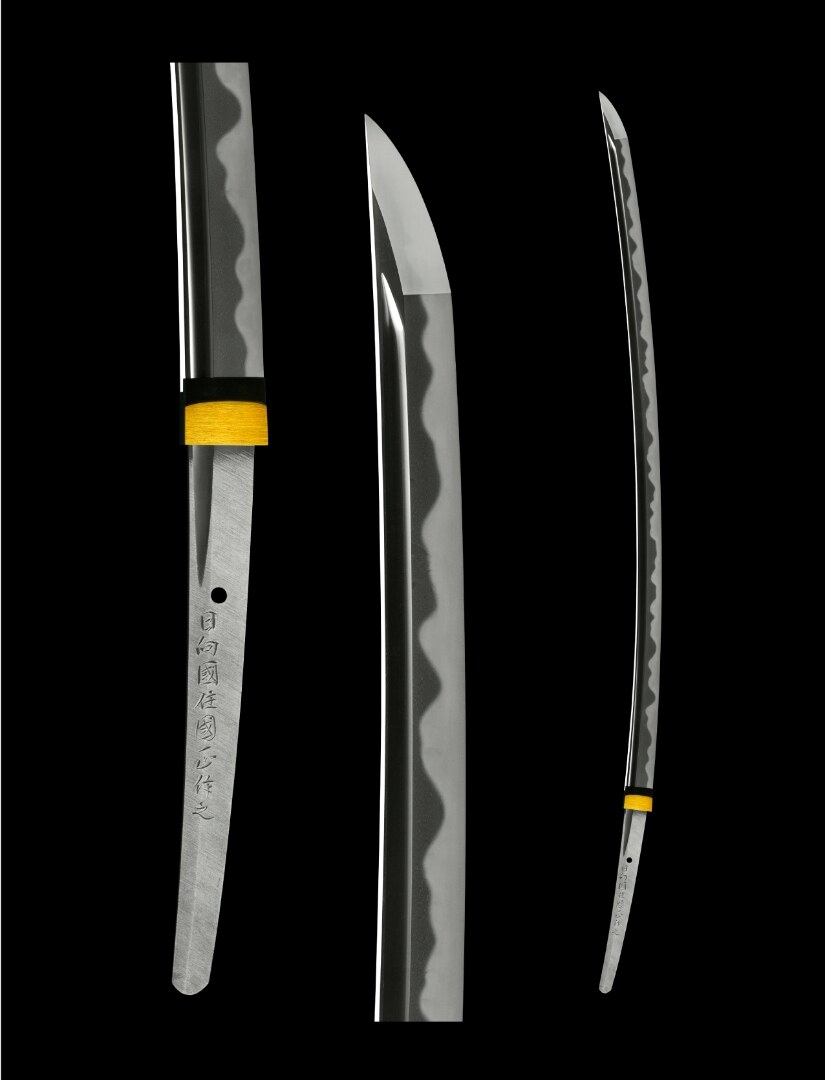
Three of his blades, in a montage of his own. Photo: the smith himself
A 2008 katana, filmed in the studio
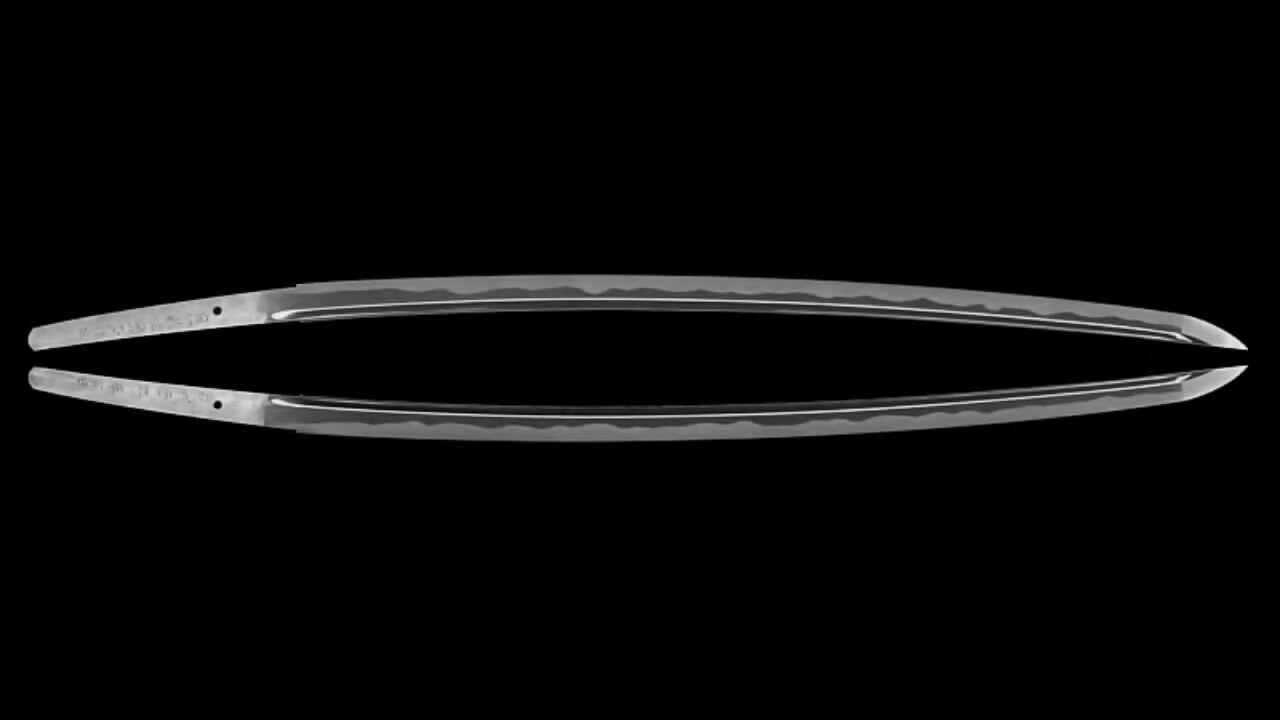
2008 katana, 日向國住国正作之 (Hyūga no Kuni-jū Kunimasa kore o saku), in two views. Photo: dealer in Japan 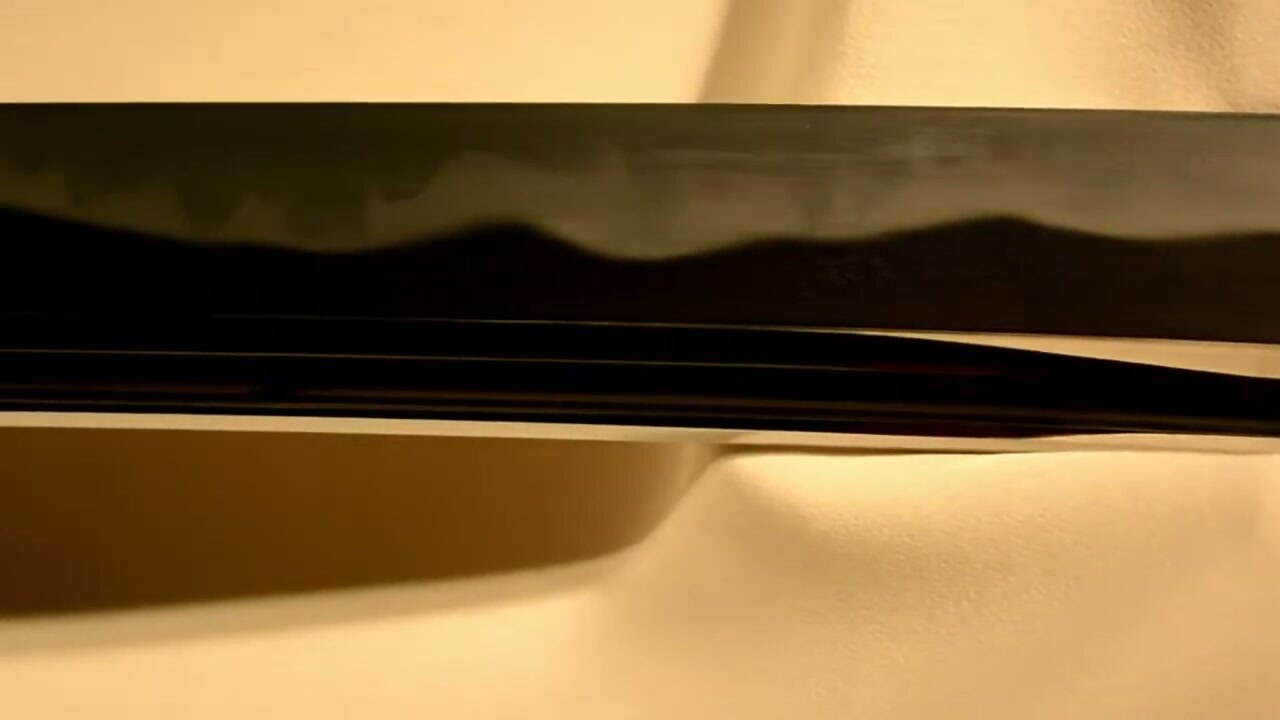
The hamon of the 2008 katana. Photo: dealer in Japan 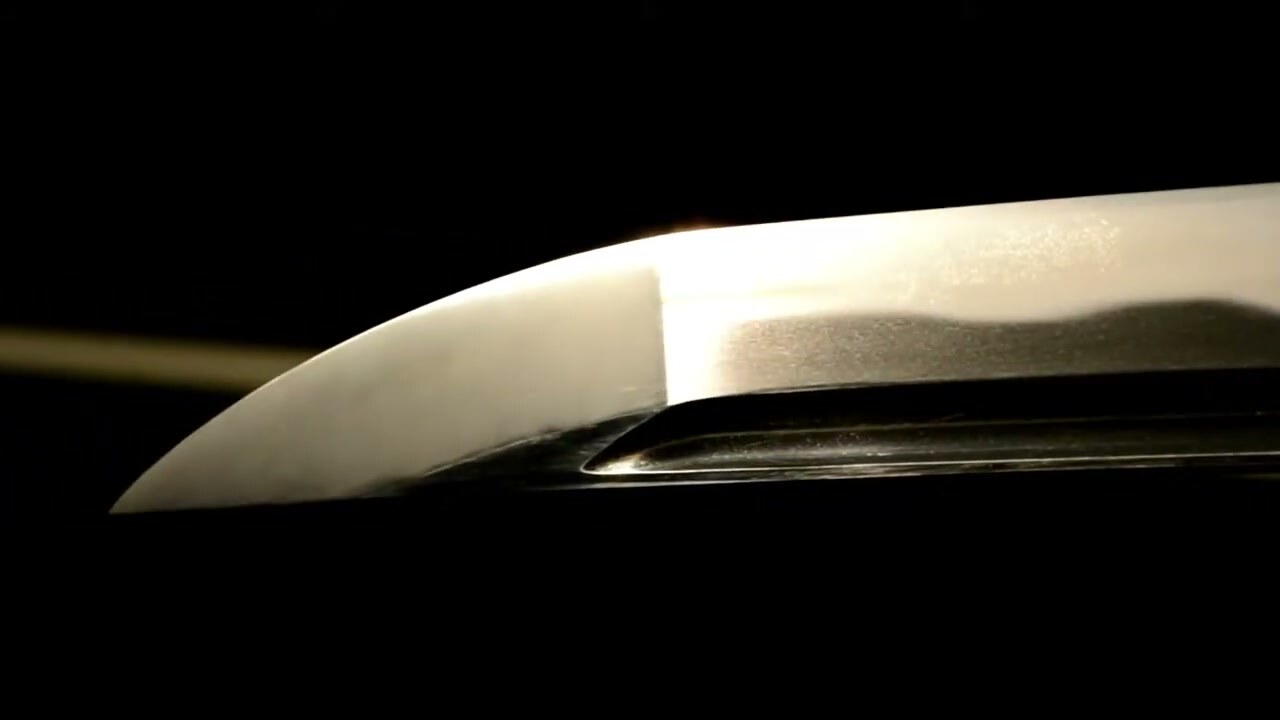
The point of the 2008 katana. Photo: dealer in Japan 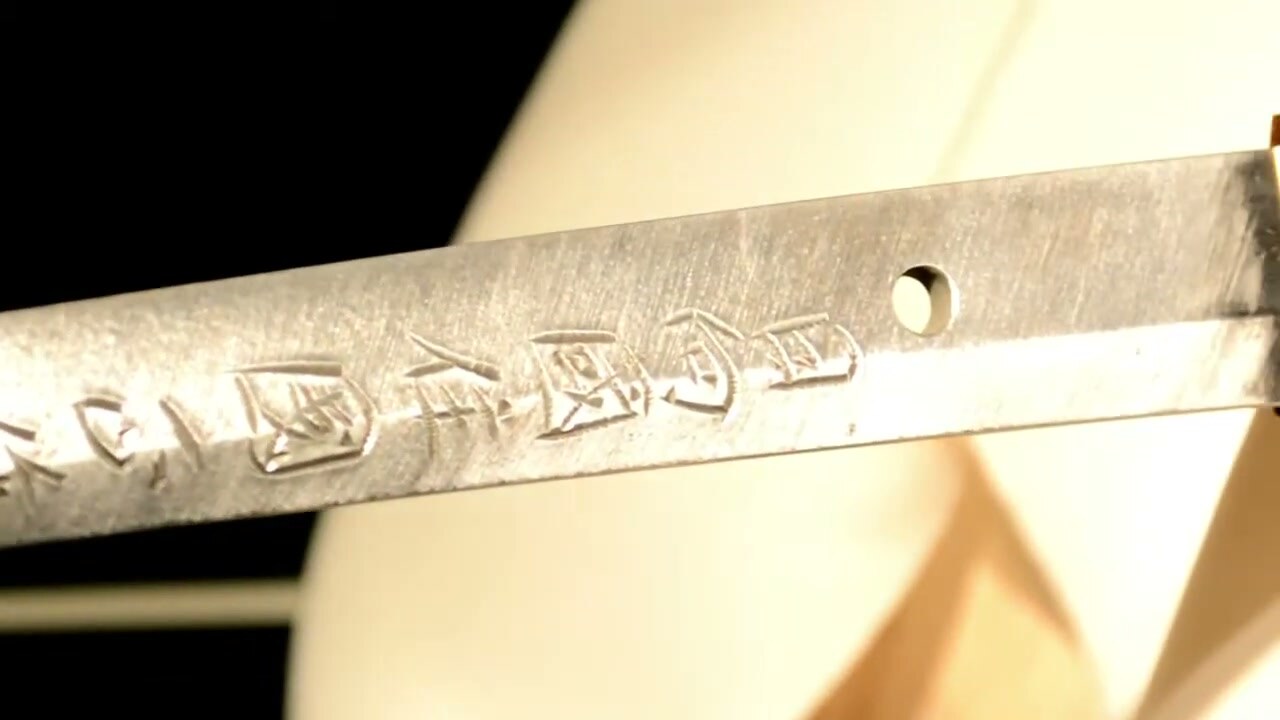
The signature of the 2008 katana. Photo: dealer in Japan 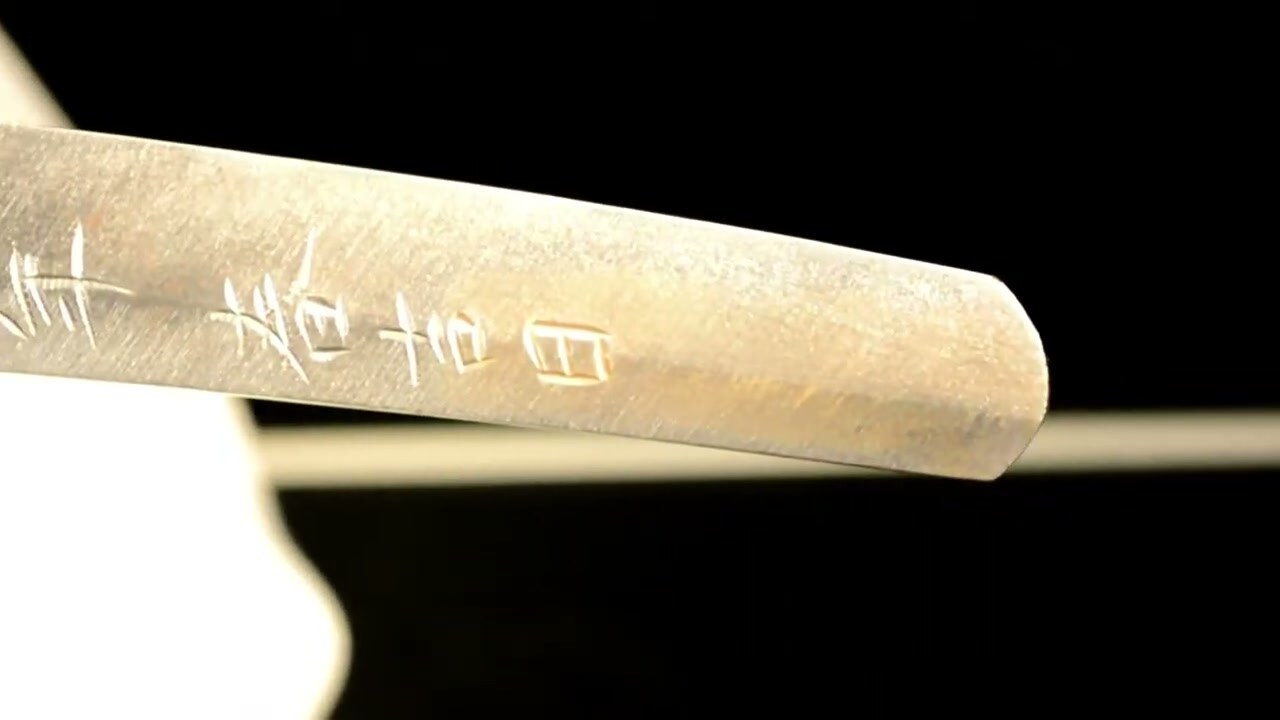
The date of the 2008 katana: 平成二十年春吉日 (Heisei nijūnen haru kichijitsu). Photo: dealer in Japan 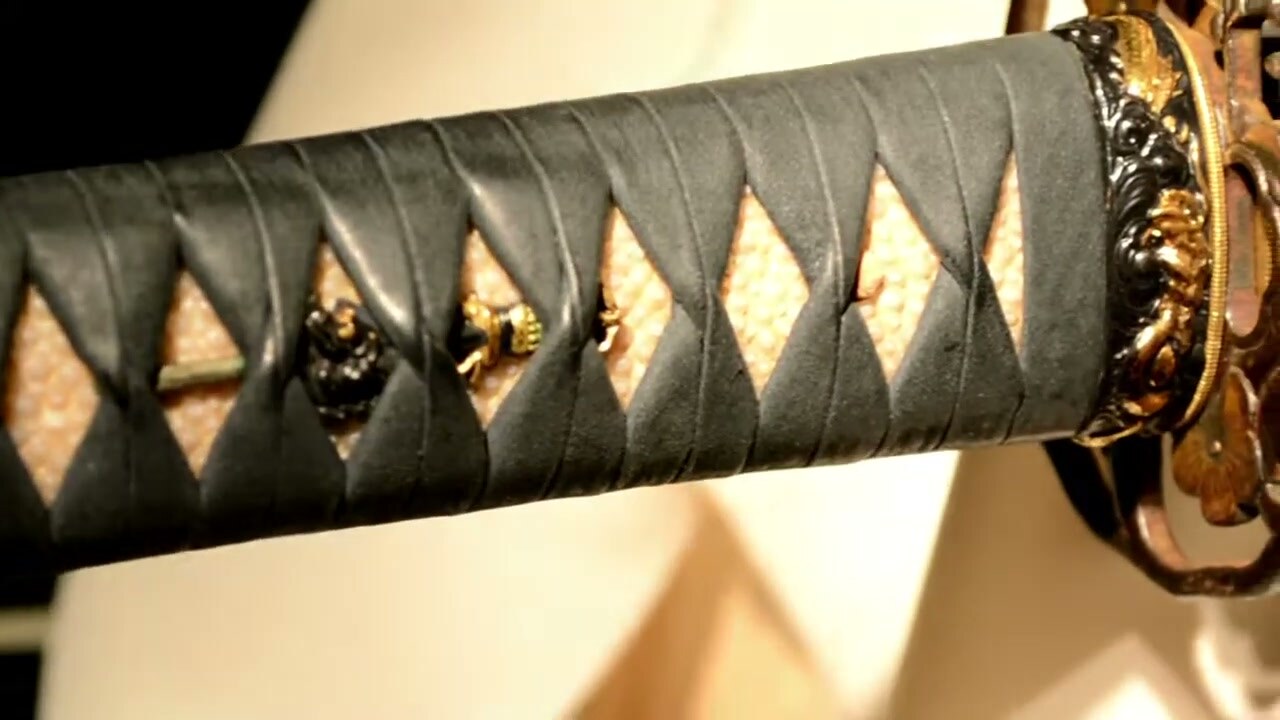
The hilt of the 2008 katana’s koshirae. Photo: dealer in Japan
A 2010 wakizashi and a 2006 tantō, on video
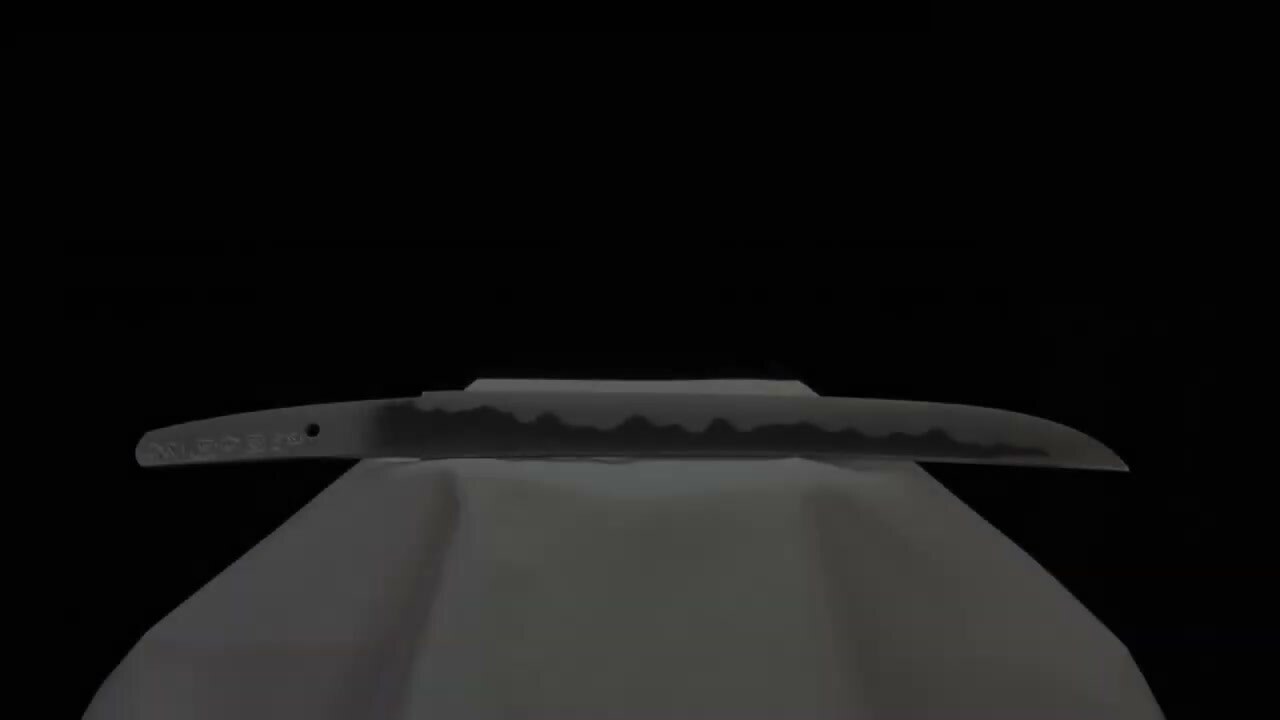
2010 hira-zukuri wakizashi. Photo: dealer in Japan 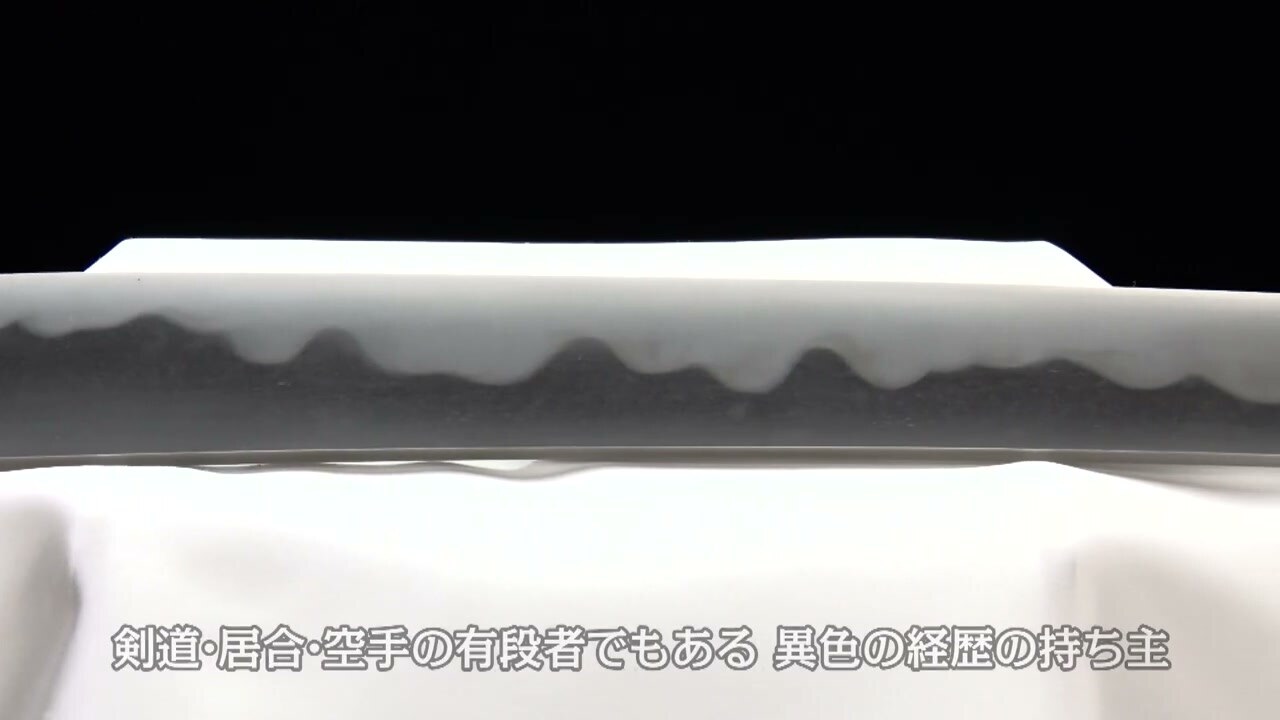
The hamon of the 2010 wakizashi. Photo: dealer in Japan 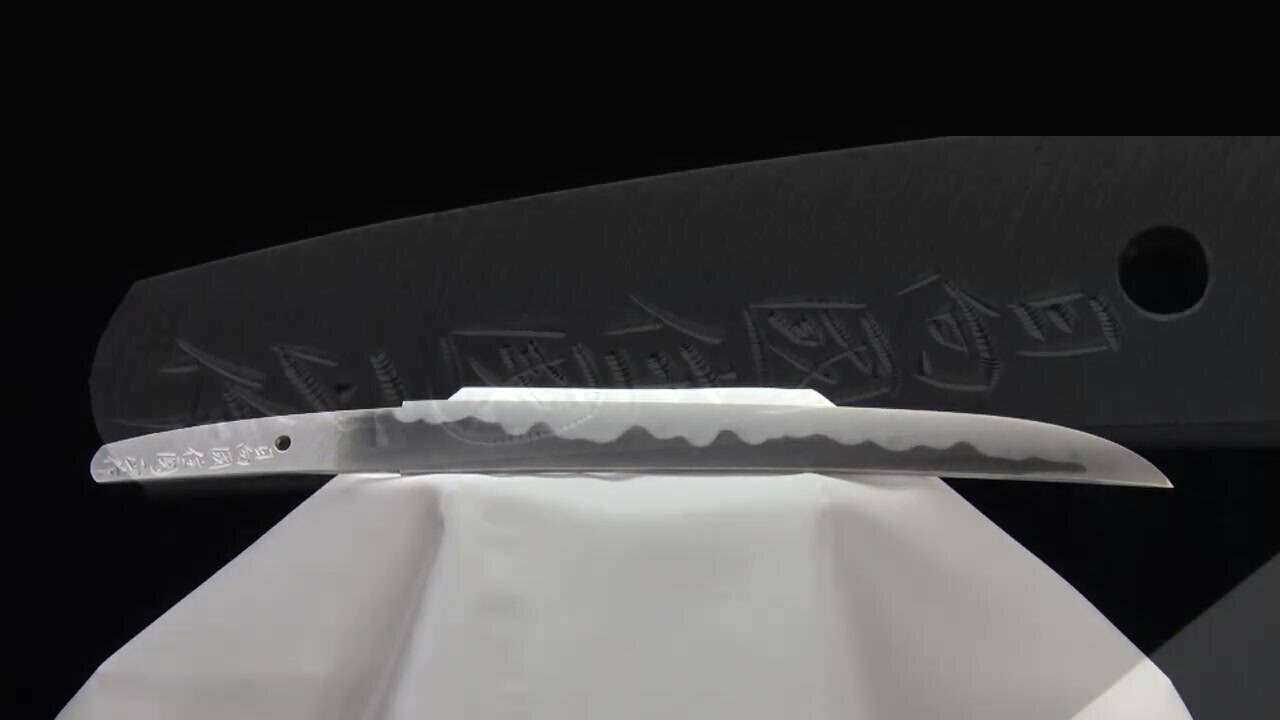
The tang and signature of the 2010 wakizashi. Photo: dealer in Japan 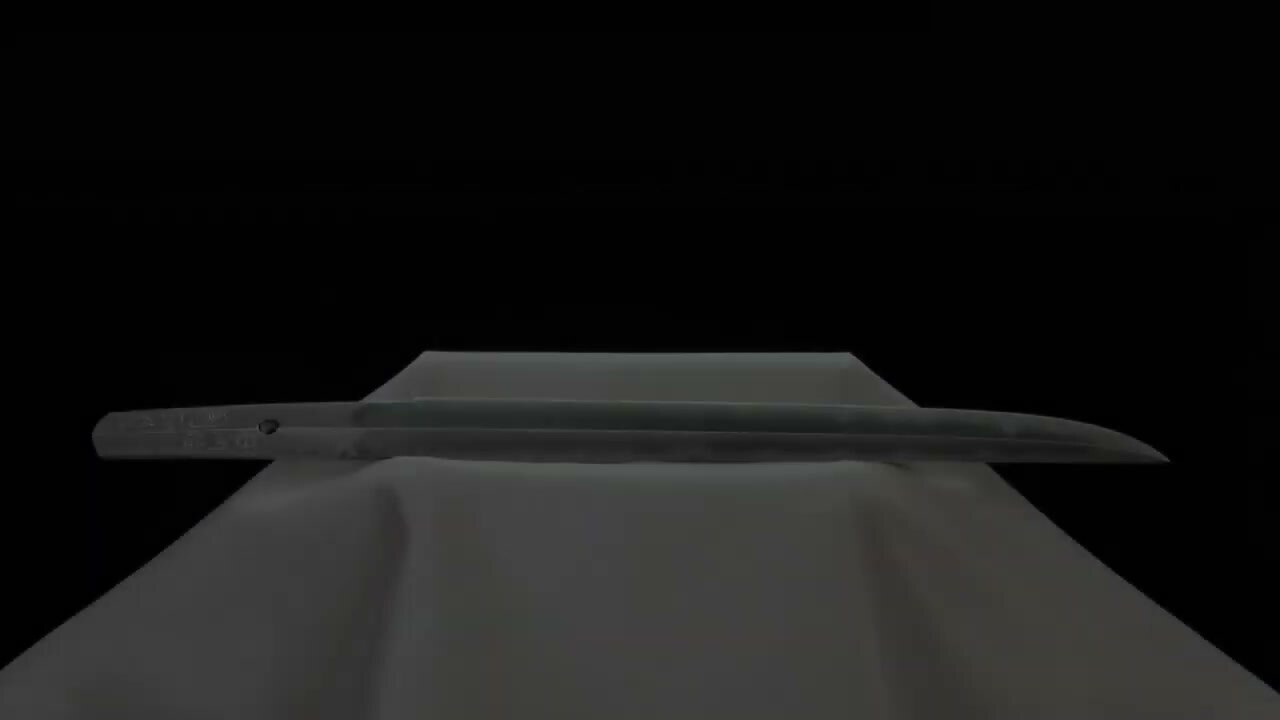
2006 moroha-zukuri tantō. Photo: dealer in Japan 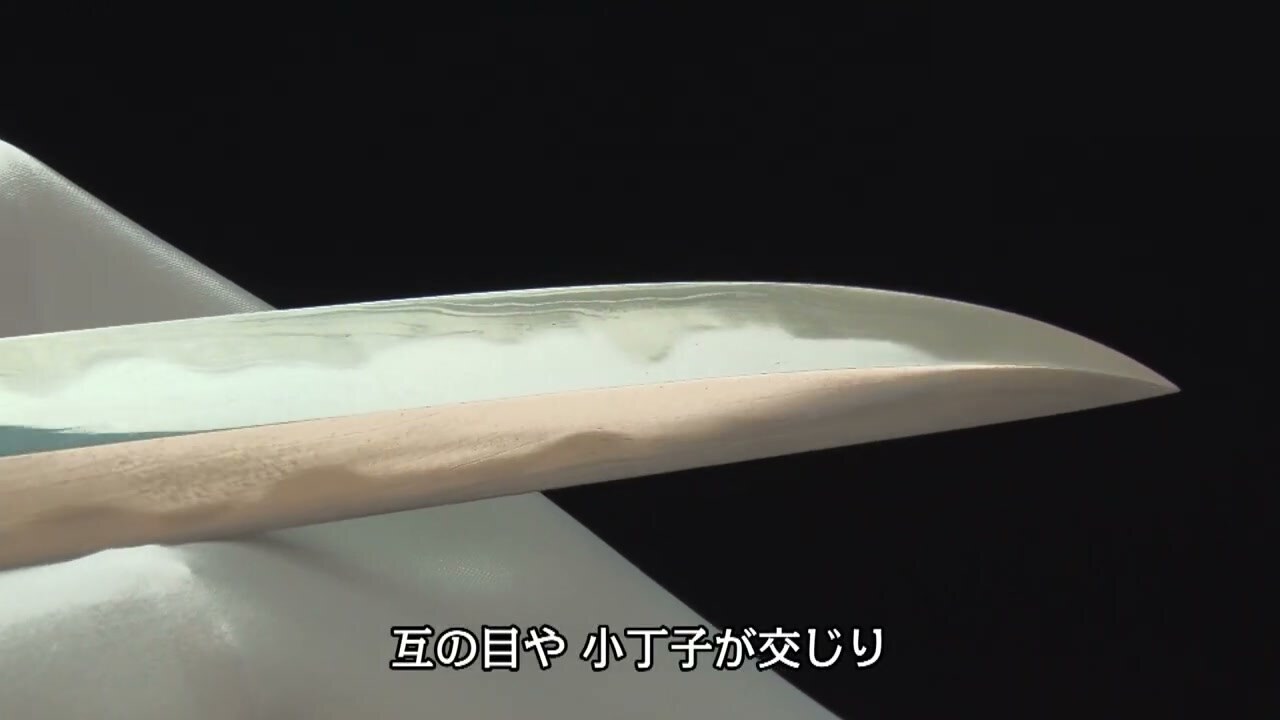
The hamon of the 2006 tantō, with the caption “互の目や小丁子が交じり” (gunome ya ko-chōji ga majiri, “a mix of gunome and ko-chōji”). Photo: dealer in Japan
His Hyūga exhibition (2021)
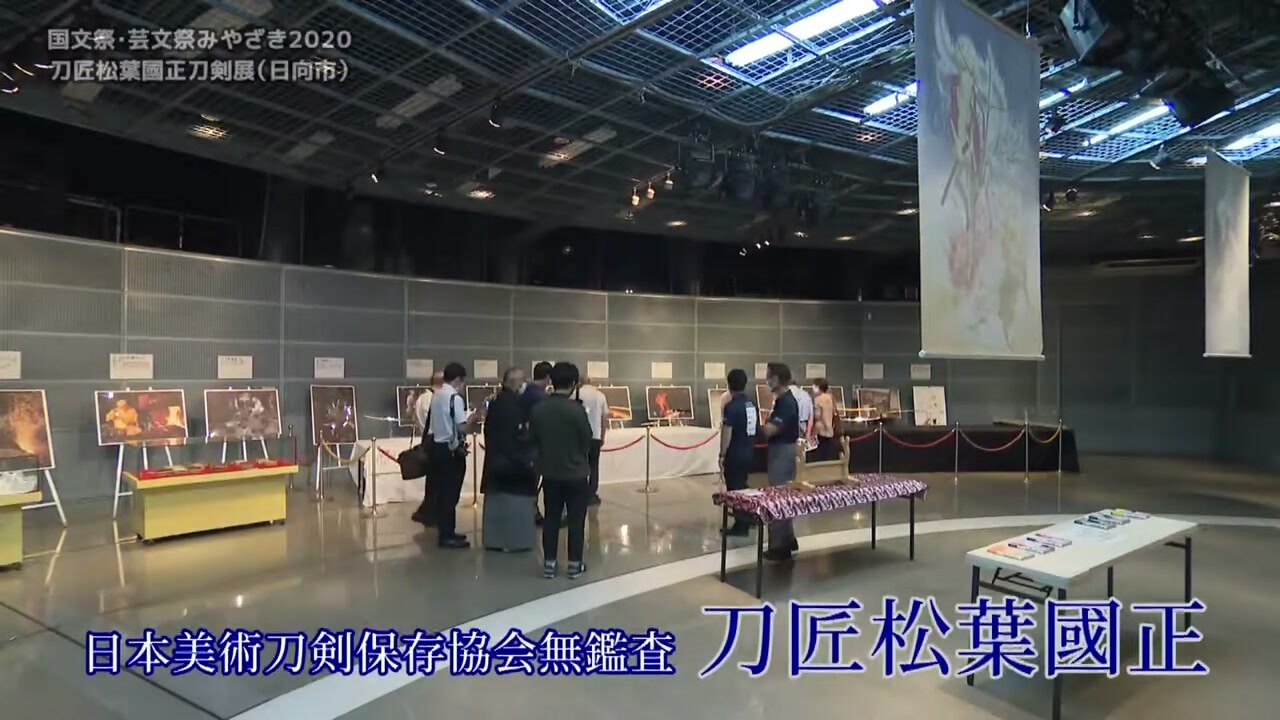
The room of his Hyūga exhibition (2021). ひなた文化散歩 (Hinata bunka sanpo), Miyazaki Prefecture · © Miyazaki Prefecture · source 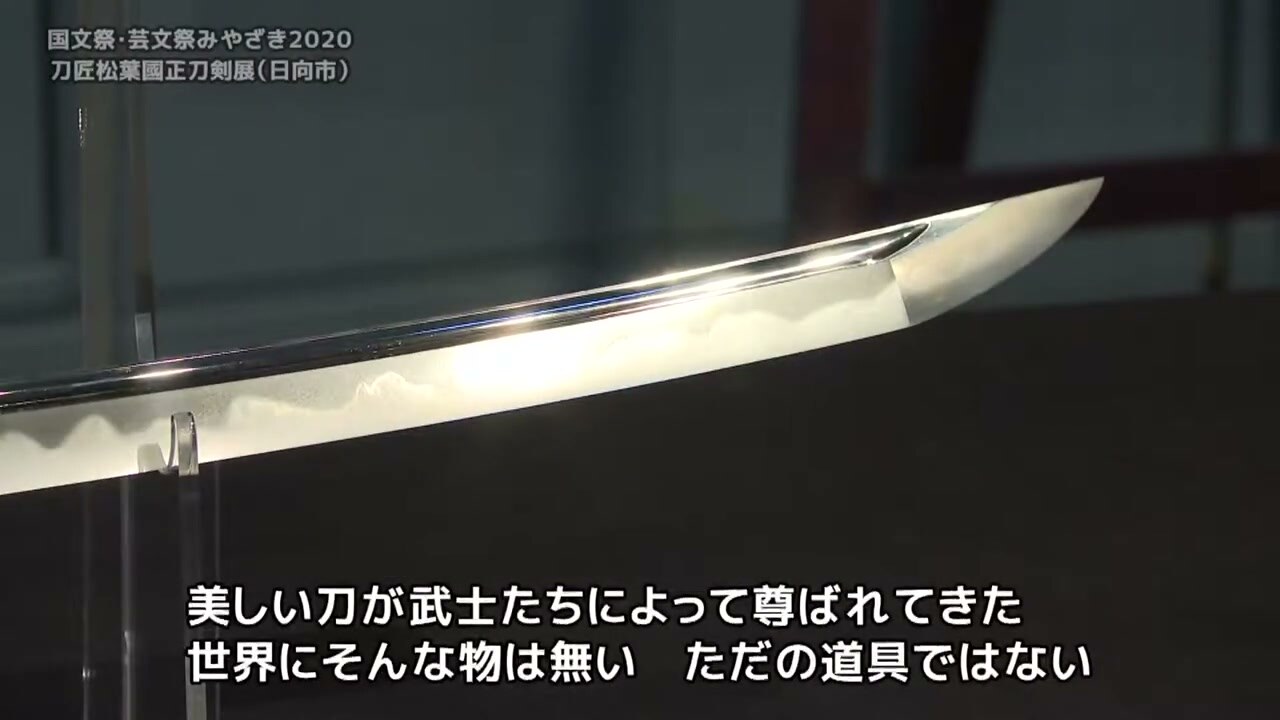
A blade exhibited in Hyūga in 2021, with a subtitled sentence of his. ひなた文化散歩 (Hinata bunka sanpo), Miyazaki Prefecture · © Miyazaki Prefecture · source 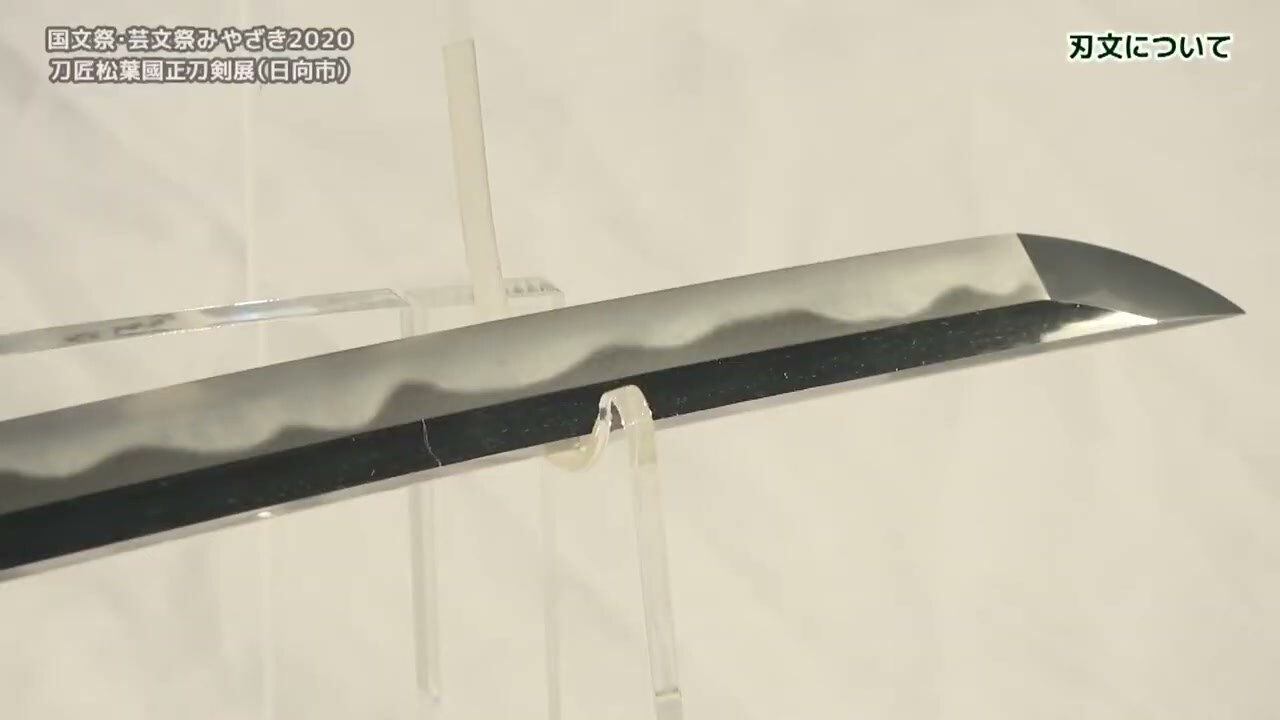
A hamon from the 2021 exhibition. ひなた文化散歩 (Hinata bunka sanpo), Miyazaki Prefecture · © Miyazaki Prefecture · source 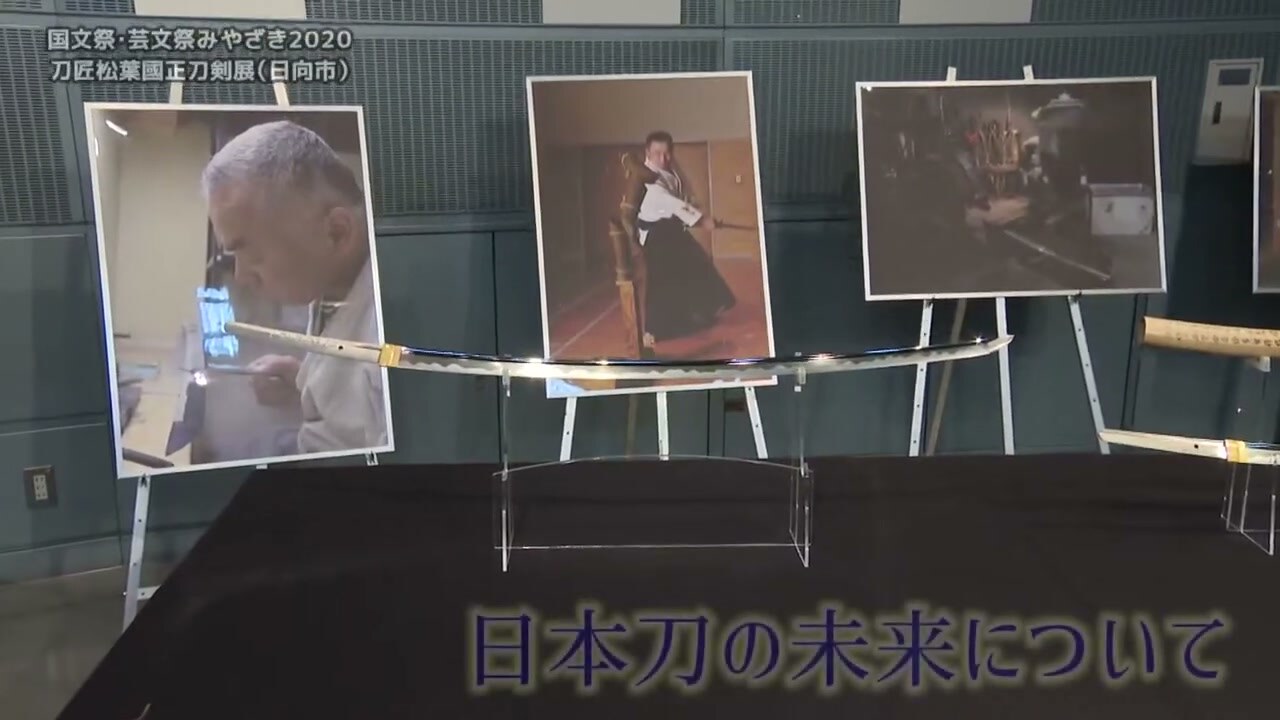
A tachi exhibited in 2021, in front of photos of him. ひなた文化散歩 (Hinata bunka sanpo), Miyazaki Prefecture · © Miyazaki Prefecture · source 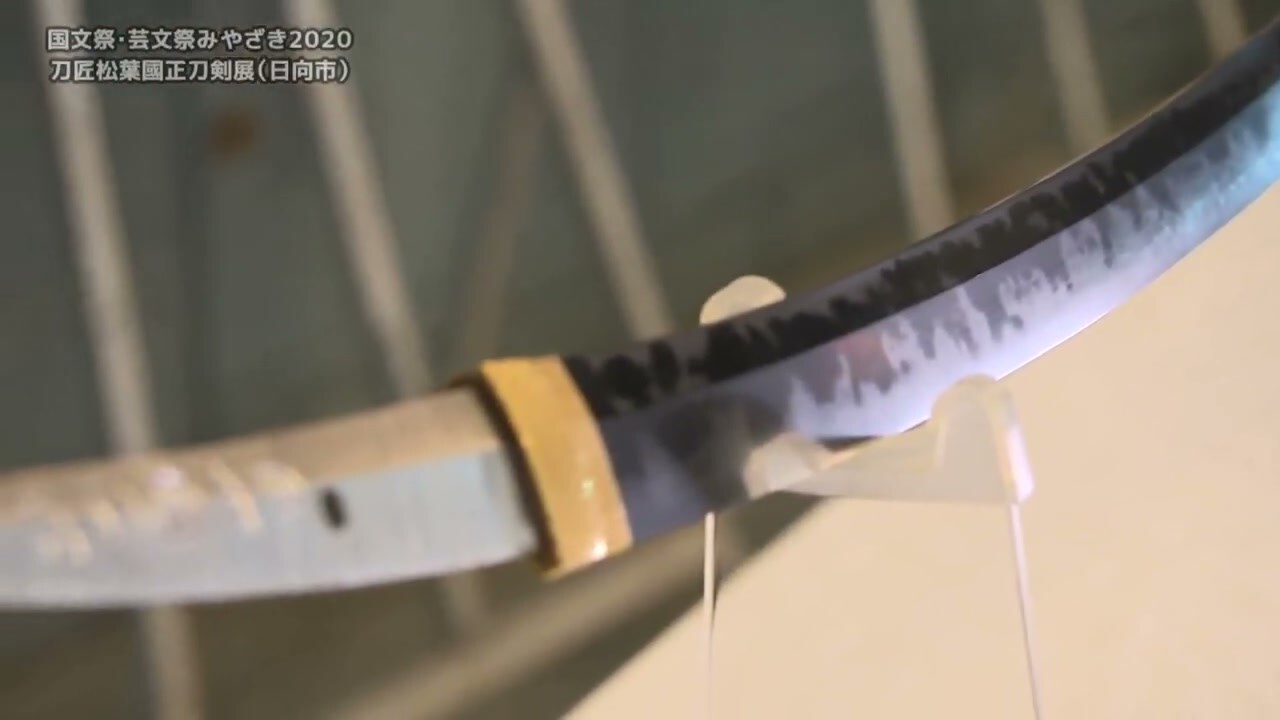
A short blade with its habaki, at the 2021 exhibition. ひなた文化散歩 (Hinata bunka sanpo), Miyazaki Prefecture · © Miyazaki Prefecture · source 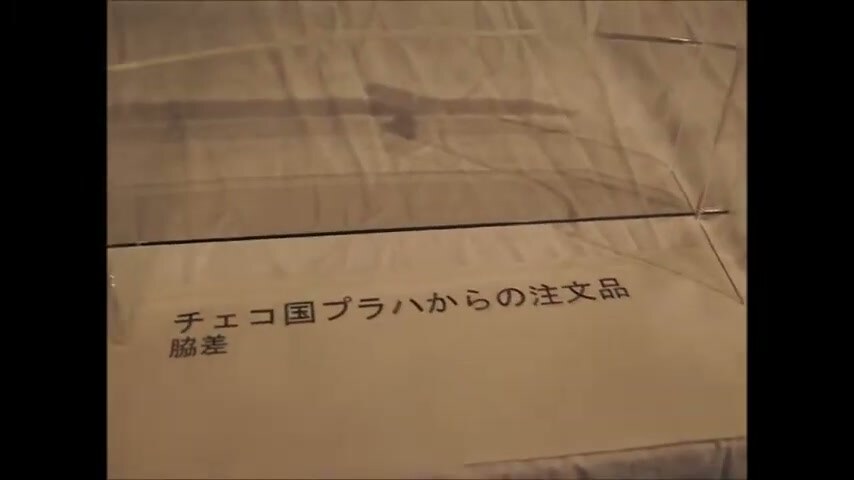
The label “チェコ国プラハからの注文品 脇差” (Cheko-koku Puraha kara no chūmonhin, wakizashi: “wakizashi commissioned from Prague”). 若杉広美 (probable reading: Wakasugi Hiromi) · © 若杉広美 (probable reading: Wakasugi Hiromi) · source 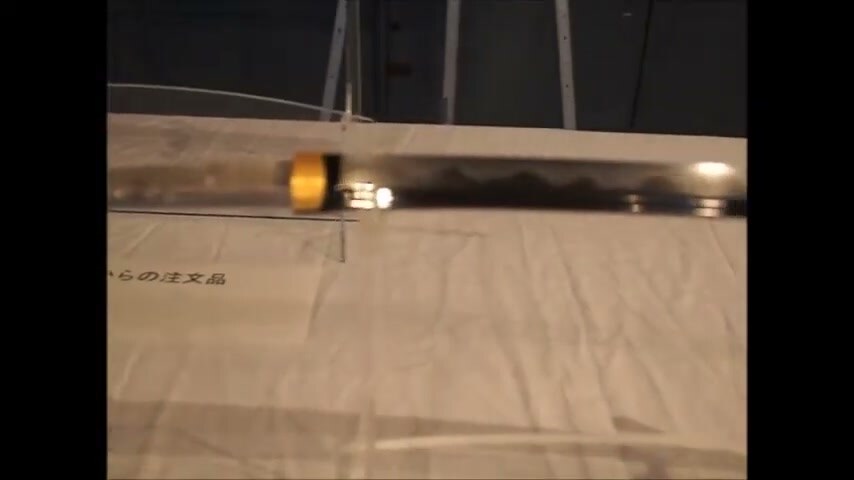
The wakizashi made for a client from Prague. 若杉広美 (probable reading: Wakasugi Hiromi) · © 若杉広美 (probable reading: Wakasugi Hiromi) · source
The Udo shrine exhibition (2023)
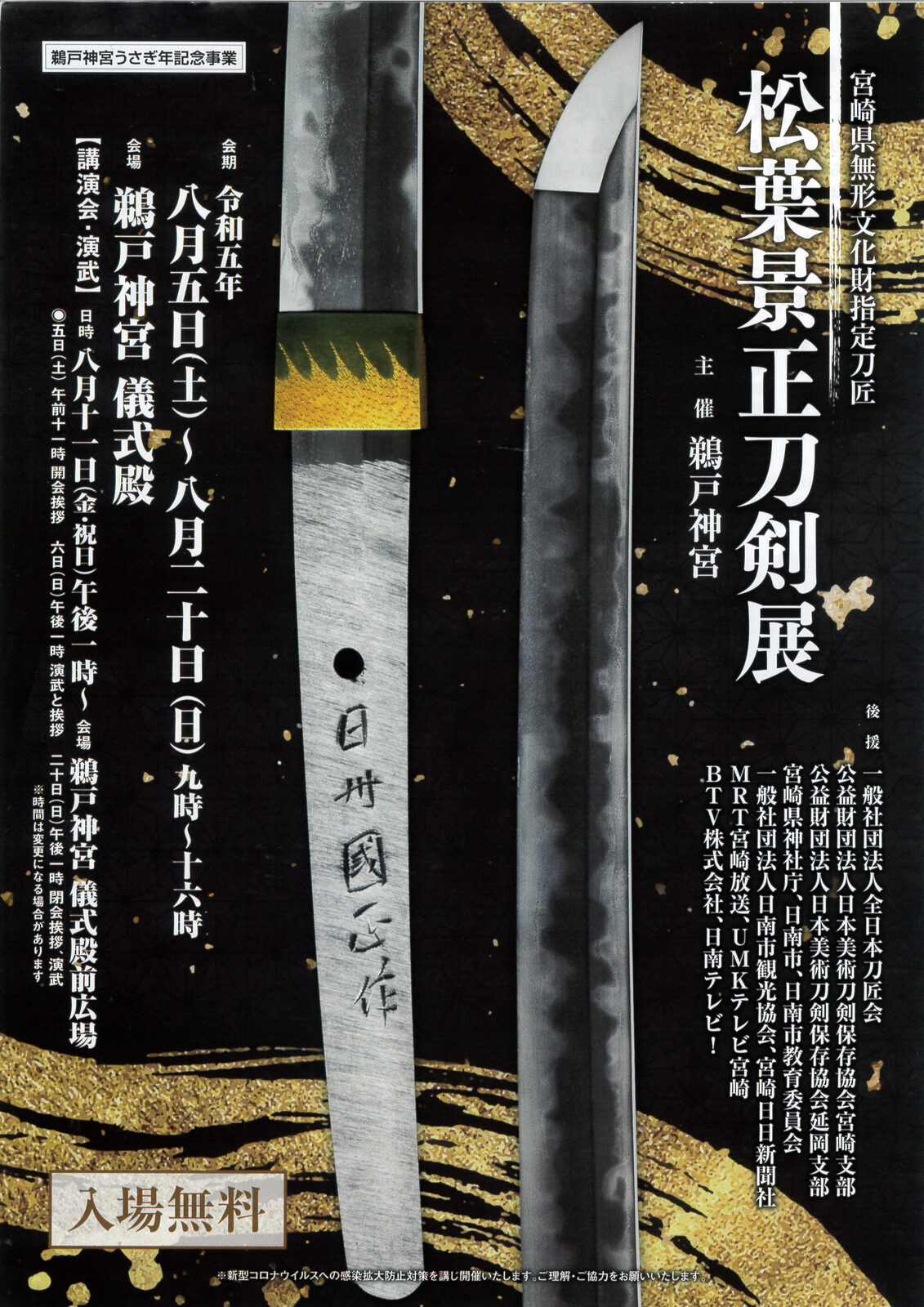
The poster for his exhibition at the Udo shrine (5–20 August 2023). Photo: the smith himself 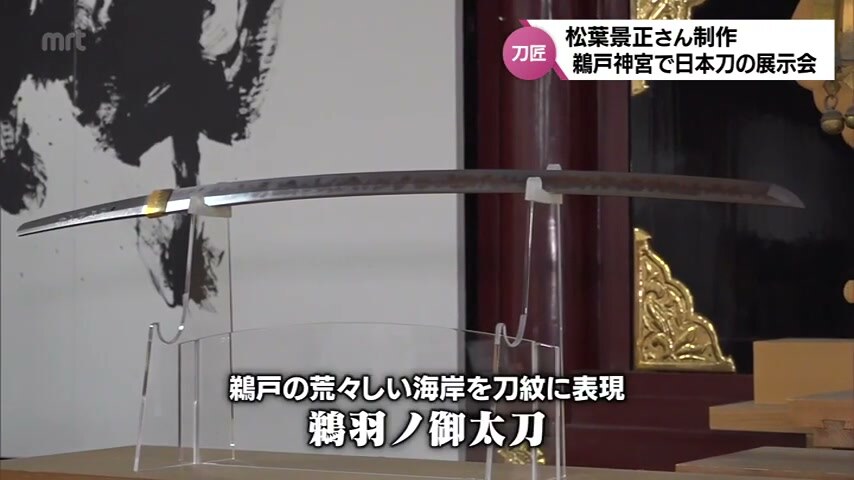
The “鵜羽ノ御太刀” (probable reading: Unoha no on-tachi), in the MRT news report (2023). MRT 宮崎放送 (Miyazaki Hōsō) · © MRT Miyazaki Hōsō · source 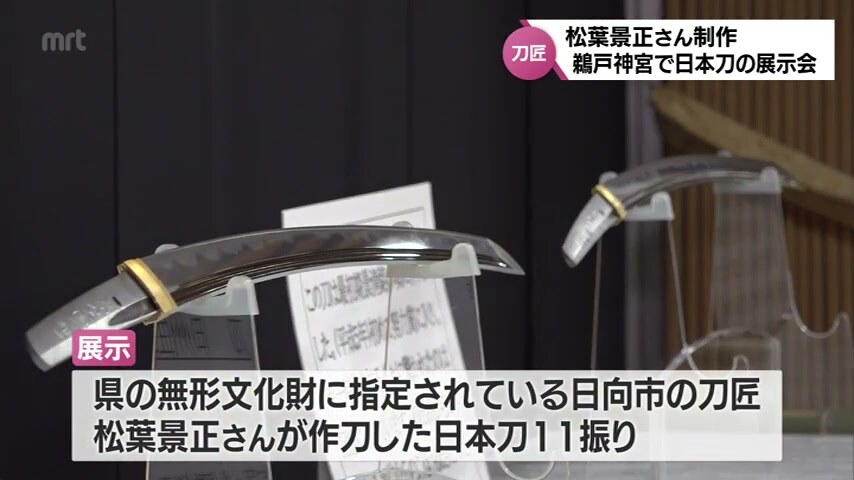
Two blades at the Udo exhibition, with the caption about the eleven blades exhibited. MRT 宮崎放送 (Miyazaki Hōsō) · © MRT Miyazaki Hōsō · source 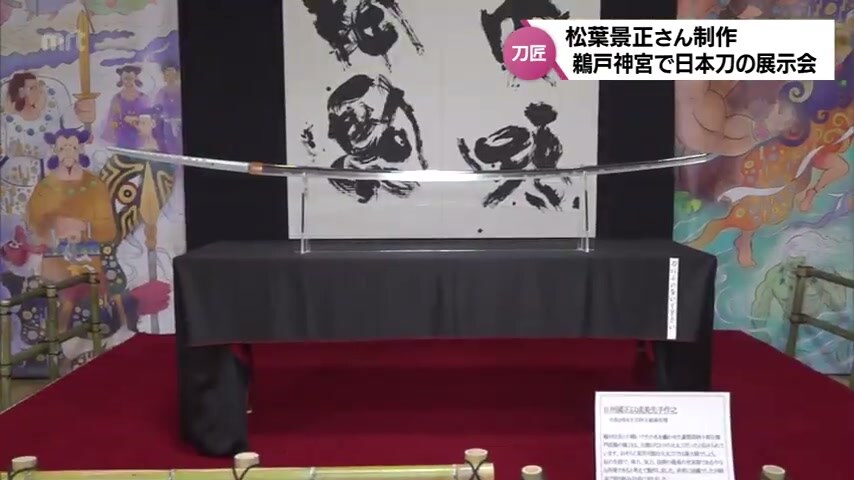
A tachi at the Udo exhibition (2023). MRT 宮崎放送 (Miyazaki Hōsō) · © MRT Miyazaki Hōsō · source 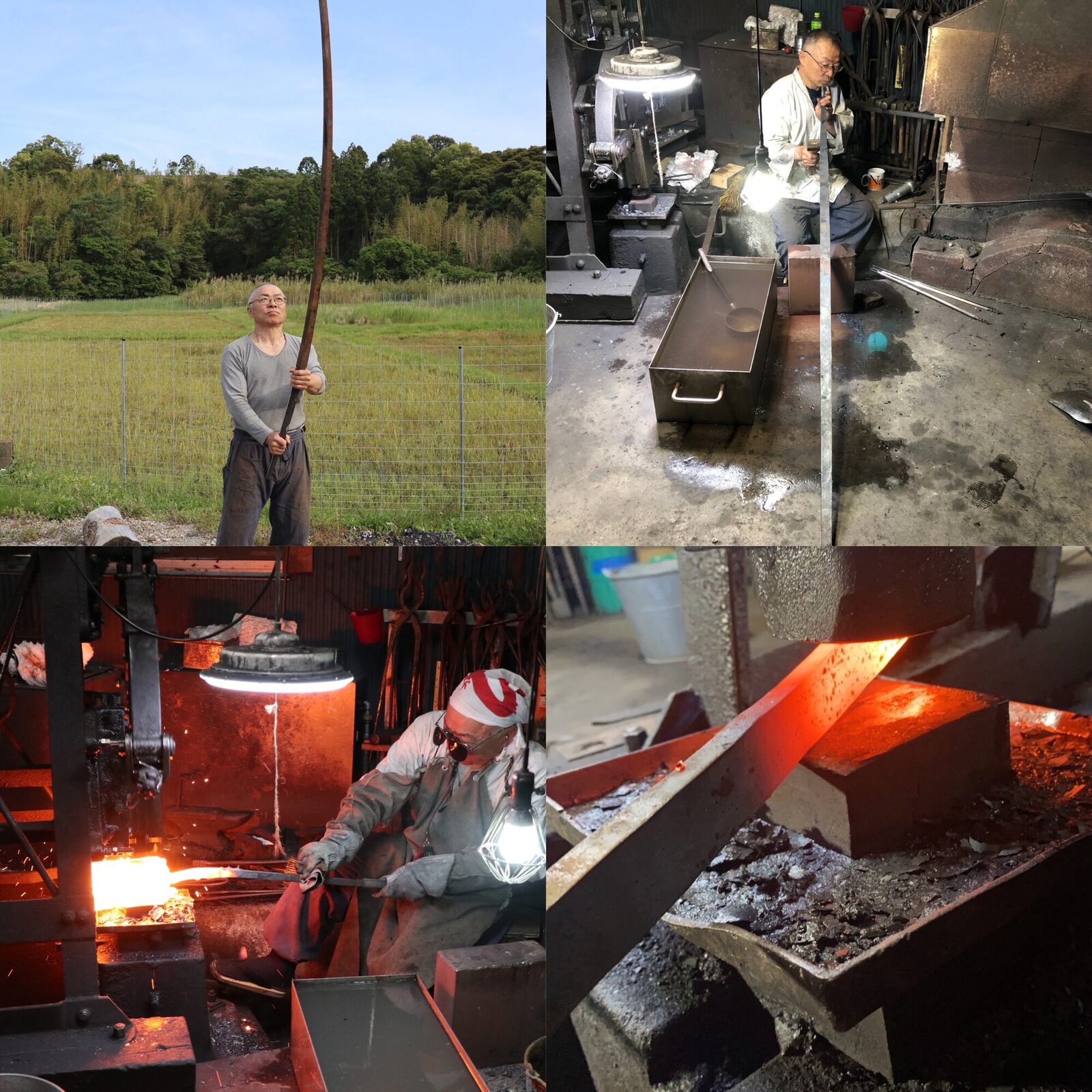
A montage of his: with the Udo ōdachi and in the forge. Photo: the smith himself 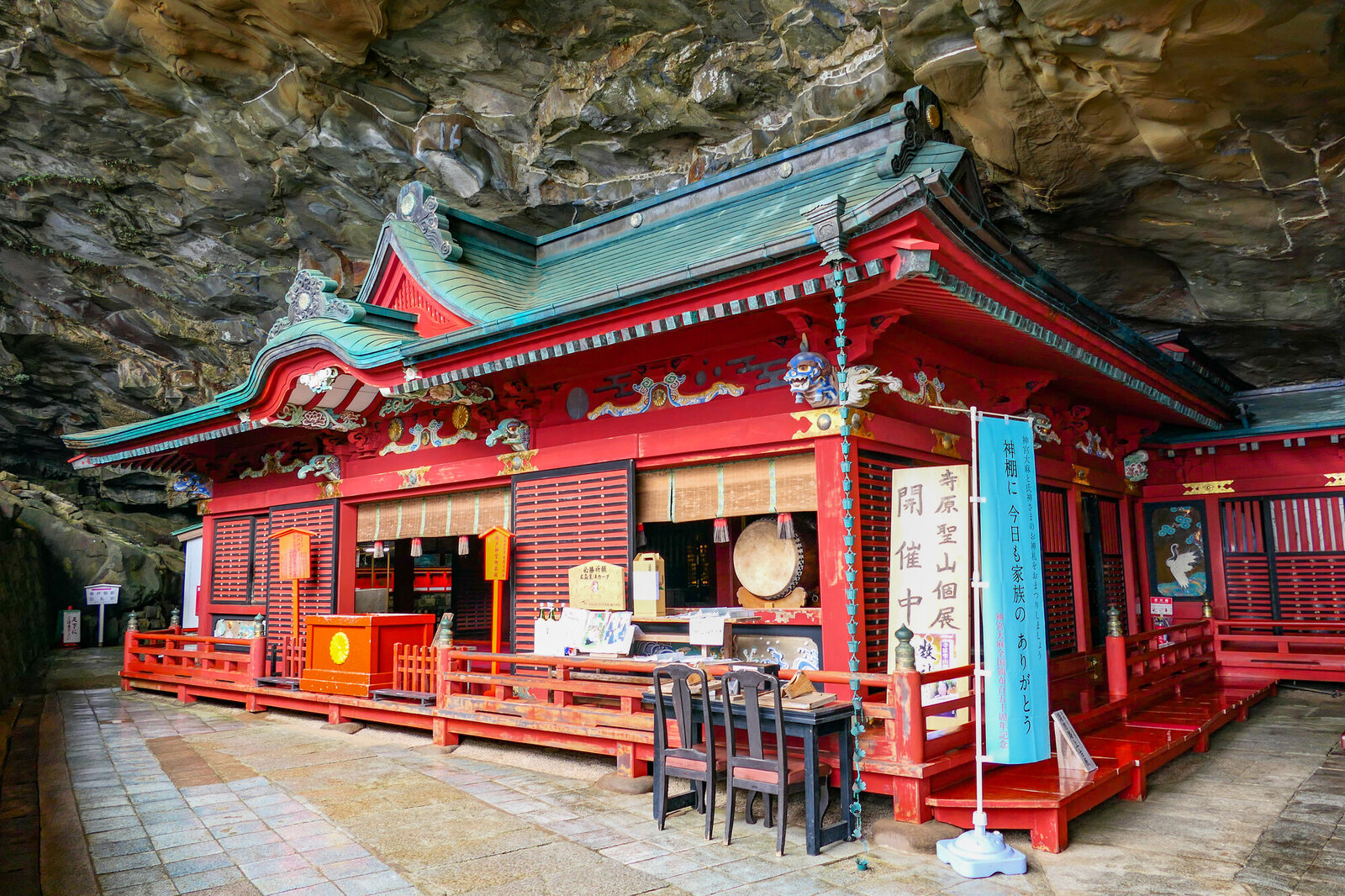
The Udo shrine (鵜戸神宮, Udo Jingū), beneath the rock. MaedaAkihiko, on Wikimedia Commons · CC BY-SA 4.0 · source

Works at a dealer
A gunome-chōji katana in three views. Photo: dealer outside Japan 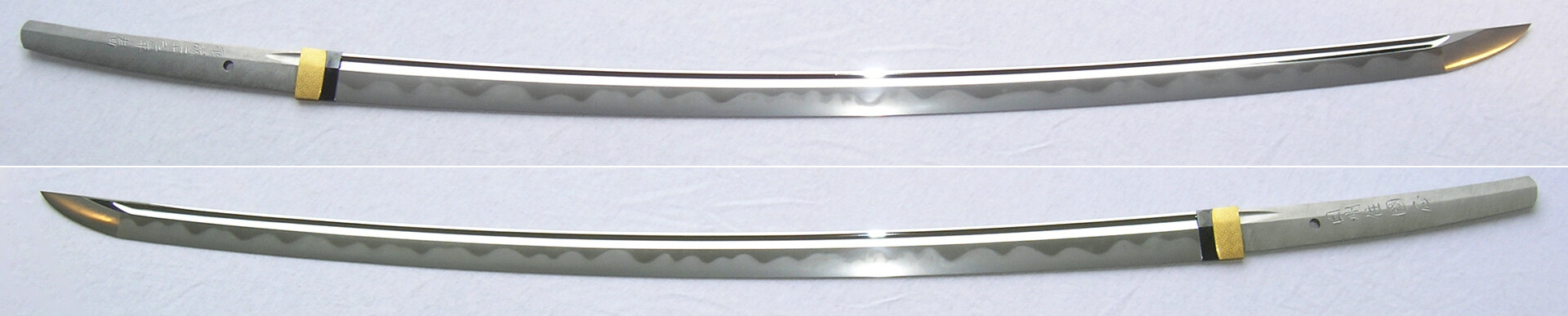
A shinogi-zukuri katana. Photo: dealer outside Japan 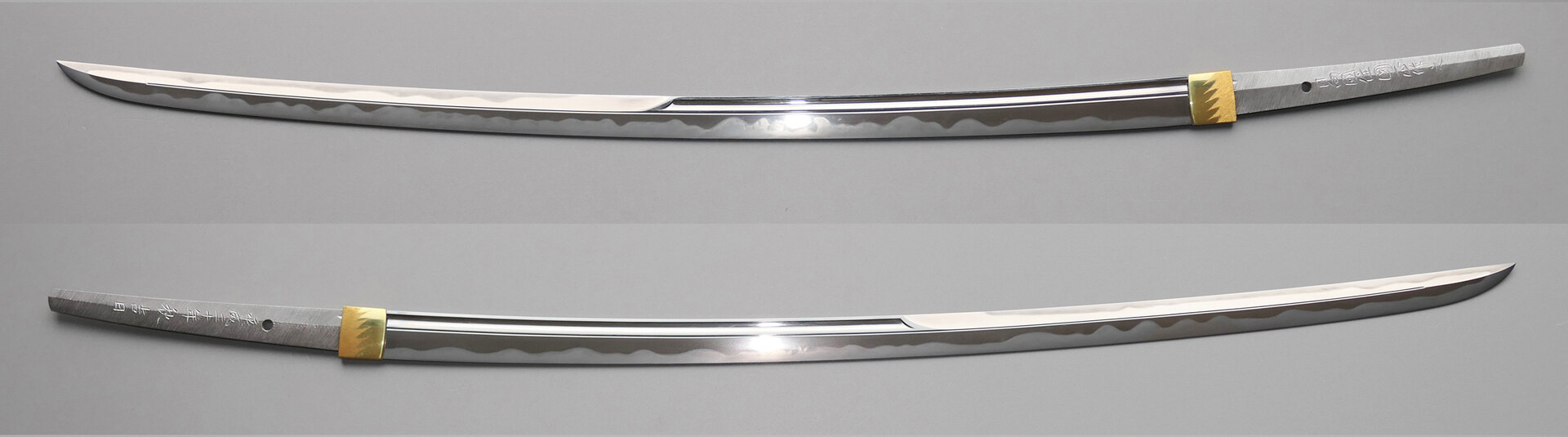
A kogarasu-zukuri blade. Photo: dealer outside Japan 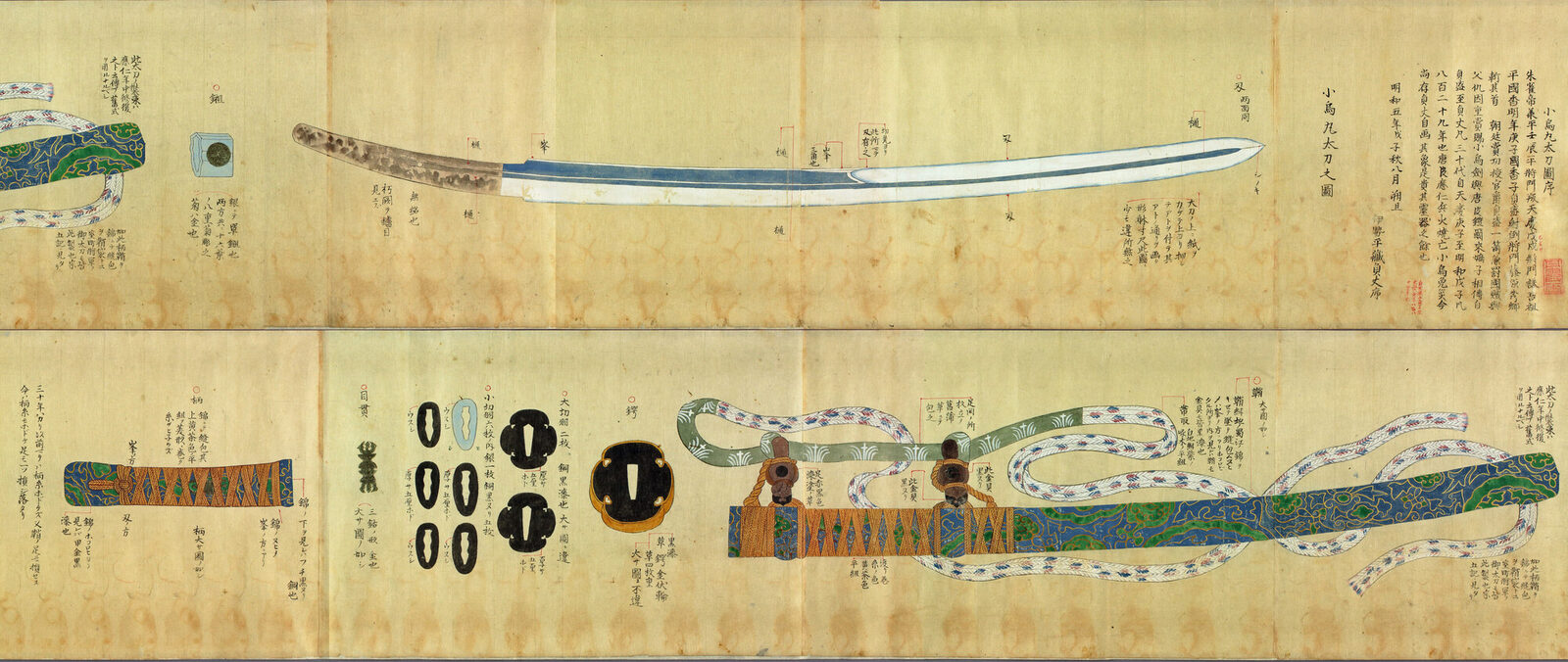
The 1812 drawing of the Kogarasu-maru (小烏丸, Kogarasu-maru), the model for that shape. 伊勢貞丈 (Ise Sadatake), preface, on Wikimedia Commons · Public domain · source 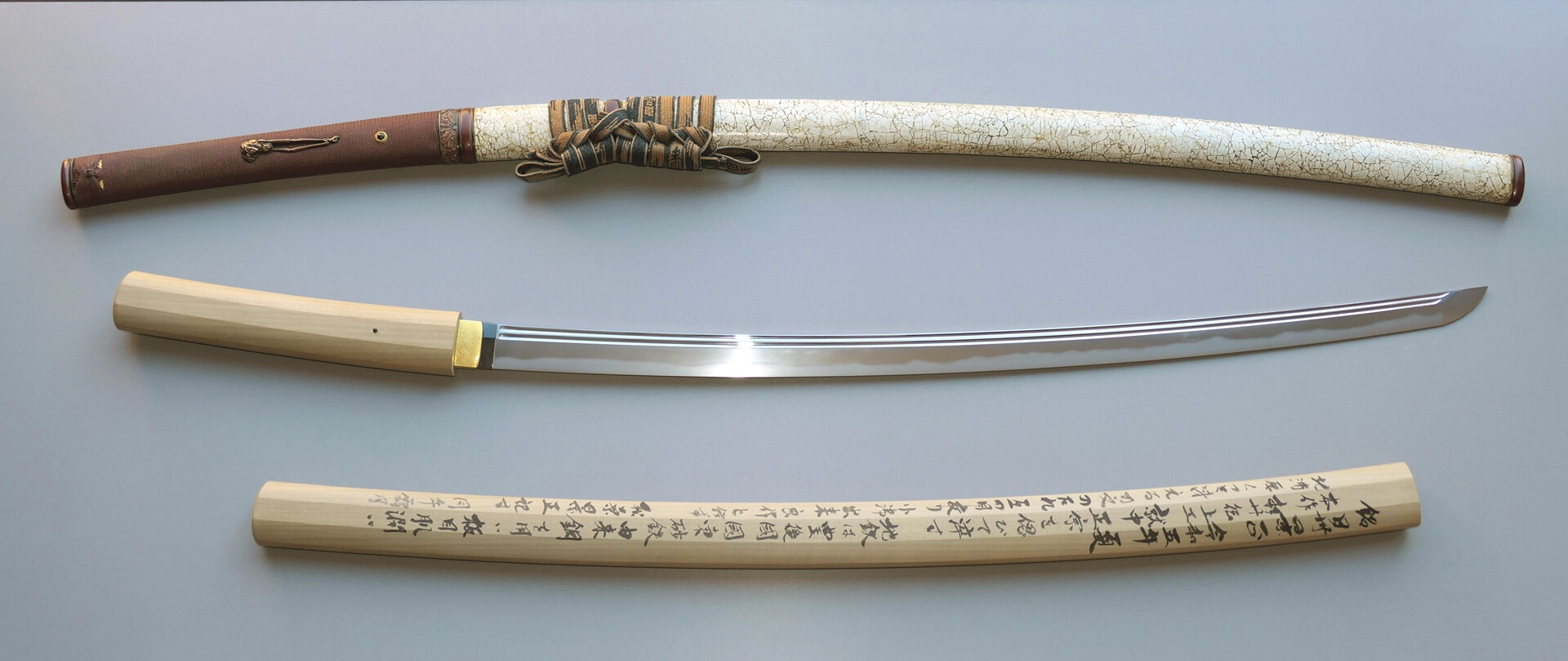
A blade that a dealer presents as a Masamune utsushi, with koshirae and sayagaki. Photo: dealer outside Japan 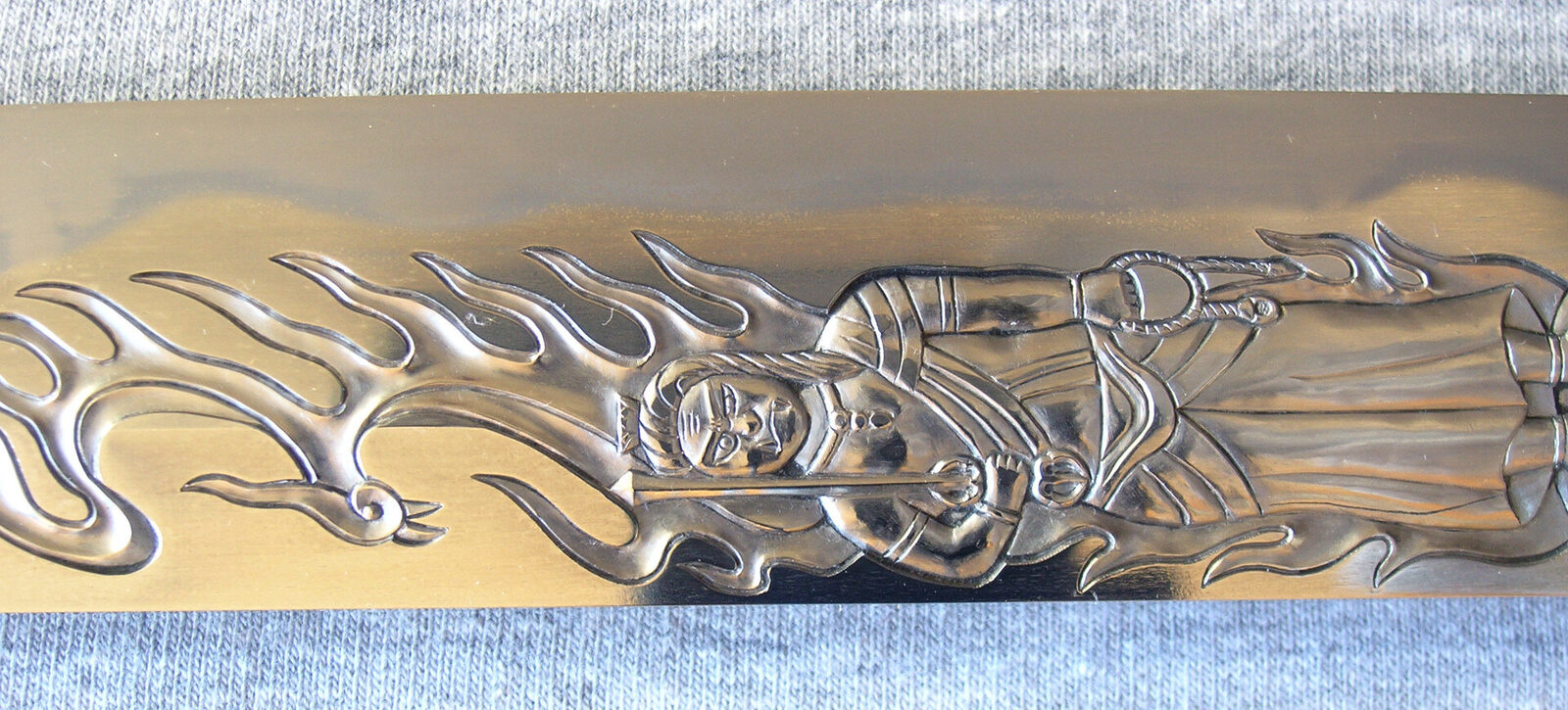
An engraving of Fudō Myōō on a blade. Photo: dealer outside Japan 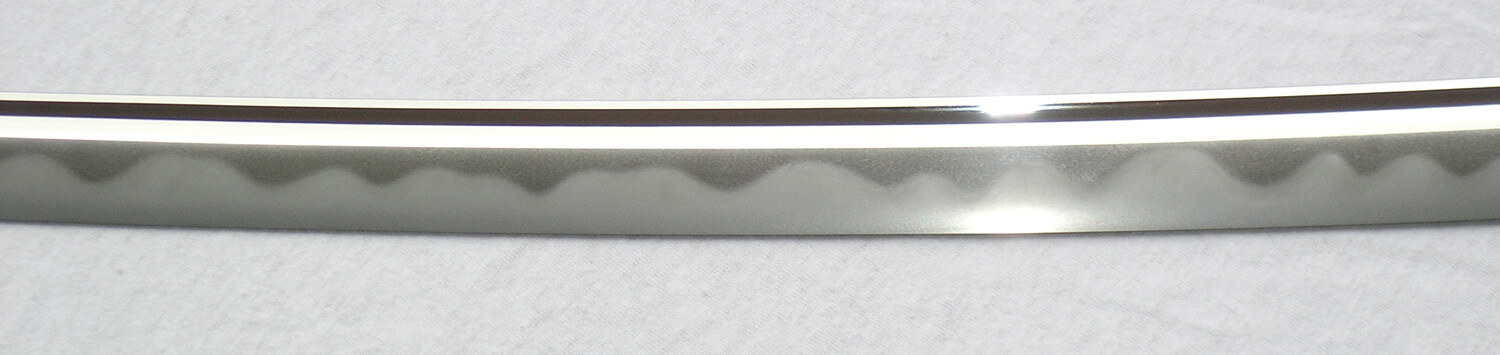
Hamon and steel grain of a blade. Photo: dealer outside Japan 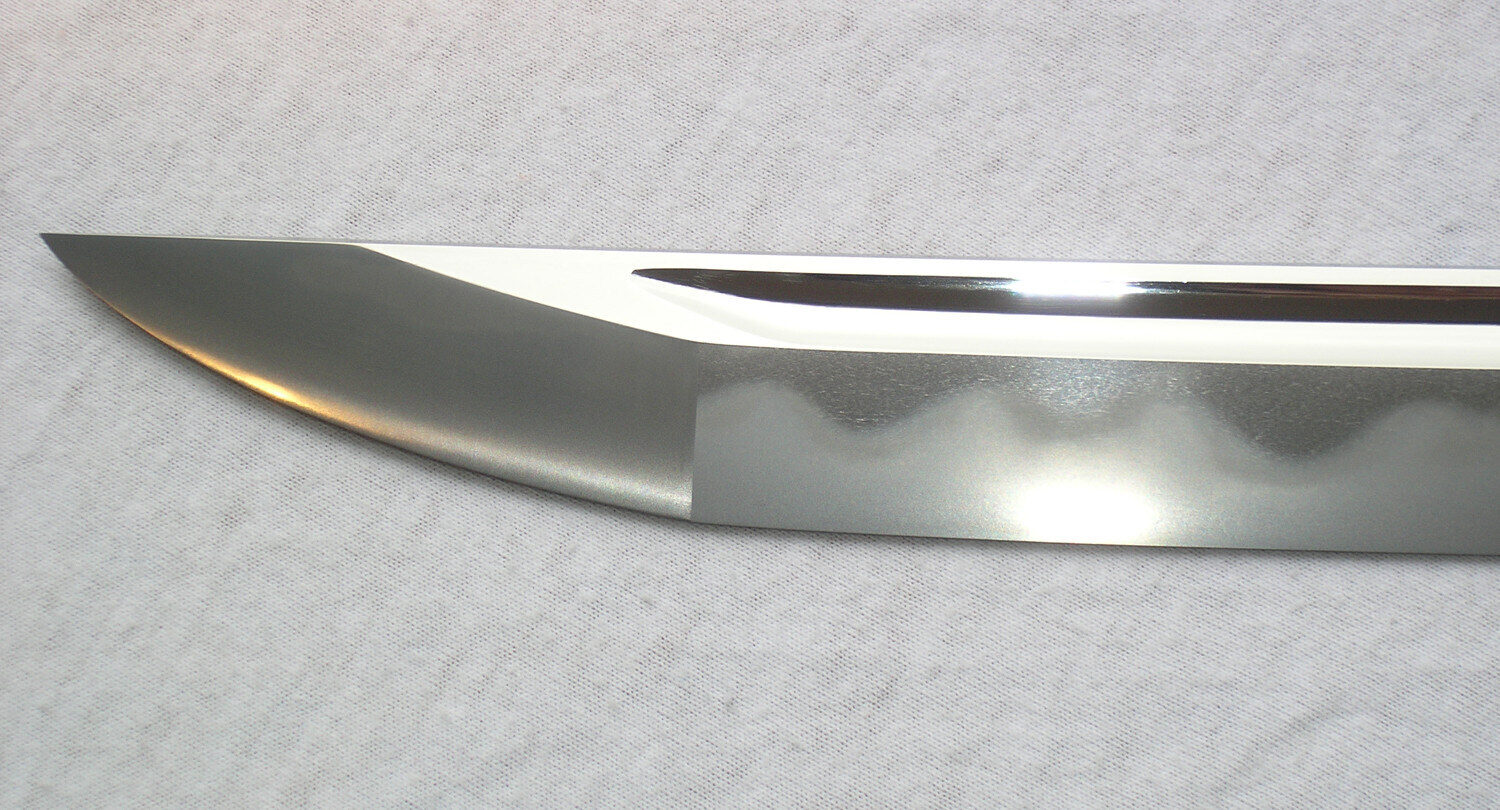
The point and bōshi of a blade. Photo: dealer outside Japan 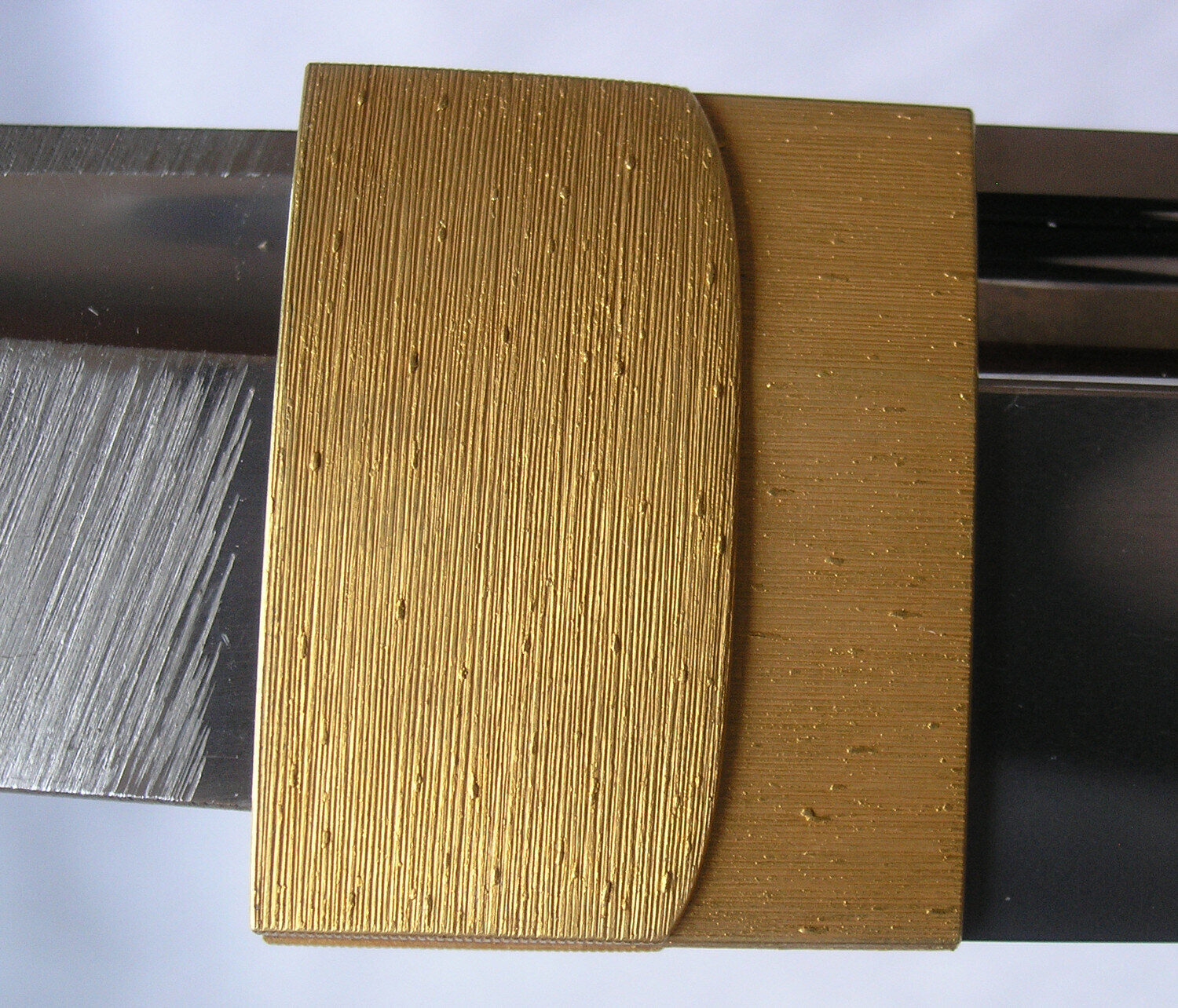
A double habaki. Photo: dealer outside Japan 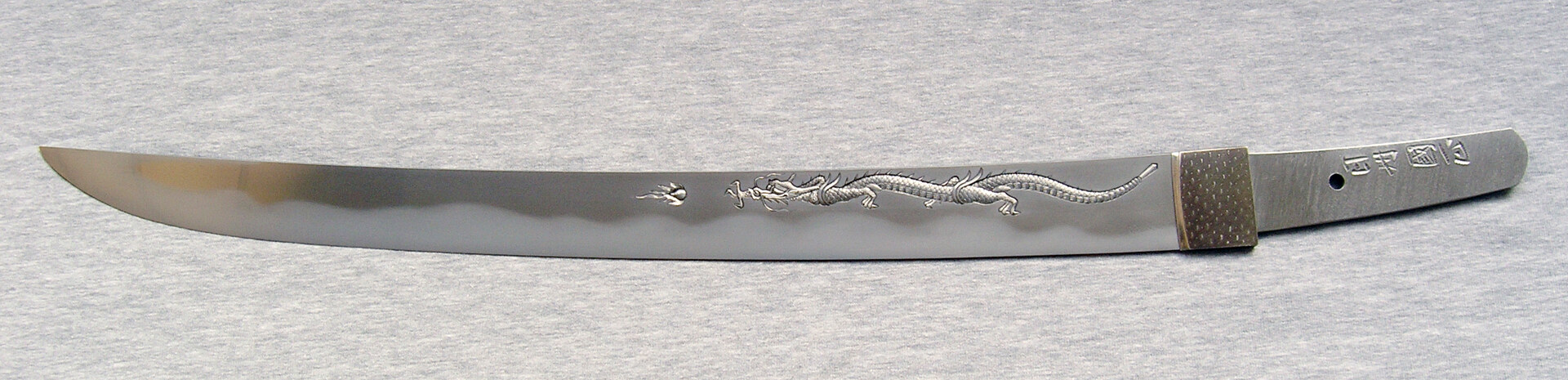
A wakizashi with an engraved dragon. Photo: dealer outside Japan 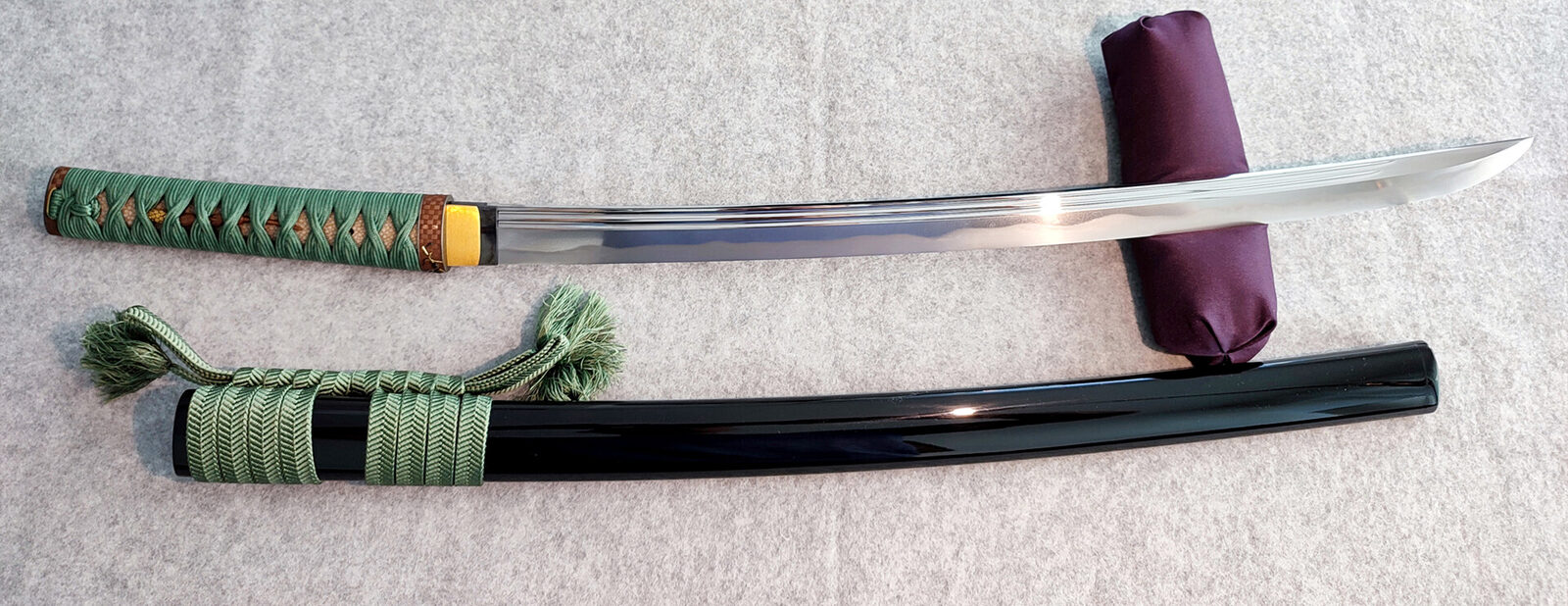
A wakizashi with two grooves and its koshirae. Photo: dealer outside Japan 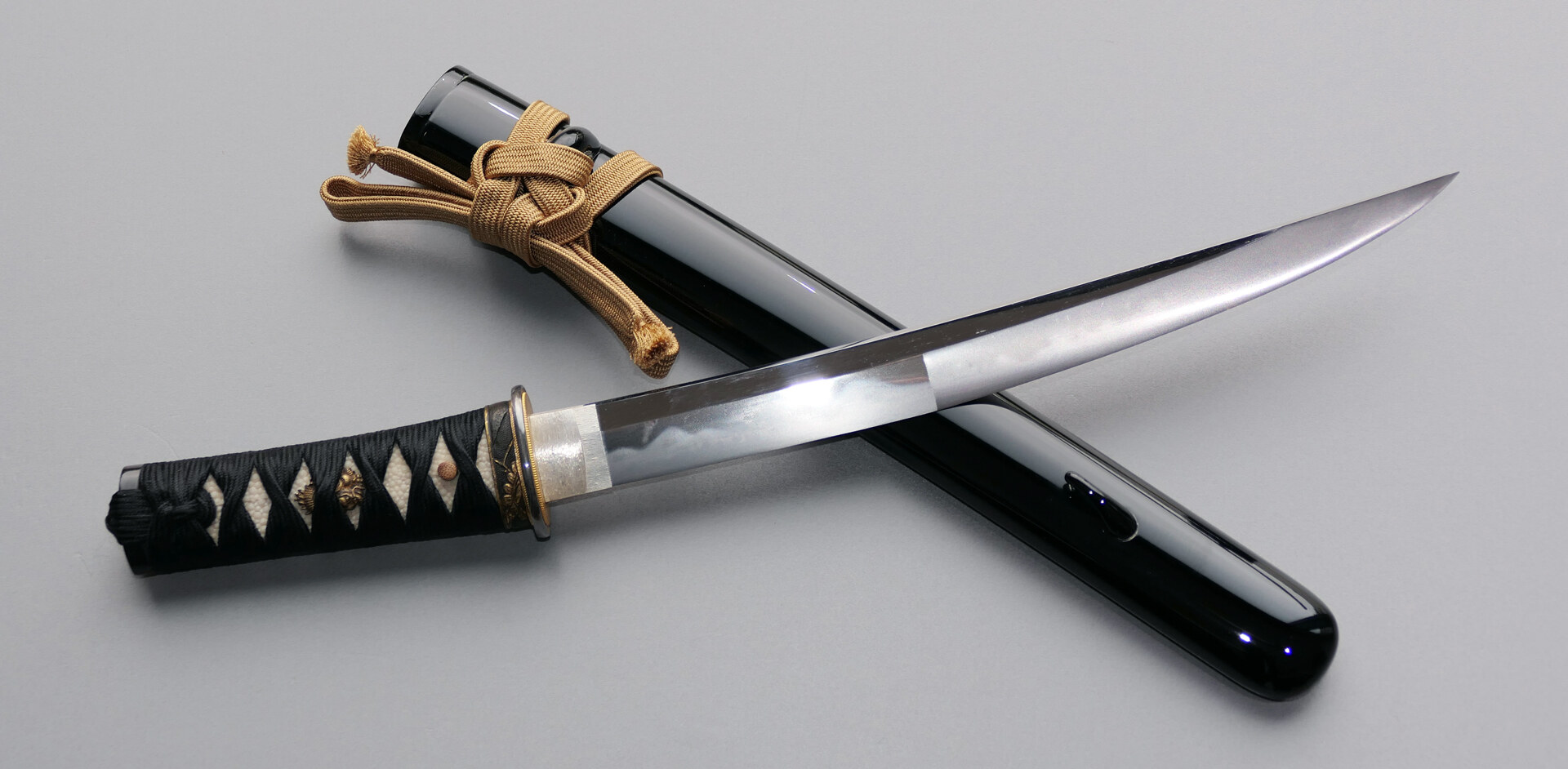
An osoraku-zukuri tantō and its koshirae. Photo: dealer outside Japan 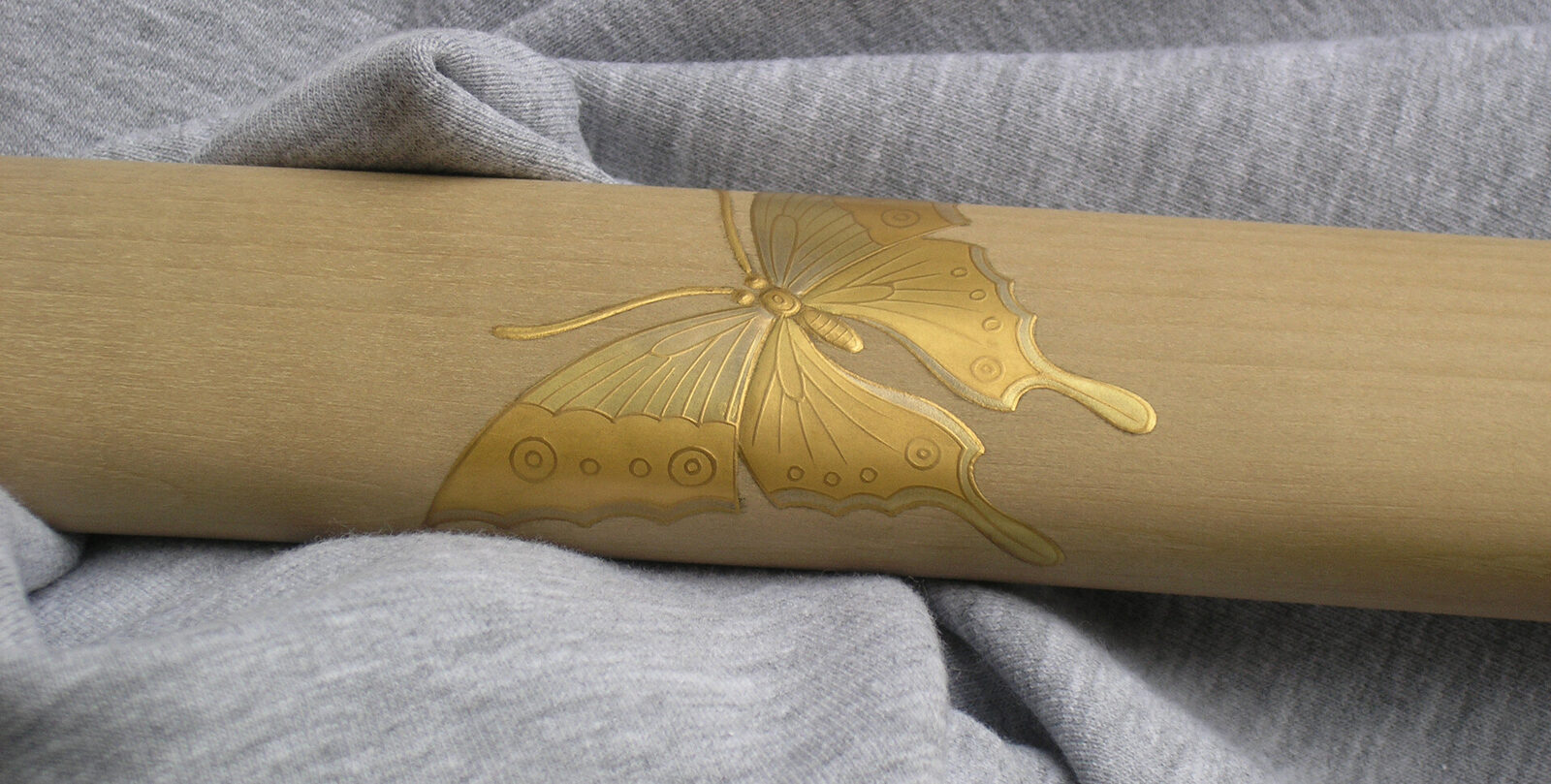
The “Anumaru”, a blade for meditation, with a makie butterfly on the mounting, according to a dealer. Photo: dealer outside Japan 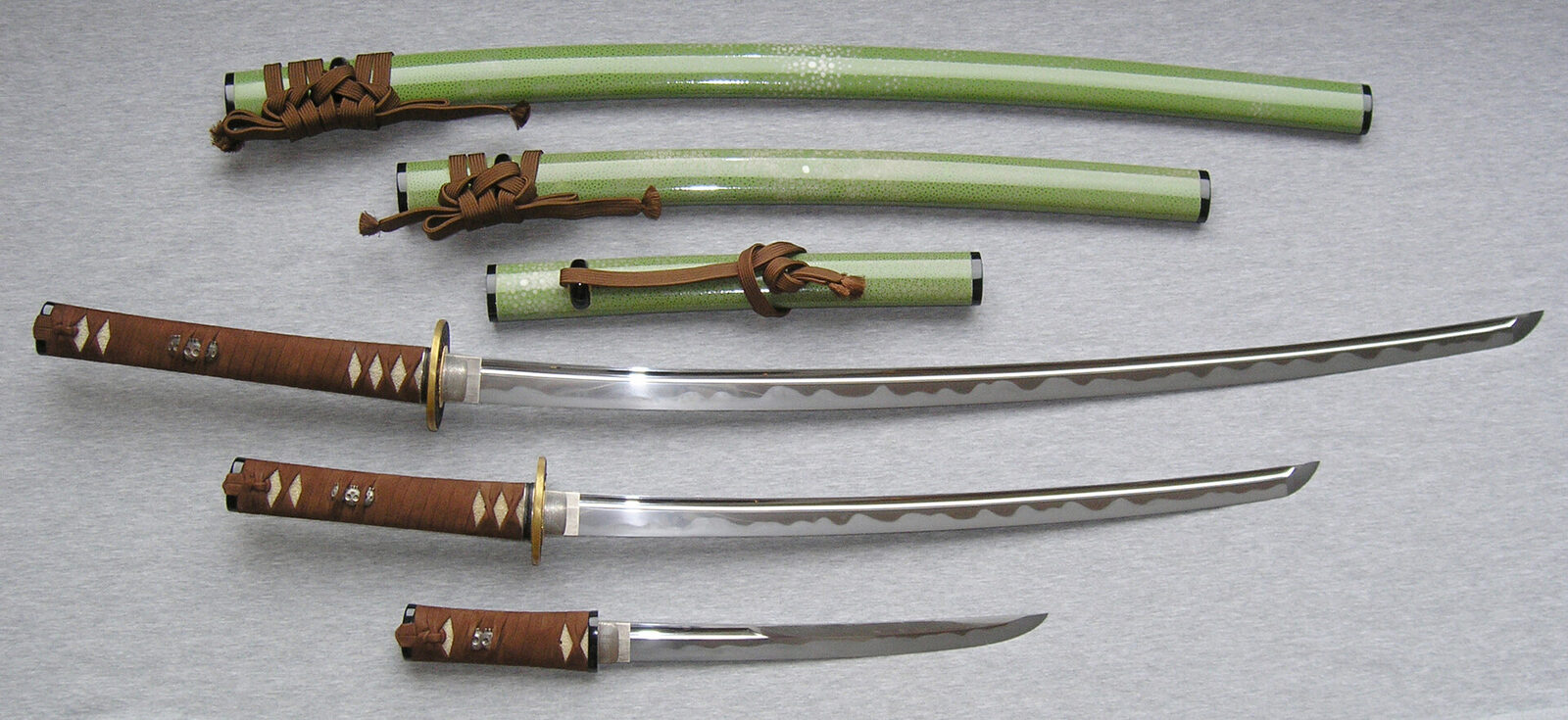
A daishō and a tantō with their green mountings. Photo: dealer outside Japan

Blades at dealers and exhibitions

2012 katana, 82.2 cm, on its stand. Photo: dealer in Japan 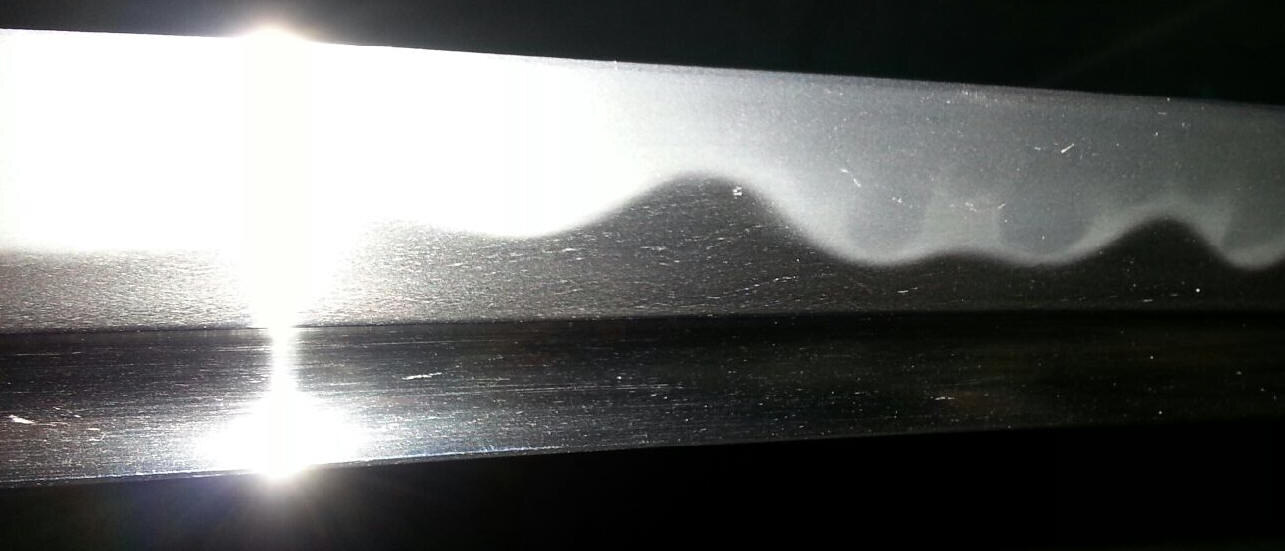
The hamon of the 2012 katana. Photo: dealer in Japan 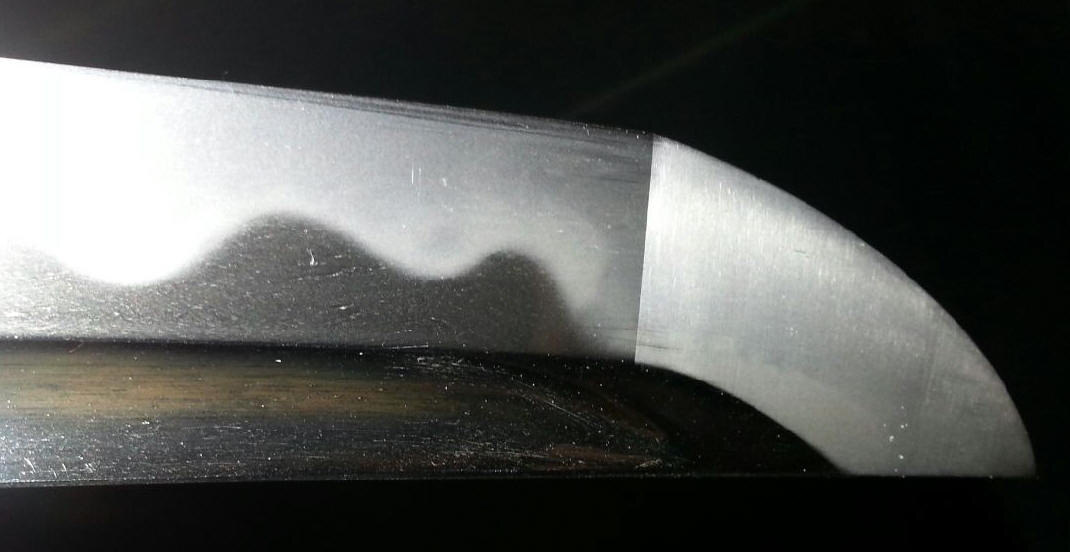
The point of the 2012 katana. Photo: dealer in Japan 
The tang and signature of the 2012 katana. Photo: dealer in Japan 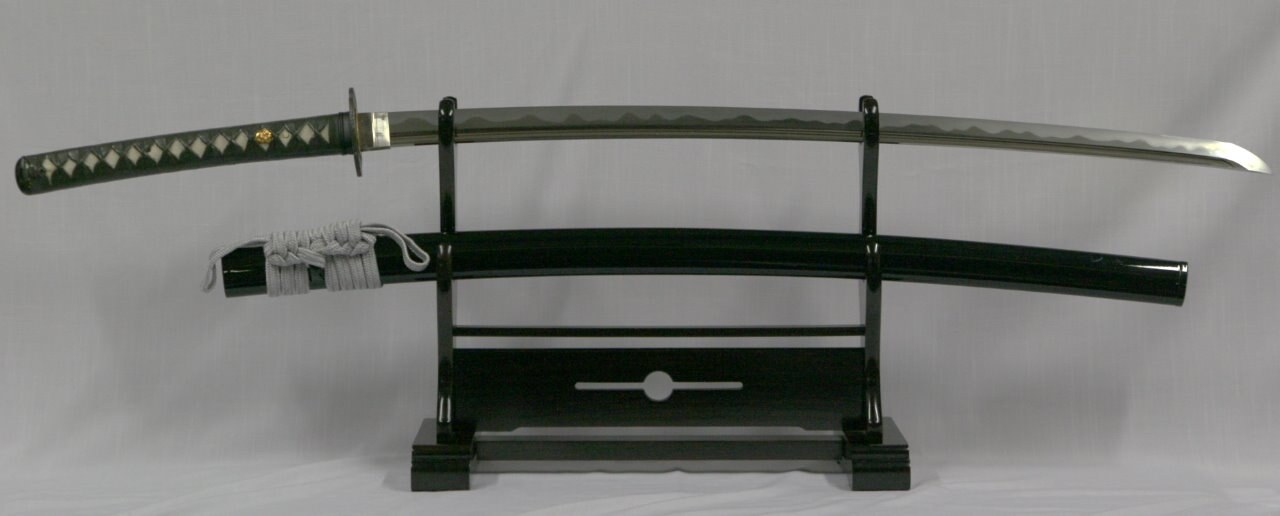
The 2012 katana with its koshirae, on the stand. Photo: dealer in Japan 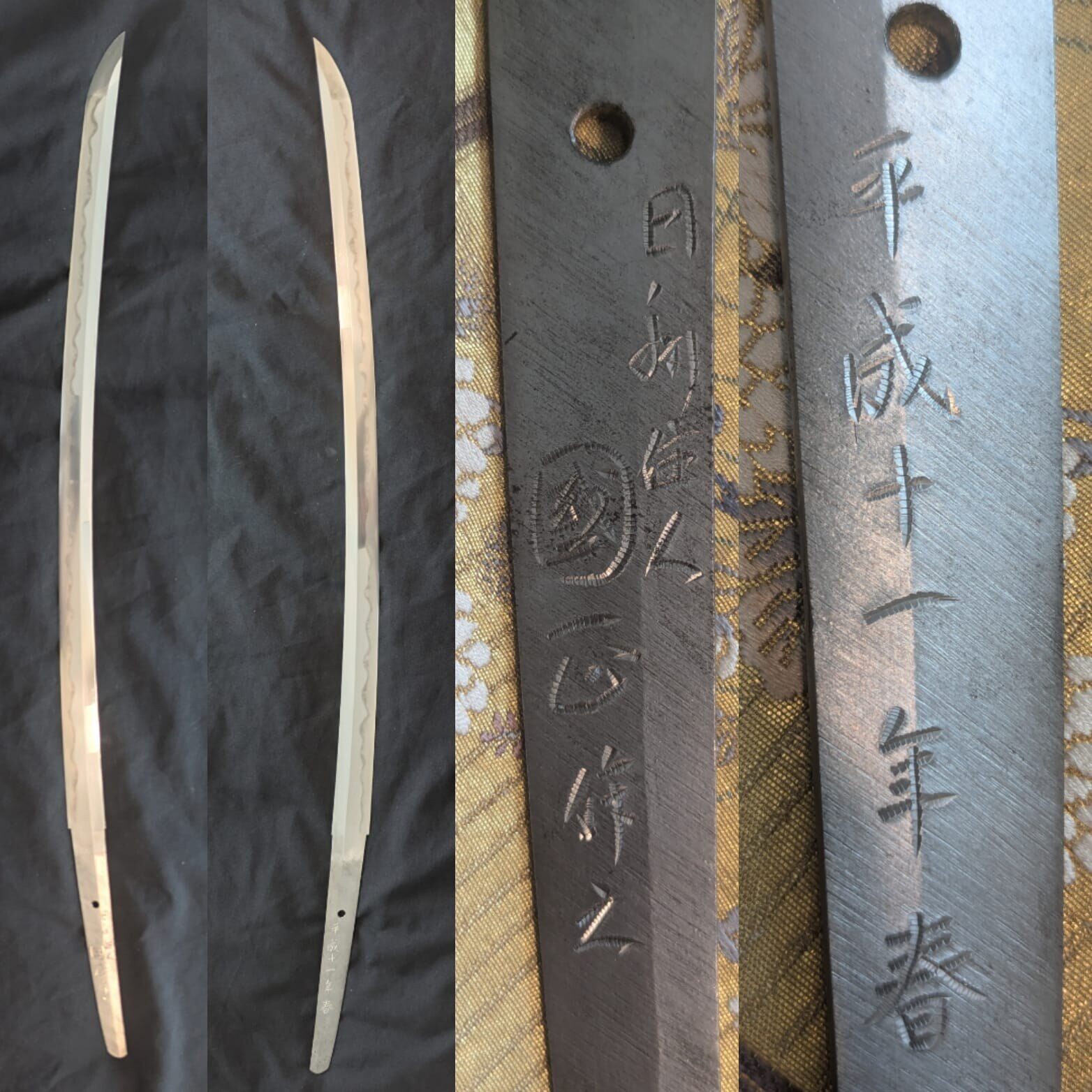
1999 katana in the manner of Chōgi: the signature 日州住人國正作之 (Nisshū jūnin Kunimasa kore o saku) and 平成十一年春 (Heisei jūichinen haru). Photo: dealer outside Japan 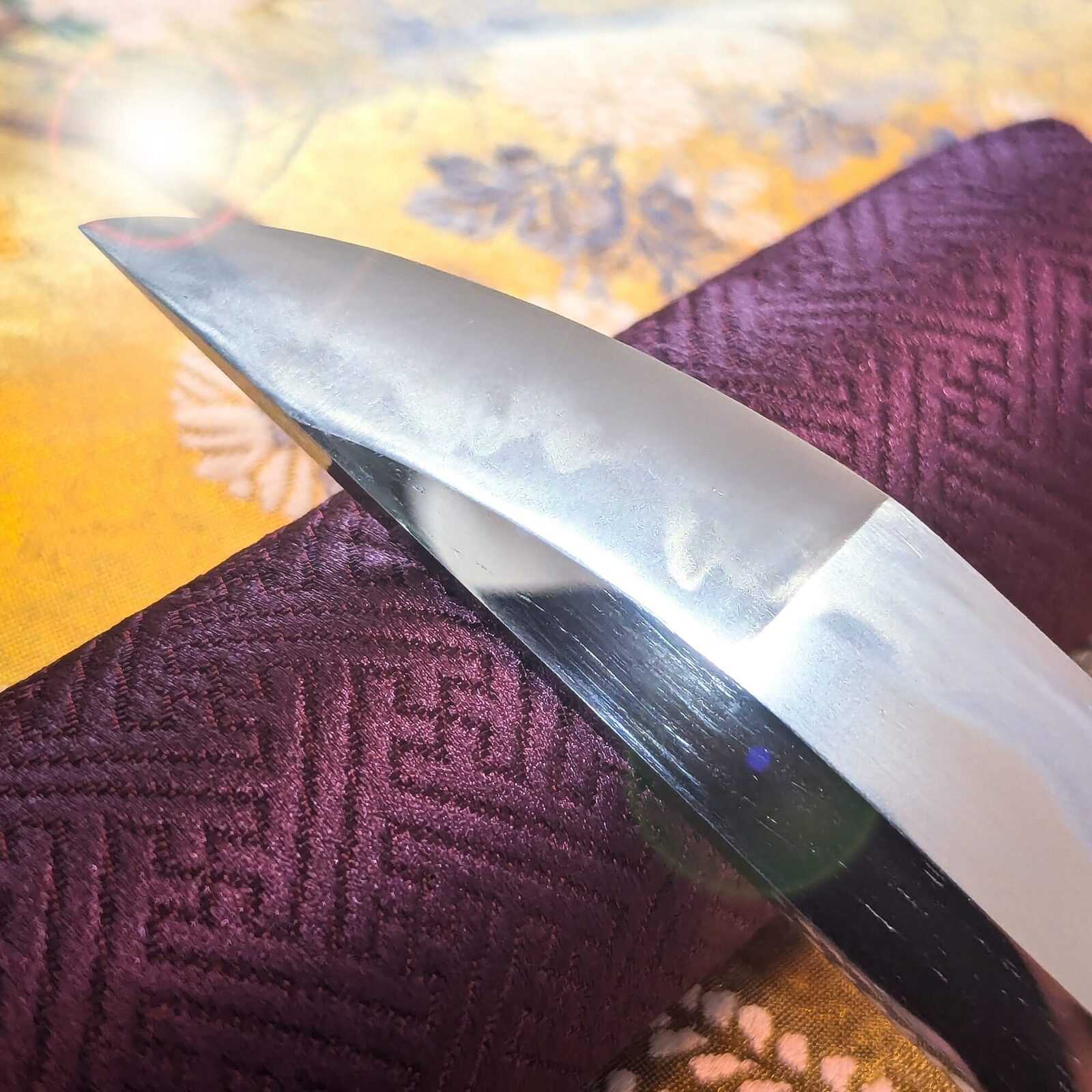
The point of the 1999 katana. Photo: dealer outside Japan 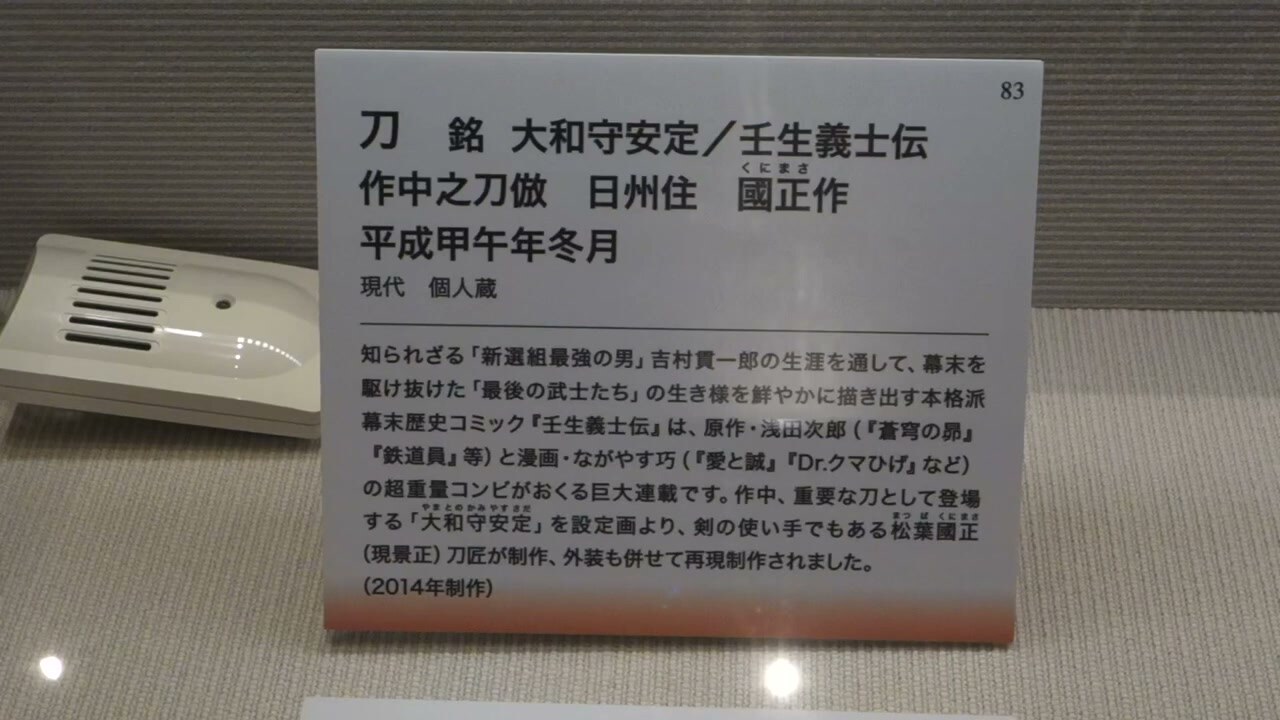
The label of his 2014 katana modelled on the 大和守安定 (Yamato-no-kami Yasusada) of the manga 『壬生義士伝』 (Mibu Gishiden). N N (knob_N) · © N N (knob_N) · source 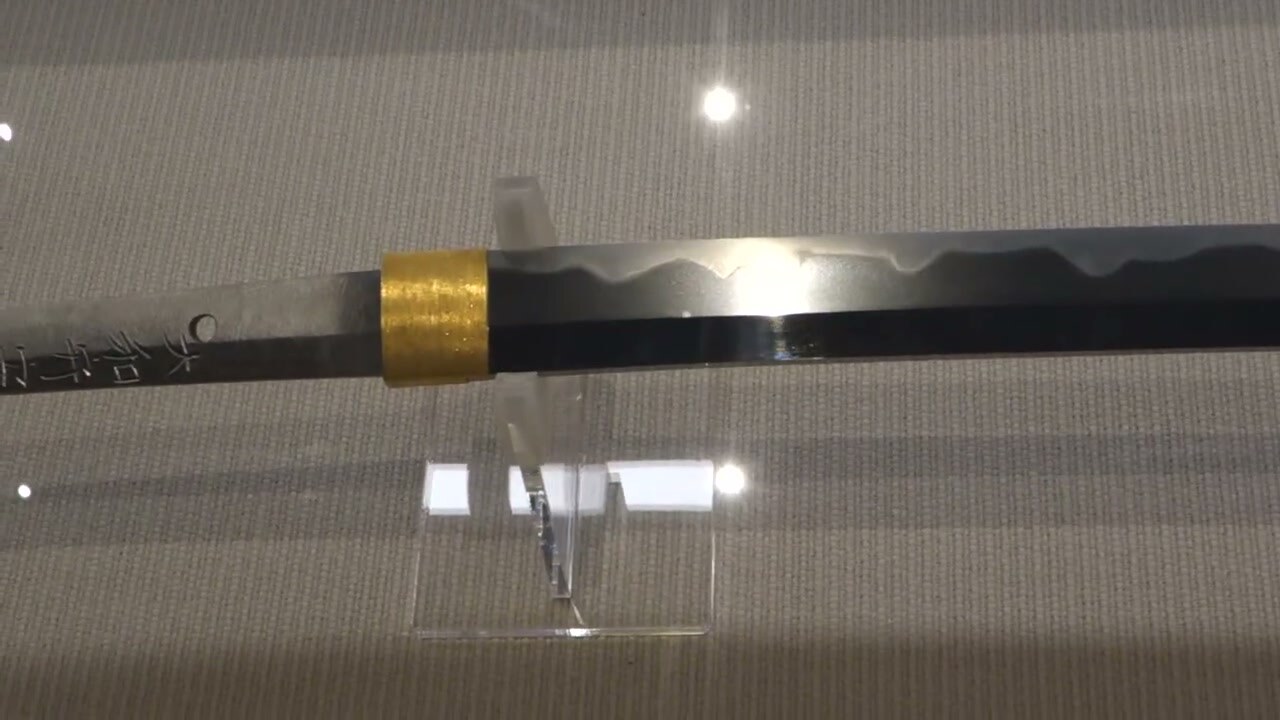
The 2014 katana, in the display case. N N (knob_N) · © N N (knob_N) · source 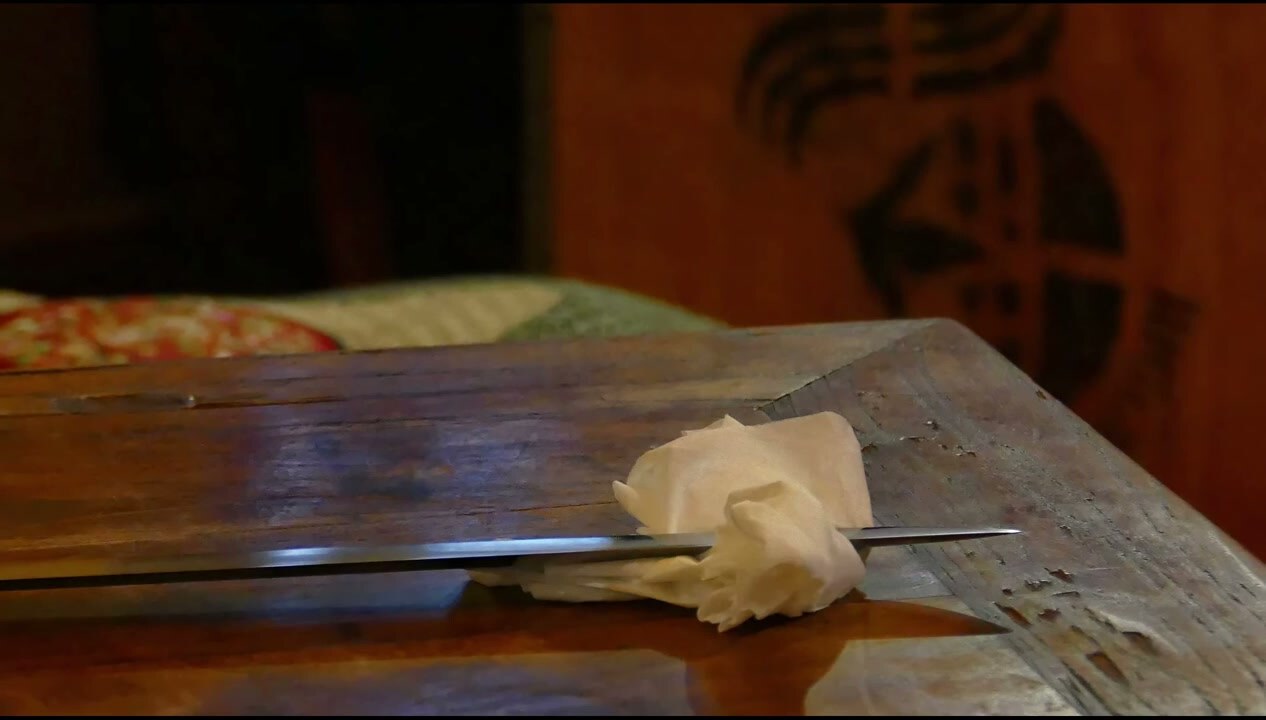
A blade on the table at the Prague talk (2017); it is not said whose it is. Kolibrik Films · © Kolibrik Films · source
What his works say II
He makes long, wide blades with ease (82 cm and more, motohaba of about 3.5 cm), but with a moderate kasane: 0.64 cm on the 2012 katana. For use he has also made blades of 72 cm with a 0.8 cm kasane (2002).
The steel and the method
The little that is known of his method comes from him and from a client.
| Aspect | Fact |
|---|---|
| What he says | He speaks only of tatara tamahagane: “日本刀の美そのものである刃文、地鉄(じがね)は玉鋼に代表される和鉄、和鋼によってのみ表現されるものなのです” (“the hamon and the jigane, which are the very beauty of the Japanese sword, can only be expressed with Japanese iron and steel, of which tamahagane is the finest example”). |
| His own steel | “自家製鉄を用いて古名刀の地鉄を求め” (“he seeks the jigane of the great old swords with steel he smelts himself”), in the profile on his 2012 DVD. |
| Blends by purpose | A client from 2002 says that for art and competition works he blends tamahagane with his own steel or with old iron, for a jigane of antique appearance, and that for a sword for use he prefers tamahagane alone, because its quality is consistent and the blade holds up better. |
| Old iron | For the 2016 meteoric-iron sword he says he blended reworked Japanese iron of the early Edo period with the meteorite, and that it welded very badly. |
| Construction | On the 2002 katana for use, kōbuse and a well-hammered shinogi-ji, so that itame comes out and not masame, according to the client. |
| Folds | Not on record in any public source. |
| Hardening | A dealer says he quenches with water from a spring next to the new forge. |
| The craft | “鍛錬の失敗による疵、フクレ(空気の混入)は日常茶飯事、良い地鉄を鍛えても焼き入れ失敗ですべてがおじゃん” (“flaws from forging and air blisters are everyday fare, and even if a good jigane comes out, a failed hardening ruins everything”). |
| His 2017 book | Chapter 3 describes how he forges; we have not read it. |
Like Kanemitsu, he uses his own or recycled steel for the jigane of his art works. But, unlike him, a client says that for swords for use he prefers tamahagane alone, because it is more consistent.