Sugata
For Sesko, the Sukesada represent the sugata of the end of the Muromachi: short katana for one hand (片手打, katate-uchi), of about 60 cm, with the curve pronounced towards the point (先反り, sakizori). His example is the 1521 katana by Yosōzaemon-no-jō, an Important Cultural Property: a nagasa of 64.8 cm and a sori of 1.9 cm. Sue-Bizen and Sue-Seki are known for blades with a thin kasane and a high shinogi, but in Sukesada the shinogi is sometimes very low: both things must be looked at carefully. The Tokyo National Museum describes its 1523 katana as having a large point and great width, of robust appearance, curved towards the point and with a short tang, for drawing with one hand.
Jihada
With series production, the steel of Sue-Bizen loses the “oily” look of old Bizen, and the utsuri (映り, utsuri) is rare or faint. The 1523 katana in Tokyo has a well-forged itame; the 1577 one in Kyūshū, an itame with masame.
Hamon
The swordsmiths of the beginning of the 16th century keep elements of Ōei-Bizen and group the wide-based gunome-midare (腰の開いた, koshi no hiraita) in twos or threes. In the Sukesada line this leads, at the end of the Muromachi, to the famous “crab’s claw” (蟹の爪, kani no tsume): elements that open upwards and end in chōji heads. The temper carries more and more nie, and several Sue-Bizen smiths temper in hitatsura. There are also suguha in nioi-deki, and in Katsumitsu and Sukesada Sesko sees forerunners of the kobushigata-chōji (拳形丁子) of Kawachi no Kami Kunisuke. The 1523 katana has a suguha with midare; the 1577 one, a ko-gunome with nie.
Bōshi
On the 1577 katana in Kyūshū the temper of the point runs to the edge (焼き詰め, yakizume) on one side and turns back in ko-maru on the other. The sources consulted give no general rule for the bōshi of the Sukesada.
Nakago and mei
The long signatures give province, school and personal name: 備前国住長船彦兵衛尉祐定 (Bizen no kuni-jū Osafune Hikobei-no-jō Sukesada), 備前国住長船与三左衛門尉祐定作 (Bizen no kuni-jū Osafune Yosōzaemon-no-jō Sukesada saku) or 備前国住中川与三左衛門祐定作 (Bizen no kuni-jū Nakagawa Yosōzaemon Sukesada saku). The short one reads 備州長船祐定 (Bishū Osafune Sukesada). On the 1577 katana the signature is on the omote side of the tang and the date on the ura, with three mekugi holes, two of them filled with lead.
Horimono
The specially ordered blades bear carvings of deities. Sesko cites a 1521 katana by Yosōzaemon-no-jō with a dragon coiled around a sword (真の倶利伽羅, shin no kurikara) on one side and 春日大明神 (Kasuga Daimyōjin) on the other, and gathers the invocations of the Sukesada: Amaterasu Ōmikami, Hachiman Daibosatsu, Kasuga, Sumiyoshi, Kizuki, Yaegaki Daimyōjin, Marishiten and Fudō Myōō. The 1577 katana bears 八幡大菩薩 (Hachiman Daibosatsu) on one side and on the other the Sanskrit seed syllables of Amida, Fudō and Dainichi.
Details
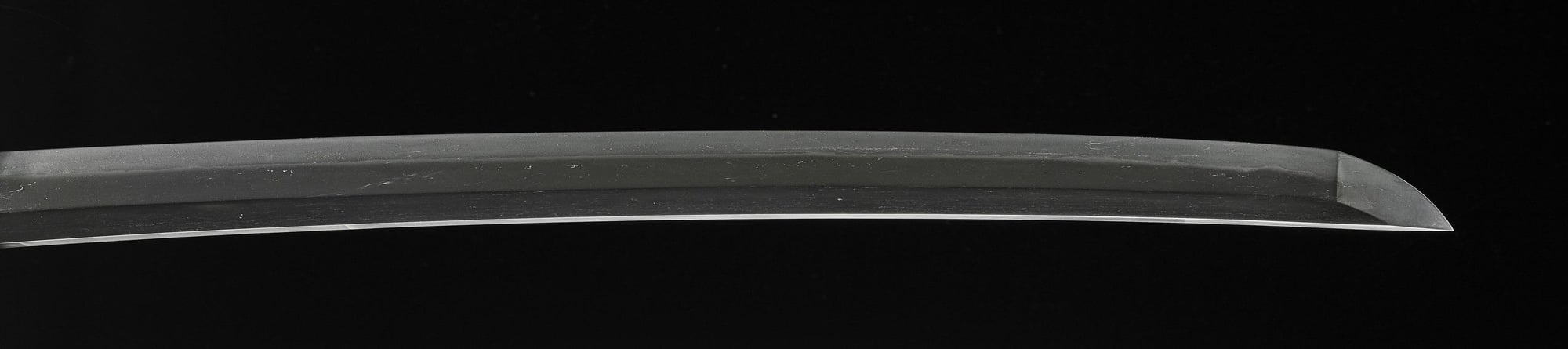
The point of the 1572 katana. Tokyo National Museum, via ColBase · ColBase terms of use · source 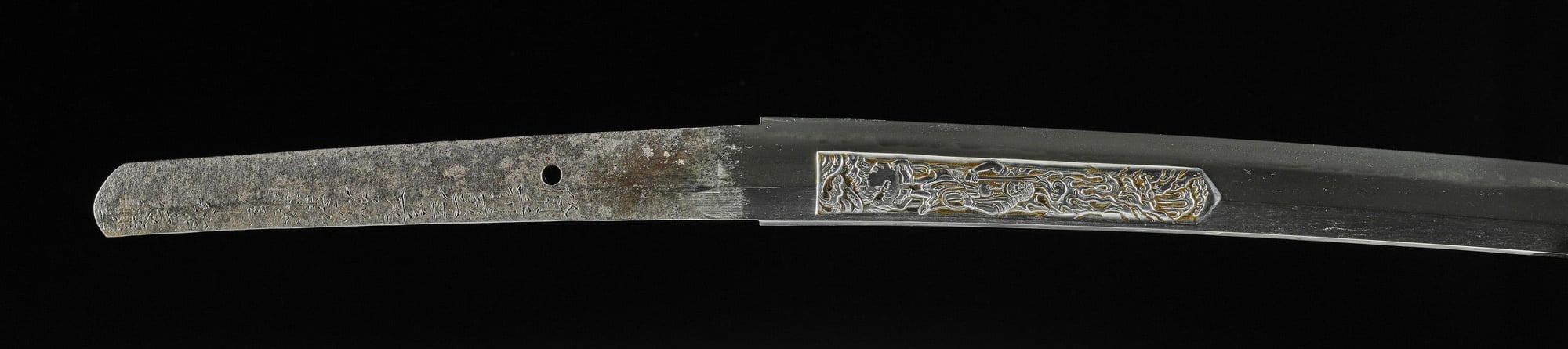
The tang and the habaki of the 1572 katana. Tokyo National Museum, via ColBase · ColBase terms of use · source 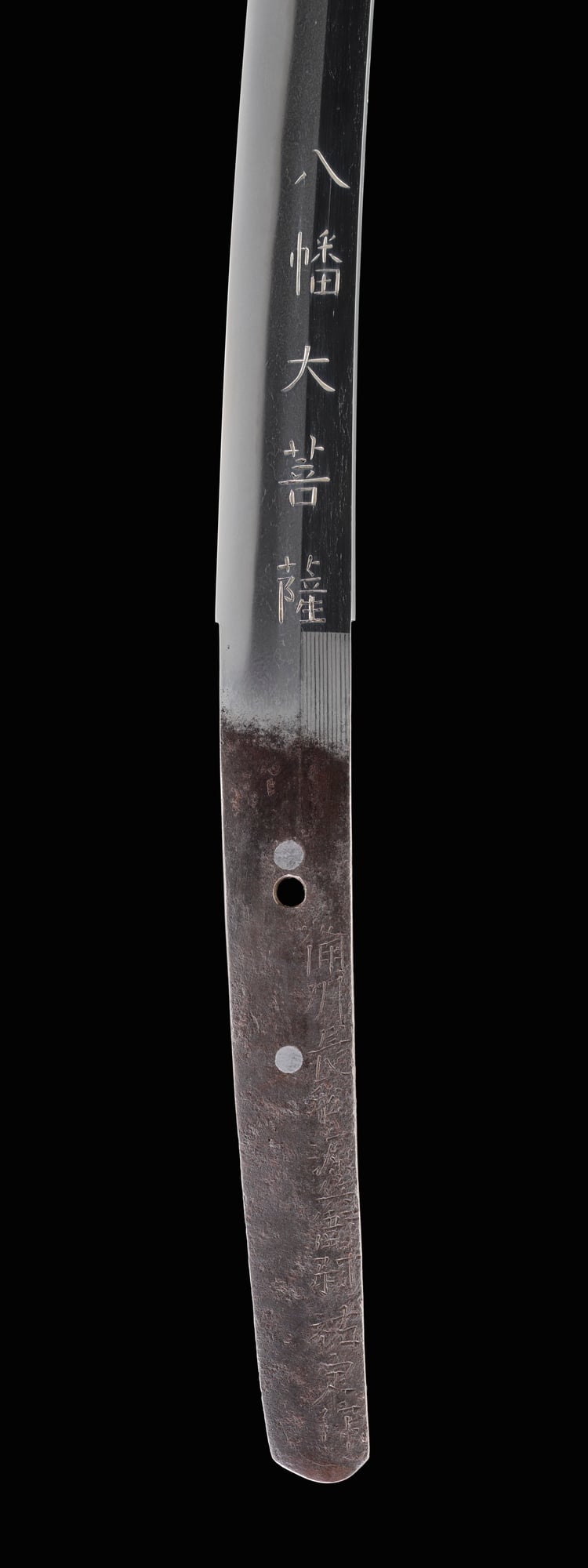
Katana by Genbei-no-jō Sukesada, of 1577 (Tenshō 5): the carving 八幡大菩薩 (Hachiman Daibosatsu) and the tang. Kyūshū National Museum. Kyūshū National Museum, via ColBase · ColBase terms of use · source 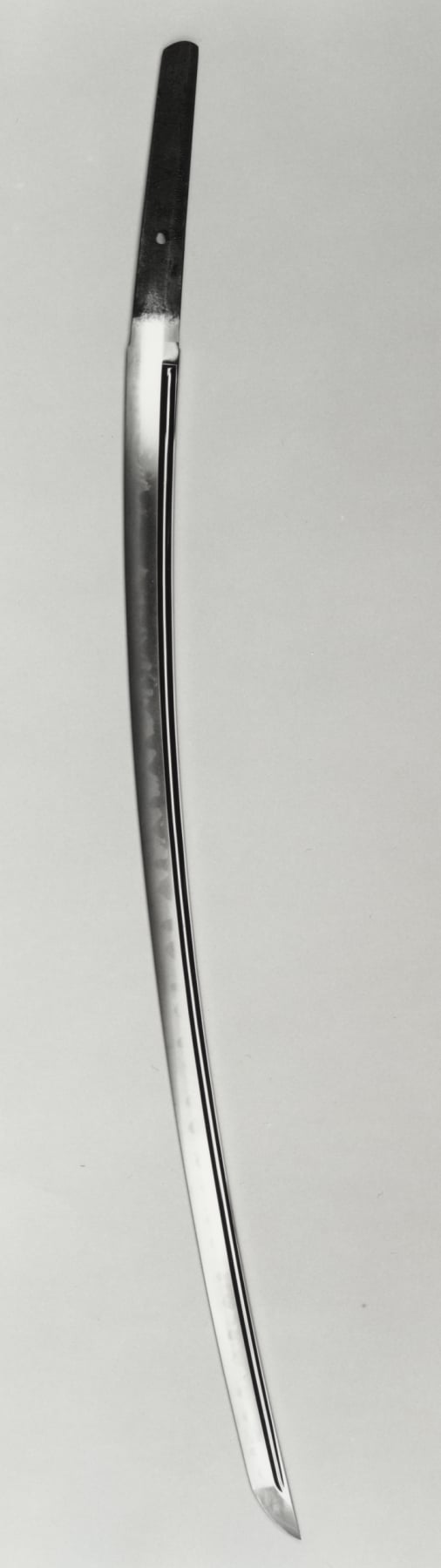
Katana blade by Sukesada with Fudō Myōō (不動明王, Fudō Myōō), of the 16th century. Walters Art Museum, Baltimore. Walters Art Museum, public domain, via Wikimedia Commons · Public domain · source
