On this page
Kantei keys
Sugata. His katana were long tachi that were shortened (suriage); there are also tantō and wakizashi in hira-zukuri. Some katana have a normal width and kissaki, like the Kikkō Sadamune, and others an elongated kissaki, and these are judged to be already of the Nanbokuchō. His tantō are somewhat long (sunnobi), with a thin kasane and little curvature, like those of his time. Markus Sesko gives him, with Akihiro and Hiromitsu, as an example of the narrow shinogi-ji typical of Sōshū.
Jihada. A very tight ko-itame, with abundant ji-nie and plentiful chikei, according to the Japanese Wikipedia. Sesko, on the other hand, cites him with Masamune as an example of the ō-itame of the first Sōshū smiths.
Hamon. Notare 湾れ (notare) with gunome, very active kinsuji and sunagashi, a deep nioiguchi (匂口) with ko-nie, bright and lively in the ji and in the ha. It resembles that of Masamune, but is calmer: the chikei and the kinsuji stand out less.
Bōshi. On the Terasawa Sadamune, with little undulation, pointed and with the kaeri towards yakizume; on the Tokuzen-in Sadamune, a pointed midare-komi with kaeri; on the katana of the Uesugi, midare-komi with hakikake and kaeri in ko-maru.
Nakago and mei. There are no signed blades: his works have the original tang (ubu) without a signature, or a shortened one with the shu-mei of the Hon'ami. The Kikkō Sadamune, fully shortened (ō-suriage), has engraved at the end of the tang a flower in a tortoise shell, 亀甲花文 (kikkō hanamon), from which it takes its name.
Horimono. Sūken 素剣 (sūken), bonji (梵字) of Fudō Myōō and of Yakushi Nyorai and rendai (蓮台), as on the tantō Monoyoshi and on the wakizashi of the Kunōzan Tōshōgū.
Three official descriptions
- Terasawa Sadamune, tantō, National Treasure: hira-zukuri, mitsu-mune, without curvature; a well-tightened ko-itame, thick ji-nie and abundant chikei; a hamon of shallow notare with gunome, deep and bright nioi, ko-nie, kinsuji and inazuma; a kuwagata with sūken on one side and two hi on the other.
- Tokuzen-in Sadamune, tantō, National Treasure: hira-zukuri, wide, sunnobi and curved, 35.5 cm long and 0.6 cm of sori; tight itame with chikei, ji-nie and yubashiri; above the mono-uchi, the hamon on one side becomes almost hitatsura (皆焼); bonji and kuwagata with sūken on one side, and bonji and kuwagata with goma-bashi on the other; original tang, with two holes and no signature.
- Katana of the Uesugi, “traditionally Sadamune”, Important Cultural Property: shinogi-zukuri, iori-mune, chū-kissaki, 76.5 cm long and 2.8 cm of sori; itame with mokume, thick ji-nie, chikei and jifu; notare of large midare with nie and sunagashi; sūken and bonji; fully shortened tang. The official record says that the quality of the ji and the ha makes the attribution credible.
Gallery
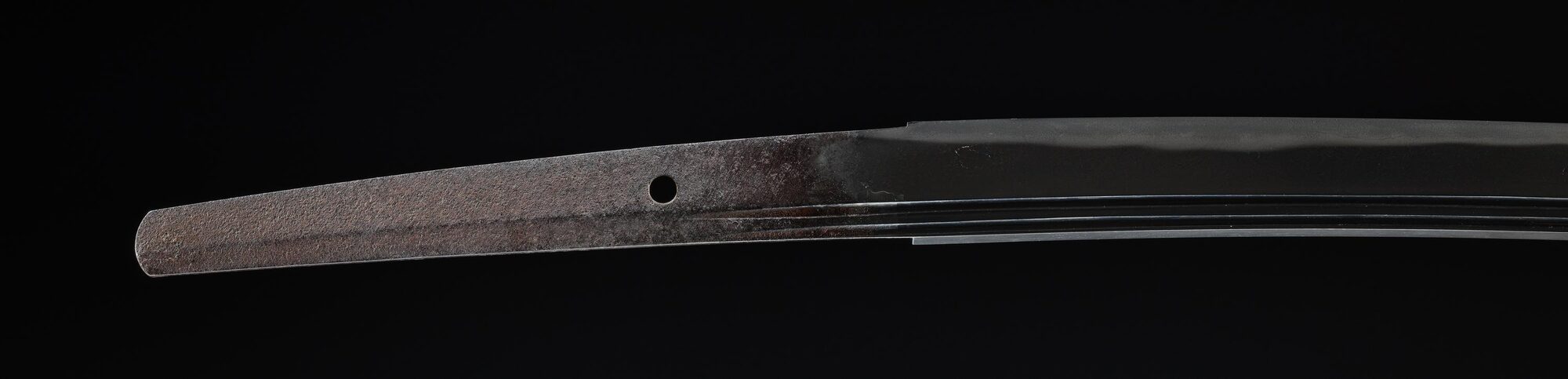
The nakago of the Kikkō Sadamune, shortened and unsigned, with the start of the hi. Tokyo National Museum, via ColBase · ColBase terms of use · source 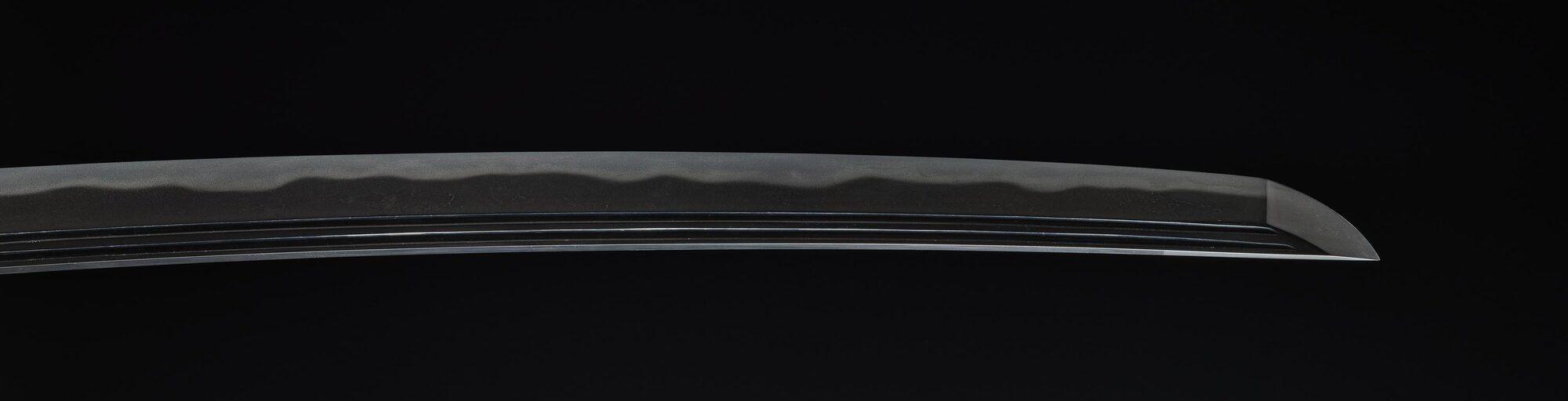
The point of the Kikkō Sadamune: the hamon in notare (湾れ) and the bōshi (帽子). Tokyo National Museum, via ColBase · ColBase terms of use · source 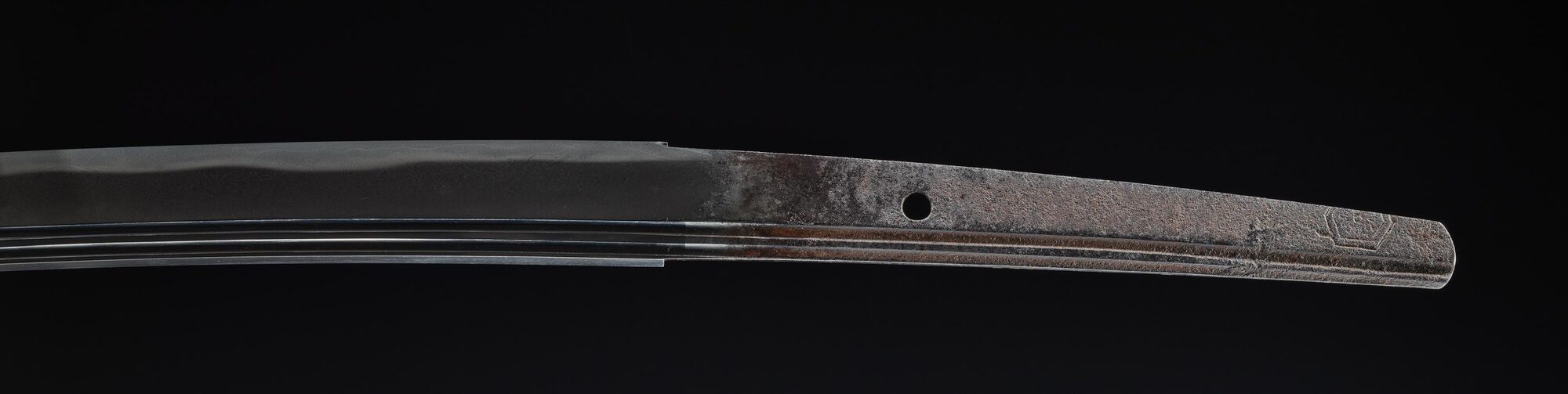
The nakago from the other side, with the flower in a tortoise shell that gives the blade its name. Tokyo National Museum, via ColBase · ColBase terms of use · source 
The Kiriha Sadamune (切刃貞宗, Kiriha Sadamune), Important Cultural Property: the whole blade. Tokyo National Museum, via ColBase · ColBase terms of use · source 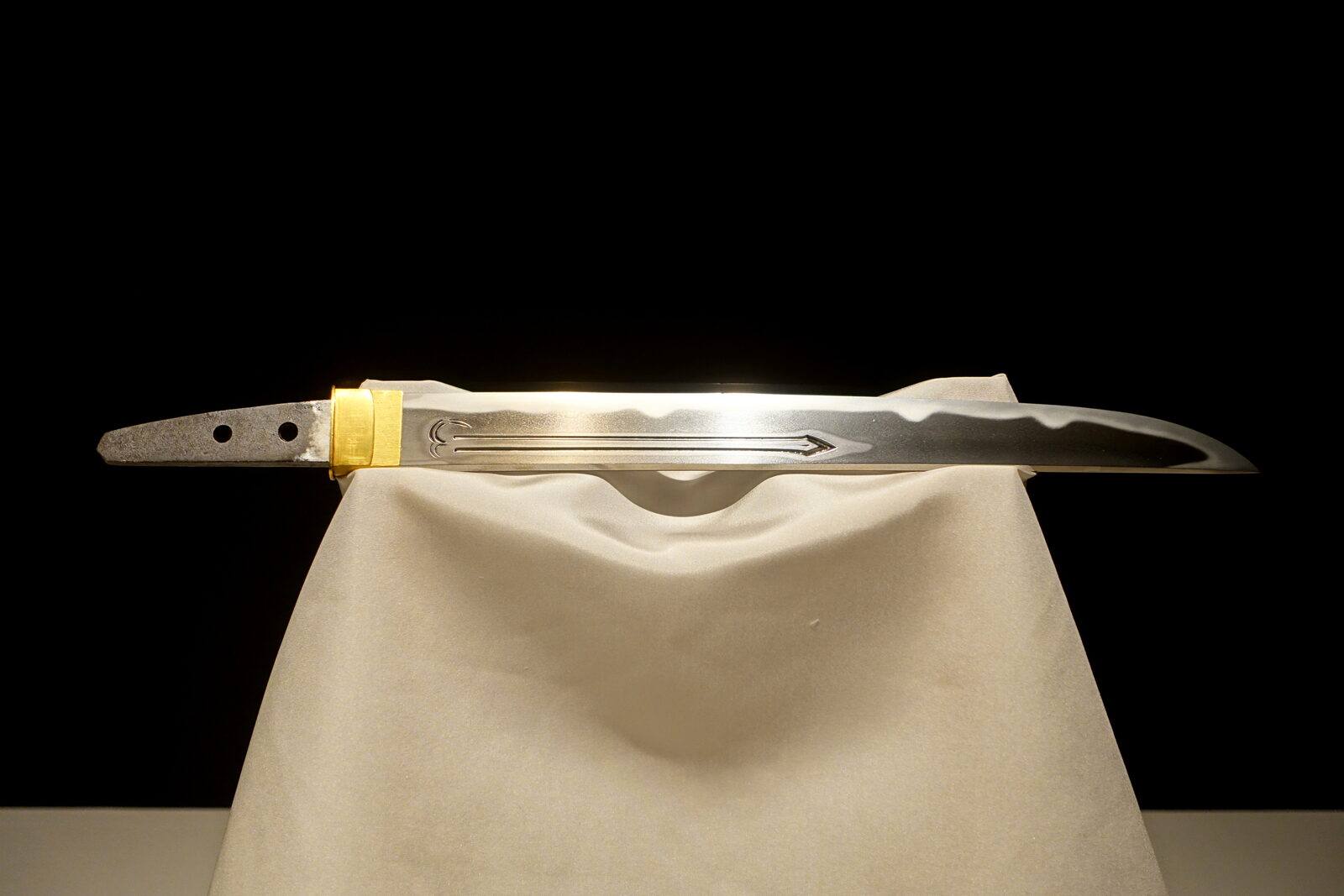
A tantō attributed to Sadamune, on display at the Tokyo National Museum. Daderot, Public domain, via Wikimedia Commons · Public domain · source
