On this page
Quick profile
- Name
- Sadamune; called Hikoshirō; also “Sōshū Sadamune”, Sadamune of Sagami AT
- Kanji and reading
- 貞宗 (Sadamune) · 彦四郎 (Hikoshirō) · 相州貞宗 (Sōshū Sadamune) AT
- Period
- The end of the Kamakura period and the beginning of the Nanbokuchō, in the 14th century. His dates of birth and death are not documented. PC
- Province
- Sagami (相模, Sagami), in Kamakura; a late tradition makes him a native of Ōmi (近江, Ōmi) AT
- School
- The Sōshū tradition (相州伝, Sōshū-den), of which he is taken to be Masamune’s successor AT
- Master
- 正宗 (Masamune), whose son or adopted son tradition makes him AT
- Pupils
- 信国 (Nobukuni), according to tradition; 秋広 (Akihiro) is taken to be his son AT
- Documented fact and tradition
- Documented: his designated works and their official descriptions. Tradition: that he was the son of Masamune, which appears in writing a century and a half after his life. AT
In short
What we know. Japan’s cultural properties database describes his designated blades: the Kikkō Sadamune, the Terasawa Sadamune and the Tokuzen-in Sadamune are National Treasures; the Kiriha Sadamune, the Ishida Sadamune and others, Important Cultural Properties.
How we know it. His life is told by the meizukushi (銘尽), the books of swordsmiths, which the Japanese Wikipedia summarises; the filiation with Masamune appears in copies from 1483 onwards. His works are attributed to him by comparison with those of Masamune, Shintōgo Kunimitsu, Akihiro and Nobukuni.
What we do not know. When he was born and died, and whether the “Takagi Sadamune” of a signed blade mentioned by the English Wikipedia is the same person.
Sections
-
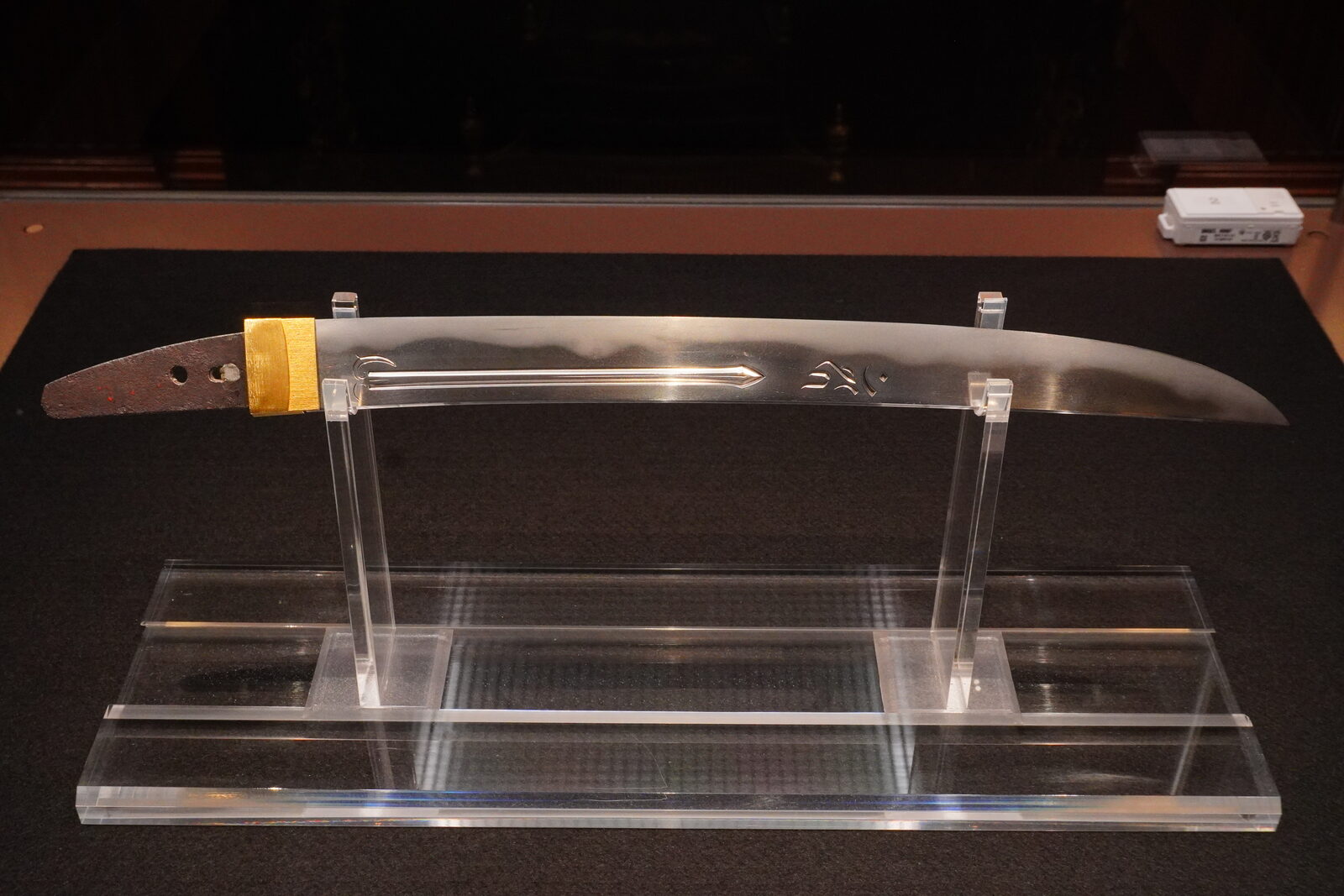
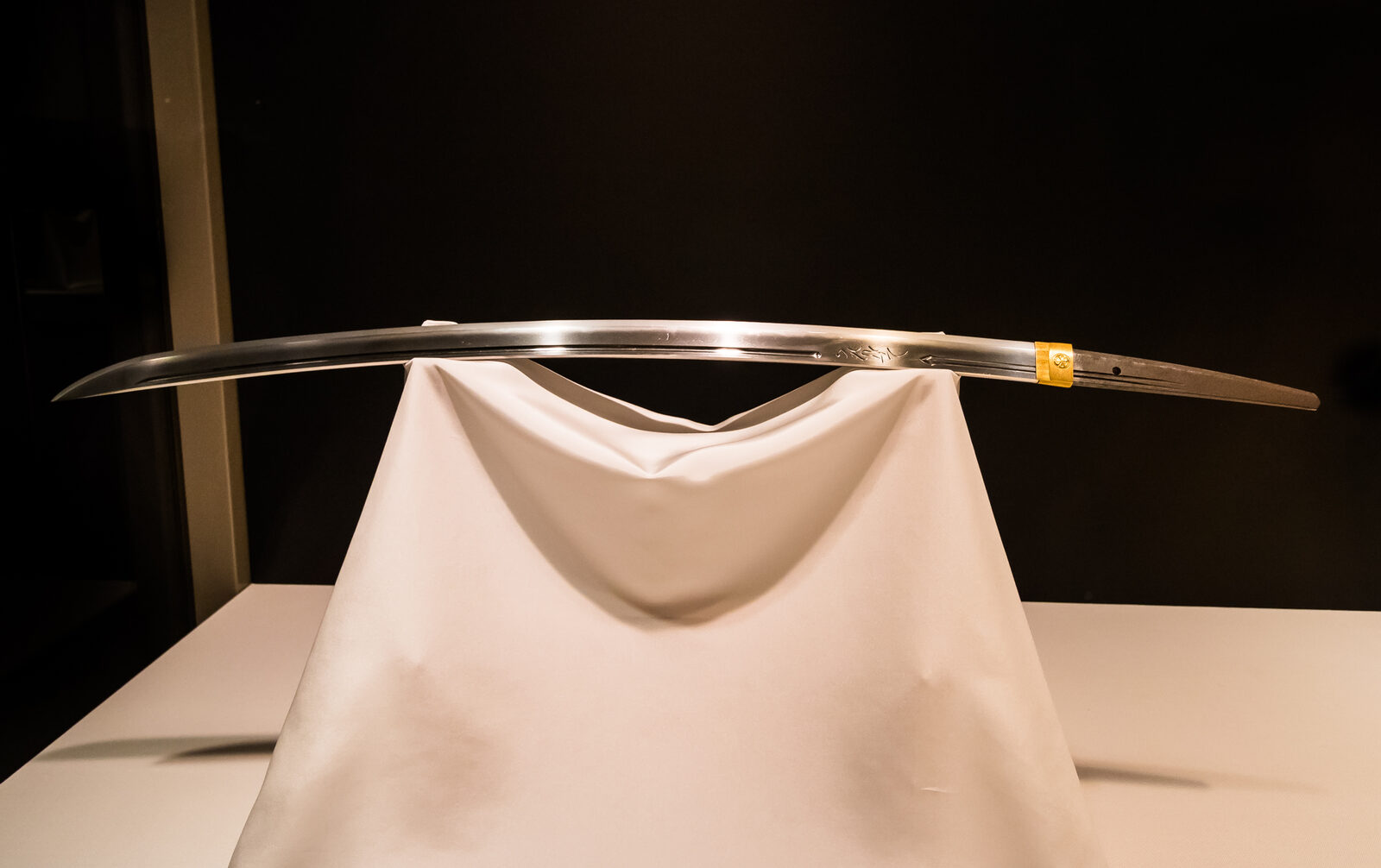 Kamakura · Masamune · the meizukushi
Life and times
What the old texts say about him, when the filiation with Masamune appears and who are held to be his pupils.
-
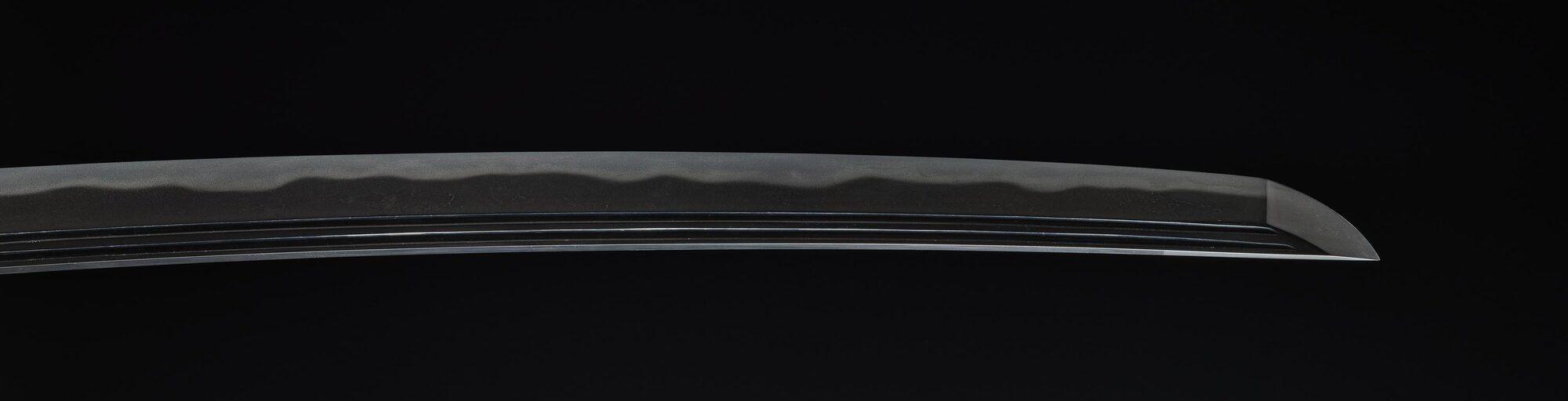 Ko-itame · notare · unsigned
Work and style
The kantei keys: shape, steel, temper, point, tang and carvings, with the official descriptions of his blades.
-
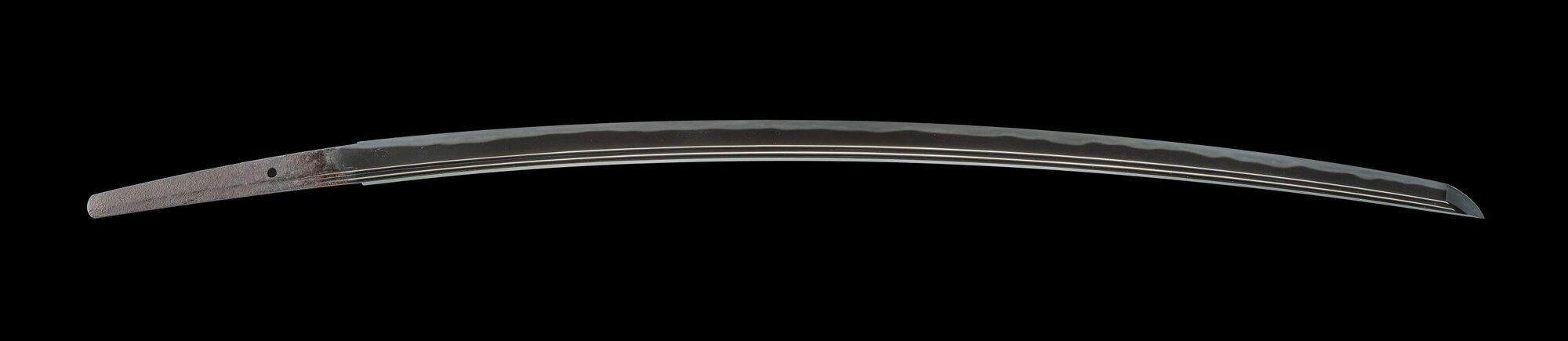 National Treasures · meibutsu
Famous works
His four National Treasures and his Important Cultural Properties, where they are and their place in the Kyōhō meibutsuchō.
-
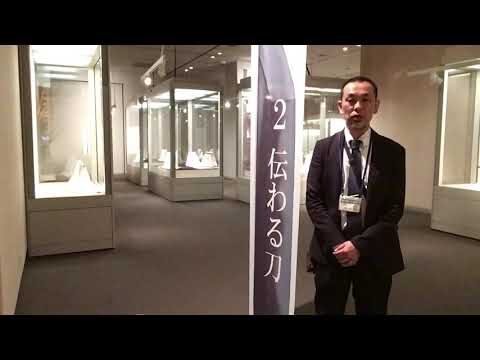 Works on display
Videos
Two short videos: a museum presents an attributed wakizashi, and some visitors stand before the Kikkō Sadamune.
-
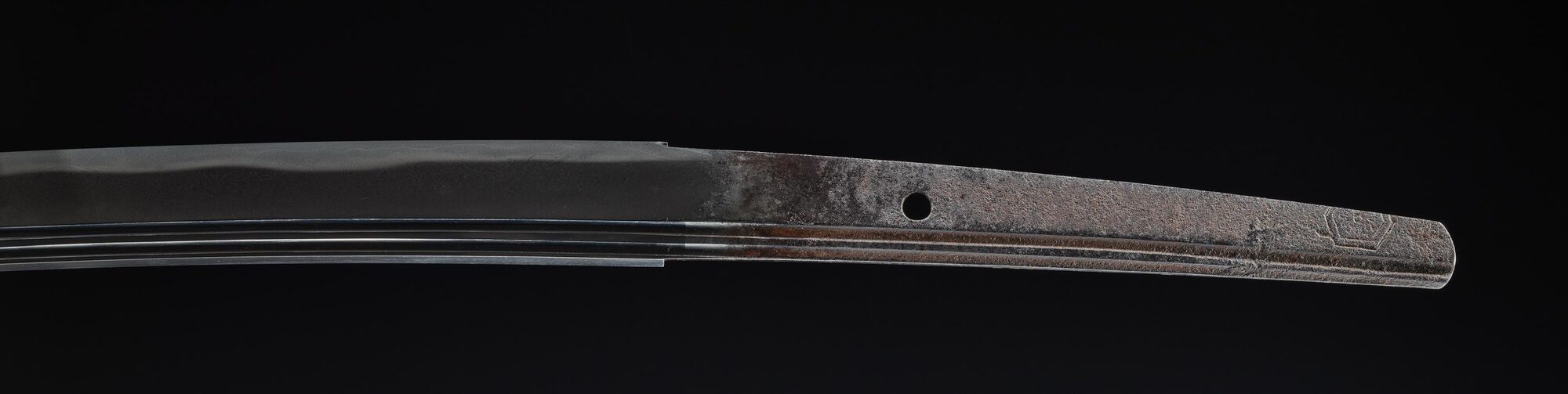 Bibliography and credits
Sources
The sources consulted on 4 October 2026, with their link, and the credit for each image.