His style
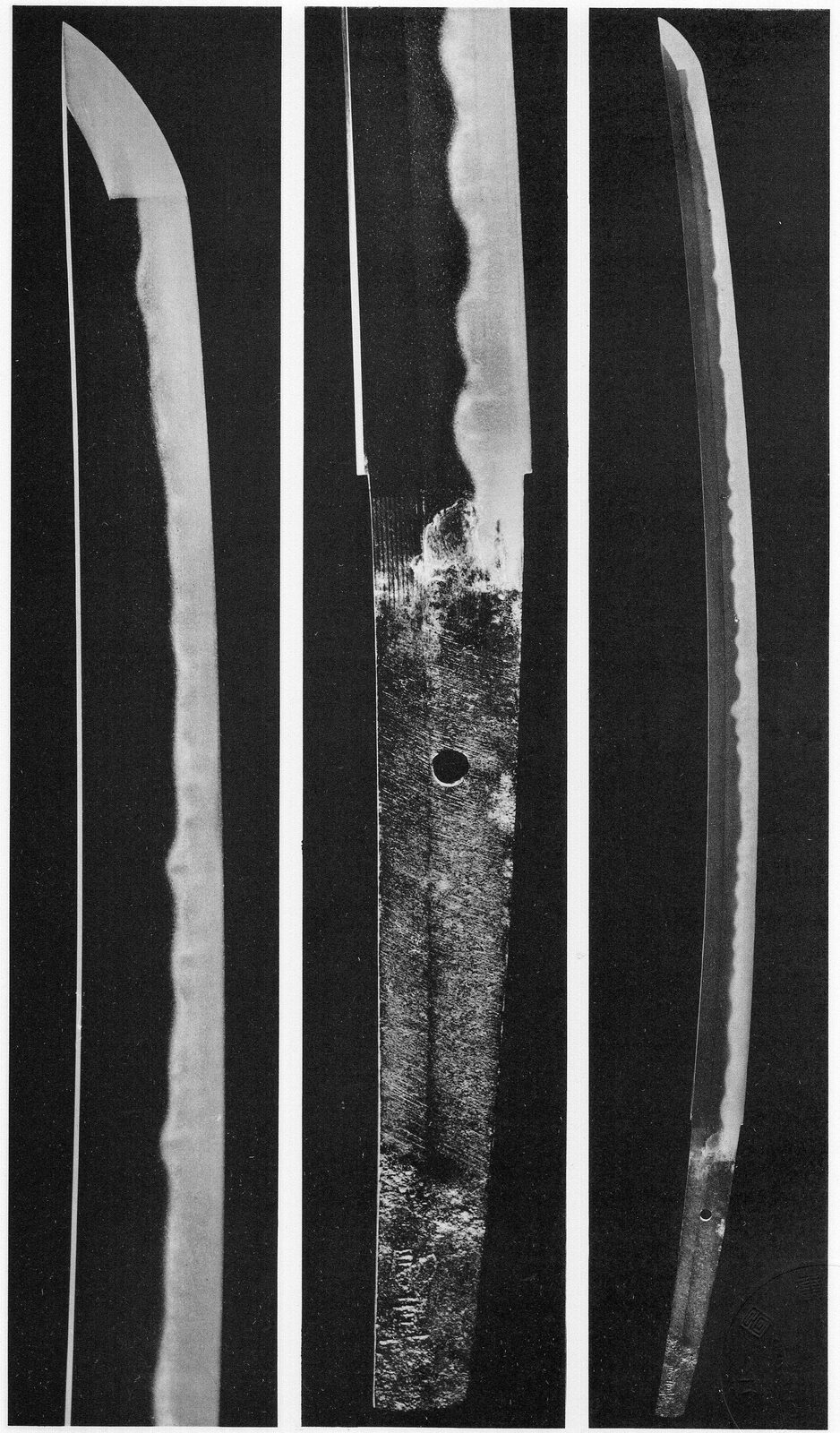
- Large chōji-midare, showy and vigorous: the most robust and forceful work of the school. Unlike the nioi temper typical of Bizen, his has plenty of nie, as can be seen in the Nikkō Sukezane.
- An opinion recorded by the Japanese Wikipedia sees two manners in him: one of very marked Bizen character, and another, showier, the Kamakura one, like the tachi of the Tokugawa Art Museum.
- For Markus Sesko, the tadpole-shaped chōji (蛙子丁子, kawazu-no-ko chōji) is typical of Osafune Mitsutada, of Hatakeda Moriie and of Sukezane.
- Sesko also places him among the swordsmiths of the “magnificent” shape of the mid-Kamakura period: wider, tapering less towards the point, with a high shinogi and an ikubi kissaki.
Kantei keys
They are given, for his most celebrated work, by the official record of the Nikkō Sukezane:
- Sugata. Shinogi-zukuri and iori-mune; wide mihaba, shortened but with funbari; ikubi kissaki; a wide bōhi on each side.
- Jihada. Tight itame, somewhat visible, with ji-nie and midare-utsuri.
- Hamon. Deep nioi and well-settled nie; ō-chōji-midare with gunome-midare and togari-ba, with many ashi and yō, higher and with sunagashi in the middle of the omote side.
- Bōshi. Midare-komi with hakikake.
- Nakago and mei. Somewhat shortened tang, katte-sagari file marks; the two-character signature, 助真 (Sukezane), below the bōhi and towards the back, on the omote side.
Measurements
- The Nikkō Sukezane, according to the official database: 71.2 cm long and 2.8 cm of sori. The Japanese Wikipedia gives 72.21 cm, 2.88 cm of sori and 3.21 cm wide at the base. The official database gives 2.2 cm wide at the base, which does not fit its “wide mihaba”: it looks like a misprint.
- The tachi of the Tokyo National Museum: 67.0 cm long and 1.8 cm of sori. The museum describes it as wide and vigorous, with a showy chōji-ba, and regards it, with the Nikkō one, as his representative work.
His two National Treasures
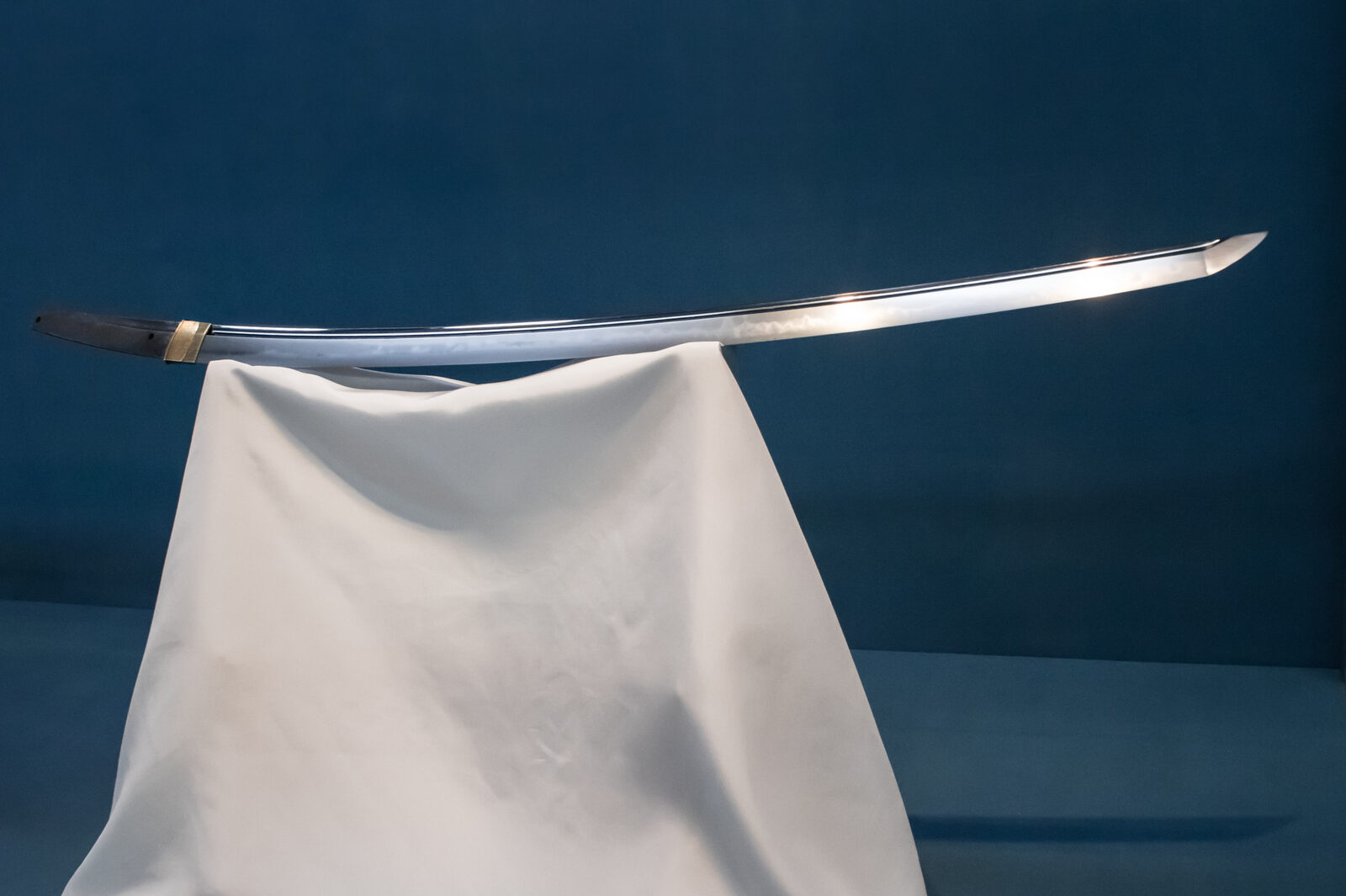
The Nikkō Sukezane, seen from the point. Kakidai, CC BY-SA 4.0, via Wikimedia Commons · CC BY-SA 4.0 · source 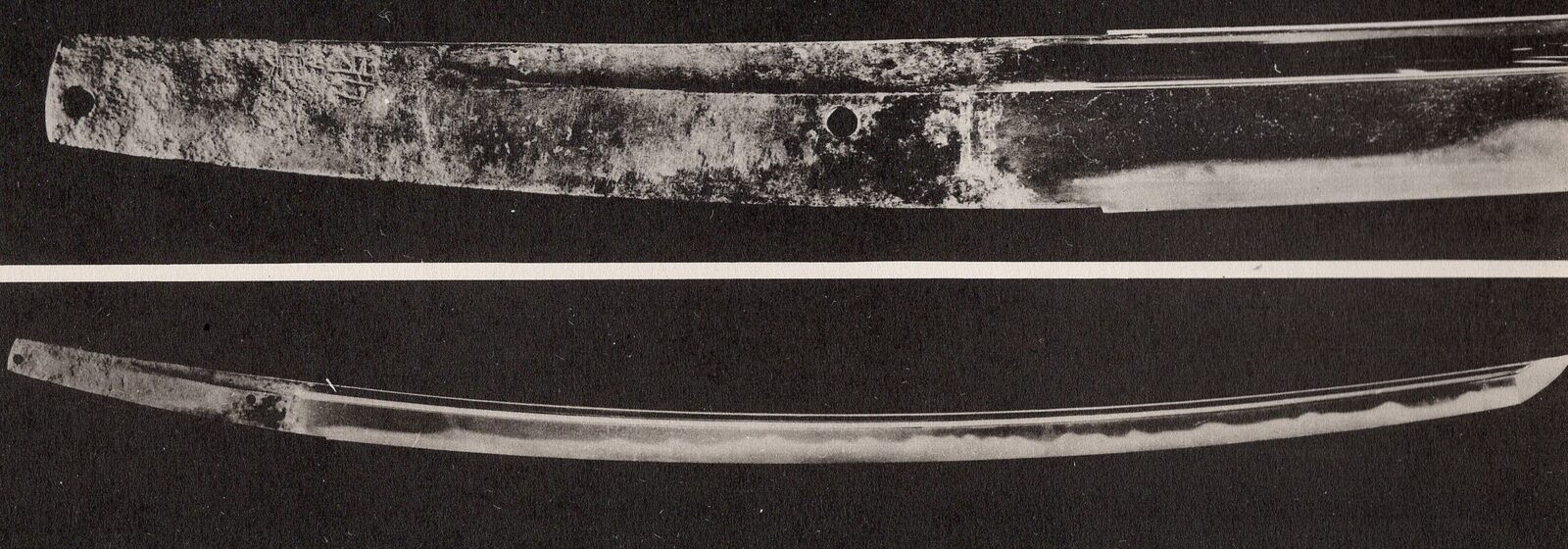
Plate of the Nikkō Sukezane: the tang and the whole blade. 文化財協会 (Bunkazai Kyōkai), public domain, via Wikimedia Commons · Public domain · source 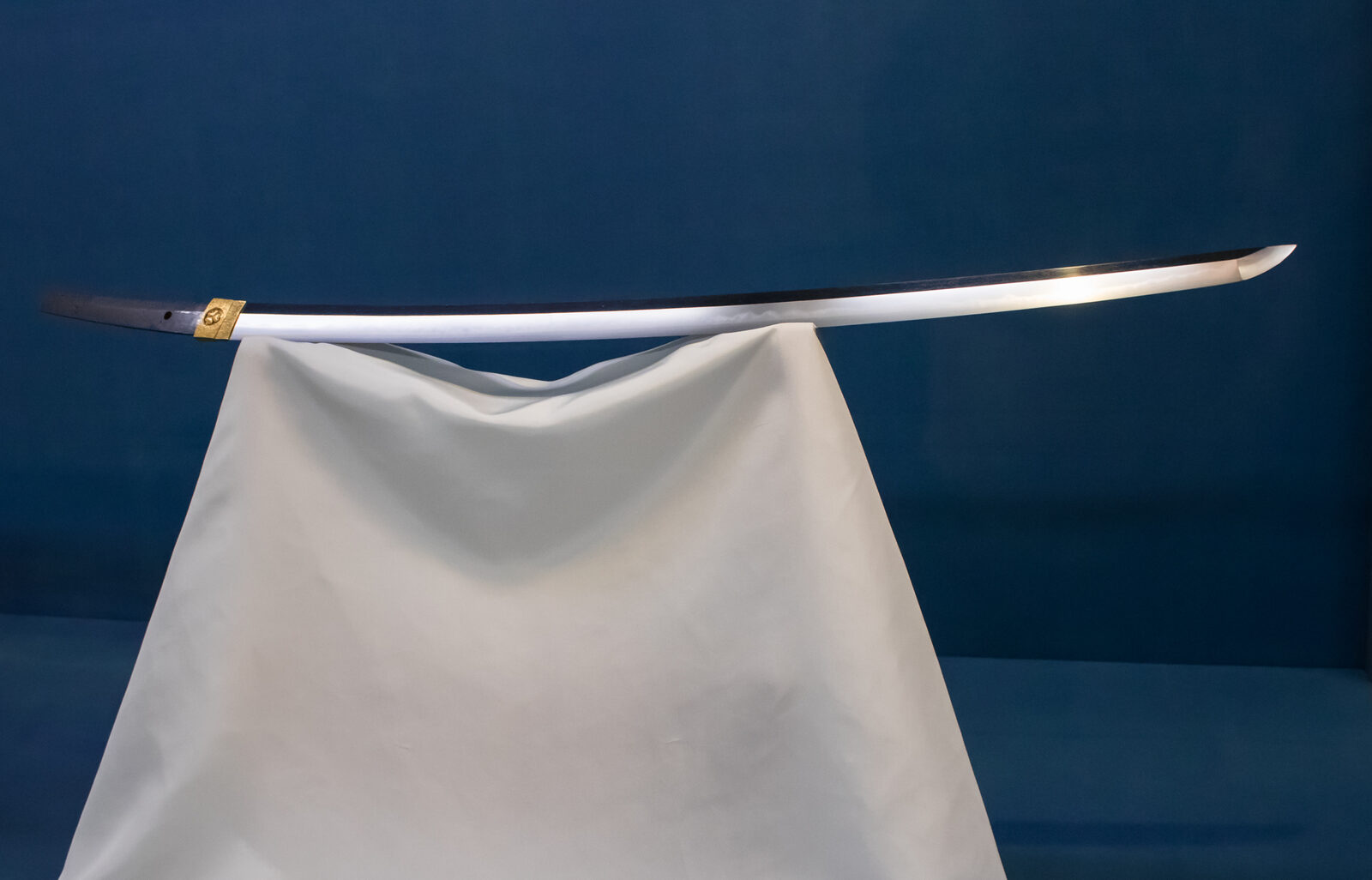
The tachi signed Sukezane, a National Treasure, in the Tokyo National Museum. Kakidai, CC BY-SA 4.0, via Wikimedia Commons · CC BY-SA 4.0 · source 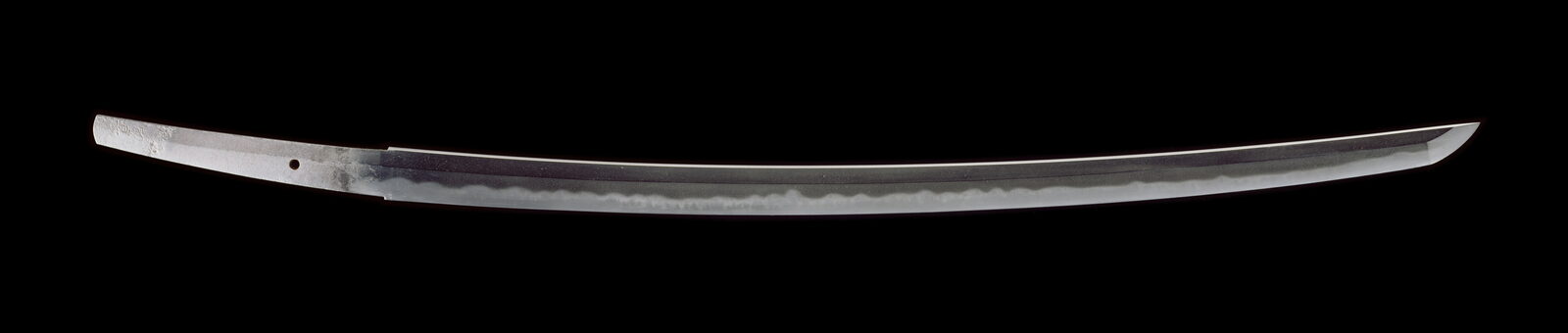
The tachi of the Tokyo National Museum, omote side. 国立文化財機構 (Kokuritsu Bunkazai Kikō), CC BY 4.0, via Wikimedia Commons · CC BY 4.0 · source


