On this page
The Nikkō Sukezane
- Tachi 銘助真 (mei Sukezane), the 日光助真 (Nikkō Sukezane), in the Tōshōgū shrine in Nikkō: designated in 1910 under the old law and a National Treasure since 9 June 1951. The official database gives its path: from Katō Kiyomasa to Tokugawa Ieyasu, and from him to the shrine.
- The Japanese Wikipedia tells it in more detail: it passed from Kiyomasa to Ieyasu in 1609, on the betrothal of Tokugawa Yorinobu and Yaso-hime, Kiyomasa’s daughter; it survived the fire of 1815 with other swords of Ieyasu, and its mounting, the Sukezane-goshirae, is a black uchigatana whose style was copied in the Taishō era.
- It is in the Kyōhō meibutsuchō (享保名物帳).
- Satō Kanzan wrote of it in 1964, in 『武将と名刀』 (Bushō to meitō), that it has 「絢爛目を奪うものがある」: “a splendour that dazzles”. The Japanese Wikipedia regards it as Sukezane’s most accomplished work.
The tachi of the Tokyo National Museum
Tachi 銘助真 (mei Sukezane), which belonged to the Tokugawa of Kishū, in the Tokyo National Museum. Designated in 1935 under the old law and a National Treasure since 1953, according to the Japanese Wikipedia.
His designated works
The two National Treasures have been checked in the official records; the Important Cultural Properties are given according to the Japanese Wikipedia.
| Work | Designation | Where it is |
|---|---|---|
| Tachi 銘助真 (mei Sukezane), the 日光助真 (Nikkō Sukezane) | National Treasure | Tōshōgū shrine in Nikkō, Tochigi |
| Tachi 銘助真 (mei Sukezane), of the Tokugawa of Kishū | National Treasure | Tokyo National Museum |
| Tachi 銘助真 (mei Sukezane) | Important Cultural Property, 1933 | Hayashibara Museum of Art, Okayama |
| Tachi 銘助真 (mei Sukezane) | Important Cultural Property, 1939 | Iwate Prefectural Museum |
| Tachi 銘助真 (mei Sukezane) | Important Cultural Property, 1957 | Mitsui Memorial Museum, Tokyo |
| Unsigned, attributed to Sukezane, of the Makino family | Important Cultural Property, 1956 | Kyoto National Museum |
| Unsigned katana, attributed to Sukezane | Important Cultural Property, 1954 | Tokugawa Art Museum, Nagoya |
| Unsigned katana, which tradition attributes to Sukezane | Important Cultural Property, 1920 | Ryūmon-ji, Saitama |
| Unsigned tachi, which tradition attributes to Sukezane | Important Cultural Property, 1956 | Private collection, Tokyo |
| An attributed unsigned katana (1936) and a signed tachi (1956) | Important Cultural Property | Whereabouts unknown |
Of the blade in the Kyoto National Museum, Wikipedia says katana and the e-Museum, tachi; its scabbard is inscribed to say that Narisada, Bingo-no-kami, received it from the shōgun Tokugawa Tsunayoshi, and it comes from the Makino family.
In the treatises
- A kantei text of the Takeya system, from between Momoyama and the beginning of Edo, translated by Markus Sesko, puts “Tōgenji Sukezane” in the Sagami section with the grade of 下作 (gesaku), the lowest on the scale, while Shintōgo Kunimitsu is 上作 (jōsaku). It is the assessment of an old treatise, not today’s.
- The Nikkō Sukezane is listed in the Kyōhō meibutsuchō (享保名物帳), and Satō Kanzan praised it in 1964.
The Nikkō Sukezane
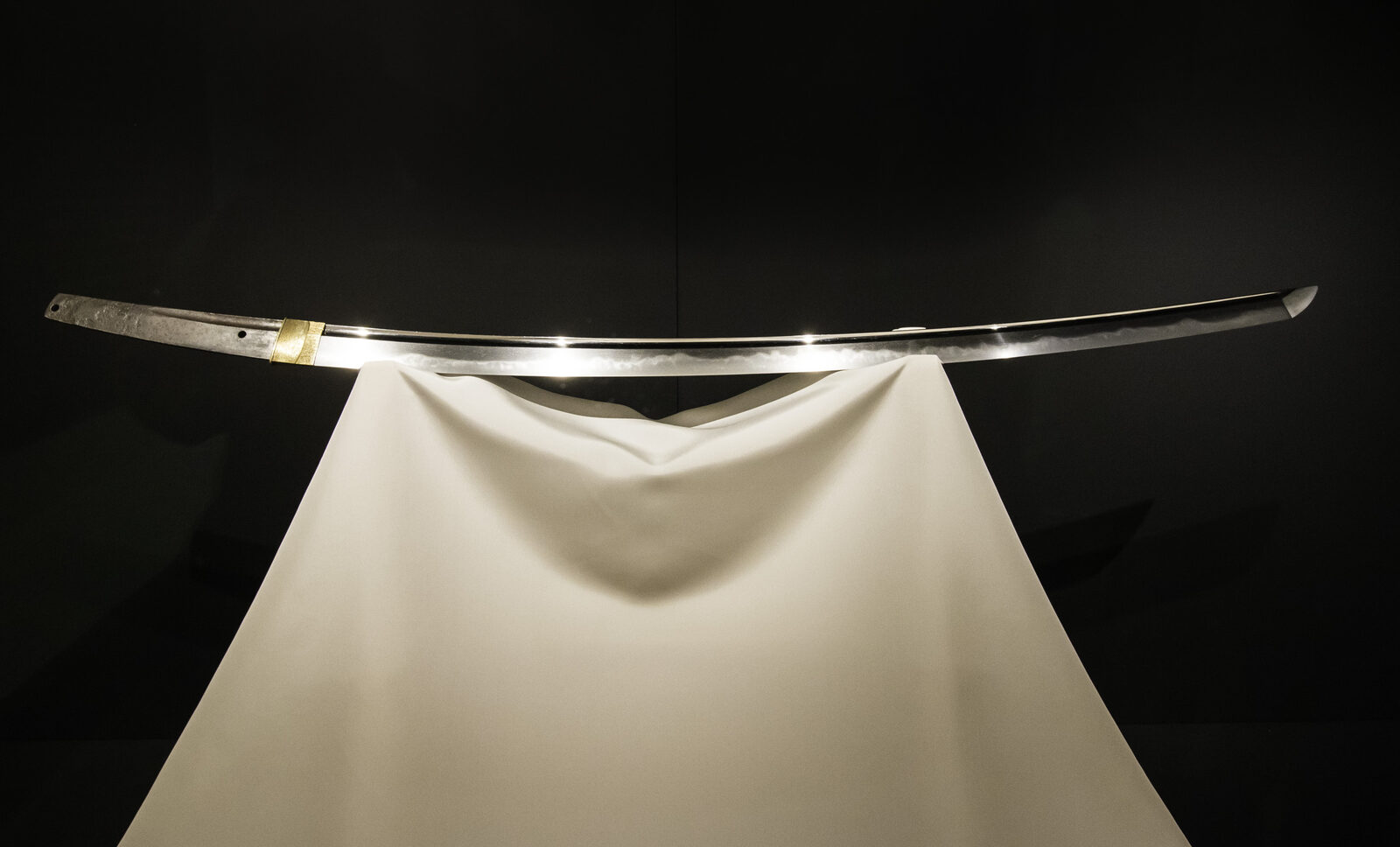
The Nikkō Sukezane, a National Treasure, of the Tōshōgū shrine in Nikkō. Kakidai, CC BY-SA 4.0, via Wikimedia Commons · CC BY-SA 4.0 · source 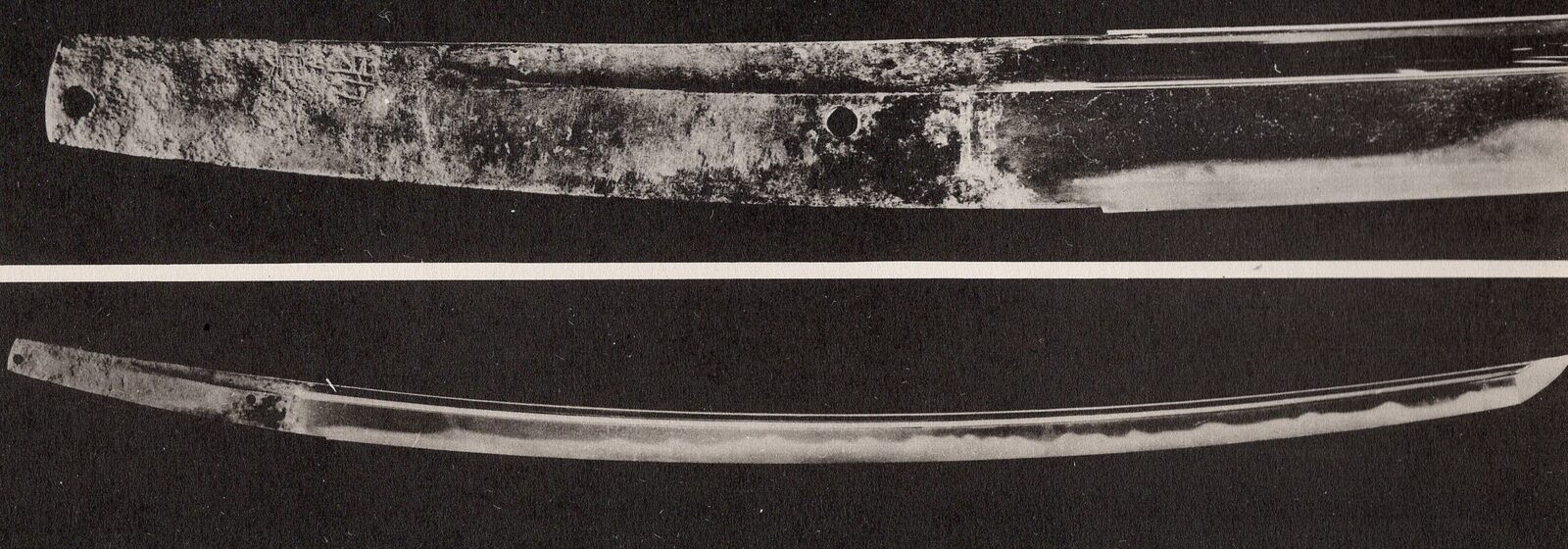
Plate of the Nikkō Sukezane: the tang and the whole blade. 文化財協会 (Bunkazai Kyōkai), public domain, via Wikimedia Commons · Public domain · source 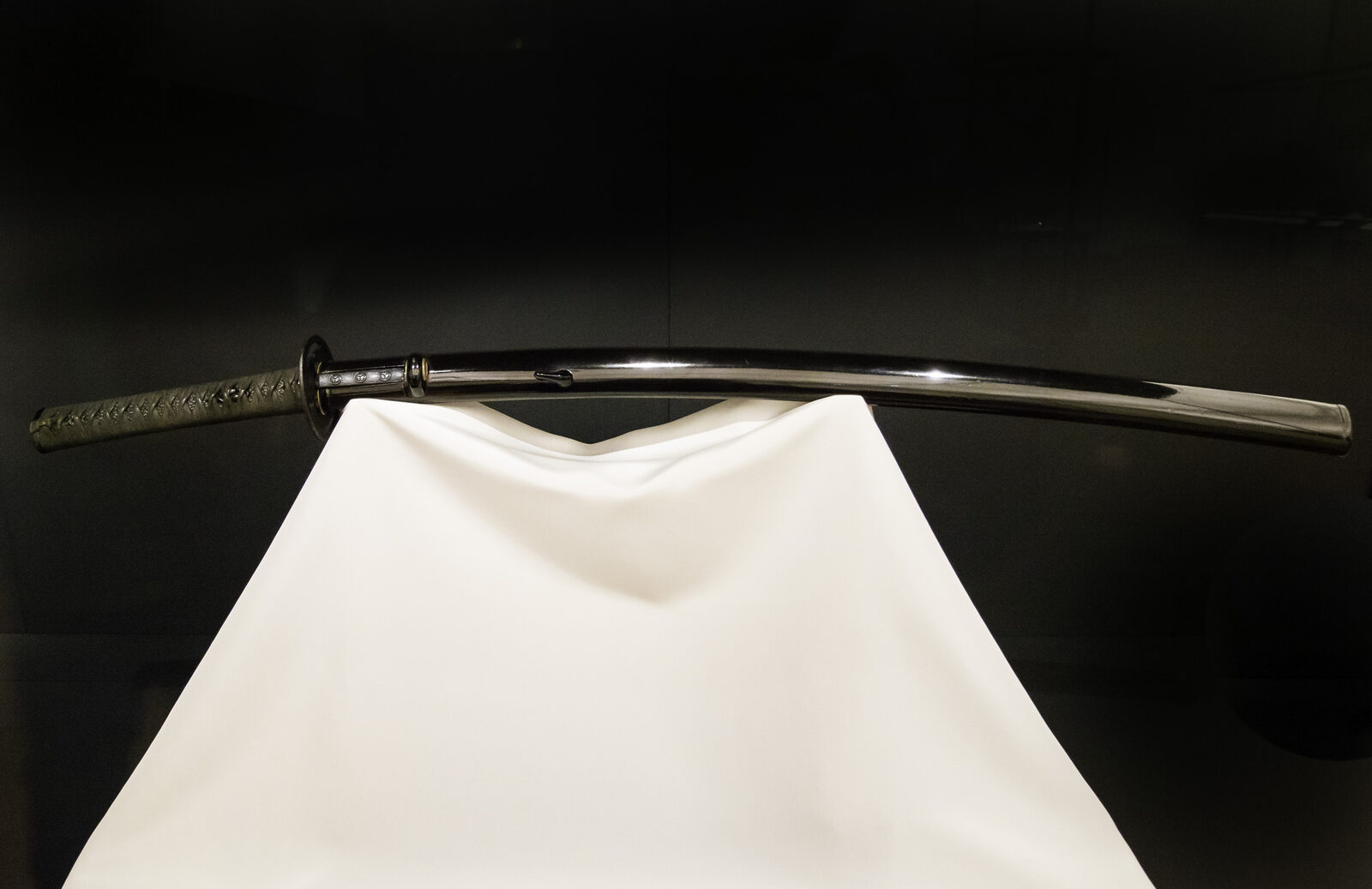
The Sukezane-goshirae, the black uchigatana mounting of the Nikkō Sukezane. Kakidai, CC BY-SA 4.0, via Wikimedia Commons · CC BY-SA 4.0 · source


