On this page
The lineage, from master to son
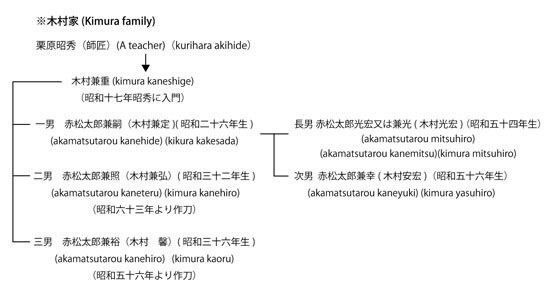
Who is who
Each row carries its level. The dates of the uncles are given only by the shops; the father and Kanemitsu appear in the Zen Nihon Tōshōkai lists.
| Person | Swordsmith’s name | Relationship | What is known | Level |
|---|---|---|---|---|
| 木村兼重 (Kimura Kaneshige) | 兼重 (Kaneshige) | Grandfather | A smith of the war years, a pupil of 栗原昭秀 (Kurihara Akihide). With him the family returns to forging swords. In the ranking 聖代刀匠位列 (Seidai Tōshō Iretsu) that Kurihara Akihide published in 1942 he is listed as 大業物 関脇格 (ō-wazamono sekiwake-kaku), in the transcription published by a shop. | AT |
| 兼嗣 (Kanetsugu) | 兼嗣 (Kanetsugu), “赤松太郎兼嗣” (Akamatsu Tarō Kanetsugu) | Father and teacher | Member of the Zen Nihon Tōshōkai, at the same address as his son. He appears in the 2014 visit and in the 2018 open day. Eldest son of Kaneshige; born in 1951 and licensed since 1976: so the shops say. He presents himself as the ninth generation of the Kimura and the eldest of the “three smith brothers”. He makes utsushi of Kiyomaro with a large kissaki. A shop credits him with a Kunzanshō (薫山賞) in 2021 that has not been found on any official list. | HD |
| 兼照 (Kaneteru) | “赤松太郎兼照” (Akamatsu Tarō Kaneteru) | Uncle, second son of Kaneshige | Born in 1957 and a smith since 1988, according to the family tree published by a shop. There are blades of his for sale. | AT |
| 兼裕 (Kanehiro) | 兼裕 (Kanehiro), “赤松太郎兼裕” (Akamatsu Tarō Kanehiro) | Uncle, third son of Kaneshige | Born in 1961 and forging since 1981. A specialist in utsushi of Kiyomaro; he signs with 以自家製鉄鍛之 (jika seitetsu o motte kore o kitau). In 2012 he made a jūka-chōji blade “福岡一文字に倣った” (Fukuoka Ichimonji ni naratta, “in the manner of the Fukuoka Ichimonji”). | AT |
| 兼光 (Kanemitsu) | 兼光 (Kanemitsu) | Eldest son of Kanetsugu | The subject of this monograph (see “The swordsmith”). | HD |
| 兼幸 (Kaneyuki) | 兼幸 (Kaneyuki), “赤松太郎兼幸” (Akamatsu Tarō Kaneyuki) | Younger brother, second son of Kanetsugu | Born in 1981, according to that same tree. In 2014 he worked as a polisher and took care of the final polishing, according to that year’s visitor. There are blades signed 赤松太郎兼幸 (Akamatsu Tarō Kaneyuki) for sale. | AT |
A family workshop
The forge is a family one and does everything in-house: “この工程をご家族で行う木村日本刀剣鍛錬所の皆様” (“the people of the Kimura workshop, who carry out this whole process as a family”), writes the 2014 visitor. A shop gives Kanetsugu, Kanehiro, Kaneteru, Kanemitsu and Kaneyuki as the active smiths.
The school’s ideal is Kiyomaro: “赤松太郎一門は源清麿を理想とした豪快な作域で有名” (“the Akamatsu Tarō school is famous for vigorous work that takes Minamoto Kiyomaro as its ideal”), say a shop’s listings. Kanemitsu leans more towards the Bizen-den (see “Style and works”).
Joint works
Father and son have signed together, and the father with his brother:
- 写 山鳥毛 (utsushi Sanchōmō) / 肥後國住赤松太郎兼嗣兼光合作 (Higo no Kuni-jū Akamatsu Tarō Kanetsugu Kanemitsu gassaku) / 本三枚鍛 (honsanmai-gitae), 79.6 cm, from July 2019, commissioned by a shop (see “His Sanchōmō”);
- 肥後國八代住赤松太郎兼嗣兼光合作 (Higo no Kuni Yatsushiro-jū Akamatsu Tarō Kanetsugu Kanemitsu gassaku) / 以自家製鉄鍛之 (jika seitetsu o motte kore o kitau) / 令和四年十月吉日 (Reiwa yonen jūgatsu kichijitsu), a katana from October 2022 advertised by another shop “for iai and tameshigiri”;
- 肥後國住赤松太郎兼嗣兼裕合作 (Higo no Kuni-jū Akamatsu Tarō Kanetsugu Kanehiro gassaku) / 平成二十七年初春 (Heisei nijūshichinen shoshun), by the father and his brother Kanehiro, from 2015, in the sale listing of a third shop.
A joint work is possible, but it is worth knowing which part each of them makes.
The name “Akamatsu Tarō”
The Akamatsu Tarō pass (赤松太郎峠, Akamatsu Tarō-tōge) exists: it is one of the “three Tarō” (三太郎峠, Santarō-tōge) of the old Satsuma road, south of Yatsushiro. The shops say the workshop’s name comes from the pass. Akamatsu Nobusaki (赤松伸咲), a smith from Okayama who also appears on the NBTHK and Zen Nihon Tōshōkai lists, is not of the family: his surname is Akamatsu.
The origins
All the sources, including the 2014 visit, say that the family descends from the official smiths of the Sagara clan (相良藩, Sagara-han), of Hitoyoshi, who in the Meiji era became cutlery smiths and returned to forging swords with Kaneshige. No independent historical source documenting it has been found.
In the 2024 talk, Kanemitsu says that “my grandfather’s teacher probably went to the Komiya house”, and Komiya Kokuten (小宮國天) adds that “my teacher’s teacher’s teacher was my great-grandfather”. It is a family memory, without a document.
The 2014 visit
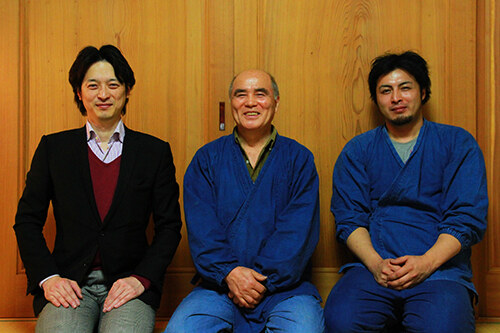
On 23 April 2014, 太田光柾 (probable reading: Ōta Kōsei), of the 武士道美術館 (Bushidō Bijutsukan), a private museum in Kumamoto devoted to bushidō, visited the forge and published it with sixteen photos: the father, Kanetsugu (兼嗣); Kanemitsu; and the brother, a polisher. What he says about the family (the Sagara clan, the return to swords with Kaneshige) is what he was told there. The author says that he practises iaidō with his family and already knew of the house’s prizes.
The forge in 2014 and after
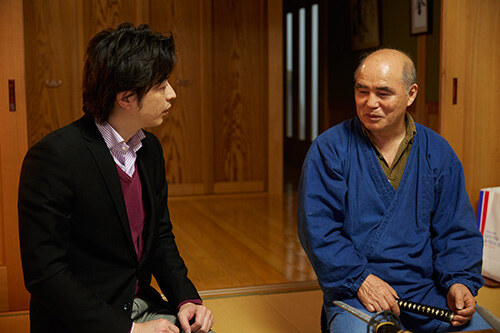
The father, Kanetsugu, with the visitor (2014). 太田光柾 (probable reading: Ōta Kōsei), of the 武士道美術館 (Bushidō Bijutsukan) · © 武士道美術館 (Bushidō Bijutsukan) 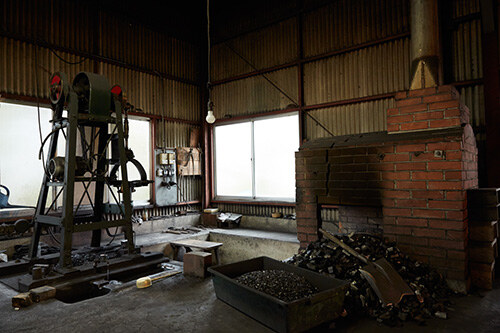
The forge: power hammer and hearth (2014). 太田光柾 (probable reading: Ōta Kōsei), of the 武士道美術館 (Bushidō Bijutsukan) · © 武士道美術館 (Bushidō Bijutsukan) 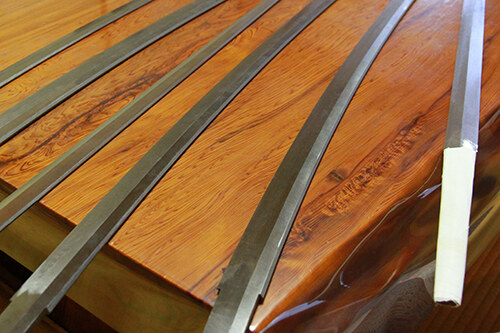
Rough blades on the bench (2014). 太田光柾 (probable reading: Ōta Kōsei), of the 武士道美術館 (Bushidō Bijutsukan) · © 武士道美術館 (Bushidō Bijutsukan) 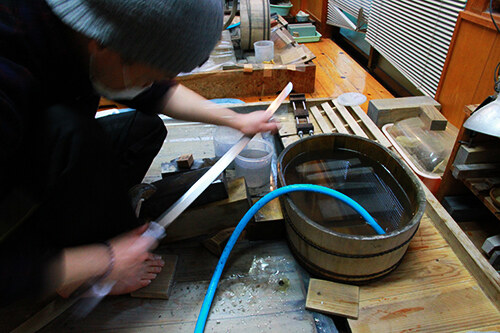
Polishing at the forge (2014). 太田光柾 (probable reading: Ōta Kōsei), of the 武士道美術館 (Bushidō Bijutsukan) · © 武士道美術館 (Bushidō Bijutsukan) 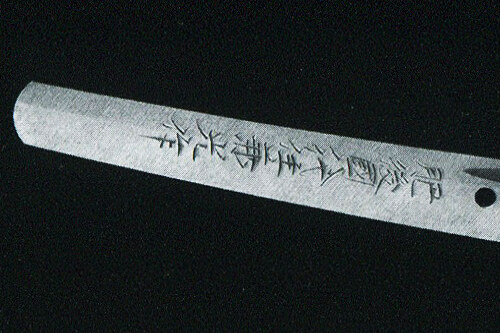
A tang with the signature (2014). 太田光柾 (probable reading: Ōta Kōsei), of the 武士道美術館 (Bushidō Bijutsukan) · © 武士道美術館 (Bushidō Bijutsukan) 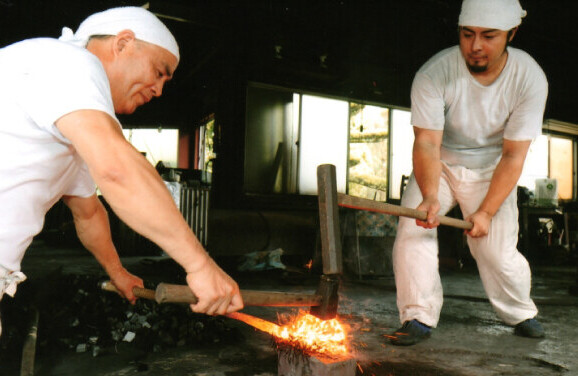
Two-handed hammering at the forge (a shop’s photo). Photo: dealer in Japan 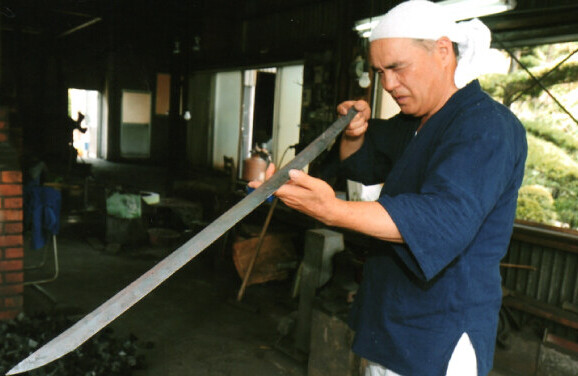
The father looks at a blade, at the forge (a shop’s photo). Photo: dealer in Japan 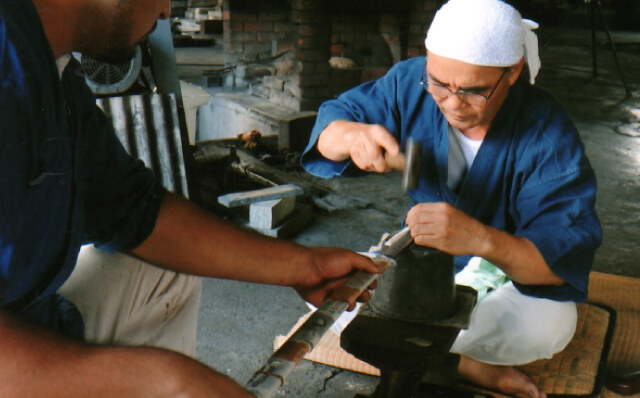
Engraving a signature, at the forge (a shop’s photo). Photo: dealer in Japan 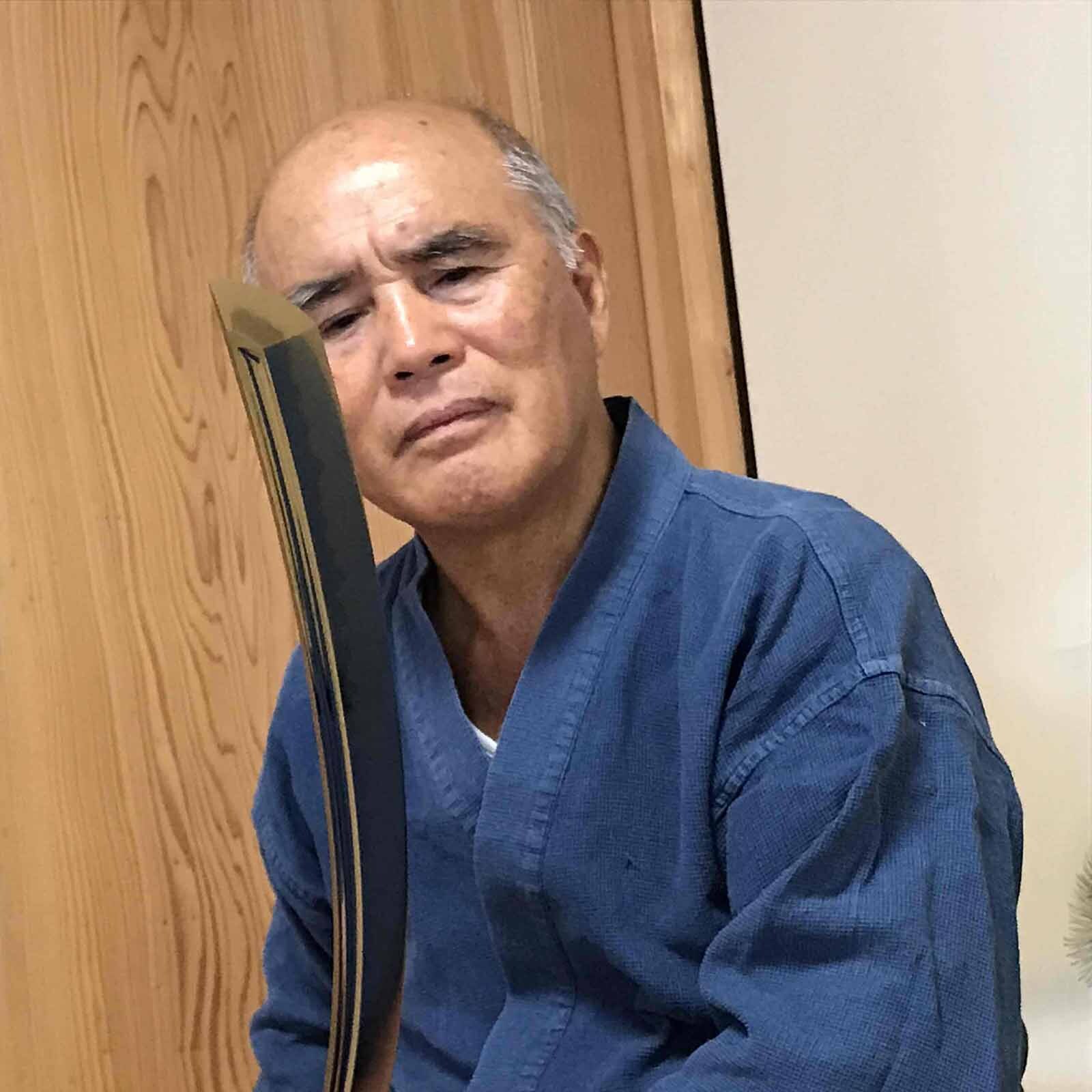
The father, Kanetsugu, in another shop’s sale listing. Photo: dealer in Japan 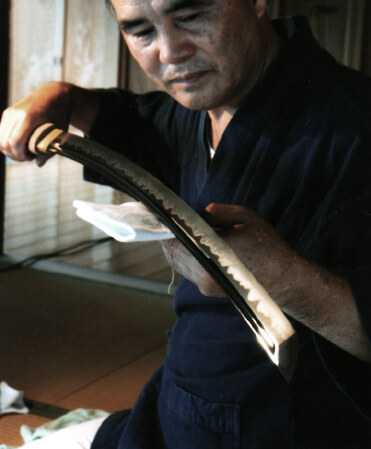
The father, Kanetsugu, on a shop’s website. Photo: dealer in Japan 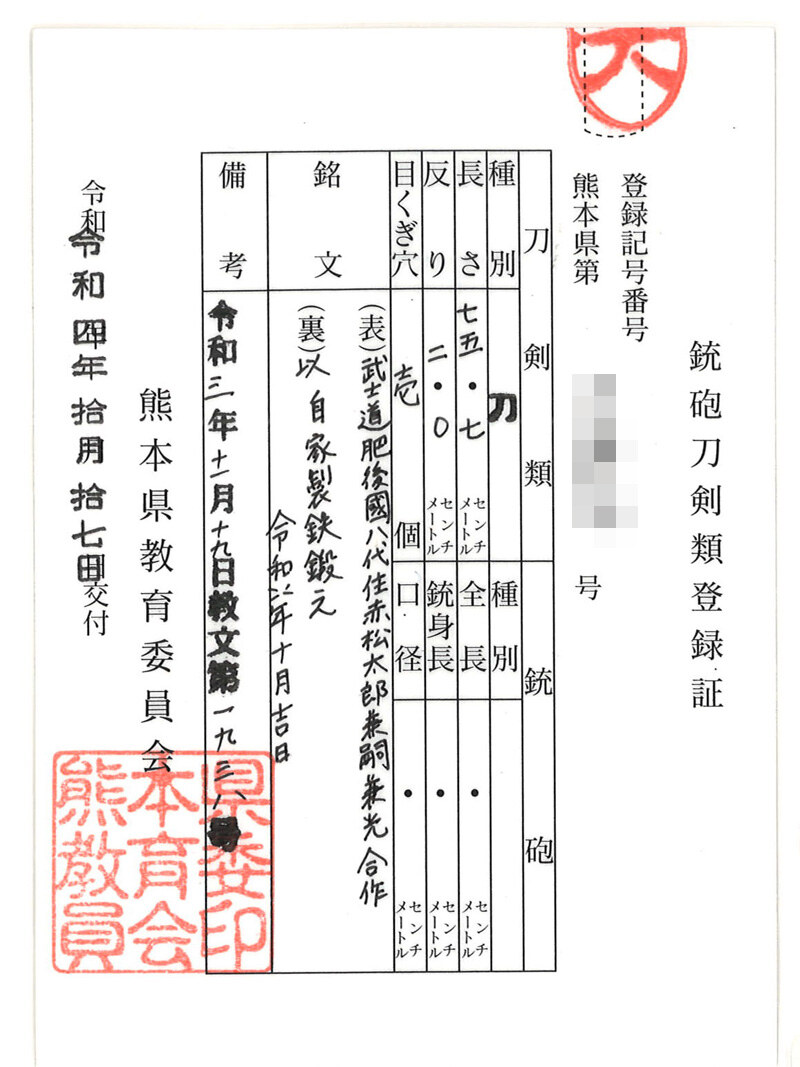
The Kumamoto registration certificate of the joint katana of 2022, in its sale listing. Photo: dealer in Japan
His master, at the hardening (2026)
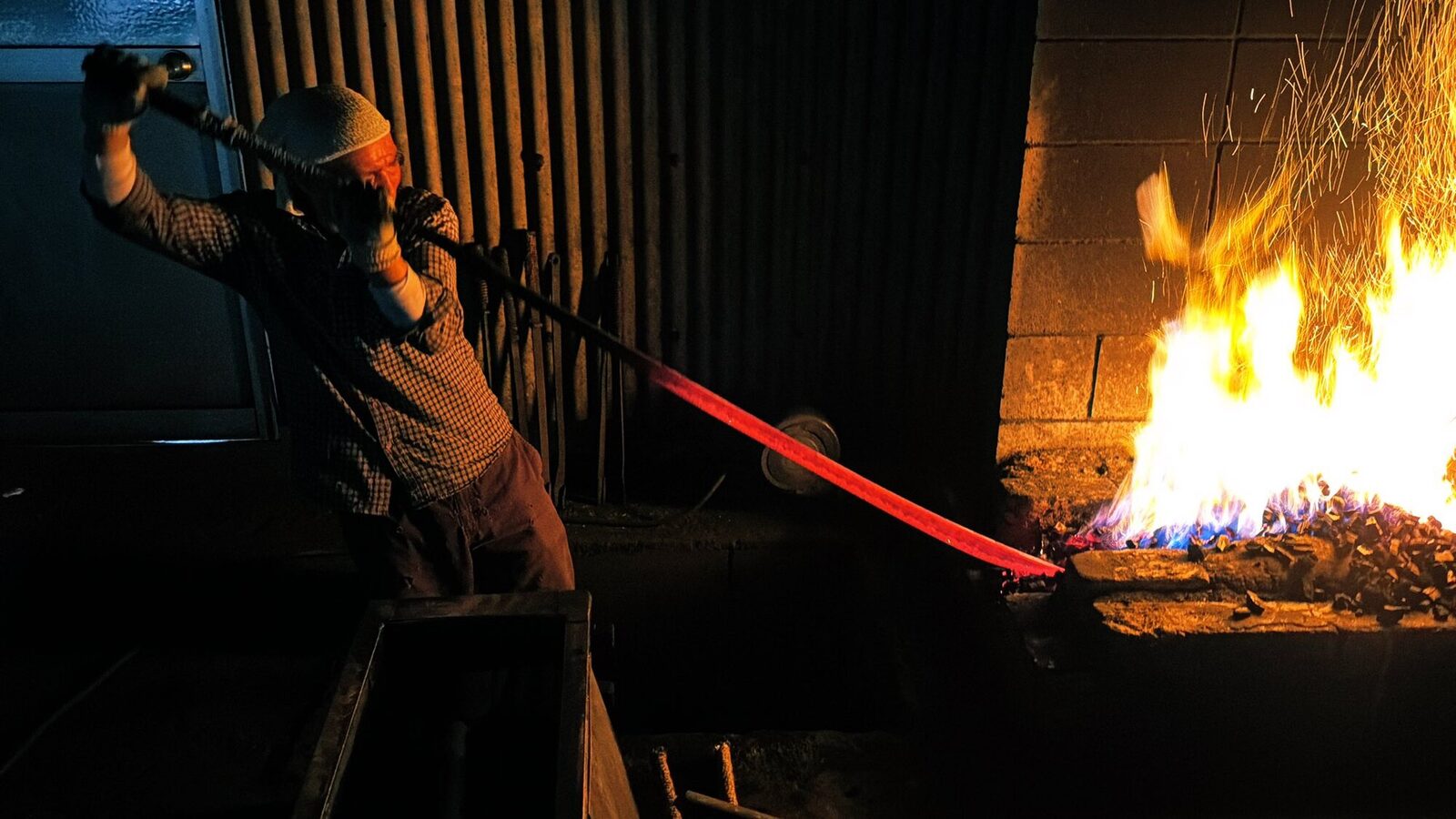
His master hardens a naginata of 3 shaku (about 91 cm): “at 75 years old, what energy!”, he writes (7 April 2026). Photo: the smith himself 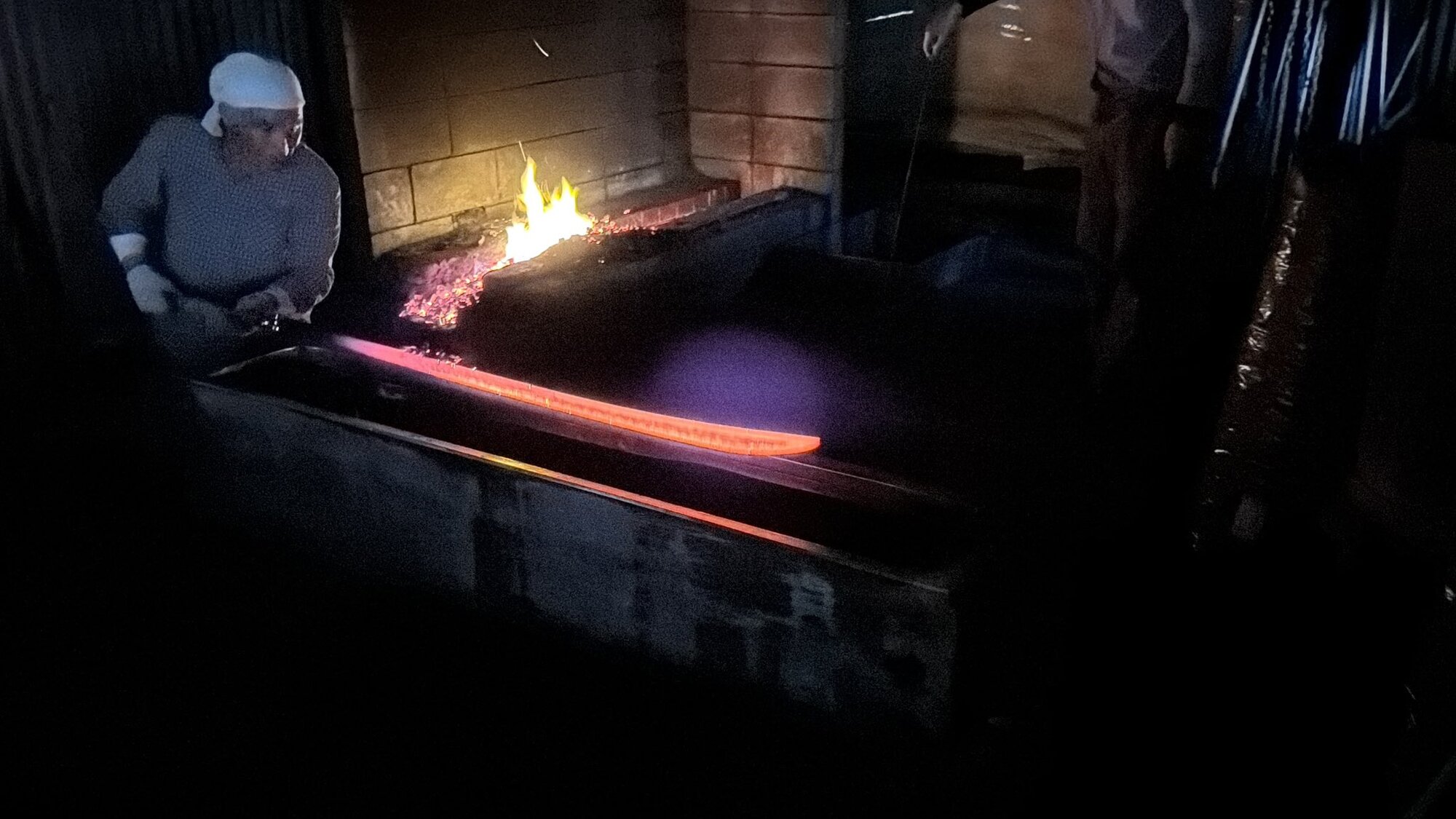
His master, with the red-hot blade over the hardening tank (7 April 2026). Photo: the smith himself
Kanetsugu, on his own
It can be verified that he is a member of the Zen Nihon Tōshōkai, which registers him with his smith’s name, 兼嗣 (Kanetsugu), at the same address as his son, and that he appears in the 2014 visit and in the 2018 open day. He does not appear in the NBTHK lists consulted, from 2017 onwards.
Everything else comes from shops: the birth in 1951 and the licence in 1976 are what they say. The 2021 Kunzanshō and a designation as a Kumamoto traditional craft in 1986 could not be verified. One of them calls him “無形文化財” (mukei bunkazai, intangible cultural property), but he is not on Yatsushiro’s list of protected cultural properties, which only covers heritage of the folk type. Most likely someone confused the two things; it is not asserted here.