On this page
What is known
- The inscription
- “以自家製鉄鍛之” (jika seitetsu o motte kore o kitau), on the reverse of the family’s blades from 2008 to 2022: it can be read in the shops’ photos HD
- What they do
- They gather the iron sand themselves and smelt their steel, instead of using the tamahagane distributed by the NBTHK: “殆どの刀工が、日刀保から供給される鋼を使用している現代においても、刀匠自らの手で素材(砂鉄)の採取を行い、自家製鉄によって独自の鋼を生成” (“today, when almost all smiths use the steel distributed by the NBTHK, the smith gathers the material, the iron sand, with his own hands and makes his own steel”), in a shop’s listing AT
- Where the sand comes from
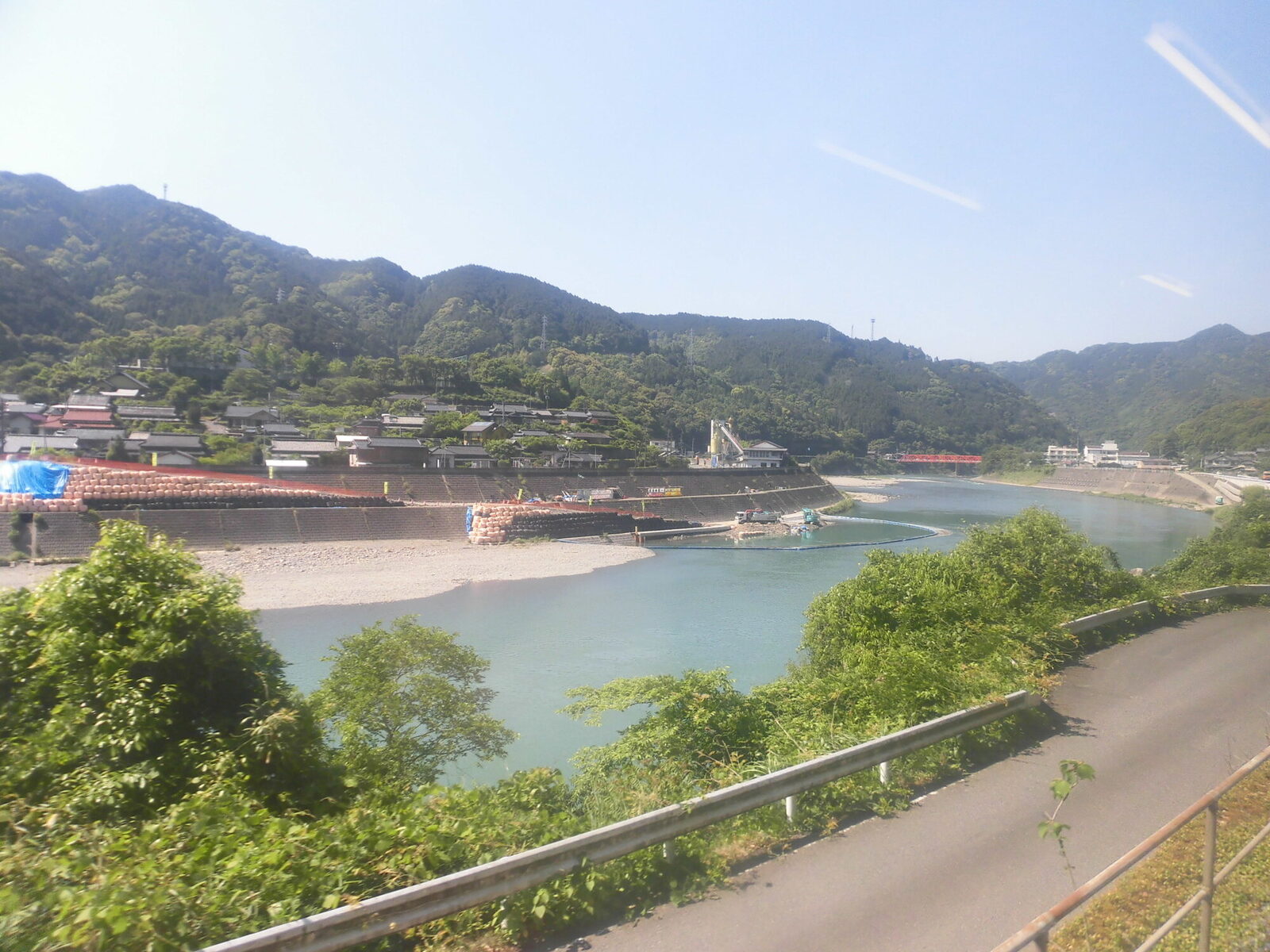
- From the Kuma river (球磨川, Kumagawa), “one of the three rapid rivers of Japan”, say the shops; the family repeats it AT
- Where
- A shop mentions a 自家製鉄場 (jika seitetsujō, their own smelting site) next to the forge, the polishing area and the clay area AT
- The furnace
- It is not on record whether it is a tatara, a small furnace or something else: no public source describes it PC
- In the prefecture feature
- “From choosing special Kumamoto steel, to wrapping it in mud and wheat, to melding the materials together…”; “up to 15 days” of physical work per sword, and “up to three years” to finish it, in ten steps AT
- The construction
- 本三枚鍛 (honsanmai-gitae: core, edge and back in three pieces) in the joint Sanchōmō of 2019, in the listing of the shop that commissioned it HD
- What he says in public
- In the 2024 talk he explains the process with tamahagane, at about 1,300 ℃, with several foldings, the kawagane and the shingane separately, and he names the 甲伏せ (kōbuse) and the 本三枚 (honsanmai). He does not talk about his own smelting HD
- What can be seen in a blade
- In the katana of the 2025 Takamatsu-no-miya Kinenshō, a mokume with very marked chikei, “like a sword of meteoric iron”, in the words of a visitor AT
What can be concluded II
There is ample evidence that the family uses its own steel: the inscription, repeated on works from many years, and the consistent account of shops unrelated to one another. Nothing has been published about the process: not the furnace, nor the yield, nor whether they mix their own steel with the NBTHK tamahagane.
Nor is it on record that Kanemitsu’s competition work is made of that steel: on it he does not sign “以自家製鉄鍛之” (jika seitetsu o motte kore o kitau). It is the first question anyone commissioning a blade from him should ask.
The Kuma river and the Yatsushiro Sea
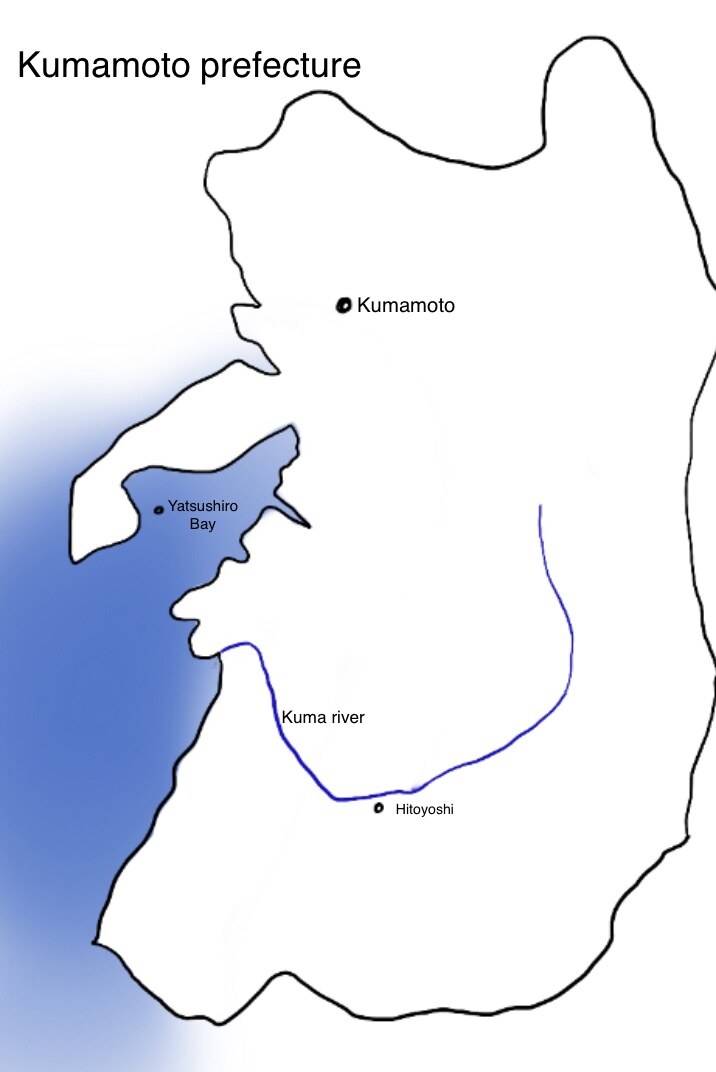
The Kuma river basin. KKharmony, CC BY-SA 4.0, via Wikimedia Commons · CC BY-SA 4.0 · source 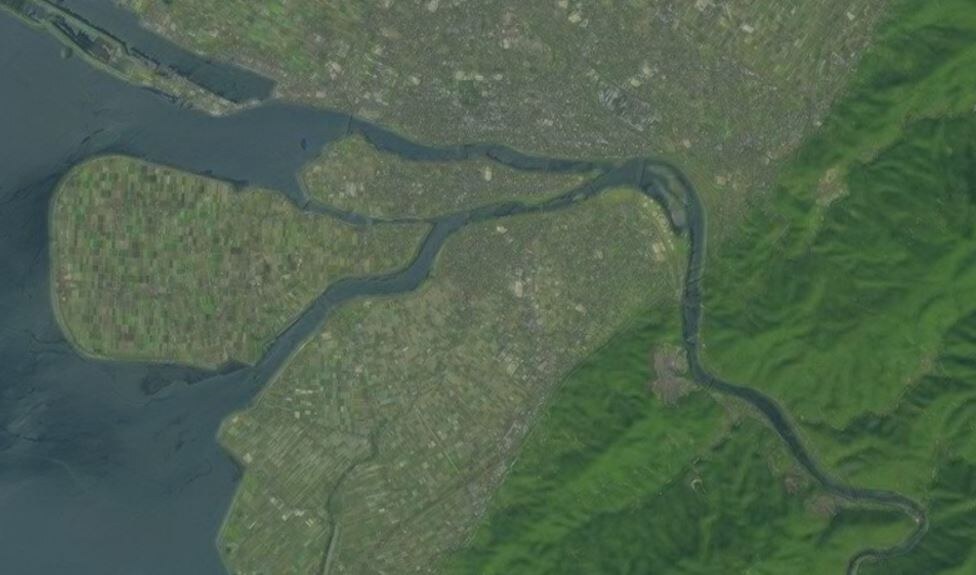
The mouth of the Kuma, at Yatsushiro (Landsat, 2014). USGS Landsat, Public domain, via Wikimedia Commons · Public domain · source 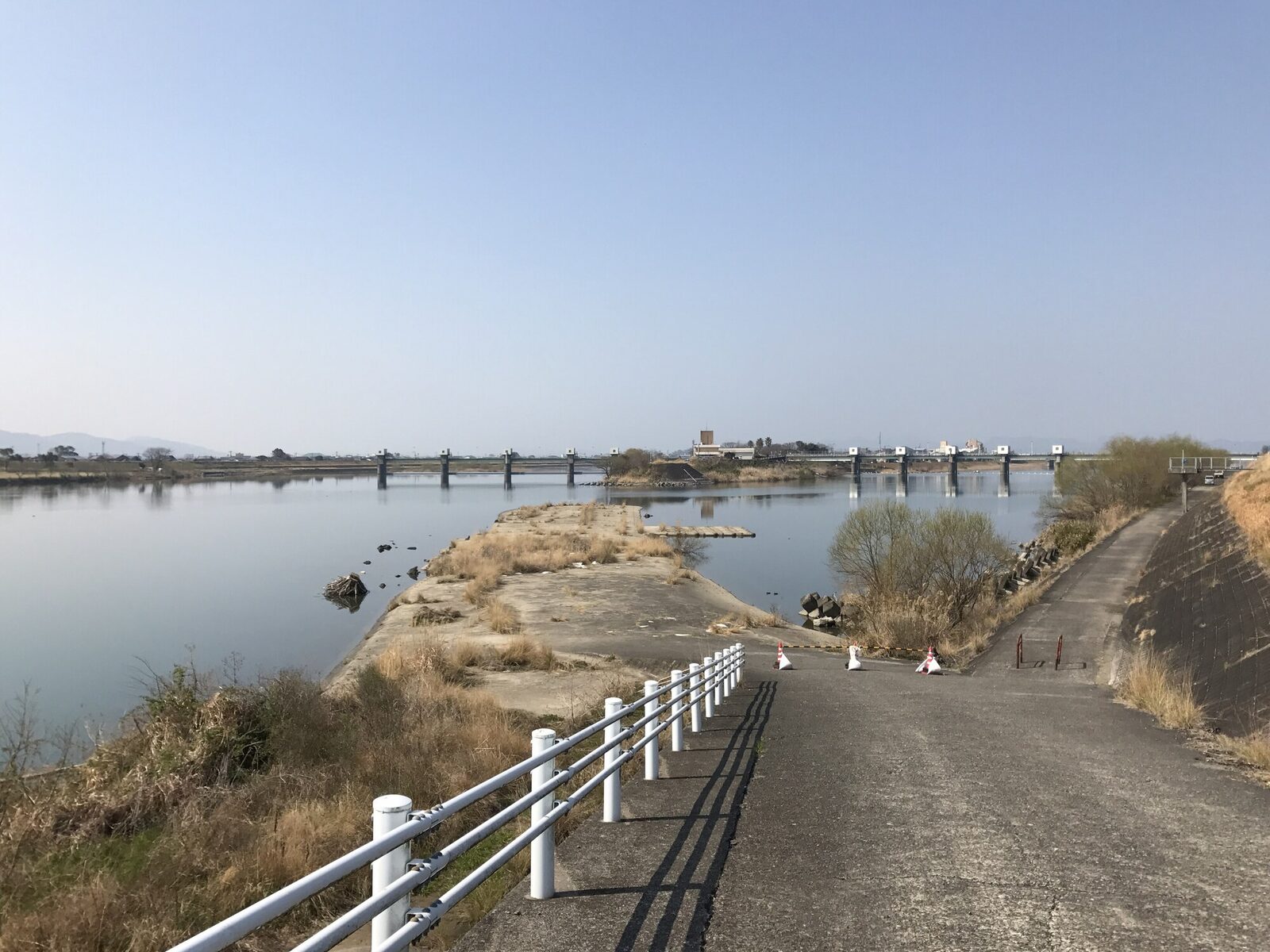
The weirs of the Kuma and the Shin-Maekawa. そらみみ (Soramimi), CC BY-SA 4.0, via Wikimedia Commons · CC BY-SA 4.0 · source 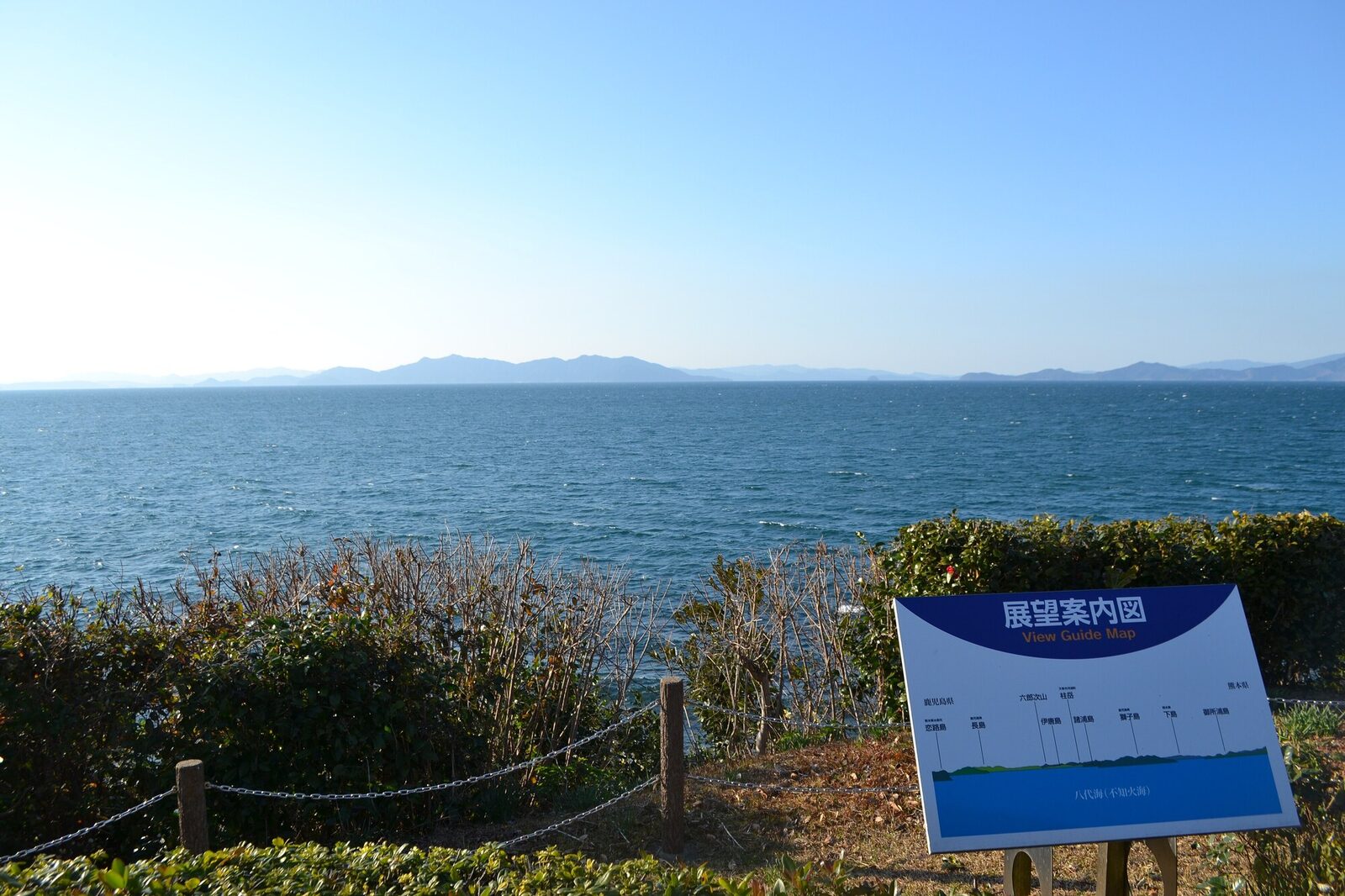
The Yatsushiro Sea, seen from Minamata. 先従隗始 (probable reading: Senjū Kaishi), CC0 1.0, via Wikimedia Commons · CC0 1.0 · source


The steel at the forge (2014)
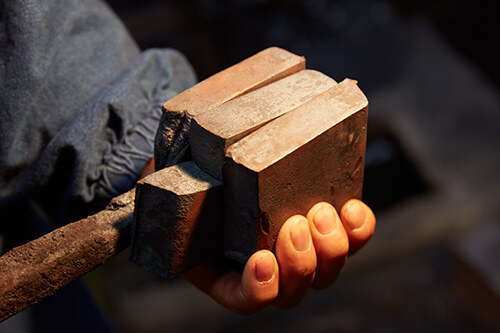
Pieces of steel stacked on a bar (2014). 太田光柾 (probable reading: Ōta Kōsei), of the 武士道美術館 (Bushidō Bijutsukan) · © 武士道美術館 (Bushidō Bijutsukan) 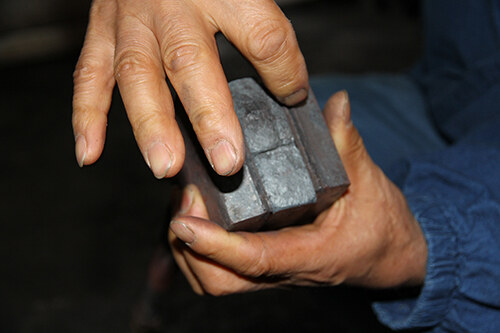
A block of steel in the hand; that it is their own steel is our interpretation (2014). 太田光柾 (probable reading: Ōta Kōsei), of the 武士道美術館 (Bushidō Bijutsukan) · © 武士道美術館 (Bushidō Bijutsukan) 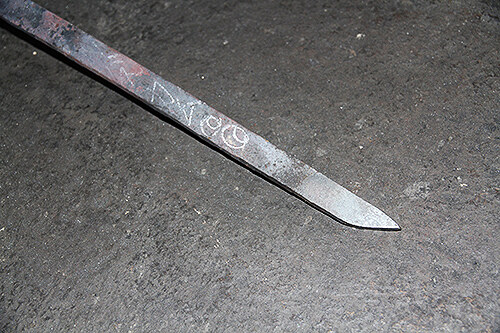
A blade on the floor of the forge (2014). 太田光柾 (probable reading: Ōta Kōsei), of the 武士道美術館 (Bushidō Bijutsukan) · © 武士道美術館 (Bushidō Bijutsukan) 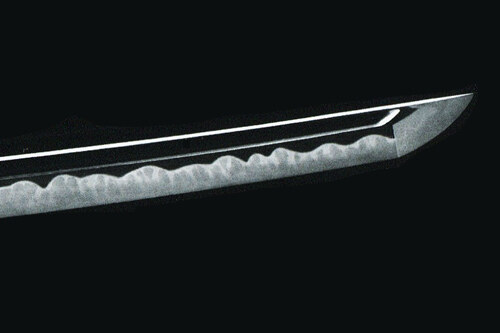
The hamon of a blade from the forge (2014). 太田光柾 (probable reading: Ōta Kōsei), of the 武士道美術館 (Bushidō Bijutsukan) · © 武士道美術館 (Bushidō Bijutsukan)
Context: from sand to blade
Two videos from elsewhere show what the family has not filmed: how iron sand becomes a blade, at the forge of another Kumamoto smith, Matsunaga Genrokurō (松永源六郎), and a tatara in Shimane. They are not of the Akamatsu Tarō forge.
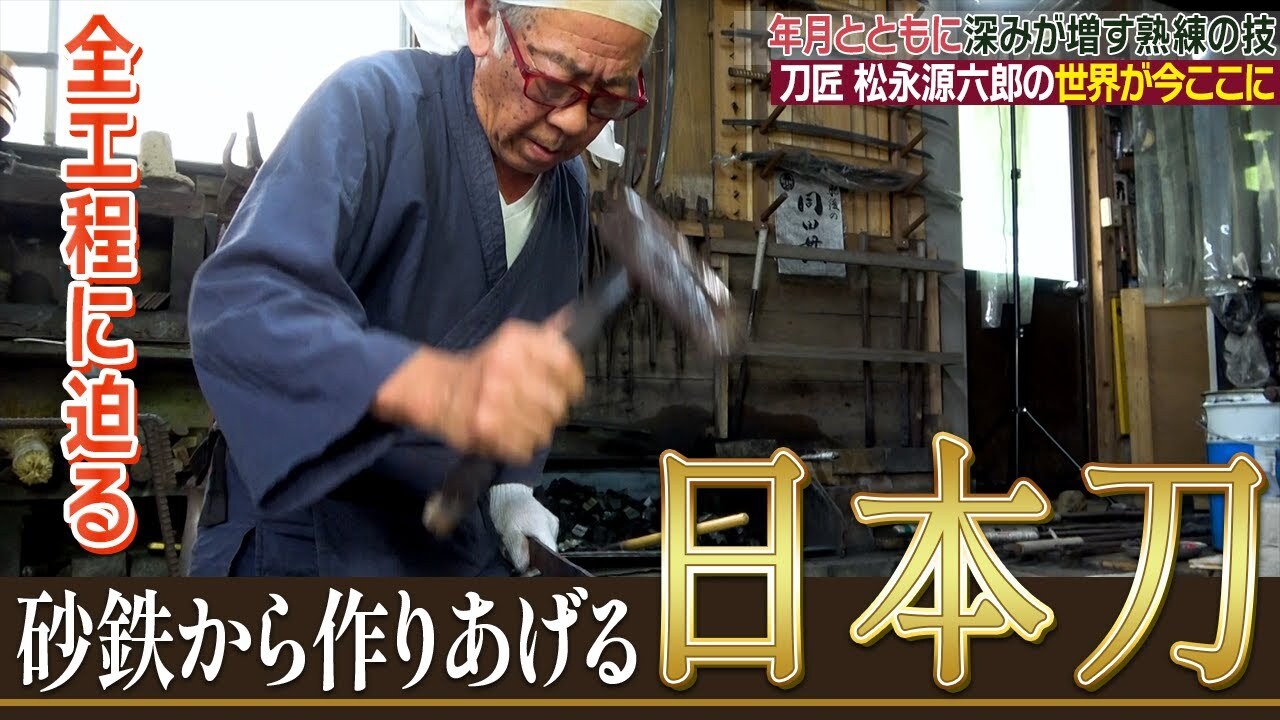 Play: 【日本刀】砂鉄が日本刀に至るまで 刀匠 松永源六郎による日本刀づくり (Nihontō: satetsu ga nihontō ni itaru made, tōshō Matsunaga Genrokurō ni yoru nihontō-zukuri; From iron sand to sword, with the smith Matsunaga Genrokurō)
【日本刀】砂鉄が日本刀に至るまで 刀匠 松永源六郎による日本刀づくり (Nihontō: satetsu ga nihontō ni itaru made, tōshō Matsunaga Genrokurō ni yoru nihontō-zukuri; From iron sand to sword, with the smith Matsunaga Genrokurō) · 熊本市くまもと工芸会館 (Kumamoto-shi Kumamoto Kōgei Kaikan)
12:10 · 6 July 2022
From the Kumamoto city craft centre: 0:41 gathering the iron sand; 1:56 the tamahesshi; 2:58 the tsumi-wakashi; 4:13 the forging; 7:10 the hizukuri; 8:15 the tsuchioki; 9:14 the hardening; 11:05 a cutting test. It is context: it is not the family’s forge.
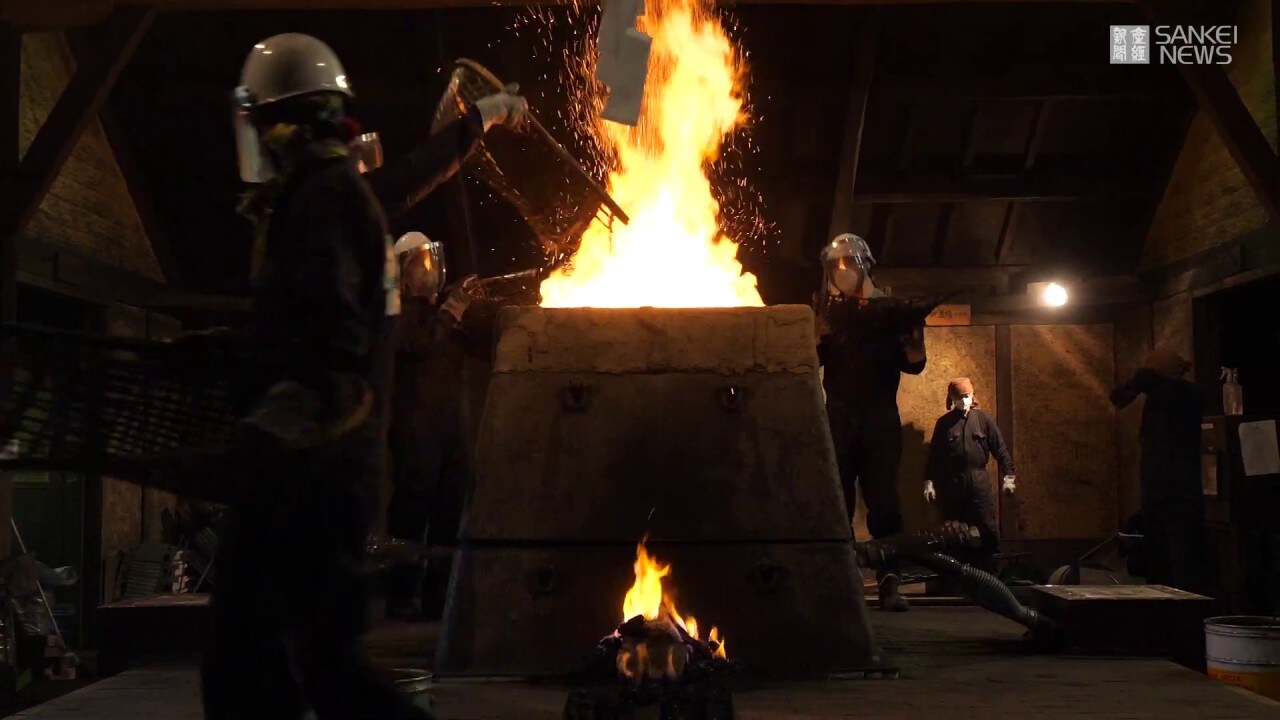 Play: 美しきにっぽん たたら製鉄 (Utsukushiki Nippon: tatara seitetsu; Beautiful Japan: tatara smelting)
美しきにっぽん たたら製鉄 (Utsukushiki Nippon: tatara seitetsu; Beautiful Japan: tatara smelting) · 産経ニュース (Sankei Nyūsu)
1:55 · 3 September 2019
A tatara in Okuizumo (Shimane) in operation: 0:45 the smelting; 1:34 they take out the kera. Context: there is no record that the family uses a tatara.