On this page
His style
A study of the Tōgō Hagane steel says that among the swordsmiths of Western steel (洋鉄, yōtetsu) there is none to compare with him, and that his blades have a very clean 梨子地肌 (nashiji-hada), the pear-skin grain. He is credited with a preference for Western steel over tamahagane, and with copies of old kodachi and warabitetō.
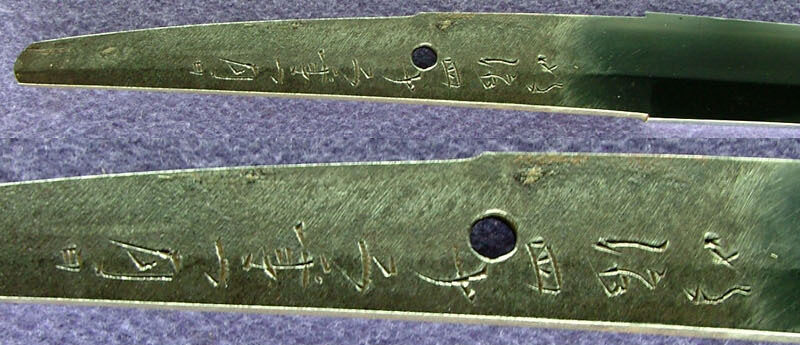
His tang has a shape of its own, the 雉子股形茎 (kijimomo-gata nakago): it widens behind the hole, like the thigh of a pheasant.
Dated blades
- Tantō of August 1897, in hira-zukuri and with a thick body. The tang reads 羽山円真造 (Hayama Enshin tsukuru) and アツタニオイテ (Atsuta ni oite, “at Atsuta”), and on the other side it names the ship 靖遠 (Seien) and a spring (發條, hatsujō). It seems to say what steel it was made from. It is described with a suguha of small gunome, ashi and ko-nie, and it has NBTHK 保存 (hozon) papers.
- Katana of June 1905, signed 浄雲斎羽山円真造之 (Jōunsai Hayama Enshin kore o tsukuru), commissioned by 倉田七郎 (Kurata Shichirō). He made it after the battle of Tsushima, and Kurata rose to captain in the Navy.
- Katana of February 1909, signed 浄雲斎羽山円真造之 (Jōunsai Hayama Enshin kore o tsukuru), forged at Atsuta.
- Katana of August 1913, 73.3 cm long, signed 一 浄雲斎羽山圓眞造之 (ichi Jōunsai Hayama Enshin kore o tsukuru), of Tōgō Hagane steel: nashiji-hada and a hamon of notare with gunome, in nioi.
- The 毛抜形蕨手刀 (kenukigata warabitetō) of 1902, with NBTHK 保存 (hozon) papers.
The 1905 katana
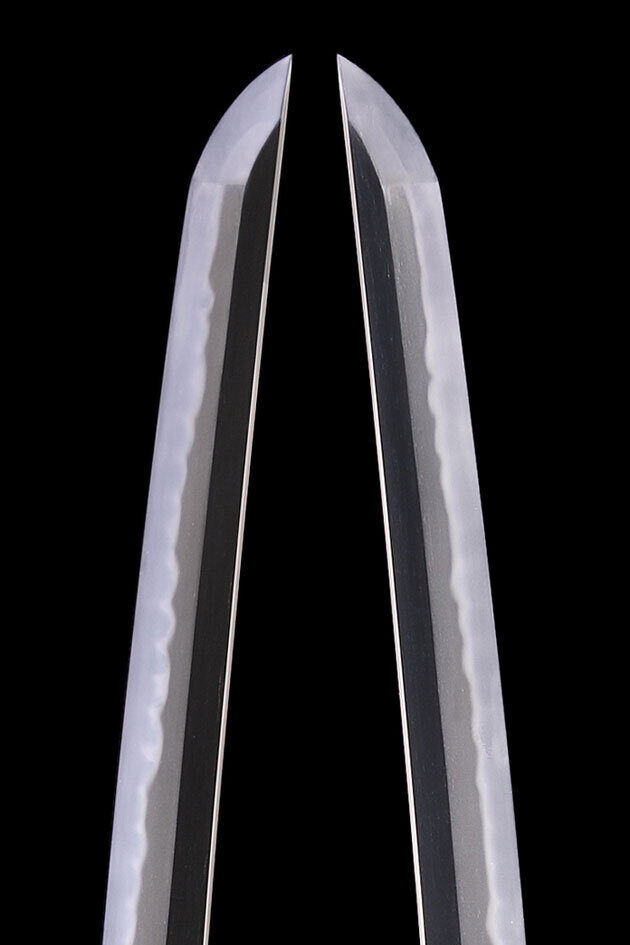
The 1905 katana: the point. Photo: dealer in Japan 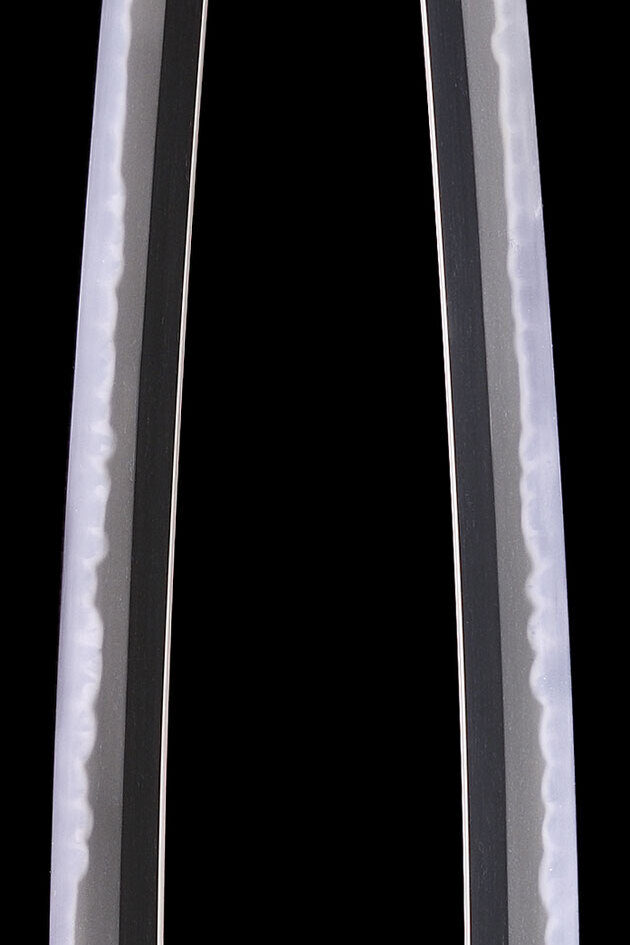
The 1905 katana: the temper line. Photo: dealer in Japan 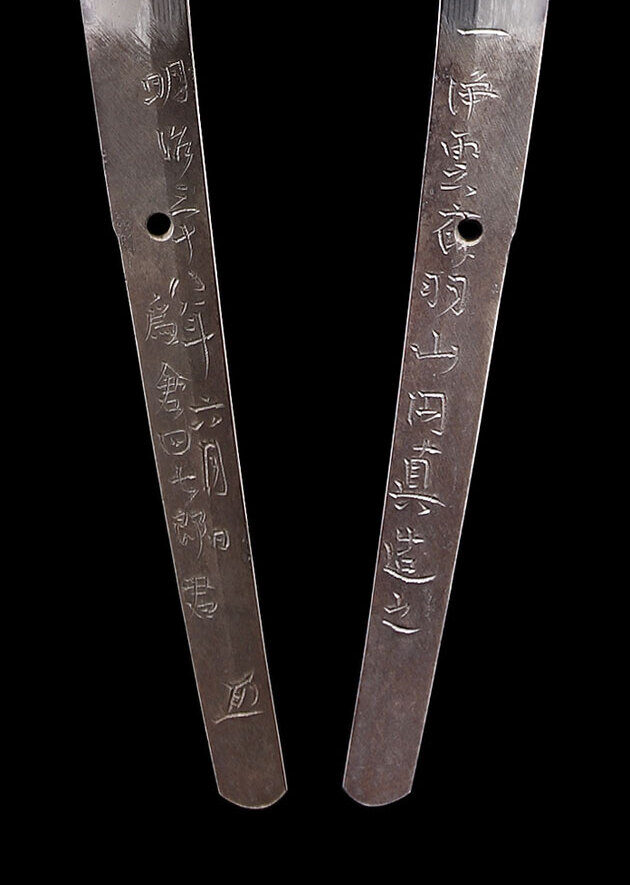
The 1905 katana: the signature 浄雲斎羽山円真造之 (Jōunsai Hayama Enshin kore o tsukuru) and, on the other side, the date and the name of the man who commissioned it. Photo: dealer in Japan
The 1897 tantō
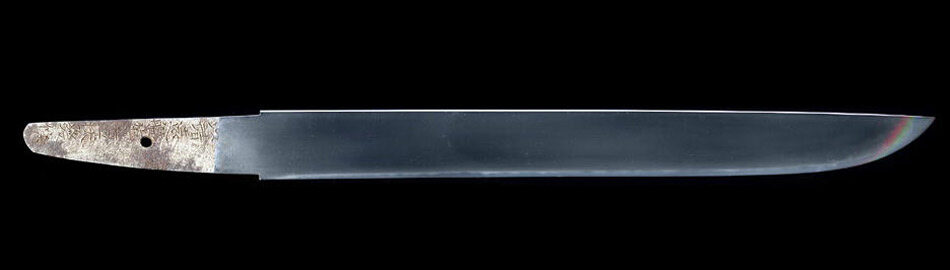
The 1897 tantō, whole. Photo: dealer in Japan 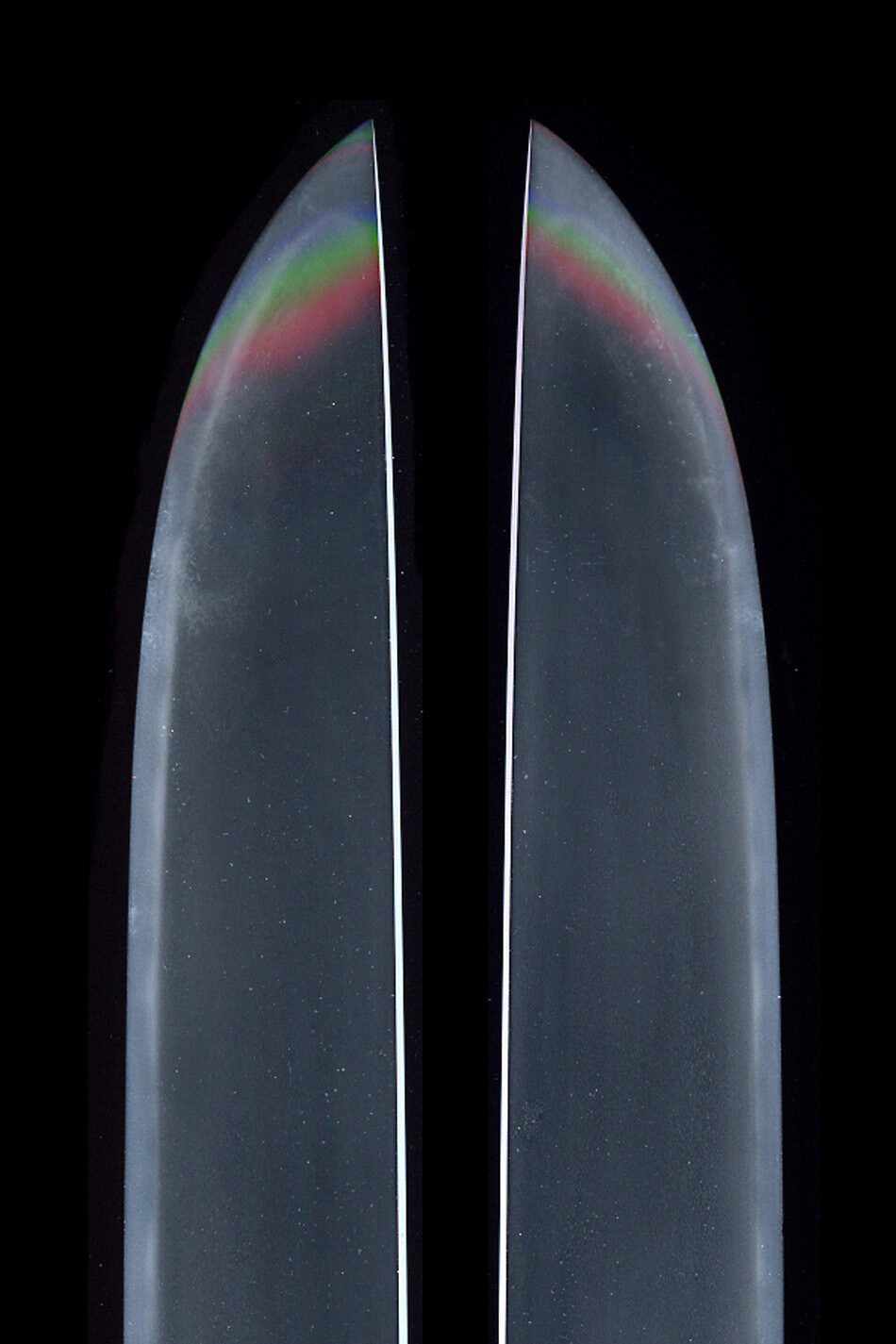
The 1897 tantō: the point. Photo: dealer in Japan 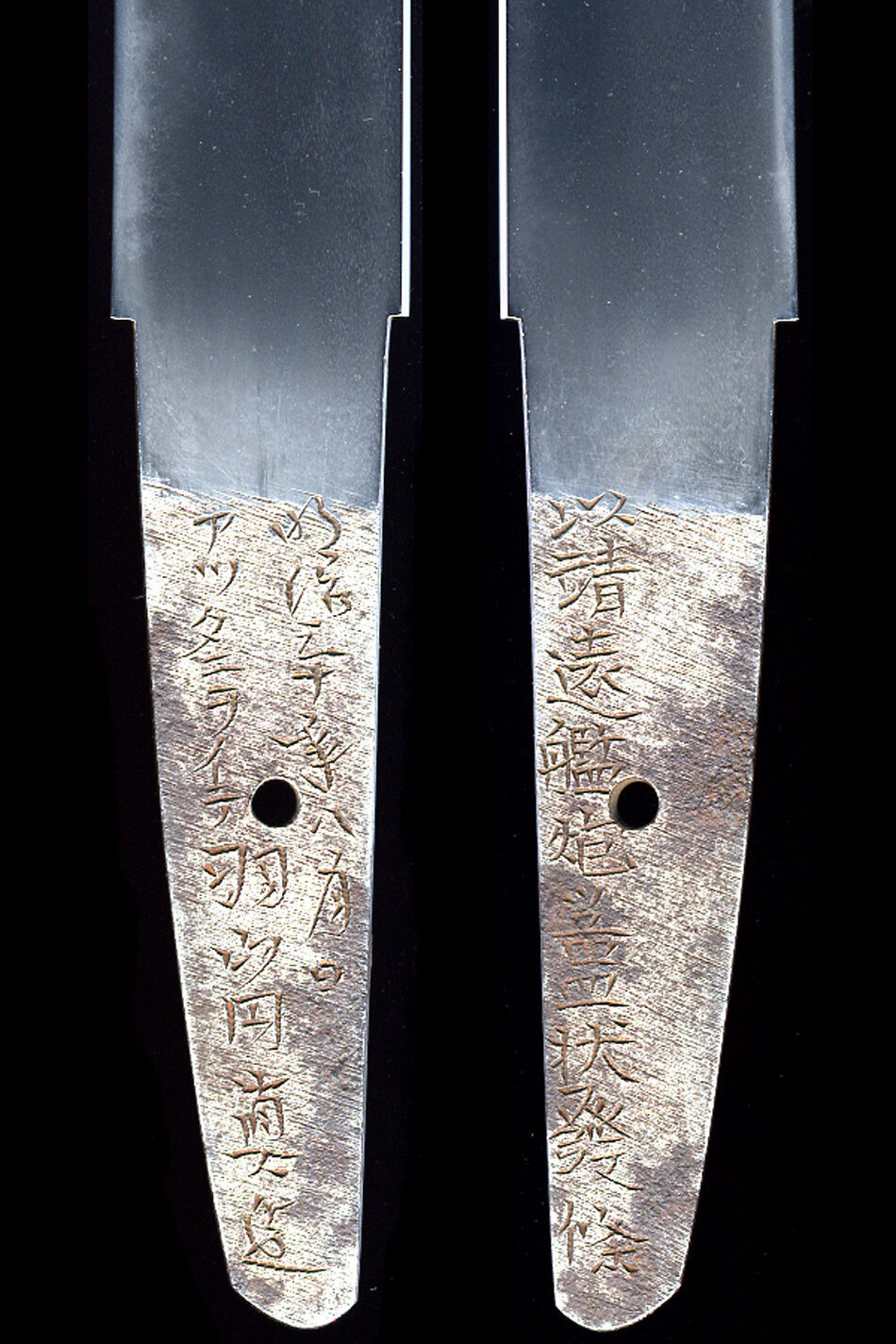
The 1897 tantō: the signature, the date and the inscription of the steel. Photo: dealer in Japan