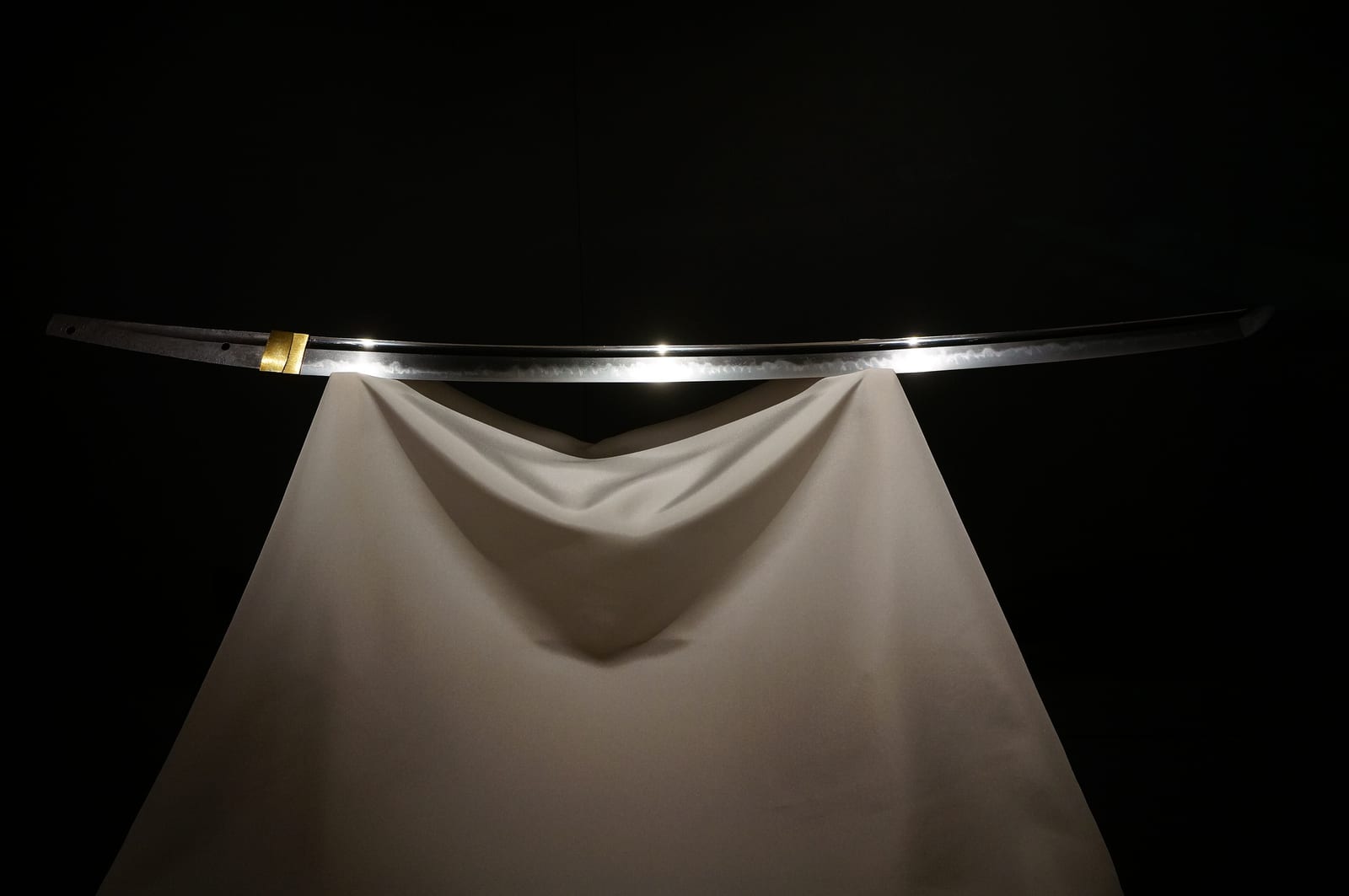
Examples of his work
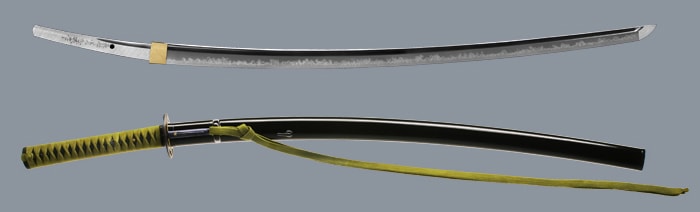
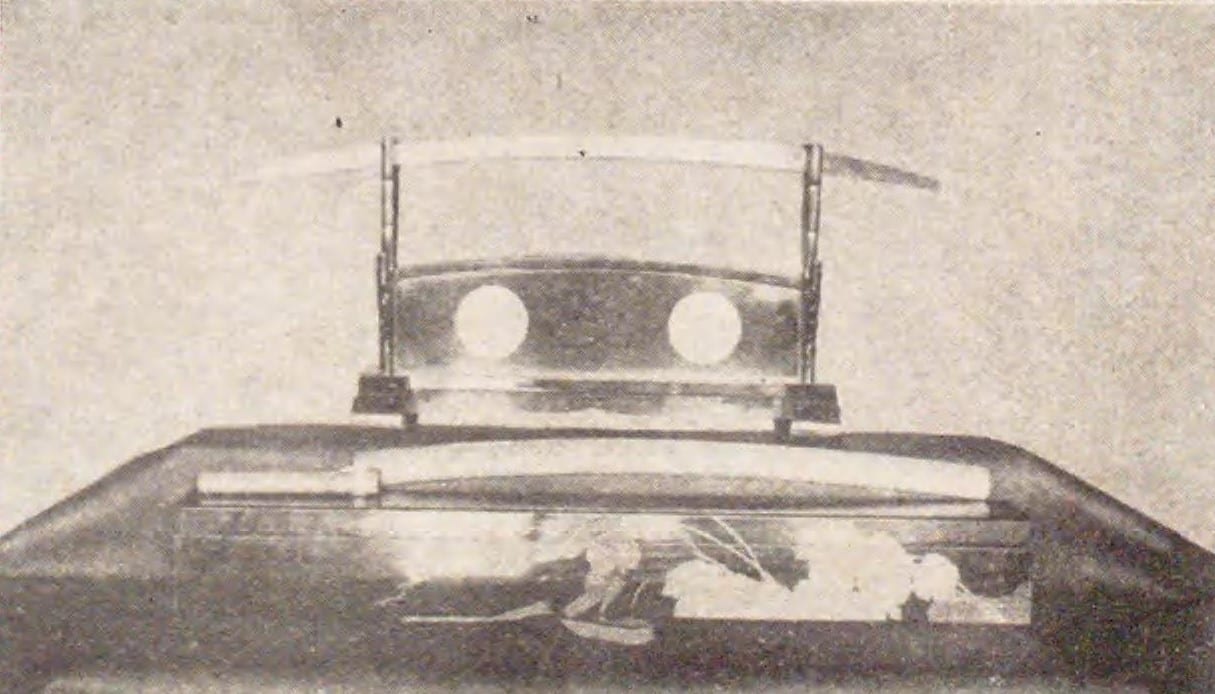
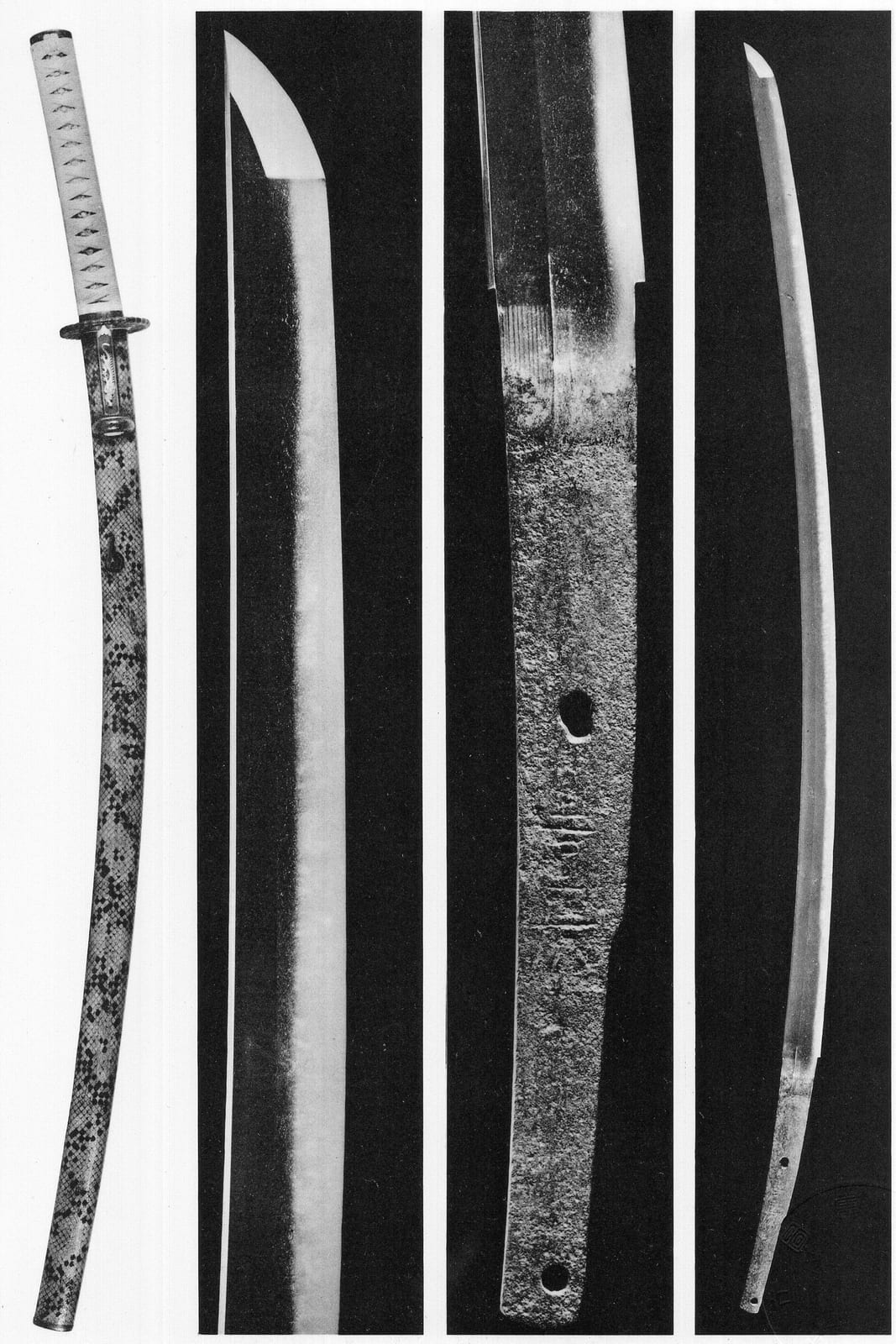
A katana and, below it, its koshirae: black-lacquered saya; ito and sageo in yellowish green. Photo: dealer in Japan 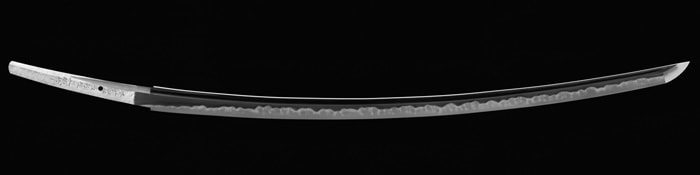
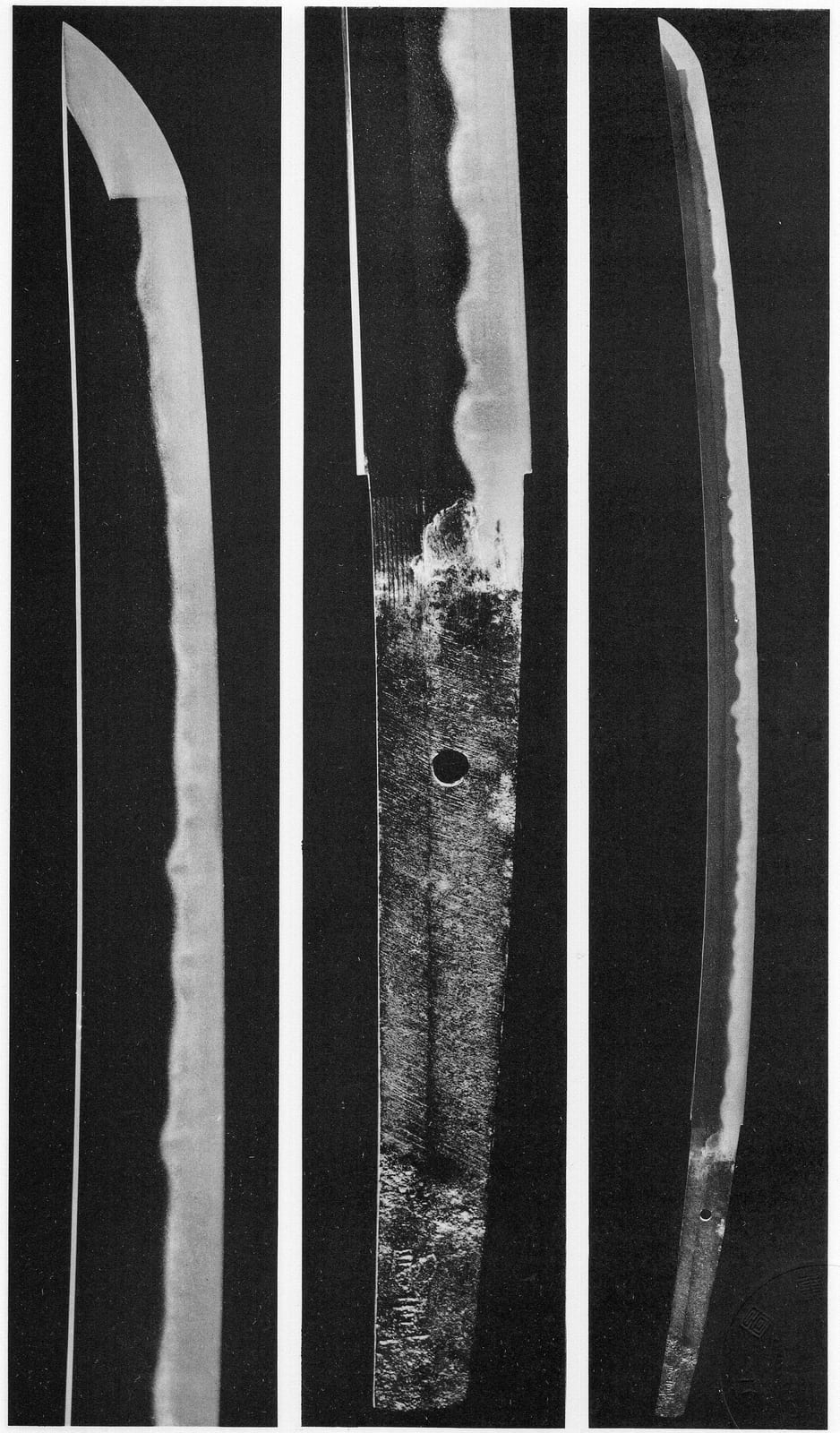
The whole blade, in profile. Photo: dealer in Japan 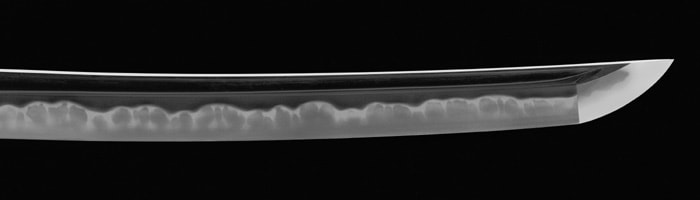
The upper third of the blade, up to the point, with the hamon. Photo: dealer in Japan 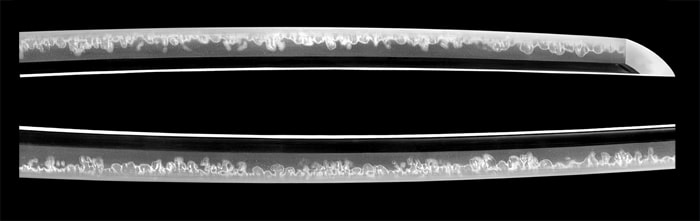
Two sections of the chōji (丁子) hamon, in detail. Photo: dealer in Japan
In short
What we know. Kawashima Kazuki is a member of the Zen Nihon Tōshōkai (全日本刀匠会), the swordsmiths’ association, and enters the NBTHK’s 現代刀職展 (Gendai Tōshokuten): in 2025 he placed 入選七席 (nyūsen shichiseki), seventh among the ranked selections. He states in public that his goal is the Fukuoka Ichimonji of the Bizen-den and, specifically, the Sanchōmō. In 2024 and in 2026 he travelled to Paris with swords of his own for two exhibitions and a lecture at the Maison de la culture du Japon.
How we know it. From the official lists of the Zen Nihon Tōshōkai and the NBTHK, from the Okayama press, from the Maison de la culture du Japon and from the videos filmed in his forge. Almost all of his biography before 2018 is told only by him, in what he publishes about himself and in the profile he wrote for the Zen Nihon Tōshōkai.
What we do not know. His exact date of birth, his NBTHK results between 1997 and 2021, whether his blades show utsuri and whether he has ever finished an utsushi of the Sanchōmō that satisfies him.
Why this monograph II
Kawashima works a few kilometres from where the Sanchōmō was forged, in the same Osafune where the museum now keeps it. This monograph brings together what is known about him: who he is, where his craft comes from, what he looks for in the steel and in the hardening, and what can be asked of him and what cannot.
The route: the swordsmith (profile and biography), his masters, his style and his forging with the long video minute by minute, his prizes, the Sanchōmō, the videos, the glossary and the sources.
How to read the levels II
Each fact carries one of these four levels, the same as in the dossier on which the monograph is based:
- HD, documented fact: it is given by an official or primary source (the Zen Nihon Tōshōkai, the NBTHK, the Agency for Cultural Affairs, the Setouchi city council and its museum), by the press reporting on a public event, or it can be seen in a video.
- AT, attribution: Kawashima himself says it (what he publishes about himself, his profile, his interviews) or a secondary source does, with no independent check.
- II, our interpretation: calculations, comparisons and reasoned readings.
- PC, yet to be checked: the source is missing or there is an unresolved contradiction.
Sections
-
 Profile and biography
The swordsmith
Quick profile and year-by-year biography, from Aki (Kōchi) to Osafune and from Osafune to Paris.
-
 Father, Seki and Tokyo
Masters and lineage
His blacksmith father, Nakata Masanao in Seki and the mukansa Yoshihara Kuniie III. And what a mukansa is, and what it is not.
-
 Bizen-den · jūka-chōji
Style and forging
What he is after, the steel he works with, what he thinks of the sword and the whole process in the long video, minute by minute.
-
 What has been verified
Prizes and recognition
The prizes that can be checked and the records in which he does not appear, so as not to oversell him.
-
 National Treasure
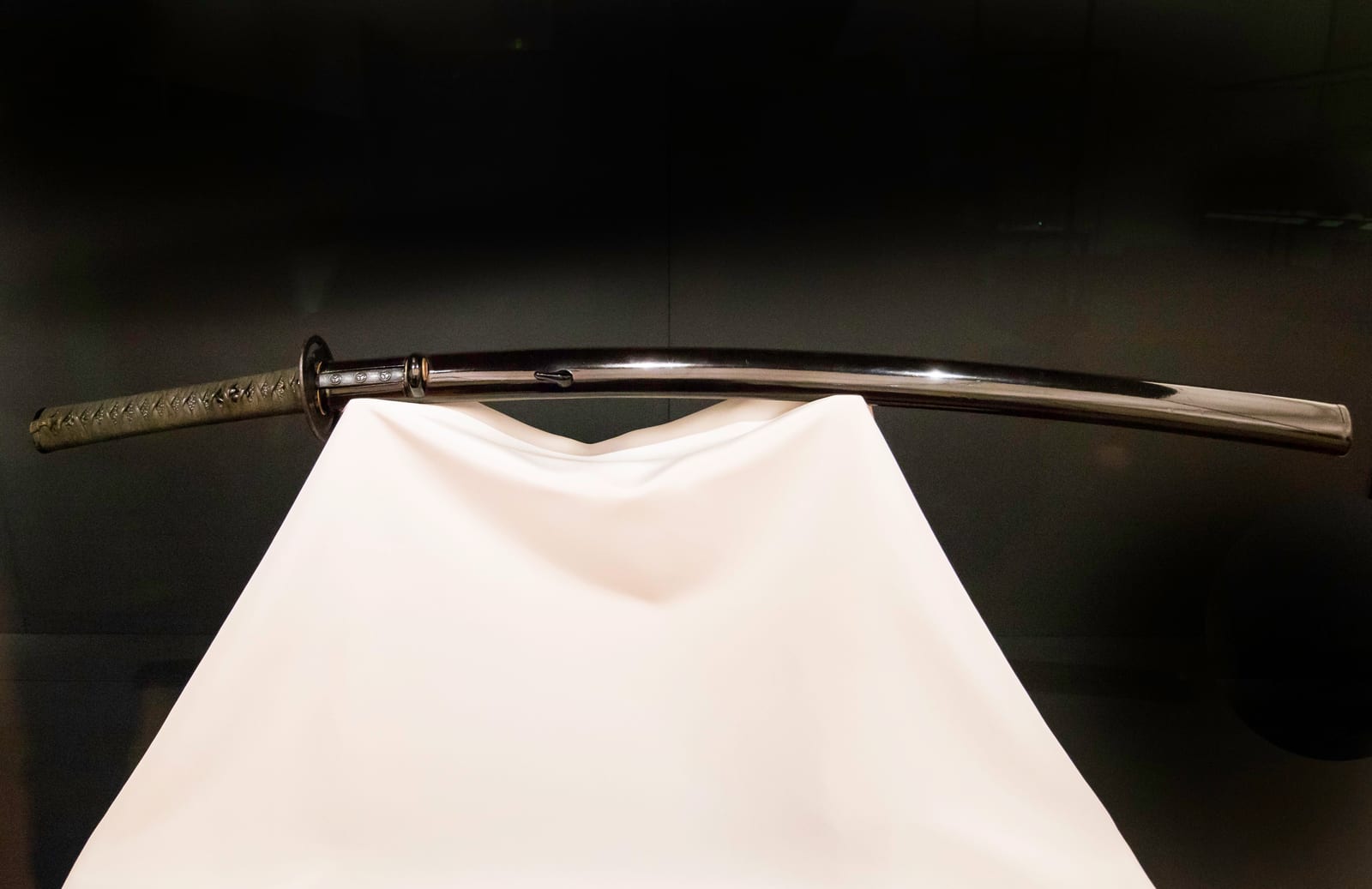
The Sanchōmō (山鳥毛)
The Fukuoka Ichimonji tachi that Kawashima is pursuing: measurements source by source, description, name, history, purchase by Setouchi and known utsushi.
-
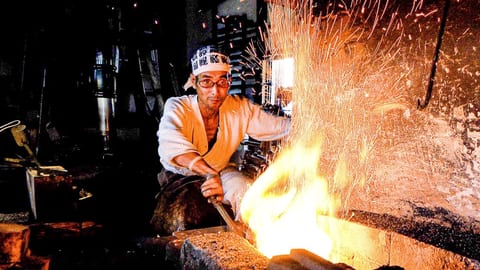 From the forge to Paris
Videos
The videos published about Kawashima and his work, with their channel, their length and what each one tells.
-
 Japanese terms
Glossary
The Japanese terms used in the monograph, with their original script.
-
 Bibliography and credits
Sources
The sources consulted, grouped by subject, and the credits for every image.