On this page
What he is after
- His Zen Nihon Tōshōkai profile sums it up like this: “備前伝福岡一文字を目標としています” (“my aim is the Fukuoka Ichimonji of the Bizen-den”) and “備前伝一文字を目標とし 華麗な重花丁子に挑戦!!” (“with the Ichimonji of the Bizen-den as my aim, going for a showy jūka-chōji!”).
- In 2024 he explained it to the KSB channel: “華やかな『丁子乱れ』で丁子の出入りが激しく高かったり低かったり、これがチョウジの花のように刃文が並んだ重花丁子なんですけど…” (“it is a showy chōji-midare, with the chōji going in and out a lot, some high and some low; this, with the hamon lined up like clove flowers, is the jūka-chōji…”).
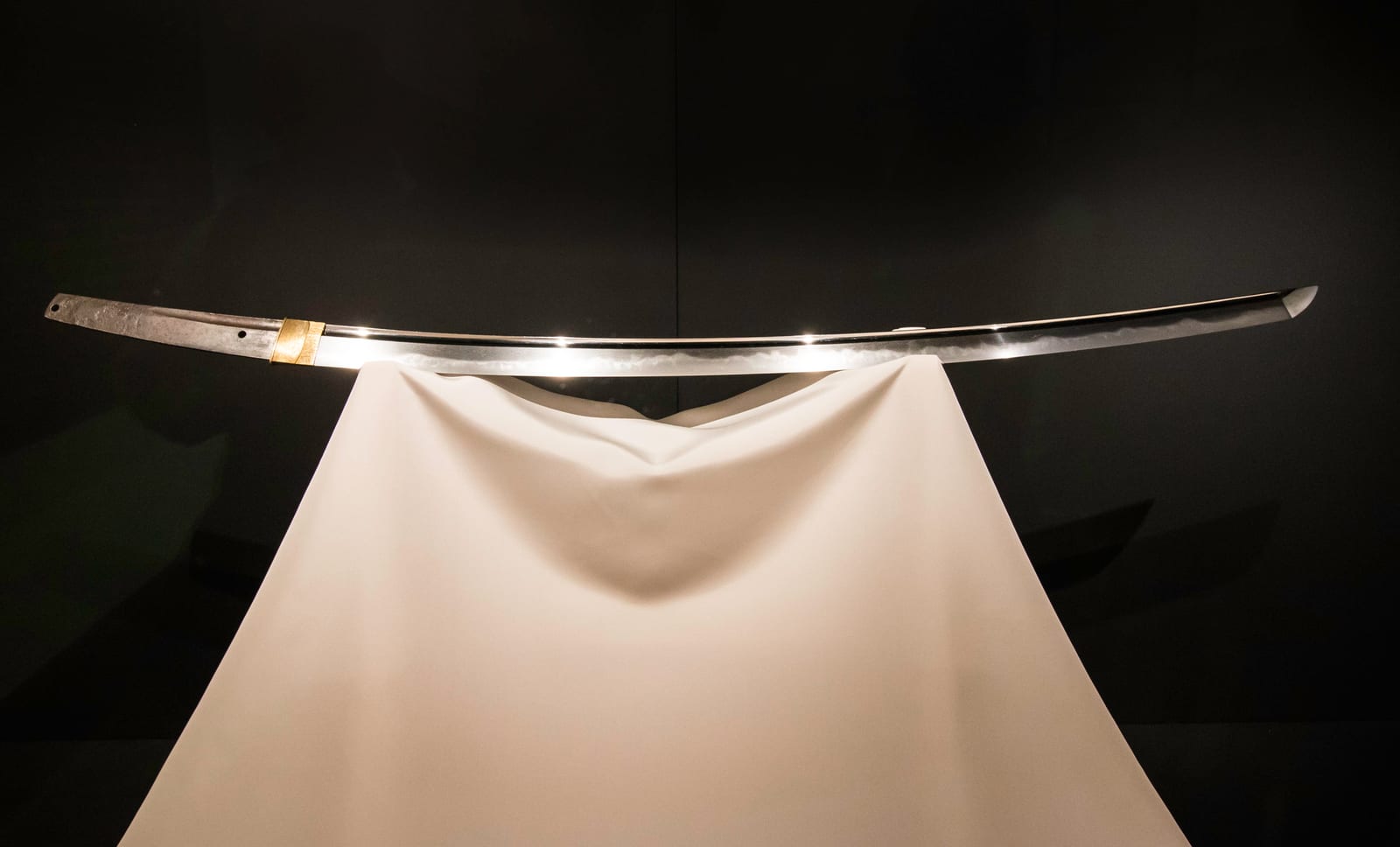
- Reference works he states himself: the sword of the 2005 Doryokushō was made “吉房を念頭において” (Yoshifusa o nentō ni oite), with Yoshifusa, of the Fukuoka Ichimonji, in mind; a tantō of his is intended as a “兼光写し” (Kanemitsu utsushi), after Osafune Kanemitsu, to whom the Uesugi tradition attributed the Sanchōmō.
- The Sanchōmō as his goal: he has stated it himself since 2018 at least, and to OHK in 2026.
- The swordsmith Yokoi Akimitsu, head of the Chūgoku-Shikoku branch of the Zen Nihon Tōshōkai, said on OHK: “「福岡一文字」を地元で再現しようとする第一人者と言っていいと思う” (“I think it can be said that he is the leading figure among those trying to recreate the Fukuoka Ichimonji on its home ground”). It is a colleague’s opinion.
- No source says whether his blades show utsuri, or the midare-utsuri of the original.
Materials and technique he states
What he says and what can be seen in the videos, each row with its level.
| Aspect | Fact | Level |
|---|---|---|
| Steel | “主に玉鋼、三分の一は卸し金を使います”: mostly tamahagane and one third oroshigane. | AT |
| Origin of the tamahagane | “島根県で今現在作ってくれています”: it is produced in Shimane. | AT |
| Oroshigane | He smelts old nails: in the long video, “数百年ほど前に作られた昔の古釘” (“old nails, made a few hundred years ago”); in the tsumi-wakashi video, Japanese nails more than a hundred years old. It can be seen in the videos; their age is his word. | HD |
| Folds | He himself writes ten; in the 2025 talk and on the 2019 visit, twelve. In the long video six folds of shita-gitae and six of age-gitae can be seen. | AT |
| Charcoal | Red pine (赤松炭, probable reading: akamatsu-zumi) cut by hand into 1 cm cubes. | HD |
| Fire temperature | “約1300℃” (yaku sen-sanbyaku do, about 1,300 ℃), according to the video’s caption. | AT |
| Time per sword | “私は三ヵ月くらいが多いです”: about three months. | AT |
| Key steps, in his view | Forging (鍛錬, tanren) and hardening (焼き入れ, yaki-ire): “ここで刀の強度や反りが決まります” (“this is where the strength and curvature of the sword are decided”). | AT |
| What sets a good sword apart | “どれだけ心を込めて作ったか、例えば細かく丁寧にヤスリをかけたりナカゴの形などを整えているか” (“how much heart has gone into making it: for example, whether it has been filed in detail and with care, or whether care has been taken over the shape of the nakago”). | AT |
| Whom he forges for | “刀が好きな人、居合に使いたい人など… 普通の会社員の方もおります” (“people who like swords, people who want to use them in iai… there are ordinary office workers too”). | AT |
What he thinks of the sword
- An amulet, not a weapon. “僕たち刀鍛冶は、武器を作っているわけじゃない” (“we swordsmiths do not make weapons”). In Paris: “日本刀は家族や一族を守るお守りであり、芸術作品アート” (“the Japanese sword is an amulet that protects the family and the lineage, and a work of art”). In 2025: “もし今が戦国時代だったら僕は刀作りたくないなと思いました… 僕は調和好きだから、愛が好きだから、平和が好きだから。だから僕は守り刀を作りたい” (“I thought that, if we were in the Sengoku period now, I would not want to make swords… Because I like harmony, I like love, I like peace. That is why I want to make mamori-gatana”).
- A weapon that makes you happy. “武器なんだけど持ったときに幸せな気持ちになれる、そんな刀を造りたい” (“it is a weapon, but I want to make swords that make you feel happy when you hold them”) (long video, 39:29); and in 2024, that he wanted to show in Paris “武器以上の"日本人が持つ美の感性"” (“beyond the weapon, ‘the Japanese sense of beauty’”).
- At the 2026 Paris lecture he is said to have stated that the present-day sword is not a weapon but a total work of art that brings together the finest craftsmen. We have only seen it in the summary of a press article.
- Forging the sword is forging oneself. “刀作りは自分自身を刀に表現する仕事だと思いますので、いい刀を作るためにはまず自分自身の鍛練が必要です。「剣心鍛道」とは、刀作りの座右の銘です” (“I think making swords is work in which you express yourself in the sword, so to make a good sword you first have to forge yourself. Kenshin Tandō is my motto for making swords”).
- What a great sword is. “手に取った時に何か感じるもの、教えてくれるもの… 日本刀は無機質な鉄でできてますが、生命を感じます” (“something you feel when you take it in your hand, something that teaches you… The Japanese sword is made of inert iron, but you feel life in it”).
- Fire. “神様ですよね、火は” (“fire is a god, isn’t it?”).
- Humility. “今でも失敗が多いので… 刀かし職人ですって胸を張るのはちょっと恥ずかしい” (“I still fail a lot… I am a little embarrassed to boast of being a swordsmith”).
The process, minute by minute
The minutes are taken from the official Japanese subtitles of the video “日本刀ができるまで” (Japanese Industry, 39:52, 2024). The translated subtitles are automatic and unreliable; it is best to follow the Japanese ones.
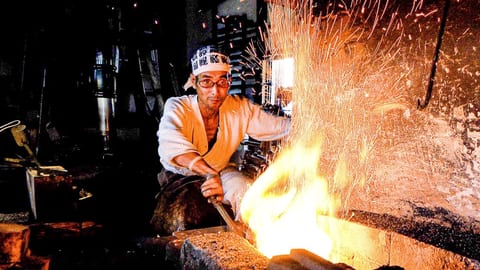 Play: 日本刀ができるまで。刀鍛冶職人が命を燃やす世界最高峰の刀剣。 (How a Japanese sword comes to be: the finest sword in the world, into which the swordsmith burns his life)
日本刀ができるまで。刀鍛冶職人が命を燃やす世界最高峰の刀剣。 (How a Japanese sword comes to be: the finest sword in the world, into which the swordsmith burns his life) · Japanese Industry (ジャパニーズインダストリー, Japanīzu Indasutorī)
39:52 · 15 March 2024
The long video: the whole process in his forge, from the oroshigane to the carving of the hi. The official Japanese subtitles are reliable; the translated ones, automatic, are not (they render the name of the Sanchōmō as “hair of the mountain birds”). The minute-by-minute breakdown is just above.
Chapters of the long video
| Minute | Stage | Level |
|---|---|---|
| 00:43–01:08 | Introduction: the forge “high up on a mountain”; he entered the craft at 18 out of admiration for his father, a cutlery blacksmith. | HD |
| 01:17 | Preparing the hearth (火床, hodo). | HD |
| 02:22 | He smelts old nails to make oroshigane (卸金). | HD |
| 03:58–04:02 | The tamahagane: “玉鋼は日本の古式製鉄法で作られる” (“tamahagane is made with the old Japanese method of making iron”). | HD |
| 04:50 | He builds the base of the stack (ヘコ台, probable reading: heko-dai). | HD |
| 04:58 | Sledgehammer blows to drive out impurities. | HD |
| 05:17–05:36 | He covers the steel with straw, straw ash (藁灰, warabai) and clay. | HD |
| 05:55 | Forge welding: “炎から火花が出て鋼が鍛着する” (“sparks fly from the flame and the steel welds”). | HD |
| 06:34–06:48 | Cutting with a chisel (鏨, tagane) and folding (折り返し, orikaeshi). | HD |
| 09:00 | He cuts the red-pine charcoal by hand into 1 cm cubes. | HD |
| 09:09–12:32 | Mizu-heshi: he heats, flattens to about 5 mm and cools in water; “火床の温度は約1300℃” (hodo no ondo wa yaku sen-sanbyaku do; “the hearth is at about 1,300 ℃”). | HD |
| 12:38–12:57 | He breaks the steel into pieces of 2–2.5 cm and sorts them by their carbon content, piece by piece. | HD |
| 13:04–14:01 | Tsumi-wakashi: he stacks, covers with ash and clay, heats and consolidates. | HD |
| 14:15–16:03 | Shita-gitae, which cleans the steel and adjusts the carbon: six folds. | HD |
| 16:08–18:54 | Age-gitae, which forms the steel of the body: he changes the direction of the fold; two folds and then four more. | HD |
| 20:43–22:21 | He forms the kawagane, the outer steel, richer in carbon. | HD |
| 22:47–23:54 | He forms the shingane, the core, with less carbon. | HD |
| 24:00–24:32 | Tsukurikomi: he wraps the core in the outer steel (“折れず曲がらず”, “it neither breaks nor bends”). | HD |
| 24:49–25:33 | Sunobe: he draws the bar out to the length of the blade. | HD |
| 25:33–26:02 | Hizukuri: he forges the edge and the shape. | HD |
| 26:06–26:19 | He pares it down with the draw-knife (鏟がけ, sen-gake). | HD |
| 26:30–26:55 | He removes the scale (黒皮, kurokawa). | HD |
| 27:07–27:28 | Filing (やすりがけ, yasuri-gake). | HD |
| 27:44–28:02 | He draws the hamon before the tsuchioki. Caption: “川島さんは山鳥毛写しを得意とする” (“Kawashima excels at utsushi of the Sanchōmō”). | HD |
| 28:11–28:18 | Two hardening clays: with and without charcoal powder. | HD |
| 28:36–29:12 | Tsuchioki: “焼き刃土の置き方で刀紋が変わるため慎重に土置きを行う” (“since the hamon changes with the way the hardening clay is laid on, the tsuchioki is done with care”). | HD |
| 29:23–29:56 | Hardening: “焼き入れで刀の出来が左右される” (“how the sword turns out depends on the hardening”); he dries the clay over the fire little by little. | HD |
| 31:17 | He works in the dark to see the colour of the steel. | HD |
| 32:16 | He moves the blade back and forth to heat it evenly. | HD |
| 34:09 | Quench in water. | HD |
| 34:18 | Light tempering: “僅かに焼き戻しをする” (“he gives it a light temper”). | HD |
| 35:07–35:14 | He corrects the curvature with a small hammer. | HD |
| 35:48–36:09 | He takes the clay down and does a test polish to see the hamon: “一番ドキドキする瞬間” (“the most nerve-racking moment”). | HD |
| 37:08 | “重花丁子の刀紋が浮かび上がってきた”: a jūka-chōji appears. | HD |
| 37:25–37:35 | He carves the hi, the groove: “デザイン性を出し、軽量化” (“to give it design and lighten it”). | HD |
| 37:52 | Afterwards, the professional polisher finishes the blade. | HD |
| 38:04 | He shows earlier swords of his. | HD |
| 39:29 | “武器なんだけど持ったときに幸せな気持ちになれる、そんな刀を造りたい” (“it is a weapon, but I want to make swords that make you feel happy when you hold them”). | HD |
The tsuchioki, up close
The tsuchioki is the step in which the clay is applied before hardening, and it decides the hamon. Tiny Mouse Factory filmed it without narration before the ceremonial hardening of 5 August 2023.
In 2026, in front of OHK, Kawashima was preparing a tsuchioki “一文字の山鳥毛を手本にして” (“taking the Ichimonji’s Sanchōmō as a model”). On his preliminary drawing of the hamon: “このように(刃文が)入ってくれるとすごくうれしいが、このようには入らないんです” (“I would be very happy if the hamon came out like this, but it does not come out like this”). After the hardening: “良い反り。いい感じに反った… 思っていた通りではないが、出来はいいんじゃないでしょうか” (“good curvature, it has curved nicely… it is not what I had in mind, but I think it has turned out well”).
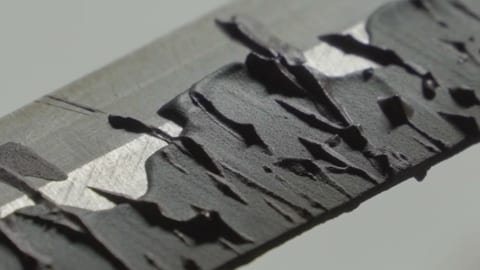 Play: 日本刀製作の超重要工程・焼き刃土置き 刀匠・川島一城氏(備前伝) (A crucial step in making a Japanese sword, the tsuchioki: the swordsmith Kawashima Kazuki, Bizen-den)
日本刀製作の超重要工程・焼き刃土置き 刀匠・川島一城氏(備前伝) (A crucial step in making a Japanese sword, the tsuchioki: the swordsmith Kawashima Kazuki, Bizen-den) · Tiny Mouse Factory (にしやまゆうき, Nishiyama Yūki)
3:34 · 28 July 2023
The tsuchioki before the ceremonial hardening at the Yukie shrine, without narration and with music.
 Play: 夢の出発点から23年…名刀・福岡一文字の山鳥毛を目指し炎と向き合う刀工・川島一城さん【岡山】 (23 years since the starting point of the dream: the swordsmith Kawashima Kazuki faces the fire with the goal of the Sanchōmō, the great sword of the Fukuoka Ichimonji [Okayama])
夢の出発点から23年…名刀・福岡一文字の山鳥毛を目指し炎と向き合う刀工・川島一城さん【岡山】 (23 years since the starting point of the dream: the swordsmith Kawashima Kazuki faces the fire with the goal of the Sanchōmō, the great sword of the Fukuoka Ichimonji [Okayama]) · OHK, Okayama Broadcasting (OHK公式チャンネル, OHK kōshiki channeru)
7:16 · 2 July 2026
Report: the forge in 2003 and today, his difficulties, a tsuchioki with the Sanchōmō as a model, his life at the forge, the trip to France and the opinion of the swordsmith Yokoi Akimitsu.