On this page
Identity
- Official name
- 太刀〈無銘一文字(山鳥毛)/〉 (tachi mumei Ichimonji, Sanchōmō): unsigned tachi, Ichimonji school, “Sanchōmō” HD
- Readings
- さんちょうもう (Sanchōmō, the usual one in Setouchi) and やまとりげ (Yamatorige, the one in the cultural-heritage database) HD
- Other readings
- やまどりげ (Yamadorige), さんしょうもう (Sanshōmō) and やましょうもう (Yamashōmō) AT
- Type
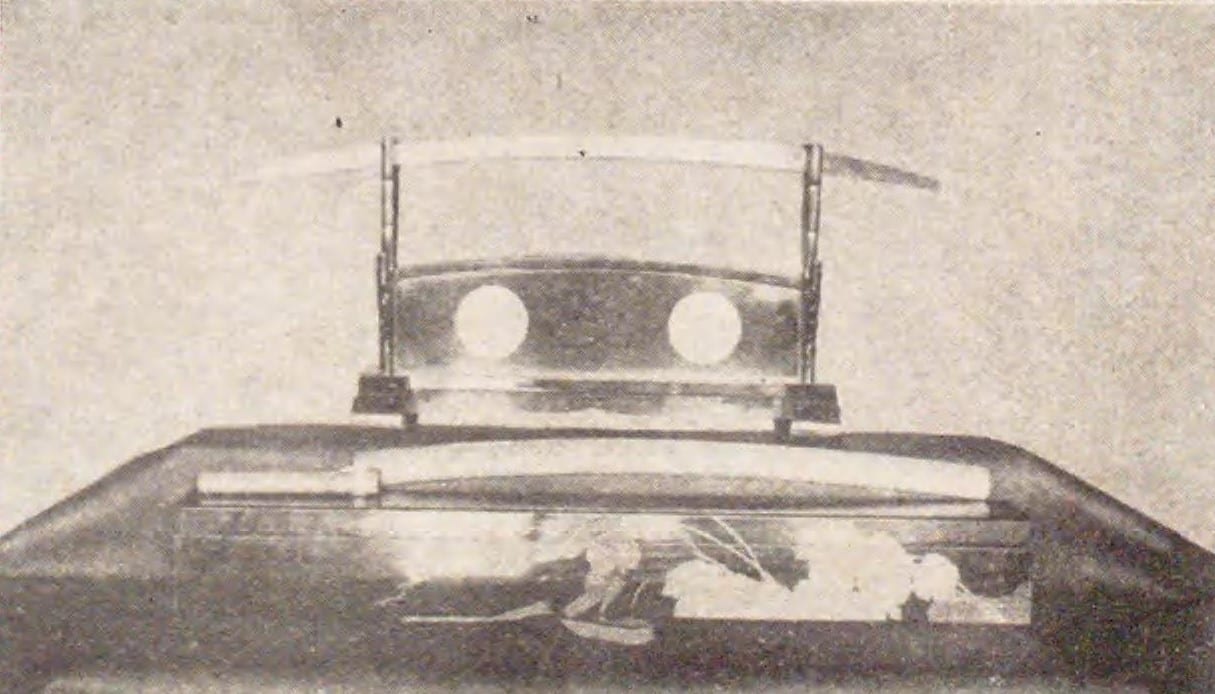
- Tachi, shinogi-zukuri, iori-mune, kissaki ikubi, high koshizori and with funbari (“鎬造、庵棟、鋒猪首となり、腰反り高く、踏ん張りがある”, shinogi-zukuri, iori-mune, kissaki ikubi to nari, koshizori takaku, funbari ga aru) HD
- Period
- Mid-Kamakura (13th century) HD
- School
- Fukuoka Ichimonji (Osafune-chō Fukuoka, now Setouchi) HD
- Signature
- Unsigned; ubu nakago, never shortened HD
- Protection
- National Treasure under the old law (3 May 1940), today equivalent to Important Cultural Property; National Treasure (国宝, kokuhō) since 29 March 1952 HD
- Earlier protection
- Important Art Object (24 December 1937) AT
- Associated mounting
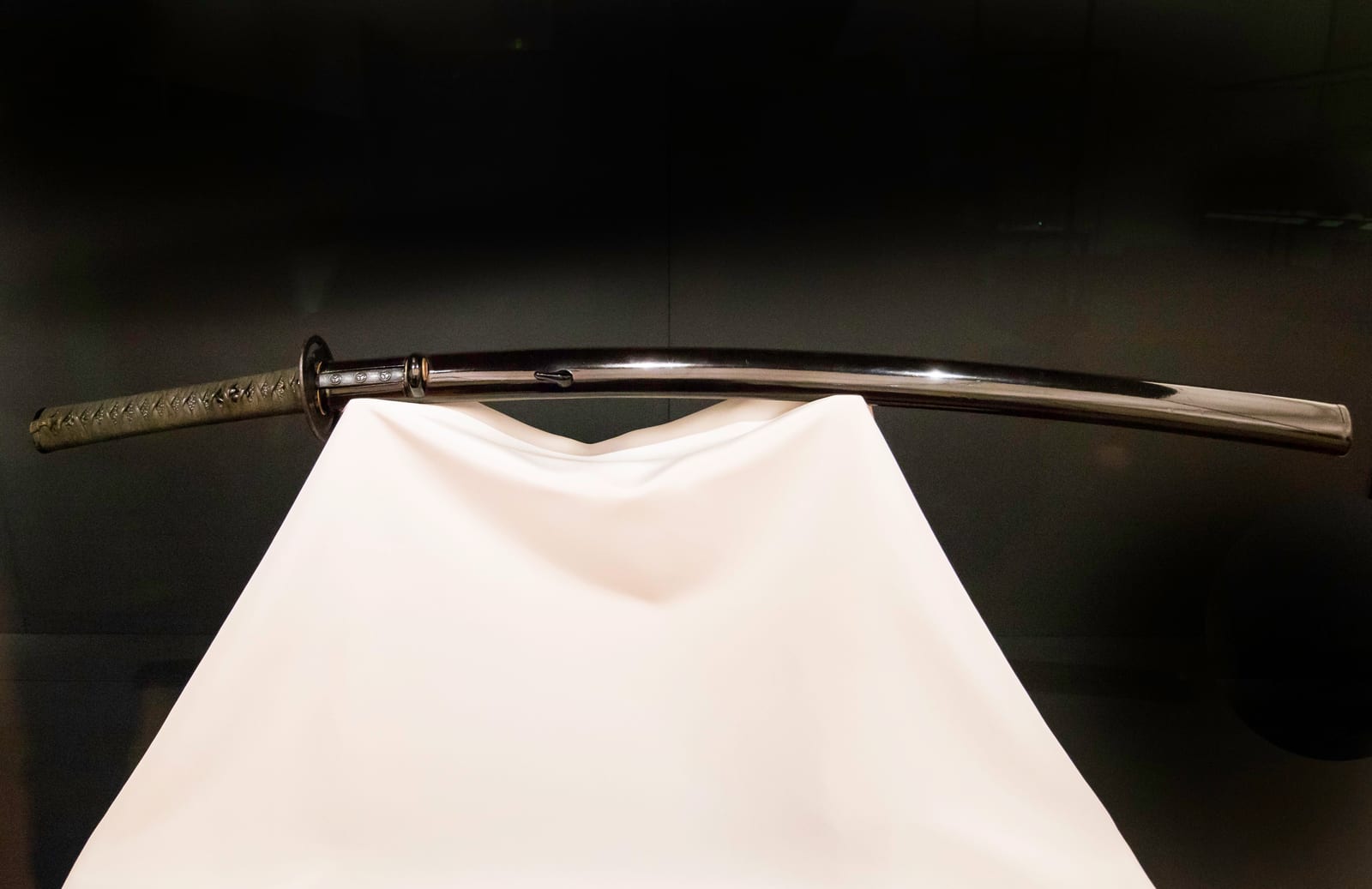
- Black aikuchi uchigatana-koshirae, without tsuba, “上杉家以外では類を見ない” (“unmatched outside the Uesugi house”) HD
- Dating of the mounting
- Late Muromachi or Momoyama period, depending on the source AT
- Owner
- City of Setouchi, since 22 March 2020; it is kept by the Bizen Osafune Japanese Sword Museum HD
The official measurements
The measurements, source by source
The reference figures are those of the Agency for Cultural Affairs’ cultural-heritage database and those of the museum leaflet: 刃長 (hachō) 79.1 · 反り (sori) 3.3 · 元幅 (motohaba) 3.5 · 先幅 (sakihaba) 2.2 · 鋒長 (probable reading: kissaki-naga; length of the kissaki) 3.3 (cm). The others differ through rounding, copying errors or measuring in another way. In centimetres, except the weight.
| Measurement | Heritage database | Museum leaflet | City website, 2020 | City council FAQ, 2019 | Regional plan, 2020 | Japanese Wikipedia | Uesugi register, 1898 | 『日本刀大百科事典』 (Nihontō Dai Hyakka Jiten, 1993), according to transcriptions | Okayama prefecture |
|---|---|---|---|---|---|---|---|---|---|
| Nagasa | 79.1 | 79.1 | 79.1 | 79.5 | 79.1 | 79.5 (cites 79; 79.2 and 80.9) | 弐尺六寸壱分 (ni shaku roku sun ichi bu = 79.1) | 80.3 (2尺6寸5分, ni shaku roku sun go bu) | 71.2 ✗ |
| Sori | 3.3 | 3.3 | 3.3 | 3.4 | 3.3 | 3.2 (cites 3.4) | — | 3.18 (1寸0分5厘, issun go rin) | 2.7 ✗ |
| Motohaba | 3.5 | 3.5 | — | — | — | — | — | 3.48 (1寸1分5厘, issun ichi bu go rin) | — |
| Sakihaba | 2.2 | 2.2 | — | — | — | 2.2 | — | 2.18 (7分2厘, nana bu ni rin) | — |
| Kissaki | 3.3 | 3.3 | — | — | — | 3.3 | — | 3.33 (1寸1分, issun ichi bu) | — |
| Nakago | — | — | — | — | — | — | — | 22.18 (7寸6分5厘, nana sun roku bu go rin) | — |
| Weight | — | — | — | 1.06 kg | 1.06 kg | 1.06 kg | — | 1.06 kg | — |
| Mekugi-ana | — | 2 (in the photo) | — | — | — | 2 | — | — | — |
The column from the 『日本刀大百科事典』 (Nihontō Dai Hyakka Jiten), by Fukunaga Suiken, we have only seen in secondary transcriptions; the work itself could not be consulted.
Figure by figure
- Nagasa: 79.1 cm. The Uesugi house register of swords (1898) gives “長 弐尺六寸壱分” (nagasa ni shaku roku sun ichi bu), which is 79.1 cm: it matches the official figure. The 80.3 (2尺6寸5分, ni shaku roku sun go bu) is only partly explained by measuring from the ha-machi (that would give about 79.7). Measured along the curve of the back, the blade gives about 79.5, exactly the city’s 2019 figure; along the curve of the edge, about 80.3–80.4. It may also be a misprint in copying 2尺6寸1分 (ni shaku roku sun ichi bu). In any case, 80.3 is not an official figure.
- Sori: 3.3 cm. The city council gave 3.4 cm in 2019 and Wikipedia gives 3.2. The difference from 3.18 falls within reading or rounding errors; without the printed source it cannot be resolved.
- Motohaba 3.5, sakihaba 2.2 and kissaki 3.3 cm: the figures of 3.48, 2.18 and 3.33 are the same measurements unrounded. There is no real discrepancy.
- Nakago: about 22–23 cm. There is no official figure, and the conversion in circulation is wrong: 7寸6分5厘 (nana sun roku bu go rin) is 23.18 cm, not 22.18.
- Weight: 1.06 kg, published by the city council in 2019 and in 2020. It is not stated whether this is the bare blade or with the habaki. Our own calculation gives 1.01–1.07 kg for the bare blade with a bōhi running to the end of the nakago: it fits the blade alone, not the mounted blade.
- Kasane: there is no official figure. Secondary sources give about 0.9 cm at the base (3分弱, san bu jaku) and about 0.5 cm at the point (1分6厘弱, ichi bu roku rin jaku).
- The Okayama prefecture record is wrong: 71.2 cm and a sori of 2.7 cm match no other record.
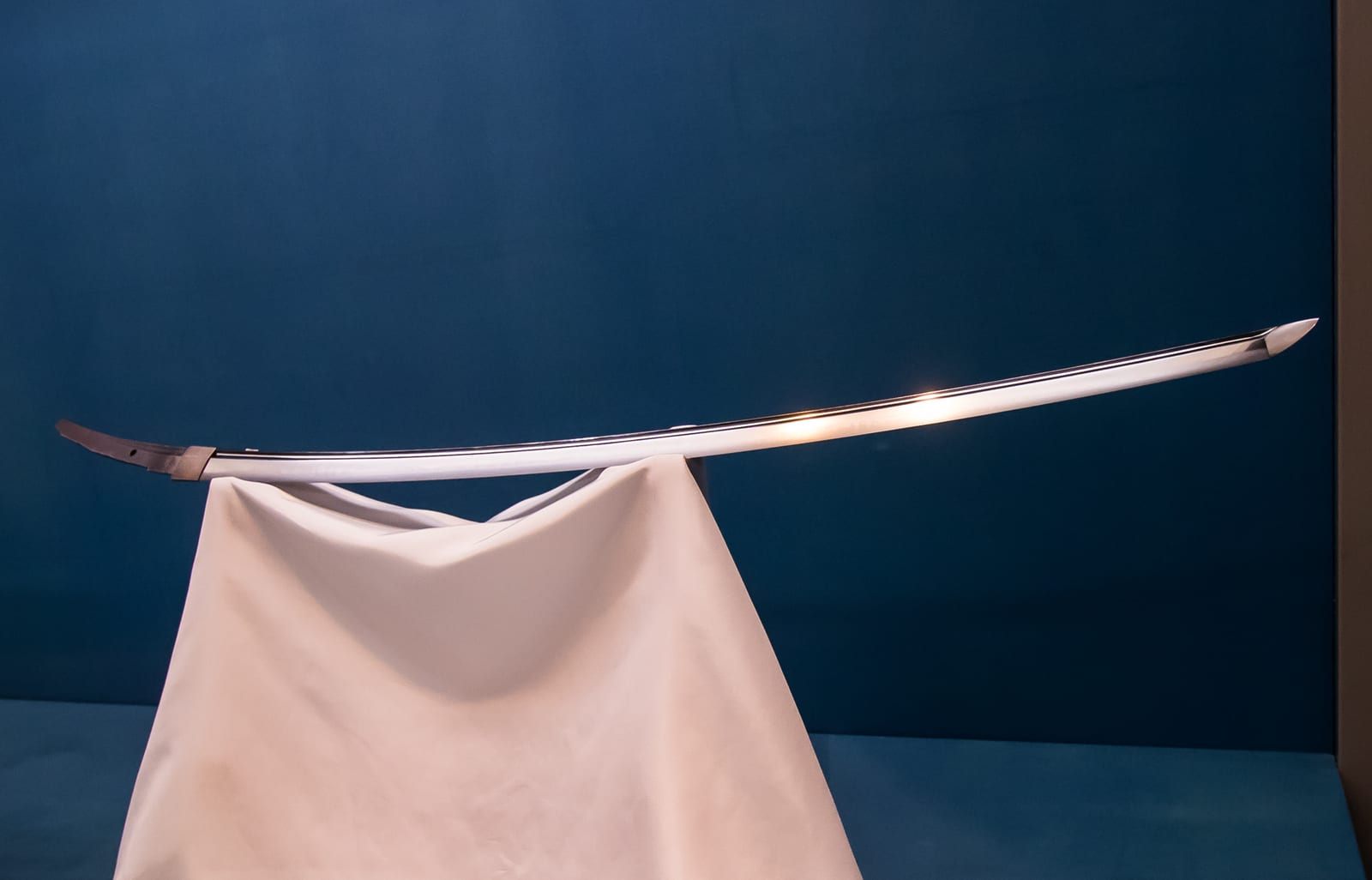
鍛は板目、淡く乱映り立つ。刃文は重花調の大丁子乱れでほとんど鎬におよび、足葉頻りに入り変化極まりなく、腰元、物打下は特に沸強くつき金筋かかり、帽子は表は張って大きく乱込んで返り、掃きかけかかり、裏は乱れ込みとなる。表裏に棒樋を茎先まで掻き流す。茎は生ぶ、勝手下がりの鑢目がつき、銘はない。 (The steel is itame, with a faint midare-utsuri. The hamon is an ō-chōji midare of jūka-chōji type that reaches almost to the shinogi, with abundant and endlessly varied ashi and yō; at the base and below the monouchi, especially strong nie and kinsuji. The bōshi, on the omote, is broad, runs in in large waves and turns back, with hakikake; on the ura, midare-komi. On both faces, a bōhi that runs to the tip of the nakago. The nakago is ubu, with katte-sagari yasurime, and bears no signature.)
The official text, in English
- Jihada: itame with a faint midare-utsuri. Secondary sources add mokume, fine ji-nie and a somewhat visible steel.
- Hamon: ō-chōji midare of jūka-chōji type, so high that it almost reaches the shinogi, with abundant and highly varied ashi and yō; at the base and below the monouchi, strong nie and kinsuji. The museum leaflet adds tobiyaki everywhere and a hamon mainly of nioi, with areas of nie.
- Bōshi: on the omote face, broad, it runs in in large waves and turns back with hakikake; on the ura, midare-komi. Wikipedia describes the ura as notare with a komaru turn-back.
- Horimono: bōhi on both faces, running to the end of the nakago. The leaflet explains it as a device “to lighten the blade and make it easier to wield”.
- Nakago: ubu, with katte-sagari yasurime, unsigned and with 2 mekugi-ana. Kurijiri, according to Wikipedia.
- A nick a little above the habaki. The leaflet interprets it as proof that the tachi was used in combat.
For the Agency it is a work “日光一文字と並ぶ” (Nikkō Ichimonji to narabu), on a par with the Nikkō Ichimonji, and “刃文が最も大模様に乱れて刃中の変化に富んだ作” (“a work whose hamon has the largest irregular pattern and the greatest variety of activity in the edge”). According to Wikipedia, Satō Hirosuke (Tokyo National Museum) believes the hamon is the product of chance and unrepeatable, and Watanabe Taeko (Sano Museum) considers it impossible to reproduce. No swordsmith can promise an exact copy of this hamon.

The name “山鳥毛” (Sanchōmō)
- The official version: “号は、一説にその刃文が山鳥の羽毛に似ているからというが、他にも説があって明らかでない” (“the name comes, according to one account, from its hamon resembling the plumage of the copper pheasant, but there are other accounts and it is not clear”). The name would come, according to one account, from the hamon resembling the plumage of the 山鳥 (yamadori), but there are others and it is not clear. The 山鳥 (yamadori) is the Japanese copper pheasant.
- The city council records both images: the pheasant’s plumage and “山野が燃えるよう” (san'ya ga moeru yō), a mountain in flames.
- The note in the 1898 Uesugi register: “又山焼毛トモ謂フ、蓋シ焼刃ノ美ナル山鳥ノ尾毛、山野ノ燃ユルノ状ニ似タルヲ以テ” (“it is also called ‘hair of the burning mountain’, for the beauty of its hardened edge recalls the tail feathers of the copper pheasant and a mountain on fire”).
- The reading さんちょうもう (Sanchōmō) comes from Uesugi Kagekatsu’s autograph inventory, which writes it “山てうもう” (Sanchōmō, in the old spelling).
From Uesugi Kenshin to Setouchi
| Date | Event | Level |
|---|---|---|
| Mid-Kamakura | It is forged by an anonymous Fukuoka Ichimonji smith (official attribution on grounds of style). | HD |
| 1556 or 1560 | Nagao Norikage, lord of Shiroi castle (Kōzuke), gives it to Uesugi Kenshin. The old sources attributed it to Osafune Kanemitsu. The Uesugi register gives 1556; a chronicle of 1591 gives 1560. | AT |
| Around 1600 | Uesugi Kagekatsu records it in his autograph inventory as “上秘蔵” (jō-hizō), of his highest esteem, among his chosen swords. | HD |
| Until after the war | It remains with the Uesugi house of Yonezawa (in 1948 it was still theirs). | AT |
| 1948–1958 | A collector from Okayama acquires it. | AT |
| 29 March 1952 | Designated a National Treasure. | HD |
| 1997 | Deposited at the Okayama Prefectural Museum. | AT |
| 2015–2017 | The city of Jōetsu (Niigata) tries to acquire it and fails to reach an agreement with the owner. | AT |
| 29 January 2018 | The owner offers the sword to Setouchi. | HD |
| 30 August 2018 | A swordsmith examines the Sanchōmō to make an utsushi; the document does not say who. | HD |
| 23 October 2018 | Press conference in Tokyo, with Kawashima, and start of the crowdfunding on 1 November 2018. | HD |
| 26 January 2020 | The fundraising target is reached. | HD |
| 17 March 2020 | The Setouchi city assembly approves the acquisition. | HD |
| 22 March 2020 | Setouchi receives the sword and becomes its owner. | HD |
The purchase by Setouchi
- The city bought the Sanchōmō without taxpayers’ money, with donations from citizens and companies: donations to municipalities (ふるさと納税, furusato nōzei) and a crowdfunding campaign.
- According to the final official account, 17,354 individuals and 154 organisations donated, and the sum raised, after expenses, covered 125.5 % of the target.
- An external committee valued the sword, counting its economic effect on the city, above what was paid.
- Helping factors were the “a day in your charge” form of donation (一口佩刀, probable reading: hitokuchi haitō; from October 2019), the display of the sword at the museum in October 2019, with some 5,500 visitors, and the arrival of the “Sanchōmō” character in the video game Tōken Ranbu in December 2019.
- In 2021 the initiative received a commendation from the Minister for Regional Revitalisation.
Where to see it HD
The Sanchōmō is not on permanent display: the Bizen Osafune Japanese Sword Museum shows it roughly once a year. On 26 September 2026 the 2026 season had already ended and the 2027 one had no dates.
The museum offers a virtual-reality viewing of about six minutes and a 4K touch screen for seeing the blade from angles impossible in the showcase.

Known utsushi
- Ōno Yoshimitsu (大野義光) made several utsushi (1984, 1986 and 2004), which are reckoned among the best of his work; they were exhibited in 2019–2021.
- The official utsushi is by Andō Hiroyasu (安藤広康), a swordsmith from Okayama, who finished it in November 2022 for the city of Setouchi, as a gift to the donors, after more than a dozen attempts, of which only two were carried through to the end. Andō: “刃文は偶然の産物。コントロールして出すのは難しい” (“the hamon is the product of chance; it is hard to bring it out at will”).
- The Sankei says that the city council asked “安藤さんら刀工” (Andō-san ra tōkō), Andō and other swordsmiths, for utsushi. Kawashima may have been one of them; it is not confirmed.
- An unnamed swordsmith examined the Sanchōmō on 30 August 2018 to make an utsushi.
Kawashima and the Sanchōmō: what can be stated II
Each statement, with its level and its basis. The conclusion: Kawashima is pursuing the Sanchōmō, but has not finished any utsushi of the Sanchōmō on record.
Certainty matrix
| Claim | Level | What it rests on |
|---|---|---|
| He states the Sanchōmō as his goal. | HD Documented fact | He himself, since 2018 at least, and OHK in 2026. |
| He was at the project’s press conference (Tokyo, 23 October 2018). | HD Documented fact | att.JAPAN report. |
| The replica of the Sanchōmō photographed at that press conference is not his. | AT Attribution | According to Wikipedia, an utsushi owned by a video-game company was lent to the mayor. It must not be attributed to him. |
| He does tsuchioki taking the Sanchōmō as a model. | HD Documented fact | OHK report, 2026. |
| He is presented as a specialist in utsushi of the Sanchōmō. | AT Attribution | Caption of the Japanese Industry video, 2024. |
| In July 2026 he had not yet finished a complete utsushi. | HD Documented fact | He himself, to OHK: “「山鳥毛の写しの刀ができた」というのを早く完成させたいと思っている。長い刀の一部分だけ良い刃文かなというのはあるが、全部がそうというのはなかなか難しい” (“I want to finish soon and be able to say ‘I have made an utsushi of the Sanchōmō’. In a long sword there is sometimes a stretch with a good hamon, but for the whole of it to be so is very difficult”). |
| The website cannot say that Kawashima has replicated the Sanchōmō. | II Interpretation | Because of all the above. |