Documented works
| Work | Designation | Where it is |
|---|---|---|
| Joint work with his brother, signed 天然子完利二十七歳造之 / 一貫斎正行十八歳造之 (Tennenshi Sadatoshi nijūnanasai kore o tsukuru / Ikkansai Masayuki jūhassai kore o tsukuru), 1830 (Bunsei 13) | No designation stated | Private collection; wakizashi in the NBTHK catalogue and tantō on its panel |
| Tantō 源秀寿 (Minamoto Hidetoshi), 1834 (Tenpō 5) | NBTHK Jūyō Tōken | Japanese Sword Museum, Tokyo |
| Katana, the first of the buki-kō, 1839 (Tenpō 10), 71.2 cm | Important Art Object, according to Sesko | Not recorded |
| Katana 源正行 (Minamoto Masayuki), 1844 (Tenpō 15), one of those made at Komoro | NBTHK Jūyō Tōken | Private collection |
| Katana for Kubota Sugane, 為窪田清音君 山浦環源清麿製 (Kubota Sugane-kun no tame, Yamaura Tamaki Minamoto Kiyomaro sei), 1846 | Important Art Object | Private collection |
| Tantō 清麿 (Kiyomaro), 1847, with kurikara | No designation stated | Yasukuni shrine |
| Daishō 源清麿 (Minamoto Kiyomaro), 1848 (Kaei 1) | NBTHK Tokubetsu Jūyō | Private collection |
| Katana 源清麿 (Minamoto Kiyomaro), 1849 (Kaei 2), of the Kimura family | Treasure of Nagano Prefecture (1966) | Ueda (Nagano), Kimura family |
| Katana 源清麿 (Minamoto Kiyomaro), 1850 (Kaei 3), 76.4 cm | NBTHK Jūyō Tōken (1981) | Private collection |
| Naginata for Okada Zenpaku (岡田善伯), 1850 | NBTHK Jūyō Tōken | Private collection |
| Katana 源清麿 (Minamoto Kiyomaro), with a nagasa of 73.9 cm and a sori of 2.0 cm | No designation | Kyūshū National Museum (F4) |
Three pieces
The katana he made in 1846 for Kubota Sugane is the first with the name Kiyomaro and, for the NBTHK, one of the masterpieces of his life: restrained but strong nie and nioi, kinsuji, nie-suji and sunagashi, and two parallel grooves. The 1848 daishō is rare for being a pair by the same hand; the NBTHK believes it was commissioned by a samurai of the Matsushiro domain. The Nezu Museum called it Kiyomaro’s masterpiece in 2014. The 1850 katana, Jūyō Tōken since 1981, may have started out as a naginata, judging by the shape and the length of the tang.
In the lists and the treatises
He is one of the three great smiths of Edo (江戸三作, Edo sansaku), with Suishinshi Masahide and Taikei Naotane. The NBTHK brought them together from 8 March to 11 May 2025 at its Japanese Sword Museum. In 2014, for the bicentenary of his birth, a travelling exhibition went round the Sano Museum, the Shinano museum in Nagano and the Hagi museum, and ended at the Nezu Museum in Tokyo with work from his twenty-four-year career. No work of his is recorded as a National Treasure or an Important Cultural Property in the sources consulted.
Gallery
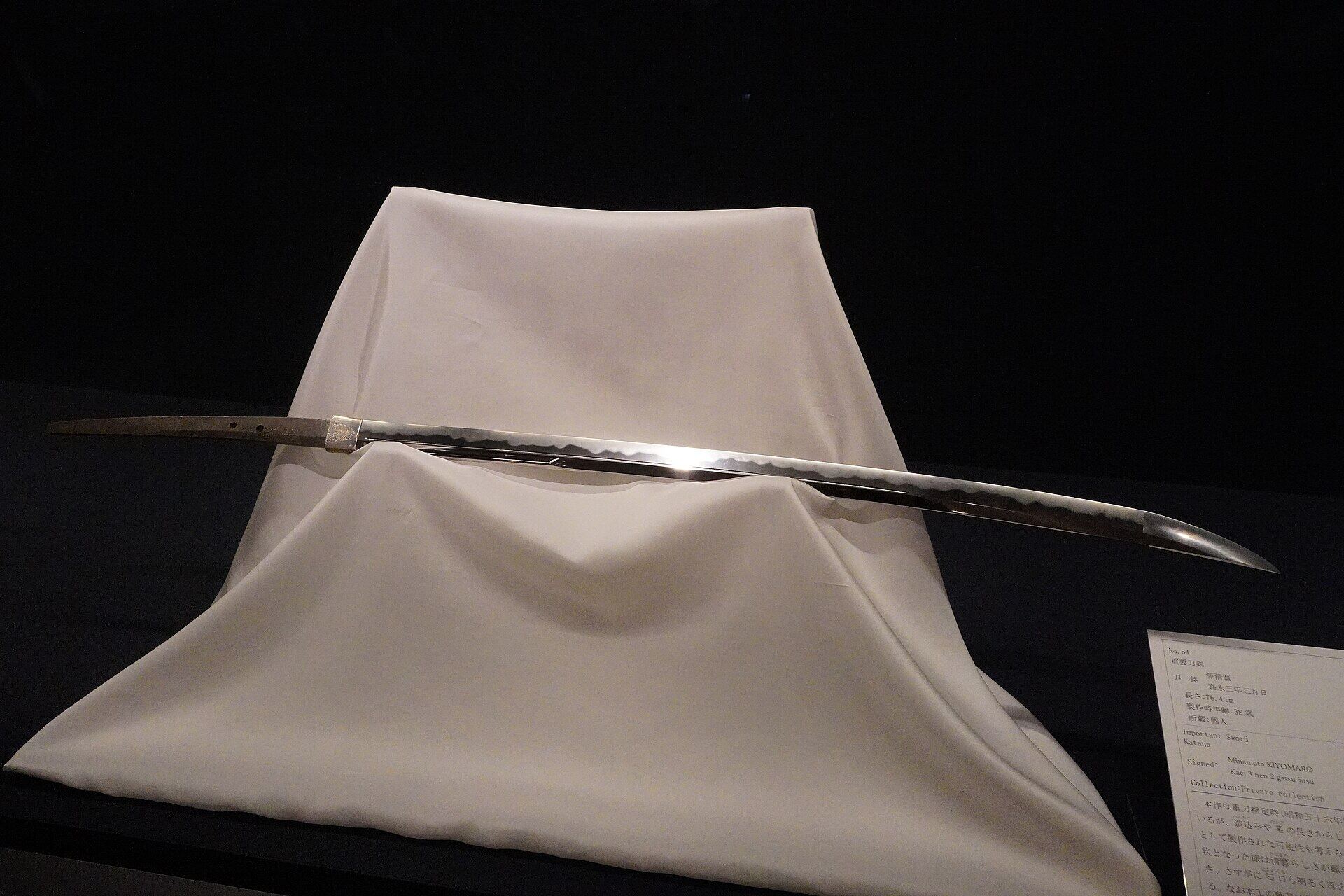
Katana signed 源清麿 (Minamoto Kiyomaro), of the second month of 1850 (Kaei 3), NBTHK Jūyō Tōken: nagasa 76.4 cm. SLIMHANNYA, via Wikimedia Commons · CC BY-SA 4.0 · source 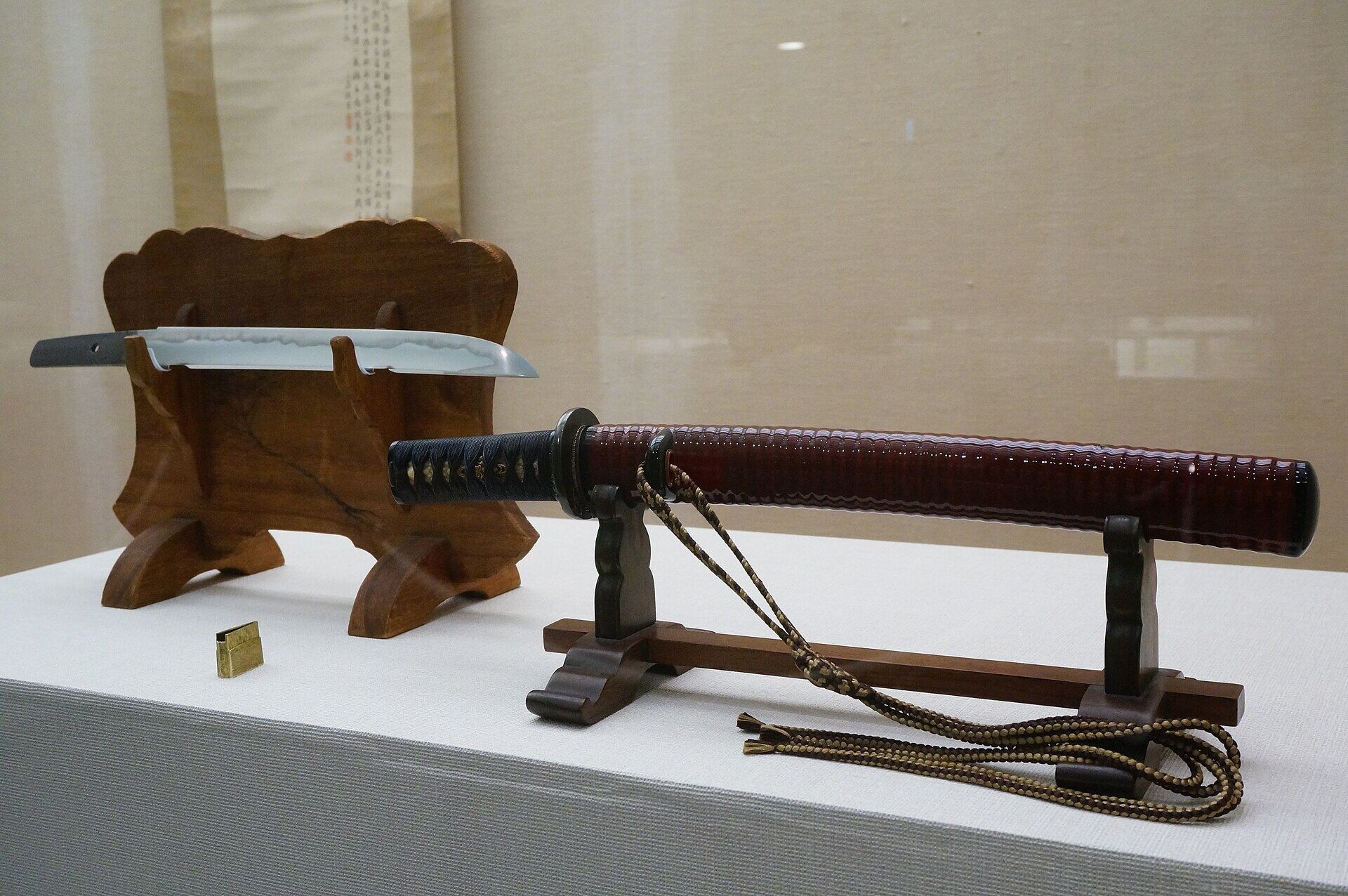
Tantō by Kiyomaro with its mount from the late Edo period. SLIMHANNYA, via Wikimedia Commons · CC BY-SA 4.0 · source 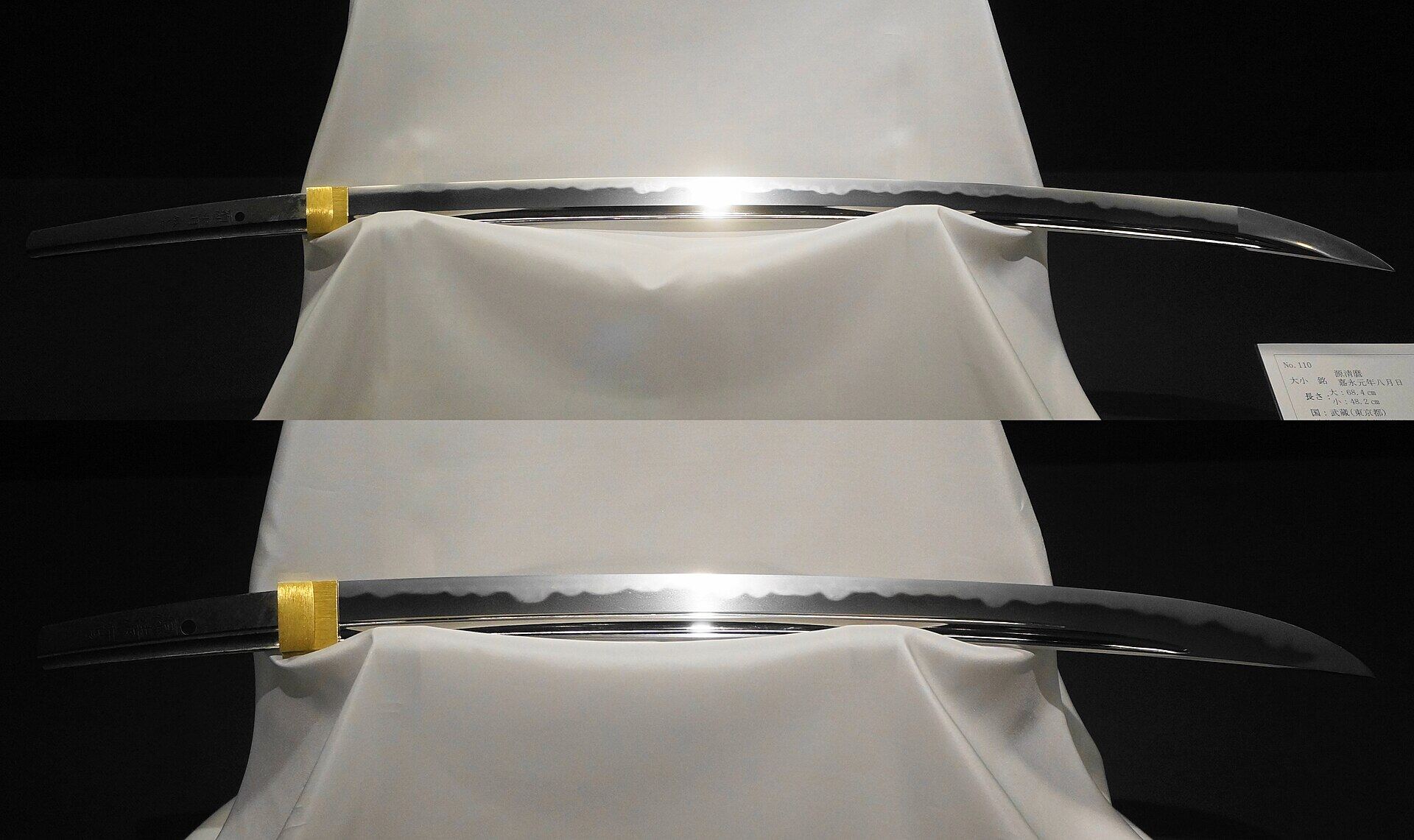
Daishō by Kiyomaro of 1848 (Kaei 1), at an exhibition: the katana above and the wakizashi below. SLIMHANNYA, via Wikimedia Commons · CC BY-SA 4.0 · source


