On this page
Kantei keys
- Sugata
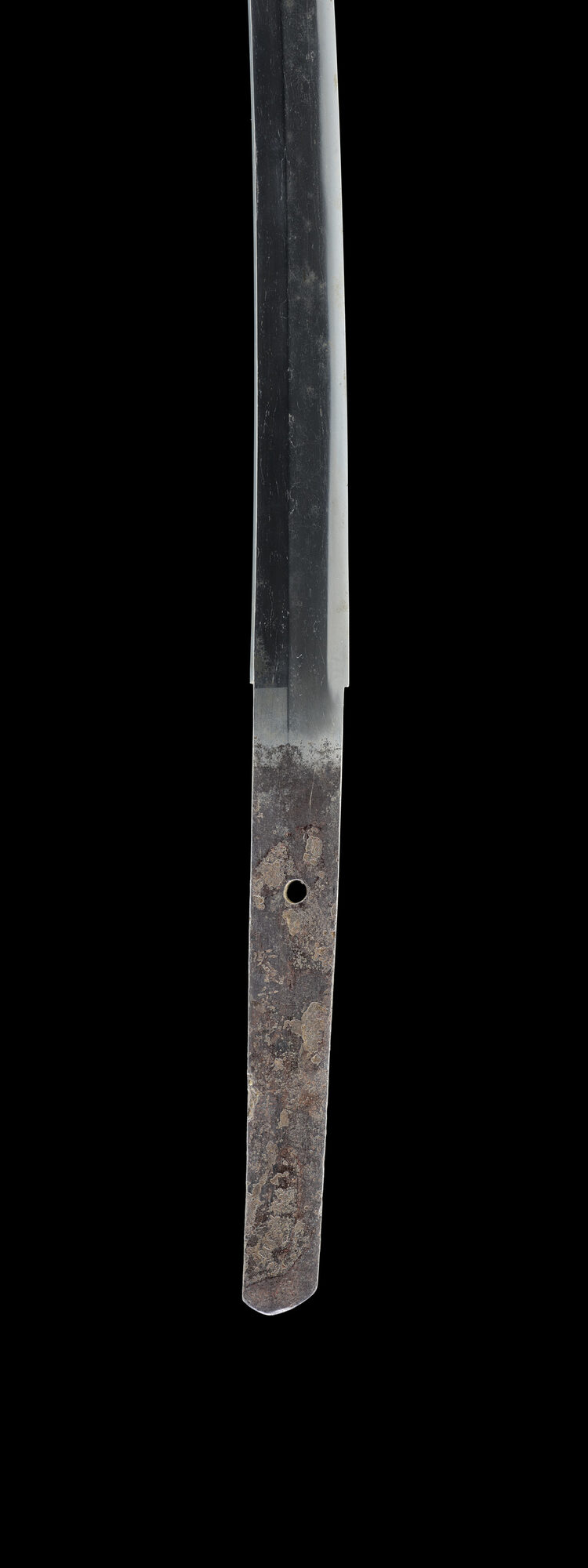
- In the katana of 1555 from Tatsuno: somewhat short, wide and thick, with sori at the point and a long chū-kissaki, the shape of its time HD
- Jigane
- Itame with plenty of mokume, a visible hada and a somewhat dark colour, in the two best-known Kiyomitsu; compared with Sukesada, a somewhat less refined work. For Sesko, in the Sue-Bizen of those years the steel loses its “oily” look and utsuri becomes rare. HD
- Hamon
- Mostly suguha or hitatsura; according to the NBTHK, double gunome makes up less than 10% of the work of Gorōzaemon-no-jō. Strong ha-nie and nie-kuzure in any type of hamon, and some yō that look like patches, “Kiyomitsu’s drool”, his main trait. HD
- Bōshi
- In the katana of 1555: wide midare-komi, in komaru with hakikake on one side and pointed on the other, with a long turn-back that continues into muneyaki HD
- Nakago and mei
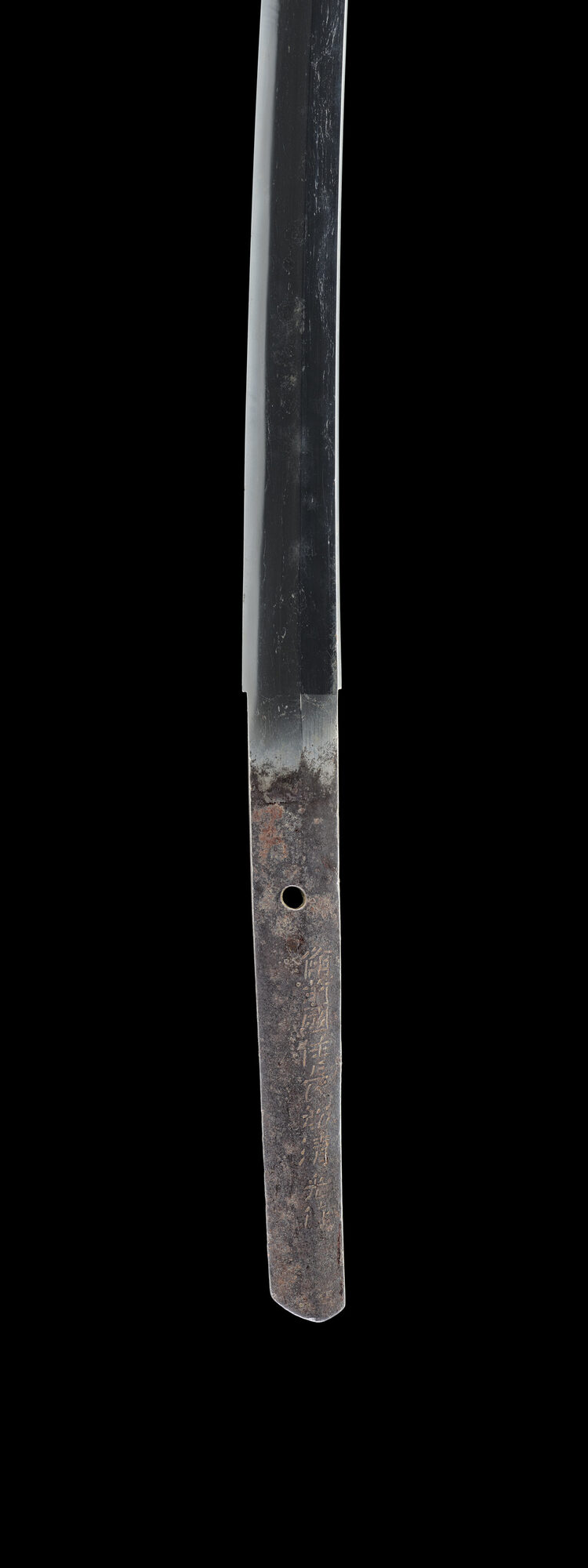
- Without a personal title on the katana of 1550, 備前国住長船清光作 (Bizen no kuni-jū Osafune Kiyomitsu saku), with a different hand on each side: for the Kyūshū National Museum, a sign that it was not a commission. With a title on that of 1555: 備前国住長船五郎左衛門尉清光 (Bizen no kuni-jū Osafune Gorōzaemon-no-jō Kiyomitsu) HD
- Horimono
- The NBTHK does not confirm for him the Sue-Bizen dragon kurikara, which dates from 1479–1520, before his time HD
A Sue-Bizen of suguha
- The NBTHK sums it up like this: the hamon of Katsumitsu is mostly midare with prominent chōji; that of Kiyomitsu is based mostly on suguha; double gunome is the mark of Sukesada.
- At Tatsuno, Gorōzaemon-no-jō almost always tempered hitatsura, to his lord’s taste; the NBTHK also judges him good at suguha.
- Sesko uses Gorōzaemon’s katana of 1555 as an example of the ever more complex gunome-midare of Sue-Bizen, with more and more nie and plenty of hitatsura.