On this page
What is called kiku gosaku
- According to the tradition recorded by the Japanese Wikipedia, Go-Toba tempered some blades himself and engraved them with a chisel (毛彫, kebori) with a sixteen-petal chrysanthemum; these blades are called 御所焼 (gosho-yaki) or 菊御作 (kiku gosaku), and the chrysanthemum of the imperial house would come from them.
- Sesko distinguishes two things. Kiku gosaku, kiku gyosaku or kiku onsaku are the blades tempered by Go-Toba himself, which may carry the chrysanthemum on the tang. Kiku-ichimonji are only the blades by the Ichimonji smiths on his list with a chrysanthemum engraved on the tang.
- Because he was the first on the list, Norimune and his blades are also known as Kiku Ichimonji.
The Kyoto tachi, key by key
It is the only kiku gosaku with an official record that brings the material together: the tachi of the Kyoto National Museum (E甲211, E-kō 211). Its record gives the following.
| Key | What the record says |
|---|---|
| Sugata | Tachi in shinogi-zukuri and iori-mune; 78.1 cm blade and 2.2 cm sori |
| Jihada | Itame |
| Hamon | Ko-midare |
| Bōshi | The records consulted do not describe it |
| Nakago and mei | For a signature, a chrysanthemum (菊紋, kikumon) engraved on the omote side, next to the habaki |
| Period | Kamakura period, 13th century |
Not attributed by the legend
- There is no description of traits of Go-Toba's hand: kiku gosaku is a category of the tradition. The blades of the smiths on the list each follow the style of their school: Ichimonji of Bizen, Awataguchi or Aoe.
- The NBTHK, in issue 810 of its journal, relates that, faced with a Ko-Aoe tachi by Tsuguie, some voted for Kuniyasu of Awataguchi or Norimune of Bizen because of the story of the rotating smiths; the characteristics of the blade were Ko-Aoe, and it warns that attributions must not be made by the legend.
Gallery
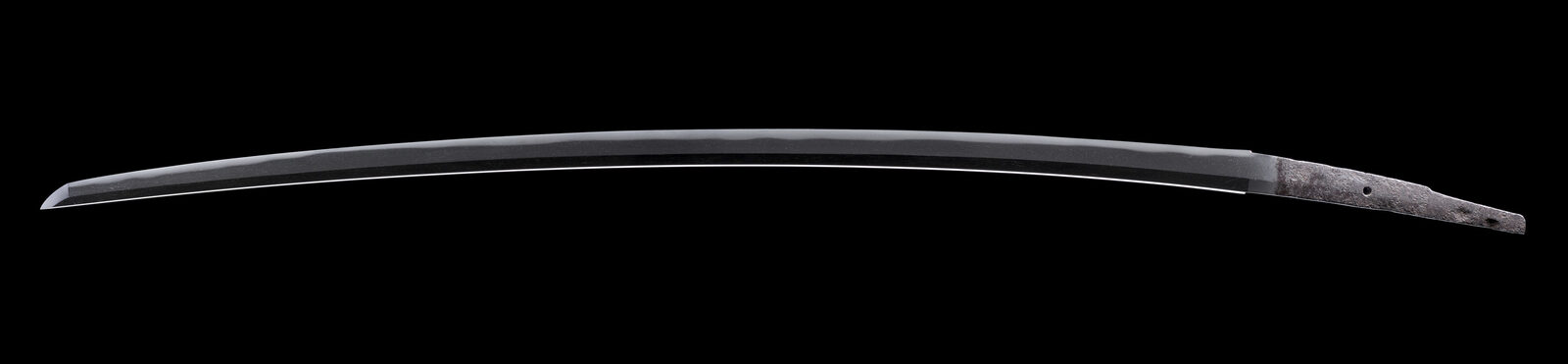
The 菊御作 (kiku gosaku) tachi of the Kyoto National Museum, an Important Cultural Property: 78.1 cm blade. Kyoto National Museum, via ColBase · ColBase terms of use · source 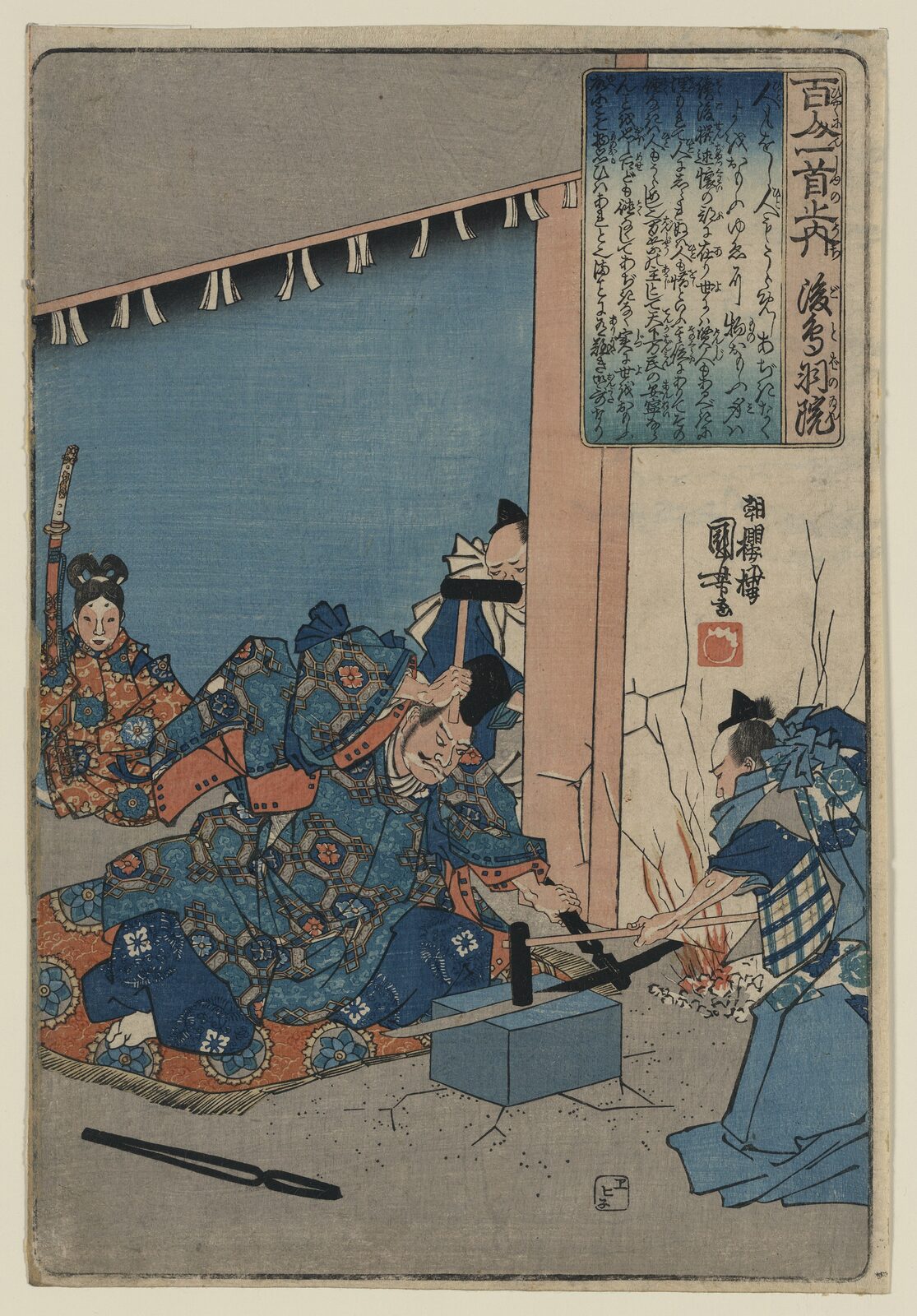
“Gotoba-in”, a print by Utagawa Kuniyoshi for the series 百人一首之内 (Hyakunin isshu no uchi): the tradition of the emperor at the forge. 歌川国芳 (Utagawa Kuniyoshi), Library of Congress, via Wikimedia Commons · Public domain · source
